
Your kidneys never take a day off. Every day they filter roughly 200 quarts of blood, remove waste, balance fluids and minerals, and help keep your blood pressure steady. Yet most people give them almost no thought until a blood test flags something. The CDC estimates that about 1 in 7 adults in the United States has chronic kidney disease, and the large majority of them don’t know it, because early kidney damage rarely causes symptoms.
If you’re searching for the best foods for kidney health, you’ve probably already run into confusing advice: eat more potassium, avoid potassium, drink more water, cut back on protein. The honest answer is that it depends on your own kidney function, and on whether you also live with high blood pressure or diabetes, the two leading causes of kidney disease.
The good news is that a handful of everyday foods consistently show up in kidney-friendly eating patterns. They’re easy to find, easy to cook, and gentle on most kidneys. If your blood pressure is part of the picture, our guide to the best foods to lower blood pressure naturally pairs well with this one. And because your liver and kidneys share the filtering workload, you may also like our best foods for liver health.
In this guide you’ll get the five best foods for kidney health, what each one does, who should be careful with it, and how to build them into a real day of eating.
Quick Answer
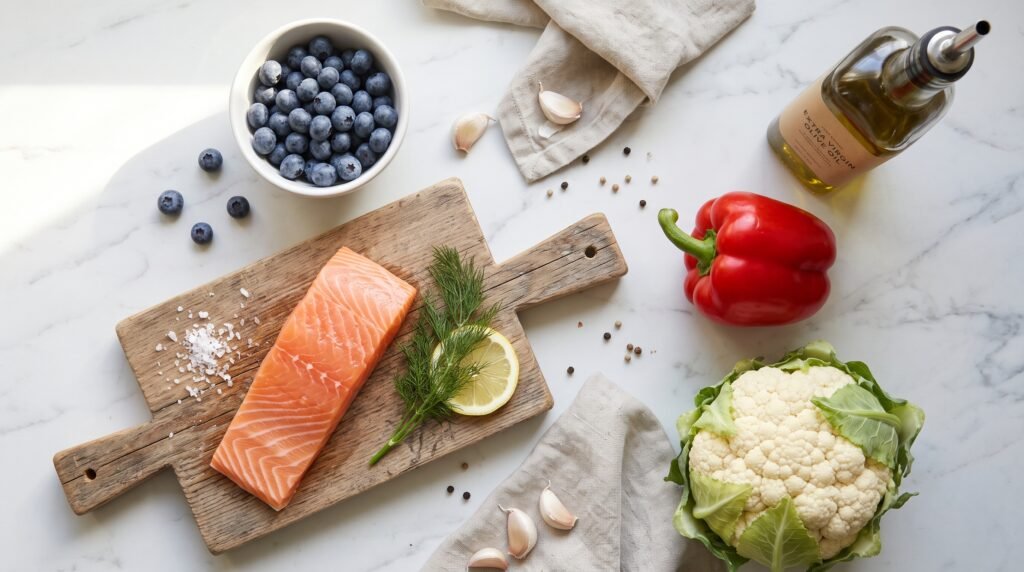
The best foods for kidney health are the ones that are low in sodium, easy on potassium and phosphorus for most people, and rich in antioxidants or healthy fats. Our top five are blueberries, salmon, red bell peppers, cauliflower, and extra virgin olive oil. Blueberries and red peppers deliver antioxidants with very little mineral load, salmon and olive oil supply anti-inflammatory fats, and cauliflower is a versatile, kidney-friendly swap for higher-potassium staples like potatoes. No single food protects your kidneys on its own: the overall pattern, including less salt and well-controlled blood pressure and blood sugar, matters most. If you already have kidney disease, your limits are personal, so confirm them with your doctor or a renal dietitian.
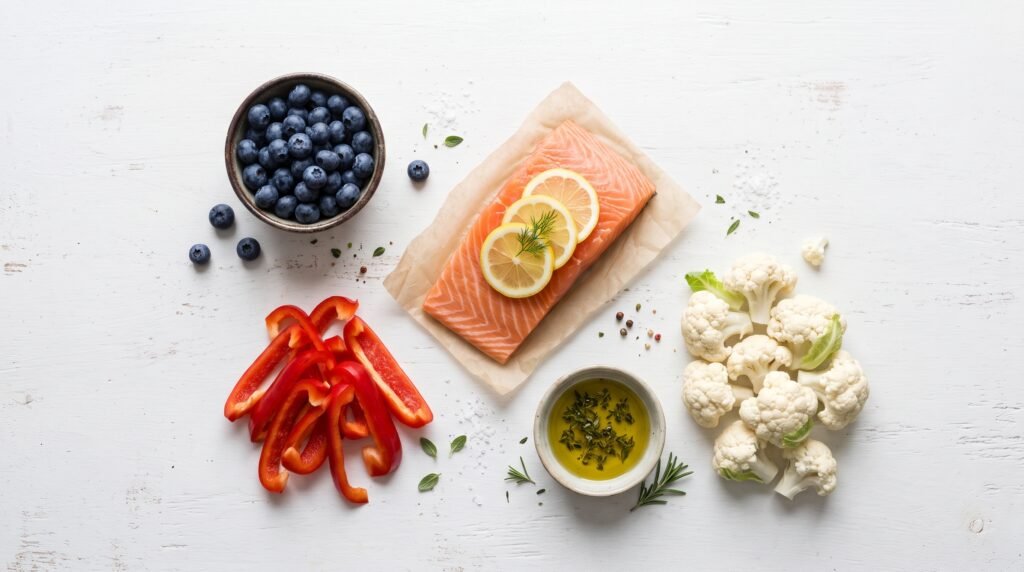
Table of Contents
- What Do Your Kidneys Actually Do?
- How to Choose the Best Foods for Kidney Health
- The 5 Best Foods for Kidney Health
- Comparison Table
- Best Kidney-Friendly Choices for Different Situations
- How to Build a Kidney-Friendly Day of Eating
- Common Mistakes
- Expert Tips
- Final Verdict
- Frequently Asked Questions
What Do Your Kidneys Actually Do?
Most people know the kidneys make urine. Fewer realize how many jobs they quietly handle. These two bean-shaped organs, each about the size of a fist, sit just below your rib cage on either side of your spine. Inside each one are about a million tiny filters called nephrons.
Together, they pull waste products and excess fluid out of your blood, keep sodium, potassium, calcium and phosphorus in balance, release hormones that help control blood pressure, and signal your bone marrow to make red blood cells. They also help activate vitamin D, which is why kidney trouble can show up as bone problems. Our guide to the best foods for bone health explains that connection in more detail.
Because the kidneys do so much, what you eat affects them in three main ways:
- Workload. Very salty or very processed meals force the kidneys to work harder to restore balance.
- Blood pressure. High blood pressure damages the delicate filters over time, so eating patterns that lower it protect the kidneys too.
- Blood sugar. Long-term high blood sugar injures kidney blood vessels, which is why diabetes is a leading cause of kidney failure. See our guide to the best foods for insulin resistance for the blood-sugar side of the story.
That’s why the best foods for kidney health aren’t exotic. They’re whole, fresh foods that keep sodium low, support steady blood pressure, and avoid unnecessary mineral overload.
How to Choose the Best Foods for Kidney Health
Before you stock your kitchen, ask yourself three quick questions. Your answers change which foods are best for you.
1. How well are my kidneys working right now? If your kidney function is normal, you generally don’t need to restrict potassium or phosphorus. Your goal is protection: less salt, more plants, healthy fats. If you have chronic kidney disease (CKD), your care team may set limits on potassium, phosphorus, protein or fluids, and those limits override any general list, including this one.
2. Do I have high blood pressure or diabetes? If so, your food choices pull double duty. Low-sodium, plant-forward eating protects both your blood vessels and your kidneys. The Mediterranean diet meal plan for beginners is a good starting framework.
3. How processed is my current diet? Packaged foods often hide large amounts of sodium and phosphate additives. Phosphate additives are absorbed far more easily than the phosphorus found naturally in whole foods, so cutting processed items is one of the simplest wins.
For trustworthy, up-to-date medical guidance, the National Institute of Diabetes and Digestive and Kidney Diseases (NIDDK) and the National Kidney Foundation both publish free, expert-reviewed nutrition resources.
The 5 Best Foods for Kidney Health
These five foods were chosen for three reasons: they fit well into kidney-friendly eating patterns, they’re widely available, and each one brings something different to the plate. The evidence for individual foods is strongest for overall dietary patterns rather than any single ingredient, so think of these as building blocks.
1. Blueberries
Overview: Blueberries are one of the most reliable fruit choices in kidney-friendly eating. They’re rich in anthocyanins, the pigments that give them their deep blue color and that have been studied for their antioxidant and anti-inflammatory effects. They also provide fiber and vitamin C while staying relatively low in potassium compared with fruits like bananas or oranges.
Chronic low-grade inflammation and oxidative stress are both linked to kidney damage over time. Antioxidant-rich foods don’t cure anything, but they’re a smart part of the overall pattern. Much of the research on anthocyanins comes from lab and observational studies, so we’d describe blueberries as supportive, not magical.
Key Features:
- Rich in anthocyanin antioxidants
- Good source of fiber and vitamin C
- Lower in potassium than many popular fruits
- Naturally sweet with no added sugar needed
- Freezes well, so frozen berries work just as well
Best For: People who want a sweet snack that won’t spike blood sugar the way sugary desserts do, and anyone building a diet around anti-inflammatory foods.
Pros: ✅ Antioxidant-rich ✅ Naturally low in sodium ✅ Convenient fresh or frozen
Cons: ❌ Fresh organic berries can be pricey ❌ Portion still matters if you’re counting carbs
Our Verdict: Blueberries are the easiest food on this list to start with. Stir a half cup to a cup into oatmeal or plain yogurt, or eat them on their own. If you’re also working on healthy aging for your brain, they overlap nicely with our best foods to boost memory and brain function.
2. Salmon (and Other Fatty Fish)
Overview: Salmon is rich in omega-3 fatty acids, specifically EPA and DHA, which support heart health and help calm inflammation. That matters for your kidneys because heart health and kidney health are tightly linked: what protects your blood vessels protects your filters. The American Heart Association recommends eating fish, especially fatty fish, at least twice a week.
Salmon is also a high-quality protein source. For people with healthy kidneys, that’s a benefit. For people with advanced CKD, protein portions may need to be limited, which is why serving size matters.
Key Features:
- Excellent source of omega-3 fatty acids
- High-quality protein
- Provides vitamin D and B vitamins
- Phosphorus in fish is naturally occurring, which is absorbed less readily than phosphate additives
- Best baked, grilled or steamed
Best For: Heart-conscious eaters and anyone replacing red or processed meat. See also our guide to foods that help lower cholesterol naturally.
Pros: ✅ Heart-protective fats ✅ Satisfying and filling ✅ Quick to cook
Cons: ❌ Smoked and canned versions can be very salty ❌ Protein and potassium add up on advanced CKD diets
Our Verdict: Choose fresh or frozen salmon, season it with lemon, garlic and herbs instead of salt, and keep the portion to about 3 to 4 ounces cooked if your doctor has you watching protein. Wondering whether you need supplements instead? Our omega-3 supplement guide compares fish oil and algae oil, but food comes first, and anyone with kidney disease should check with their doctor before taking any supplement.
3. Red Bell Peppers
Overview: Red bell peppers are a quiet star of kidney-friendly cooking. They’re low in potassium, low in phosphorus, and packed with vitamin C, vitamin A, vitamin B6 and folate. Their sweet, crunchy flavor also makes them one of the best low-sodium ways to add taste, color and texture to a meal.
That last point is underrated. One of the hardest parts of cutting salt is that food starts to taste flat. Peppers, along with onions and garlic, help fill that gap without adding a pinch of sodium.
Key Features:
- Low in potassium and phosphorus
- High in vitamin C and vitamin A
- Adds crunch and sweetness without salt
- Works raw, roasted, grilled or sautéed
- Naturally low in calories
Best For: Anyone cutting sodium who still wants big flavor, including people following a low-potassium eating plan.
Pros: ✅ Very mineral-friendly ✅ Versatile in almost any cuisine ✅ Great raw snack with a healthy dip
Cons: ❌ Red peppers cost more than green ❌ Some people find raw peppers hard to digest
Our Verdict: Slice them into salads, roast them with olive oil, or stuff them with lean protein and rice. They’re also a wonderful vitamin C source if you’re working on your immune system through food.
4. Cauliflower
Overview: Cauliflower is a cruciferous vegetable that brings fiber, vitamin C, vitamin K and folate while staying relatively low in potassium. It’s also one of the most flexible vegetables in the kitchen: it can be roasted, steamed, riced, mashed or blended into soups.
That flexibility is exactly why it earns a place among the best foods for kidney health. Many people on kidney-friendly diets are told to limit potatoes because of their potassium content. Mashed cauliflower gives you the same creamy comfort with a lighter mineral load.
Key Features:
- Low in potassium compared with potatoes
- Good source of vitamin C, vitamin K and folate
- Provides fiber for digestive health
- Mild flavor that takes on herbs and spices well
- Can replace rice, potatoes or even pizza crust
Best For: Anyone who needs a starchy-food substitute, plus people looking to eat more vegetables without a strong taste.
Pros: ✅ Versatile ✅ Low in sodium ✅ Budget-friendly
Cons: ❌ Can cause gas or bloating in some people ❌ Overcooking makes it mushy
Our Verdict: Roast it with olive oil, garlic powder and black pepper, or steam and mash it with a little unsalted butter. If bloating is a concern, our 30-day gut health reset plan shows how to add fiber gradually.
5. Extra Virgin Olive Oil
Overview: Extra virgin olive oil is the signature fat of the Mediterranean diet, an eating pattern linked in observational research to better heart and kidney outcomes. It contains no potassium and no phosphorus, and it’s rich in monounsaturated fat and polyphenols with anti-inflammatory properties.
It’s also a practical swap. Replacing butter, margarine and salty dressings with olive oil lowers saturated fat and sodium in one move, and it makes vegetables taste good enough that you’ll actually eat them.
Key Features:
- No potassium or phosphorus
- High in monounsaturated fat
- Contains polyphenol antioxidants
- Replaces butter and processed dressings
- Works for sautéing at medium heat, roasting and finishing
Best For: Anyone moving toward a Mediterranean-style pattern, and people who need extra calories without adding minerals, such as those with advanced CKD under medical guidance.
Pros: ✅ Mineral-free ✅ Heart-healthy ✅ Makes vegetables delicious
Cons: ❌ Calorie-dense, so portions count ❌ Quality varies widely between brands
Our Verdict: Use about one to two tablespoons a day in place of butter or bottled dressing. Pair it with a whole-food pattern for the greatest benefit, and if weight management is a goal, see our best foods to boost metabolism for balance.
Comparison Table
| Food | Best For | Key Nutrient | Potassium Level | Easy Serving Idea |
|---|---|---|---|---|
| Blueberries | Antioxidants, sweet cravings | Anthocyanins, vitamin C | Low | ½ to 1 cup in oatmeal |
| Salmon | Heart and anti-inflammatory support | Omega-3 (EPA, DHA) | Moderate | 3–4 oz baked with lemon |
| Red bell peppers | Flavor without salt | Vitamin C, vitamin A | Low | Roasted or raw with hummus |
| Cauliflower | Potato and rice swap | Vitamin K, folate, fiber | Low | Mashed or riced |
| Extra virgin olive oil | Replacing butter and dressings | Monounsaturated fat | None | 1–2 tbsp on vegetables |
Best Kidney-Friendly Choices for Different Situations
The best foods for kidney health look slightly different depending on your situation. Here’s how to adapt this list.
If You Have Healthy Kidneys and Want to Protect Them
You don’t need to restrict potassium or phosphorus. Focus on reducing sodium, eating more plants, and keeping blood pressure and blood sugar in a healthy range. Every food on this list works for you, and you can widen the menu with beans, whole grains and leafy greens. If fatigue has been a concern, check our guide to iron-rich foods for anemia and fatigue, since anemia and kidney problems can overlap. Our natural energy foods without caffeine are another gentle option.
If You Have High Blood Pressure or Diabetes
You’re in the highest-risk group for kidney damage, so prevention matters most. Lean on the Mediterranean-style foods here, keep sodium low, and read labels carefully. Our guides on lowering blood pressure and insulin resistance go deeper on each condition, and our weight loss and belly fat foods can help if excess weight is part of the picture.
If You Already Have Chronic Kidney Disease
Your plan should come from your nephrologist or a renal dietitian. Blueberries, red peppers, cauliflower and olive oil are commonly used because they’re lower in potassium and phosphorus, but portions of salmon and other proteins may need to be adjusted. In later stages, even some healthy foods become limited. Please use this article as a starting point for the conversation, not a replacement for it. Joint pain from long-term inflammation is also common, and our joint pain and arthritis relief guide can help you talk through food options with your care team.
How to Build a Kidney-Friendly Day of Eating
Knowing the best foods for kidney health is one thing. Turning them into meals is another. Here’s a simple five-step method.
Step 1: Start With Your Baseline
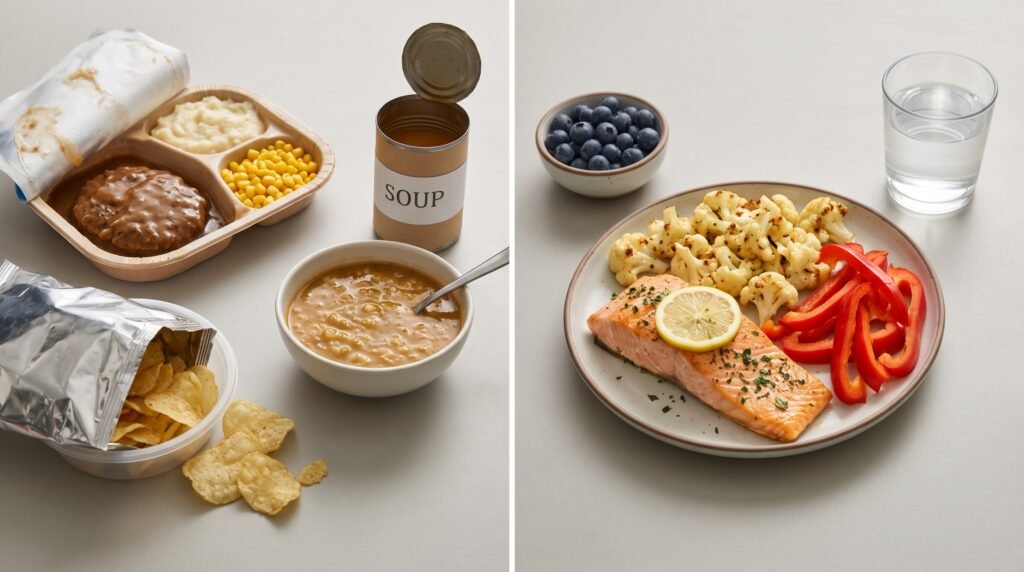
Look at your current diet for a few days. Note how often you eat packaged soups, deli meats, frozen dinners, fast food and canned goods. Those are the biggest sources of hidden sodium and phosphate additives.
Step 2: Swap Before You Subtract
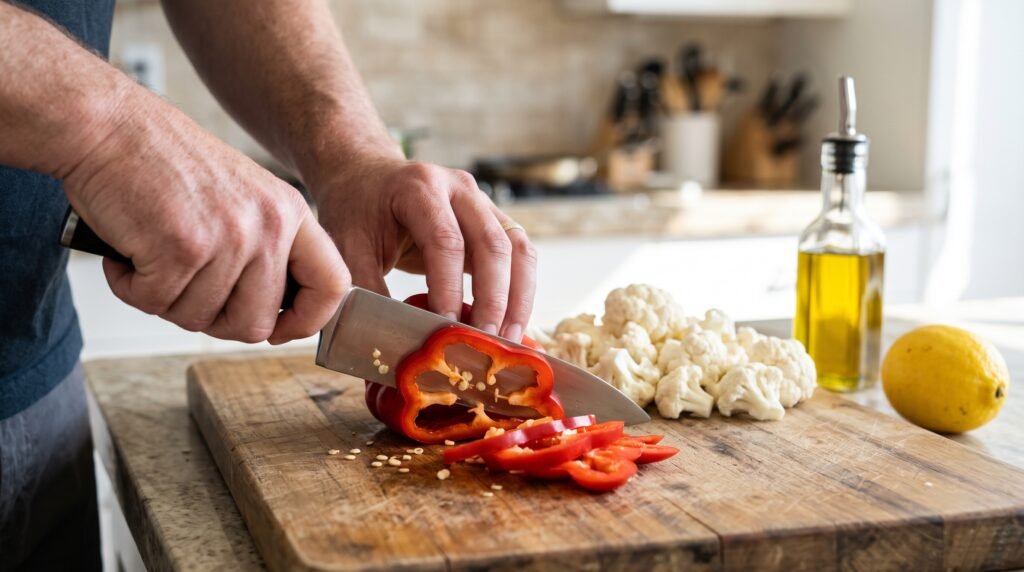
Don’t try to overhaul everything at once. Swap butter for olive oil, potatoes for cauliflower, salty snacks for red pepper strips, and dessert for blueberries. Small swaps are easier to keep.
Step 3: Cook With Flavor, Not Salt
Use garlic, onion, lemon, vinegar, black pepper, paprika, cumin and fresh herbs. Most people find their taste buds adjust to lower salt within a few weeks.
Step 4: Build Balanced Plates
A sample day might look like this:
- Breakfast: Oatmeal topped with a handful of blueberries
- Lunch: Mixed salad with red bell pepper, olive oil and lemon dressing
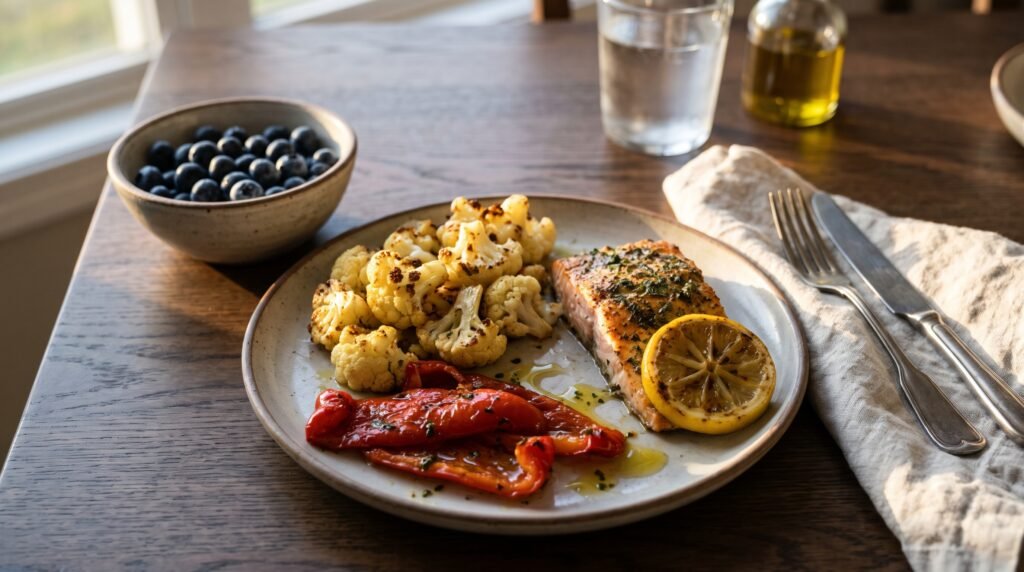
- Dinner: Baked salmon with roasted cauliflower
- Snack: Raw pepper strips or a small bowl of berries
Step 5: Review and Adjust
Ask your doctor how often to check kidney function, blood pressure and blood sugar, and adjust your food choices as your numbers change. If you’re trying to build a structured routine, our 30-day gut health reset plan and anti-inflammatory meal plan for beginners both show how to plan a week at a time.
Common Mistakes
Mistake 1: Trusting “kidney cleanse” teas and supplements. Your kidneys clean themselves around the clock. Detox products rarely have solid evidence behind them, and some herbal ingredients can actually harm kidneys. Always ask your doctor first. If you’re considering magnesium or other minerals, review our magnesium supplement guide and speak with your care team, since supplements can accumulate when kidney function is reduced.
Mistake 2: Ignoring hidden sodium and phosphate additives. Foods marketed as healthy can still be loaded with salt or additives. Check ingredient lists for words containing “phos,” and compare sodium per serving. A food that sounds good for kidneys can undo its benefits when it comes in a can or a box.
Mistake 3: Restricting potassium without a reason. Many people hear that potassium is bad for kidneys and cut out fruits and vegetables entirely. If your kidneys are healthy, this can backfire, because potassium-rich plants help lower blood pressure. Only restrict if your doctor tells you to. Our guide to better sleep foods includes some potassium-rich options that are fine for most people.
Expert Tips
Tip 1: Think pattern, not superfood. Research on kidney health points to eating patterns such as the DASH and Mediterranean diets. One blueberry won’t protect your kidneys, but a year of plant-forward meals can make a real difference.
Tip 2: Mind your cooking method. If you’ve been told to lower potassium, soaking and boiling vegetables in plenty of water, then discarding the water, can reduce their potassium content. Ask your renal dietitian whether this applies to you before trying it.
Tip 3: Hydrate sensibly. For most healthy people, drinking enough water to keep urine pale yellow supports kidney function. But people with advanced CKD or heart failure may have fluid limits, so follow your doctor’s guidance. Stress can also drive poor eating habits, so our anxiety and stress relief foods can help you stay consistent.
Final Verdict
The best foods for kidney health are simple, familiar and affordable. Here’s how our five picks stack up:
- Best overall: Extra virgin olive oil, because it’s mineral-free and upgrades almost every meal
- Best for antioxidants: Blueberries
- Best for heart and inflammation: Salmon
- Best budget swap: Cauliflower
- Best flavor without salt: Red bell peppers
No food replaces regular checkups, blood pressure control and good medical care. But if you start with these five, cut back on salt and ultra-processed foods, and ask your doctor about your personal limits, you’re giving your kidneys a real advantage. For more whole-body support, explore our guides to thyroid health, eye health and hair growth, which all share the same food-first approach.
Frequently Asked Questions
1. What is the single best food for kidney health? There’s no single winner, because kidney health depends on your overall eating pattern. Blueberries, salmon, red bell peppers, cauliflower and olive oil are all strong choices. If you want one habit that matters most, it’s lowering sodium by cooking with fresh ingredients instead of packaged foods.
2. Do I need to avoid potassium if I want to protect my kidneys? Not if your kidney function is normal. Potassium-rich fruits and vegetables help lower blood pressure, which protects your kidneys. Restriction is usually recommended only when blood tests show high potassium or when you have advanced kidney disease. Your doctor will tell you where you stand.
3. How much water should I drink for kidney health? Most healthy adults do well drinking enough to keep urine pale yellow, which for many people is around 6 to 8 cups of fluid a day, including other beverages. Needs vary with climate, activity and health conditions, and some people with kidney or heart disease have strict fluid limits.
4. Is salmon good or bad for kidneys? Salmon is generally a good choice for people with healthy kidneys and for many with early CKD because of its omega-3 fats. The caution is portion size: protein, potassium and phosphorus all add up. Fresh or frozen is better than smoked or heavily salted canned fish.
5. Can food reverse kidney damage? Diet can’t reverse established kidney damage, but it can help slow progression, especially when paired with good blood pressure and blood sugar control. Early detection is key, so ask your doctor about a simple blood and urine test if you have risk factors.
6. Are blueberries safe for people with kidney disease? Blueberries are commonly recommended because they’re relatively low in potassium and phosphorus. A typical portion is about half a cup to one cup. Because every kidney diet is individual, confirm portions with your renal dietitian.
7. What is better for kidneys, olive oil or butter? Olive oil is generally the better choice. It’s rich in unsaturated fats, contains no potassium or phosphorus, and fits the Mediterranean pattern linked to better heart health. Butter is higher in saturated fat, which is less supportive of heart and blood vessel health.
8. What foods should I limit for kidney health? The usual suspects are high-sodium processed foods, deli meats, canned soups, fast food, and drinks or snacks with phosphate additives. If you have CKD, your doctor may also ask you to limit certain high-potassium or high-phosphorus foods. Our immunity foods guide shows plenty of fresh alternatives.
9. Do probiotics help kidneys? The research is still early. A healthy gut supports overall wellbeing, but evidence for specific probiotics improving kidney function is limited. If you’re curious, read our probiotic supplements guide and talk to your doctor before starting one, especially if you have kidney disease.
10. When should I see a doctor about my kidneys? See a doctor if you have swelling in your ankles or face, foamy urine, changes in how often you urinate, persistent fatigue, or if you have diabetes, high blood pressure or a family history of kidney disease. Early testing is simple and can catch problems before symptoms appear.
This article is for educational purposes and isn’t a substitute for medical advice. Talk to your doctor or a registered renal dietitian before changing your diet, especially if you have kidney disease.
Author: Adam
Last Updated: November 2026