
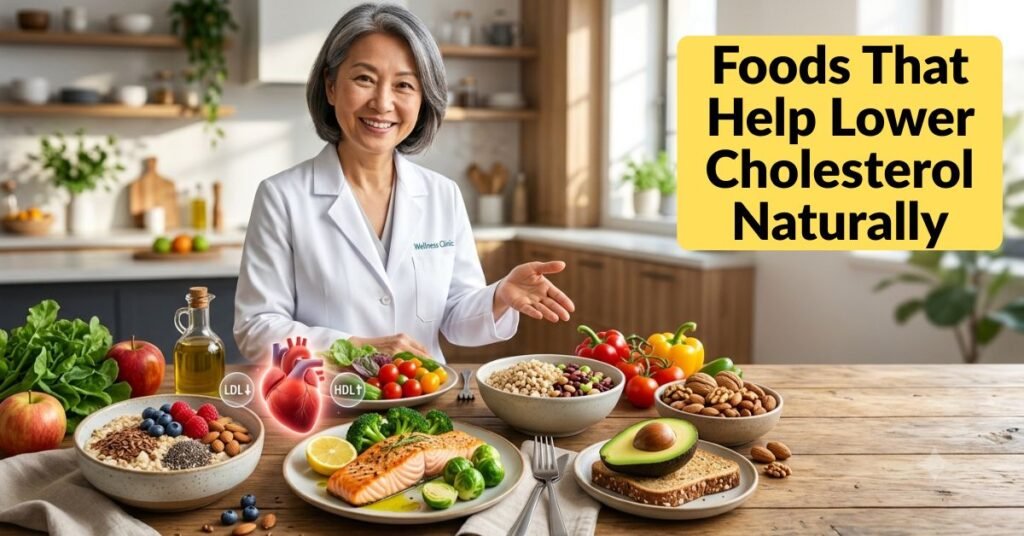
Discover 15 foods that help lower cholesterol naturally, backed by AHA and Harvard research, plus a meal plan and daily habits for better heart health.
If your last blood test came back with a note about high LDL, you’re far from alone, and the good news is that food is one of the most effective levers you have for turning those numbers around. Before we get into specific foods, it helps to understand what cholesterol is actually doing in your body and why some foods lower it while others raise it. Finding the right foods that help lower cholesterol naturally doesn’t require a complicated diet overhaul, just consistent, smart choices over time.
What Is Cholesterol?
Cholesterol is a waxy, fat-like substance that your liver produces and that also comes from certain foods you eat. Your body actually needs cholesterol to build cells, make hormones, and produce vitamin D. The problem isn’t cholesterol itself, it’s having too much of the wrong kind circulating in your blood.
LDL, HDL, and Triglycerides Explained
There are three numbers that matter most on a standard lipid panel:
- LDL (low-density lipoprotein): Often called “bad” cholesterol because it can build up in artery walls and form plaque, narrowing blood flow over time.
- HDL (high-density lipoprotein): Known as “good” cholesterol because it helps carry excess cholesterol back to the liver, where it’s processed and removed from the body.
- Triglycerides: A different type of fat in the blood. High levels, especially combined with high LDL or low HDL, raise your risk for heart disease.
Why Cholesterol Matters for Heart Health
When LDL cholesterol is too high for too long, it can combine with other substances to form plaque inside artery walls. Over time, this narrows the arteries and restricts blood flow, raising the risk of heart attack and stroke. The goal of a cholesterol-friendly diet isn’t to eliminate cholesterol entirely, it’s to keep LDL in a healthy range while supporting HDL.
Signs and Risk Factors of High Cholesterol
Why High Cholesterol Often Has No Symptoms
High cholesterol is sometimes called a “silent” condition because it usually doesn’t cause any noticeable symptoms. Most people find out they have high cholesterol only after a routine blood test, which is exactly why regular screening matters, especially for adults over 20.
Common Risk Factors
Several factors can push your cholesterol numbers in the wrong direction:
- A diet high in saturated fat, trans fat, and refined carbohydrates
- Being overweight or carrying excess weight around the abdomen
- Physical inactivity
- Smoking, which lowers HDL and damages artery walls
- Family history of high cholesterol or early heart disease
- Age, since cholesterol tends to rise naturally over time
- Certain conditions like diabetes, hypothyroidism, or kidney disease
How Diet Helps Lower Cholesterol Naturally
Food affects cholesterol through a handful of well-studied mechanisms. Understanding these makes it easier to see why certain foods show up again and again in cholesterol-friendly eating plans.
Soluble Fiber
Soluble fiber forms a gel-like substance in your digestive tract that traps cholesterol-containing bile acids and carries them out of the body before they can be reabsorbed. Research reviewed by the American Heart Association shows that eating 5 to 10 grams of soluble fiber a day can lower LDL cholesterol by roughly 5 to 11 points, and larger intakes can produce even bigger reductions.
Healthy Fats
Replacing saturated fat (found in butter, fatty cuts of meat, and full-fat dairy) with unsaturated fats from sources like olive oil, nuts, and avocados can meaningfully lower LDL cholesterol while maintaining or improving HDL levels.
Plant Sterols and Stanols
These are naturally occurring compounds in plant foods that are structurally similar to cholesterol. They work by blocking the absorption of cholesterol in your gut. Clinical research shows that consuming around 2 grams of plant sterols or stanols daily can lower LDL cholesterol by roughly 8 to 12 percent.
Omega-3 Fatty Acids
Found mainly in fatty fish, omega-3s primarily lower triglycerides rather than LDL directly, but they also support overall heart health by reducing inflammation and blood pressure. The American Heart Association recommends at least two servings of fish, particularly fatty fish, each week.
Weight Management
Carrying extra body weight, particularly around the midsection, is linked to higher LDL and lower HDL. Losing even a modest amount of weight, around 5 to 10 percent of body weight, can improve cholesterol numbers noticeably.
15 Best Foods That Help Lower Cholesterol Naturally
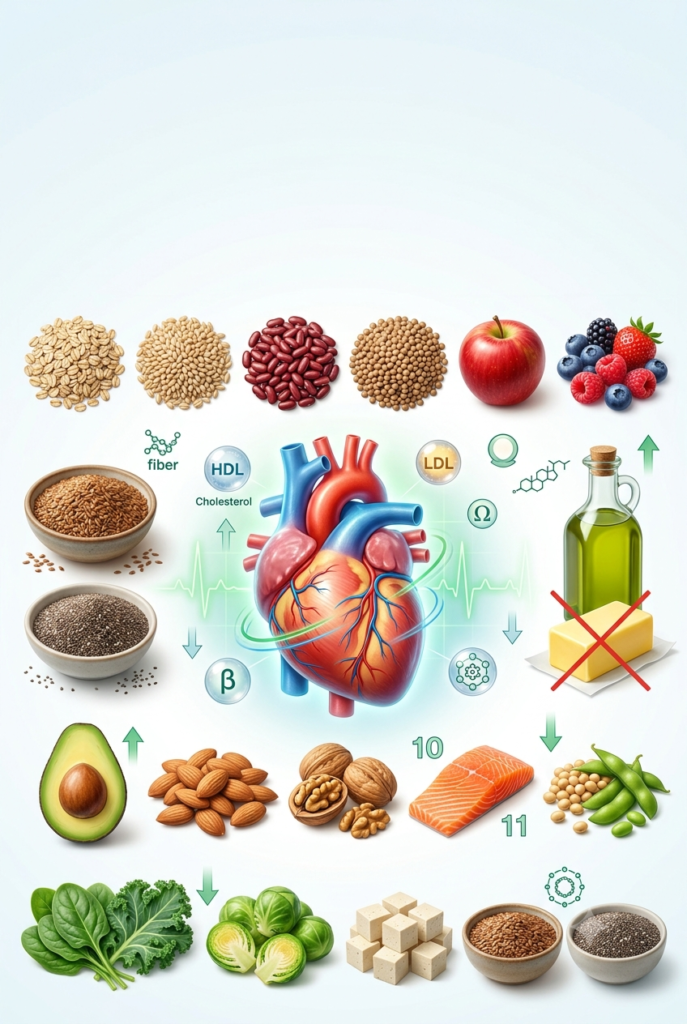
Callout Box: Most of the foods below work best when they replace less healthy options in your diet rather than simply being added on top. Swapping butter for olive oil delivers more benefit than adding olive oil while keeping the butter too.
1. Oats
Why it works: Oats are rich in a specific type of soluble fiber called beta-glucan, which has one of the strongest track records for lowering LDL cholesterol among whole foods. Key nutrients: Beta-glucan, manganese, phosphorus, magnesium. Scientific evidence: Studies show that around 3 grams of oat beta-glucan per day, roughly one and a half cups of cooked oatmeal, can lower LDL cholesterol by about 5 to 7 percent. Best ways to eat it: Cooked oatmeal topped with berries, overnight oats, or oat bran mixed into smoothies. Daily serving recommendation: 1 to 1.5 cups cooked oatmeal, or about 40 to 70 grams of dry oats.
2. Barley
Why it works: Like oats, barley is a strong source of beta-glucan fiber and offers similar cholesterol-lowering effects. Key nutrients: Beta-glucan, selenium, B vitamins. Scientific evidence: Clinical trials on barley consumption have shown reductions in both total and LDL cholesterol when it’s eaten regularly as part of the diet. Best ways to eat it: Add cooked barley to soups, stews, or grain bowls as a substitute for white rice. Daily serving recommendation: ½ to 1 cup cooked barley.
3. Beans and Lentils
Why it works: Legumes are loaded with soluble fiber and plant protein, and eating them in place of animal protein reduces overall saturated fat intake. Key nutrients: Soluble fiber, folate, potassium, plant protein. Scientific evidence: Diets high in legumes are consistently associated with lower LDL cholesterol in long-term dietary studies, and legumes are a core component of the high-fiber “Portfolio diet” shown to meaningfully reduce LDL. Best ways to eat it: Add to salads, soups, tacos, or use as a meat substitute in chili. Daily serving recommendation: ½ to 1 cup cooked, most days of the week.
4. Apples
Why it works: Apples contain pectin, a soluble fiber that binds cholesterol in the digestive tract, plus polyphenols that support artery health. Key nutrients: Pectin, vitamin C, quercetin. Scientific evidence: Studies on pectin-rich fruits show measurable reductions in LDL cholesterol when eaten regularly over several weeks. Best ways to eat it: Eat the skin on for maximum fiber, sliced with nut butter, or added to oatmeal. Daily serving recommendation: 1 medium apple daily.
5. Berries
Why it works: Berries are high in soluble fiber and antioxidants that help protect LDL particles from the oxidative damage that makes them more likely to stick to artery walls. Key nutrients: Fiber, anthocyanins, vitamin C. Scientific evidence: Research on berry consumption links regular intake to improved LDL and HDL profiles over time. Best ways to eat it: Fresh or frozen, added to yogurt, oatmeal, or eaten as a snack. Daily serving recommendation: 1 cup fresh or frozen berries.
6. Avocados
Why it works: Avocados are rich in monounsaturated fat, the same type of heart-healthy fat found in olive oil, and provide fiber as a bonus. Key nutrients: Monounsaturated fat, fiber, potassium. Scientific evidence: Clinical trials have found that eating one avocado a day as part of a moderate-fat diet can lower LDL cholesterol compared to a similar diet without avocado. Best ways to eat it: Sliced on toast, blended into smoothies, or as a substitute for mayonnaise or butter. Daily serving recommendation: ½ to 1 avocado daily.
7. Almonds
Why it works: Almonds combine unsaturated fat, fiber, and plant sterols, three cholesterol-lowering mechanisms in one food. Key nutrients: Monounsaturated fat, fiber, vitamin E, magnesium. Scientific evidence: Regular almond consumption has been shown in multiple studies to reduce LDL cholesterol without negatively affecting HDL. Best ways to eat it: A handful as a snack, or chopped over salads and oatmeal. Daily serving recommendation: About 1.5 ounces (roughly a small handful) per day.
8. Walnuts
Why it works: Walnuts stand out among nuts for their high content of plant-based omega-3 fatty acids (ALA), alongside fiber and unsaturated fat. Key nutrients: ALA omega-3s, polyunsaturated fat, fiber. Scientific evidence: Studies comparing walnut-enriched diets to typical Western diets have found greater reductions in LDL cholesterol with regular walnut intake. Best ways to eat it: Added to salads, oatmeal, or eaten plain as a snack. Daily serving recommendation: About 1 ounce (roughly 7 whole walnuts) per day.
9. Fatty Fish
Why it works: Fatty fish are rich in omega-3 fatty acids, which primarily lower triglycerides and support overall cardiovascular health, complementing the LDL-lowering effects of fiber-rich foods. Key nutrients: EPA and DHA omega-3s, vitamin D, protein. Scientific evidence: The American Heart Association recommends at least two servings of fatty fish per week, such as salmon, mackerel, sardines, or albacore tuna, based on research linking regular fish intake to lower cardiovascular risk. Best ways to eat it: Baked, grilled, or broiled rather than fried, which adds unhealthy fat. Daily serving recommendation: Two 3.5-ounce servings per week.
10. Olive Oil
Why it works: Extra virgin olive oil is high in monounsaturated fat and contains polyphenols that help protect against LDL oxidation, a key step in plaque formation. Key nutrients: Monounsaturated fat, polyphenols, vitamin E. Scientific evidence: Olive oil is a cornerstone of the Mediterranean diet, which has repeatedly been shown in large studies to lower LDL cholesterol and reduce cardiovascular events. Best ways to eat it: Use in place of butter for cooking, drizzled over vegetables, or as a salad dressing base. Daily serving recommendation: 2 to 3 tablespoons daily.
11. Soy Foods
Why it works: Soy protein appears to modestly lower LDL cholesterol, and using soy foods in place of animal protein also reduces saturated fat intake. Key nutrients: Plant protein, isoflavones, fiber. Scientific evidence: Reviews of soy protein studies show small but consistent LDL reductions, particularly when soy replaces higher-saturated-fat protein sources. Best ways to eat it: Tofu, edamame, tempeh, or unsweetened soy milk. Daily serving recommendation: 1 to 2 servings daily (about ½ cup tofu or 1 cup soy milk).
12. Flaxseeds
Why it works: Ground flaxseeds provide both soluble fiber and plant-based omega-3 fatty acids, a combination that supports lower LDL cholesterol. Key nutrients: Lignans, ALA omega-3s, soluble fiber. Scientific evidence: Studies using ground flaxseed have shown reductions in LDL cholesterol, especially in people with elevated baseline levels. Best ways to eat it: Ground and sprinkled on oatmeal, yogurt, or blended into smoothies (whole flaxseeds pass through the body largely undigested). Daily serving recommendation: 1 to 2 tablespoons ground flaxseed daily.
13. Chia Seeds
Why it works: Chia seeds form a gel when mixed with liquid thanks to their soluble fiber content, which helps bind cholesterol in the digestive tract. Key nutrients: Soluble fiber, ALA omega-3s, protein. Scientific evidence: Research on chia seed consumption shows favorable changes in cholesterol markers, particularly when used consistently over several weeks. Best ways to eat it: Chia pudding, stirred into oatmeal, or added to smoothies. Daily serving recommendation: 1 to 2 tablespoons daily.
14. Leafy Greens
Why it works: Vegetables like spinach and kale are rich in lutein and plant compounds that may help block cholesterol absorption, along with fiber that supports overall cholesterol balance. Key nutrients: Lutein, fiber, folate, vitamin K. Scientific evidence: Diets high in leafy greens and vegetables are consistently linked in population studies to lower rates of heart disease and improved lipid profiles. Best ways to eat it: Sautéed with olive oil and garlic, blended into smoothies, or as a salad base. Daily serving recommendation: 1 to 2 cups daily.
15. Brussels Sprouts
Why it works: As a cruciferous vegetable, Brussels sprouts provide both soluble and insoluble fiber along with compounds that may support liver function in processing cholesterol. Key nutrients: Fiber, vitamin K, vitamin C. Scientific evidence: Cruciferous vegetables are associated with improved cardiovascular markers in observational studies, and their fiber content directly supports the cholesterol-binding mechanism seen with other high-fiber foods. Best ways to eat it: Roasted with olive oil, shredded into salads, or sautéed. Daily serving recommendation: 1 cup, a few times per week.
Foods That Can Raise Cholesterol
Knowing what to limit matters just as much as knowing what to add.
- Processed meats: Bacon, sausage, and deli meats are typically high in saturated fat and sodium, both linked to worse cardiovascular outcomes.
- Fried foods: Deep frying, especially in reused oil, raises saturated and trans fat content significantly.
- Trans fats: Found in some margarines, packaged baked goods, and fried fast food, trans fats raise LDL while also lowering HDL, making them one of the most harmful fats for cholesterol.
- Excess saturated fats: Found in fatty cuts of red meat, butter, and full-fat dairy, saturated fat is one of the biggest dietary drivers of elevated LDL.
- Sugary processed foods: Foods high in added sugar and refined carbohydrates can raise triglycerides and lower HDL over time, even when they don’t contain cholesterol directly.
One-Day Cholesterol-Lowering Meal Plan
| Meal | Example |
| Breakfast | Oatmeal made with 1 cup oats, topped with sliced apple, 1 tablespoon ground flaxseed, and a handful of walnuts |
| Snack | Small handful of almonds and a piece of fresh fruit |
| Lunch | Large salad with leafy greens, chickpeas, avocado, and an olive oil vinaigrette |
| Snack | Carrot and celery sticks with hummus |
| Dinner | Baked salmon, roasted Brussels sprouts, and a side of cooked barley |
This plan naturally works in several of the foods that help lower cholesterol naturally, including oats, flaxseed, avocado, olive oil, and fatty fish, without requiring any special ingredients or complicated prep.
Lifestyle Habits That Improve Cholesterol
Diet is powerful, but it works even better alongside other lifestyle changes.
- Exercise: Regular aerobic activity, such as brisk walking for 30 minutes most days, can raise HDL and lower triglycerides.
- Sleep: Poor sleep is linked to unhealthy changes in cholesterol and triglyceride levels, so aim for 7 to 9 hours most nights.
- Stress management: Chronic stress can indirectly affect cholesterol through its impact on diet, weight, and hormone levels, so practices like meditation or regular exercise can help.
- Weight loss: Losing even 5 to 10 percent of body weight can produce measurable improvements in LDL and triglycerides.
- Smoking cessation: Quitting smoking raises HDL cholesterol and improves overall artery function, often within weeks.
- Limiting alcohol: Excessive alcohol intake can raise triglycerides and blood pressure, so moderation matters for anyone managing cholesterol.
Common Mistakes People Make
- Focusing only on dietary cholesterol instead of saturated fat. For most people, saturated fat has a bigger effect on blood cholesterol than the cholesterol found in food itself.
- Adding “healthy” foods without cutting back on unhealthy ones. Sprinkling flaxseed on a diet that’s still high in fried food and processed meat won’t move the needle much.
- Expecting fast results. Most dietary changes take 4 to 12 weeks to show a measurable difference on a lipid panel.
- Cutting out all fat. Very low-fat diets can lower HDL along with LDL. The goal is swapping saturated fat for unsaturated fat, not eliminating fat altogether.
- Skipping follow-up testing. Without a repeat blood test, it’s hard to know whether your changes are actually working.
Frequently Asked Questions
Can cholesterol be lowered naturally? Yes, for many people diet and lifestyle changes can meaningfully lower LDL cholesterol, sometimes by 10 to 20 percent or more, though the exact effect depends on starting cholesterol levels, genetics, and how consistently changes are followed.
Which fruit lowers cholesterol the fastest? Apples and berries tend to be highlighted most often because of their pectin and soluble fiber content, but no single fruit works instantly. Consistent daily intake over several weeks is what produces measurable results.
Are eggs safe if I have high cholesterol? For most healthy people, moderate egg consumption, around one egg a day, doesn’t significantly raise cholesterol, since dietary cholesterol has a smaller effect on blood cholesterol than saturated fat does for most individuals. People with diabetes or existing heart disease should still check with their doctor about how many eggs are appropriate for them.
Is oatmeal really effective? Yes, oatmeal is one of the most well-studied cholesterol-lowering foods thanks to its beta-glucan fiber content, with research showing meaningful LDL reductions from regular daily intake.
How long does it take to lower cholesterol through diet? Most people start to see measurable changes on a lipid panel within 4 to 12 weeks of consistent dietary changes, though full benefits can take three to six months to appear.
Do I need to avoid all saturated fat completely? Not entirely. The general guidance is to limit saturated fat to less than 6 percent of daily calories for people trying to lower cholesterol, rather than eliminating it completely.
Can exercise alone lower cholesterol without diet changes? Exercise mainly raises HDL and lowers triglycerides. It has a smaller direct effect on LDL, which responds more to dietary changes, so combining both gives the best results.
Is the Mediterranean diet good for cholesterol? Yes, the Mediterranean diet, which emphasizes olive oil, fish, vegetables, legumes, and whole grains while limiting red meat and processed foods, is one of the most consistently studied eating patterns for improving cholesterol and reducing cardiovascular risk.
Do cholesterol-lowering foods work as well as medication? For people with mildly elevated cholesterol, diet alone can sometimes bring levels into a healthy range. For those with significantly high LDL or existing heart disease, diet is usually recommended alongside medication rather than as a replacement for it.
What should I eat first thing in the morning for high cholesterol? Oatmeal topped with fruit and a tablespoon of ground flaxseed is one of the most research-backed breakfast choices for supporting healthy cholesterol levels.
Final Thoughts
Managing cholesterol doesn’t have to mean giving up flavor or eating differently from everyone else at the table. The foods that help lower cholesterol naturally covered in this guide, oats, beans, nuts, fatty fish, olive oil, and fiber-rich fruits and vegetables, all have real research behind them, and they work best when they consistently replace less healthy choices rather than sitting alongside them. Combine these food choices with regular movement, good sleep, and routine checkups, and you give your body every reasonable chance to bring your numbers into a healthier range over time.
Pingback: 16 Best Foods for Eye Health: Protect Your Vision Naturally | nutrieatss