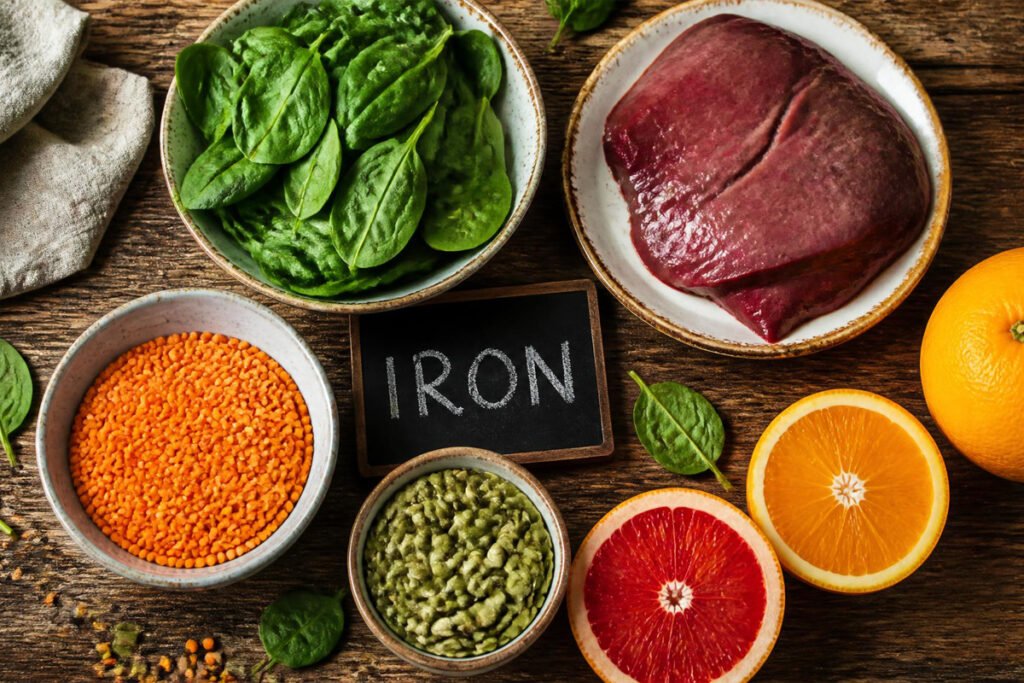
Constant tiredness. Pale skin. Cold hands, even in a warm room. Feeling winded walking up stairs you used to take without thinking. If your doctor has mentioned “low iron” or “anemia,” or you’re just trying to rule it out before your next checkup, food is one of the first places to start — right alongside, not instead of, whatever your doctor recommends.
Iron is the mineral your red blood cells use to carry oxygen throughout your body. Run low, and every system that depends on oxygen delivery — your brain, your muscles, your energy levels — feels it. The tricky part is that not all iron is created equal: the iron in meat (heme iron) absorbs far more efficiently than the iron in plants (non-heme iron), and certain food pairings can make or break how much your body actually uses. This guide breaks down the best iron-rich foods, the absorption science behind them, and how to build meals that actually move the needle. If fatigue has you rethinking your whole morning routine, our best breakfast foods for blood sugar control guide pairs well with the ideas here.
Quick Answer
The best iron-rich foods are red meat, liver, and shellfish for the most absorbable (heme) iron, and lentils, beans, spinach, and tofu for solid plant-based (non-heme) iron. Heme iron is absorbed two to three times more efficiently than non-heme iron, so if you’re vegetarian or vegan, pairing plant iron sources with vitamin C-rich foods (like citrus or bell peppers) meaningfully boosts absorption. Coffee and tea, on the other hand, can reduce iron absorption if consumed too close to an iron-rich meal — timing matters almost as much as food choice.
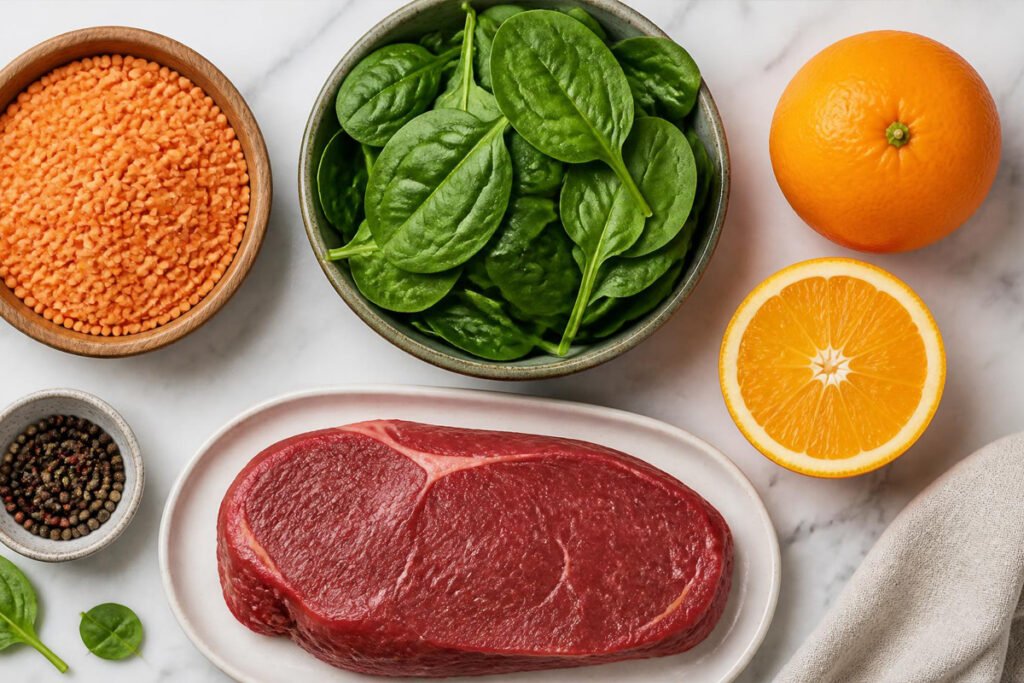
Table of Contents
- How Iron Deficiency Affects the Body
- How to Choose the Right Foods for You
- 16 Best Iron-Rich Foods
- Comparison Table
- Best Iron Foods by Situation
- How to Maximize Iron Absorption
- Common Mistakes
- Expert Tips
- Final Thoughts
- FAQ
How Iron Deficiency Affects the Body {#how-it-affects}
Iron is a core building block of hemoglobin, the protein in red blood cells that carries oxygen from your lungs to the rest of your body. When iron stores run low, your body produces fewer or smaller red blood cells, and less oxygen reaches your tissues — which is why fatigue, weakness, pale skin, and shortness of breath are the classic symptoms of iron-deficiency anemia, one of the most common nutritional deficiencies worldwide.
There are two forms of dietary iron. Heme iron, found only in animal foods like meat, poultry, and seafood, is absorbed at a rate of roughly 15-35%. Non-heme iron, found in plant foods like beans, lentils, and leafy greens, is absorbed at a much lower rate — typically 2-20%, and that rate is heavily influenced by what else you eat alongside it. This is exactly why absorption strategy matters as much as the food list itself, especially for anyone eating plant-forward, similar to the approach in our best foods for insulin resistance guide.
How to Choose the Right Foods for You {#how-to-choose}
- Do you eat meat, or are you vegetarian/vegan? Non-heme-only eaters generally need to eat more iron-rich plant foods and pay closer attention to absorption pairing than someone who eats meat regularly.
- Has a doctor confirmed you’re actually iron-deficient? Fatigue has many causes — thyroid issues, sleep problems, and other deficiencies can look similar. A blood test (ferritin and hemoglobin) is the only way to know for sure before you overhaul your diet or consider a supplement.
- Are you managing a condition affected by iron intake, like hemochromatosis? Some people need to limit iron rather than increase it — this is a case where personalized medical guidance matters more than a general list.
16 Best Iron-Rich Foods {#best-foods}
1. Beef Liver
Overview: One of the single richest food sources of iron available, along with a dense concentration of vitamin B12 and other nutrients. Key Features:
- Extremely high heme iron content
- Also rich in vitamin B12, another nutrient linked to anemia when low
- Traditionally used in many cultures specifically for “building blood” Best For: People with confirmed, more significant iron deficiency (under medical guidance) Pros: ✅ One of the most concentrated iron sources available ✅ Nutrient-dense beyond just iron Cons: ❌ Strong flavor isn’t for everyone ❌ High in vitamin A — moderate portions matter, especially during pregnancy Our Verdict: A powerful option in moderation; a few servings a month covers a lot of ground for those who enjoy it.
2. Red Meat (Beef, Lamb)
Overview: A reliable, everyday heme iron source that most people already eat regularly. Key Features:
- Good heme iron content
- Complete protein
- Widely available and easy to prepare Best For: A regular protein rotation Pros: ✅ High-absorption iron form ✅ Familiar and easy to cook Cons: ❌ Moderation matters if you’re also managing cholesterol — see our cholesterol-lowering foods guide for balance Our Verdict: A few servings a week is a solid, sustainable iron source for most people.
3. Shellfish (Oysters, Mussels, Clams)
Overview: Some of the most iron-dense foods per serving, and a food group often overlooked compared to red meat. Key Features:
- Very high heme iron content, especially clams
- Also a strong source of zinc and vitamin B12
- Lower in saturated fat than red meat Best For: People looking for a red-meat alternative with comparable iron density Pros: ✅ Extremely iron-dense ✅ Lower saturated fat than red meat Cons: ❌ Less accessible or affordable for regular weekly use in some areas Our Verdict: An excellent occasional swap that rivals red meat for iron content.
4. Poultry (Chicken, Turkey)
Overview: A moderate heme iron source, with dark meat containing meaningfully more iron than white meat. Key Features:
- Moderate heme iron, higher in dark meat
- Lean protein source
- Versatile and widely available Best For: An everyday protein choice Pros: ✅ Accessible and affordable ✅ Versatile across cuisines Cons: ❌ Less iron-dense than red meat or shellfish — don’t rely on it as your sole iron source if deficiency is significant Our Verdict: A reasonable everyday contributor, best combined with other sources on this list rather than used alone.
5. Lentils
Overview: One of the best plant-based iron sources, and a favorite for vegetarian and vegan diets specifically because of it. Key Features:
- High non-heme iron content
- Also rich in fiber and plant protein
- Inexpensive and versatile Best For: Plant-forward eaters building a daily iron habit Pros: ✅ Budget-friendly ✅ Doubles as a fiber and protein source Cons: ❌ Non-heme iron needs a vitamin C pairing to absorb well (see the absorption section below) Our Verdict: A cornerstone food for anyone eating a plant-based diet; pairs naturally with the habits in our 30-Day Gut Health Reset Plan.
6. Beans (Kidney, Black, White)
Overview: Another strong plant-based iron source, versatile enough to fit almost any cuisine. Key Features:
- Good non-heme iron content
- High in fiber
- Affordable and shelf-stable (canned or dry) Best For: A daily plant protein and iron combination Pros: ✅ Inexpensive ✅ Extremely versatile Cons: ❌ Same absorption caveat as lentils — pair with vitamin C Our Verdict: An easy, everyday addition across soups, salads, and bowls.
7. Tofu and Tempeh
Overview: A soy-based iron source that also delivers complete plant protein. Key Features:
- Moderate-to-good non-heme iron content
- Complete protein (unusual among plant foods)
- Absorbs flavor well, versatile in cooking Best For: Vegetarian and vegan eaters looking for a protein-and-iron combo Pros: ✅ Complete protein source ✅ Very versatile in cooking Cons: ❌ Same vitamin C pairing principle applies for best absorption Our Verdict: A reliable staple for plant-based eaters building consistent iron intake.
8. Spinach and Leafy Greens
Overview: A well-known plant iron source, though the iron here is bound in a form that’s harder to absorb than other plant sources. Key Features:
- Contains iron, though bioavailability is comparatively lower
- Rich in folate, another nutrient relevant to healthy blood cells
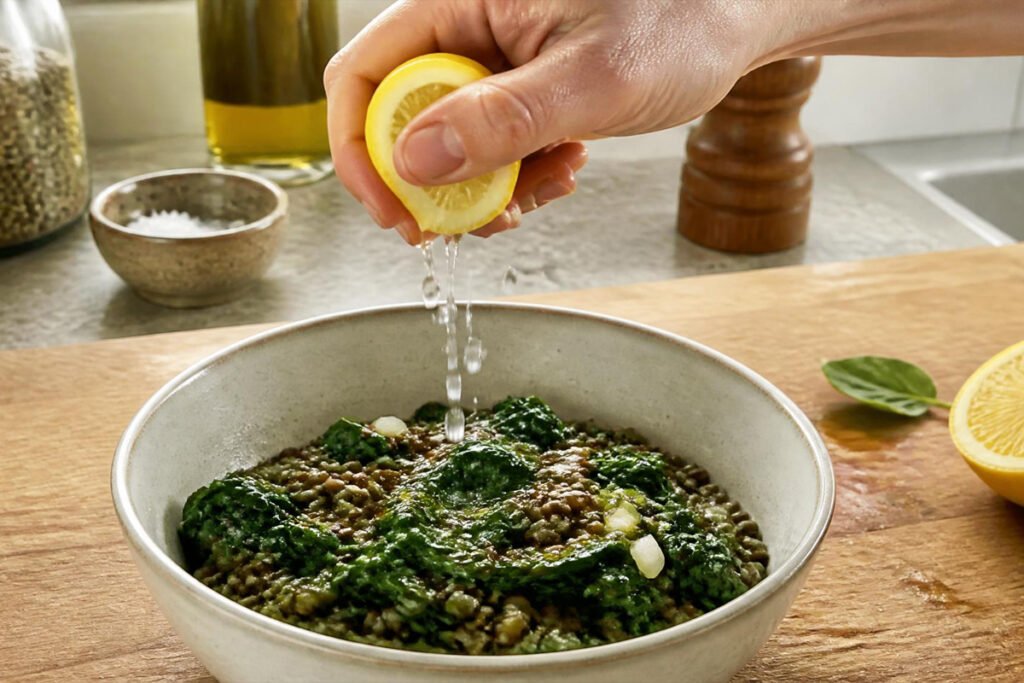
- Versatile, works raw or cooked Best For: A daily vegetable habit that supports iron indirectly through folate too Pros: ✅ Nutrient-dense beyond iron alone ✅ Easy to add to almost any meal Cons: ❌ Iron absorption from spinach specifically is lower than from beans or lentils — don’t rely on it as a primary iron source Our Verdict: A good supporting player, not a standalone anemia fix — cooked spinach with a squeeze of lemon is a smart combination.
9. Pumpkin Seeds
Overview: A convenient, snackable plant iron source. Key Features:
- Moderate non-heme iron content
- Also a source of zinc and magnesium
- Portable, shelf-stable Best For: A daily snack habit Pros: ✅ Easy to portion ✅ No prep required Cons: ❌ A supporting source rather than a primary one — best combined with beans, lentils, or meat Our Verdict: A smart, easy addition to round out daily iron intake.
10. Fortified Cereals and Breads
Overview: Many breakfast cereals and breads are fortified with iron, making them a meaningful, if less “natural,” contributor. Key Features:
- Iron content varies significantly by brand — check the label
- Often fortified alongside B vitamins
- Convenient, no prep Best For: A consistent breakfast contributor, especially alongside other whole-food sources Pros: ✅ Convenient and consistent ✅ Often affordable Cons: ❌ Highly processed versions can be high in added sugar — read labels carefully Our Verdict: Useful as a supplement to whole-food sources, not a replacement for them; pair with our best breakfast foods for blood sugar control guide to keep sugar in check.
11. Eggs
Overview: A moderate iron source, concentrated mostly in the yolk, alongside a wide range of other nutrients. Key Features:
- Moderate iron content, mainly in the yolk
- Complete protein
- Versatile, quick to prepare Best For: A daily breakfast staple Pros: ✅ Convenient ✅ Nutrient-dense beyond iron Cons: ❌ Not a primary iron source on its own — best combined with other foods on this list Our Verdict: A helpful contributor within a varied breakfast, not a standalone fix.
12. Quinoa
Overview: A whole grain with meaningfully more iron than rice or most other common grains. Key Features:
- Higher iron content than most grains
- Complete plant protein
- Naturally gluten-free Best For: A grain base that quietly adds to daily iron intake Pros: ✅ More iron-dense than typical grains ✅ Versatile as a rice substitute Cons: ❌ Still a supporting source, not a primary one Our Verdict: A smart swap for white rice if you’re building iron intake through everyday staples.
13. Dried Fruit (Raisins, Apricots, Prunes)
Overview: A concentrated, portable source of non-heme iron, useful as a snack. Key Features:
- Iron concentrated through the drying process
- Portable, shelf-stable
- Natural sweetness Best For: An on-the-go snack option Pros: ✅ No prep, easy to carry ✅ Naturally sweet Cons: ❌ Concentrated in natural sugar too — portion matters, especially for blood sugar management Our Verdict: A reasonable snack in moderate portions, not an unlimited one.
14. Citrus Fruits and Bell Peppers
Overview: Not iron sources themselves, but essential partners — their vitamin C content significantly boosts non-heme iron absorption when eaten in the same meal. Key Features:
- High in vitamin C
- Naturally low sodium
- Easy to pair with almost any iron-rich meal Best For: Pairing with every plant-based iron source on this list Pros: ✅ Meaningfully improves absorption of plant iron ✅ Refreshing, versatile Cons: ❌ Provides no iron on its own — this is a pairing food, not a source Our Verdict: The single most useful “supporting” addition on this entire list for plant-based eaters.
15. Dark Chocolate (in moderation)
Overview: An unexpected but real iron source, particularly in higher-cocoa-content chocolate. Key Features:
- Moderate iron content in 70%+ cocoa chocolate
- Also contains magnesium and antioxidants
- Small servings go a long way Best For: An occasional treat that still contributes Pros: ✅ Satisfies a sweet craving while still contributing iron Cons: ❌ Easy to overeat — this is a minor contributor, not a primary source Our Verdict: A pleasant bonus, not a strategy on its own.
16. Blackstrap Molasses
Overview: A byproduct of sugar refining that retains a surprising amount of iron and other minerals, traditionally used as a home remedy for low energy. Key Features:
- Notable iron content per tablespoon
- Also contains calcium, magnesium, and potassium
- Distinct, strong flavor Best For: A stirred-in addition to oatmeal, tea, or baked goods Pros: ✅ Concentrated mineral content in a small serving Cons: ❌ Still a sugar product — moderate portions only, and it’s a supporting source, not a primary strategy Our Verdict: A traditional, minor contributor best used sparingly as a flavor addition, not a main iron plan.
Comparison Table {#comparison-table}
| Food | Best For | Iron Type | Absorption Rate | Ease of Daily Use |
|---|---|---|---|---|
| Beef Liver | Significant deficiency | Heme | High | Low |
| Red Meat | Everyday protein | Heme | High | High |
| Shellfish | Red-meat alternative | Heme | High | Medium |
| Lentils | Plant-based staple | Non-heme | Moderate* | High |
| Spinach | Supporting nutrient | Non-heme | Lower* | High |
| Citrus/Peppers | Absorption booster | N/A (pairing food) | N/A | High |
| Fortified Cereal | Consistent breakfast add | Non-heme | Moderate | High |
*Non-heme absorption improves significantly when paired with vitamin C-rich foods.
Best Iron Foods by Situation {#by-situation}
If You’re Vegetarian or Vegan
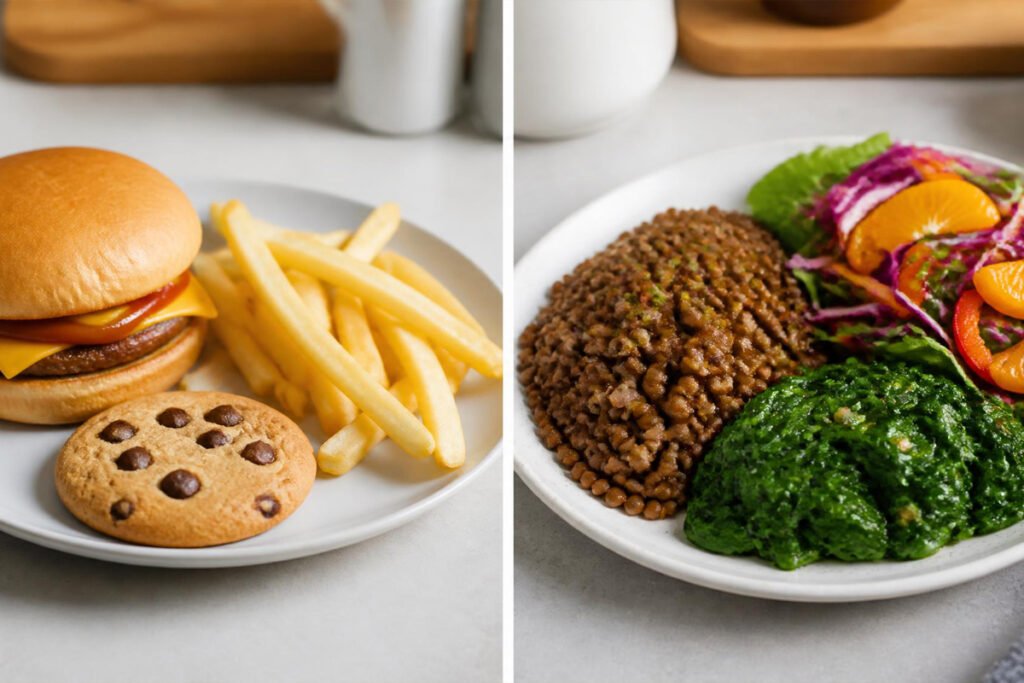
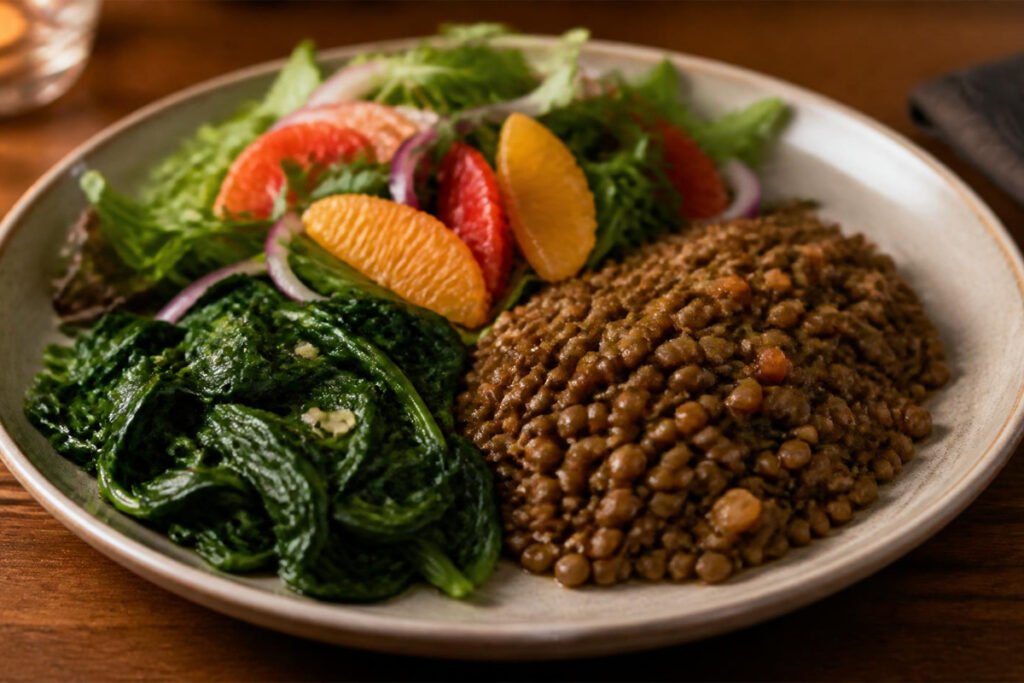
Lean on lentils, beans, tofu, and fortified cereals, and make vitamin C pairing a habit at every meal — squeeze lemon over greens, add bell peppers to a bean bowl, or finish a lentil soup with a splash of citrus. Our Mediterranean diet meal plan for beginners is built around this exact pairing principle.
If You’re Managing Heavy Periods or Postpartum Recovery
These are common, medically recognized causes of iron deficiency. Red meat, liver, and shellfish provide the most absorbable iron when needs are higher, but this is also a situation worth discussing with a doctor, since supplementation is sometimes appropriate alongside diet.
If You’re an Athlete or Very Active
Iron needs can run higher with intense training, partly due to a phenomenon where high-impact exercise can break down red blood cells faster than usual. A steady combination of heme and non-heme sources, spaced away from coffee and tea, supports recovery and energy levels.
How to Maximize Iron Absorption {#how-to-maximize}
Step 1: Pair Plant Iron With Vitamin C
Add citrus, bell peppers, or tomatoes to the same meal as your lentils, beans, or spinach — this single habit can meaningfully increase how much iron your body actually absorbs.
Step 2: Space Coffee and Tea Away From Iron-Rich Meals
Compounds in coffee and tea (tannins) bind to non-heme iron and reduce absorption. Aim to enjoy them an hour or so before or after your iron-focused meal, not during it.
Step 3: Cook in Cast Iron When You Can
Cooking acidic foods (like tomato sauce) in a cast iron pan can meaningfully increase the iron content of the finished dish — a small, low-effort habit worth adopting.
Step 4: Don’t Take Calcium Supplements With Iron-Rich Meals
Calcium can compete with iron for absorption. If you take a calcium supplement, space it a few hours from your main iron-focused meal.
Step 5: Get Tested Before Supplementing Heavily
A ferritin and hemoglobin blood test tells you whether you actually need more iron than food alone provides — supplementing without knowing can mask other issues or, in rare cases, cause iron overload.
Common Mistakes {#common-mistakes}
- Assuming spinach alone will fix iron deficiency. It’s a helpful supporting food, but its iron is less bioavailable than beans, lentils, or meat — don’t rely on it as your primary source.
- Drinking coffee or tea right alongside an iron-rich meal. This is one of the most common, easily fixed habits that quietly undermines otherwise solid food choices.
- Starting an iron supplement without a blood test. Iron overload is a real risk for some people, and supplementing without knowing your actual levels can do more harm than good — always check with a doctor first.
Expert Tips {#expert-tips}
- Build “iron + vitamin C” pairings into your regular rotation, not just when you remember to. Lentil soup with a squeeze of lemon, or a bean bowl with roasted bell peppers, makes the habit automatic rather than effortful.
- Track symptoms, not just food. Fatigue that doesn’t improve with a few weeks of consistent iron-rich eating is worth bringing to a doctor rather than pushing further on diet alone.
- Don’t overlook folate and B12 alongside iron. Both are involved in healthy red blood cell production, and a deficiency in either can produce similar fatigue symptoms even when iron itself is normal.
Final Thoughts {#final-thoughts}
Best overall: Red meat and lentils together, covering both the highest-absorption heme source and the most practical everyday plant source. Best for plant-based eaters: Lentils and beans, paired consistently with vitamin C. Best for beginners: Adding a squeeze of citrus to whatever iron-rich meal you’re already eating — the single easiest, highest-impact habit on this list.
Iron deficiency is common, but it’s also one of the more food-responsive nutritional gaps out there when you combine the right sources with smart pairing. If fatigue and energy are your main concern, our 25 high-protein foods that keep you full longer guide complements this list well for building steady, sustained energy throughout the day.
Frequently Asked Questions {#faq}
How do I know if I actually have low iron, or if I’m just tired? Fatigue has many causes, and the only reliable way to know is a blood test checking ferritin (stored iron) and hemoglobin. Self-diagnosing based on symptoms alone can lead you to address the wrong issue.
What’s the difference between heme and non-heme iron? Heme iron comes from animal foods (meat, poultry, seafood) and is absorbed at a much higher rate than non-heme iron, which comes from plant foods like beans and spinach. Non-heme iron absorption improves significantly when paired with vitamin C.
Should I take an iron supplement instead of focusing on food? Food is generally the safer first approach, since it’s harder to overdo. Supplements are appropriate for confirmed, more significant deficiency, but should be guided by a blood test and a doctor’s recommendation, since iron overload is a real risk with unsupervised high-dose supplementation.
Why does coffee affect iron absorption? Compounds called tannins in coffee and tea bind to non-heme iron in your digestive tract and reduce how much your body can absorb. Spacing your coffee an hour away from iron-rich meals largely avoids this issue.
Can I get enough iron on a vegan diet? Yes, with intentional planning. Lentils, beans, tofu, and fortified foods, consistently paired with vitamin C-rich foods, can meet iron needs for most people — though vegans with confirmed deficiency may need higher plant-iron intake or supplementation under medical guidance.
Is spinach really a good source of iron? It contains iron, but in a form that’s less bioavailable than many other sources, and its iron content is often overstated in popular culture. It’s a solid supporting food, not a primary anemia solution on its own.
How long does it take to correct iron deficiency through diet? Mild cases may improve within a few weeks of consistent, absorption-optimized eating, but more significant deficiency often takes months and may require supplementation. A doctor can help set realistic expectations based on your specific levels.
Can too much iron be harmful? Yes. Iron overload, whether from excessive supplementation or an underlying condition like hemochromatosis, can damage organs over time. This is exactly why testing before supplementing matters, rather than assuming “more is better.”
Does cooking in a cast iron skillet really add iron to food? Yes, particularly with acidic foods like tomato sauce cooked for a longer period — studies have shown a measurable iron increase in the finished dish. It’s a small, free habit worth adopting if you already have a cast iron pan.
What foods should I avoid eating right alongside iron-rich meals? Coffee, tea, and calcium-rich foods or supplements are the main ones to space out, since they can each reduce non-heme iron absorption when eaten at the same time.
Author: Howdy, Adam Last Updated: August 2026
Pingback: Best Natural Energy Foods Without Caffeine: Proven Ways to Beat Fatigue | nutrieatss
Pingback: 16 Best Foods for Hair Growth and Thickness Naturally | nutrieatss