
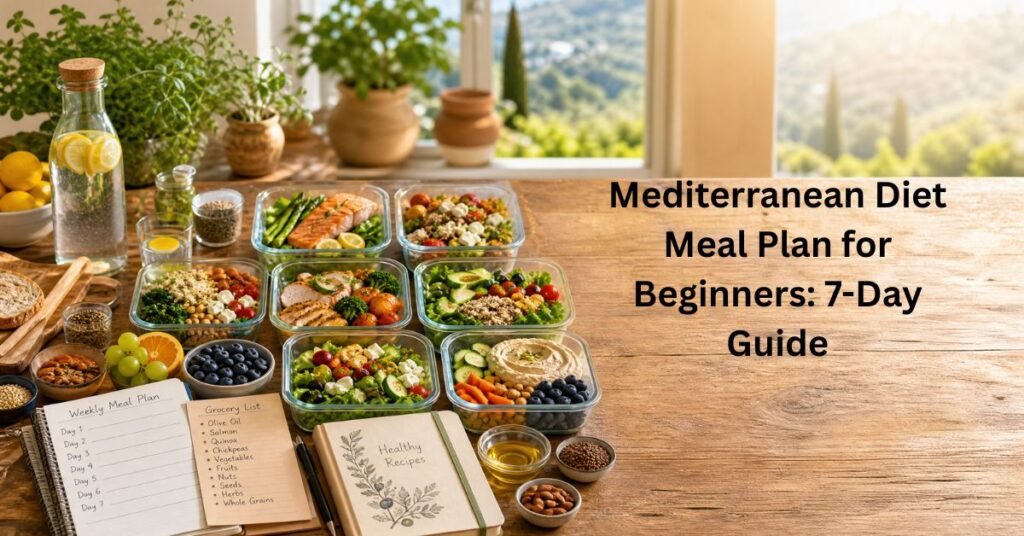
Start the Mediterranean diet with confidence. This beginner meal plan includes a 7-day guide, grocery list, easy recipes, and expert nutrition tips.
If you’ve heard nutrition experts rave about the Mediterranean diet but weren’t sure where to start, you’re in the right place. This Mediterranean diet meal plan for beginners is designed to take the guesswork out of eating this way — no complicated rules, no expensive ingredients, just real food that happens to be one of the most researched and respected eating patterns in the world.
The Mediterranean diet isn’t really a “diet” in the restrictive sense. It’s a way of eating inspired by the traditional food habits of countries like Greece, Italy, and Spain — built around vegetables, fruits, whole grains, healthy fats, and fish, with meat and sweets enjoyed occasionally rather than daily. Decades of research, including studies referenced by the Harvard T.H. Chan School of Public Health and the American Heart Association, link it to a lower risk of heart disease, better blood sugar control, and a longer, healthier life.
In this guide, you’ll get a full 7-day meal plan, a printable grocery list, eight easy beginner recipes, meal prep tips, common mistakes to avoid, and answers to the questions people ask most when starting out. Let’s dig in.
What Is the Mediterranean Diet?
The Mediterranean diet is based on the traditional eating patterns of countries bordering the Mediterranean Sea, particularly Greece, Southern Italy, and Spain, dating back to the mid-20th century. Researchers first took notice of these eating habits in the 1950s and 60s, when studies found that people in these regions had notably lower rates of heart disease compared to other Western countries, despite diets relatively high in fat — mostly from olive oil.
Core principles include:
- Vegetables, fruits, whole grains, legumes, nuts, and seeds as the foundation of most meals
- Extra virgin olive oil as the primary source of added fat
- Fish and seafood at least a couple of times per week
- Moderate amounts of poultry, eggs, cheese, and yogurt
- Red meat and sweets enjoyed only occasionally
- Herbs and spices used generously in place of excess salt
- Meals often shared with others, with an emphasis on enjoying food
The Mediterranean diet is consistently ranked as one of the healthiest eating patterns by U.S. News & World Report and is endorsed by organizations including the American Heart Association and Mayo Clinic, largely because of the sheer volume of research behind it — including large clinical trials linking it to reduced cardiovascular risk
Health Benefits of the Mediterranean Diet
This eating pattern isn’t just popular — it’s backed by a substantial body of research. Documented benefits include:
- Better heart health: Multiple studies have linked the Mediterranean diet to reduced risk of heart attack, stroke, and cardiovascular death, largely credited to its healthy fat profile and high fiber content.
- Improved blood sugar control: The diet’s emphasis on fiber, healthy fats, and whole foods supports more stable blood sugar and may reduce insulin resistance.
- Reduced inflammation: Olive oil, fatty fish, and colorful produce are rich in anti-inflammatory compounds.
- Weight management: Because it emphasizes whole, fiber-rich foods, many people find it easier to maintain a healthy weight without strict calorie counting.
- Brain health and memory: Research has associated the Mediterranean diet with a lower risk of cognitive decline and Alzheimer’s disease.
- Lower risk of type 2 diabetes: Large cohort studies have found reduced diabetes risk among people who closely follow Mediterranean eating patterns.
- Healthy aging: The diet has been associated with a lower risk of frailty and chronic disease in older adults.
- Gut microbiome support: High fiber and plant diversity feed beneficial gut bacteria.
- Improved cholesterol levels: Replacing saturated fat with olive oil and nuts has been shown to improve LDL and HDL cholesterol profiles.
- Increased longevity: Long-term studies, including work referenced by the NIH, have linked the diet to a lower risk of premature death from multiple causes.
Mediterranean Diet Food List
Eat More
- Extra virgin olive oil
- Fruits
- Vegetables
- Whole grains
- Beans
- Lentils
- Chickpeas
- Fish
- Seafood
- Nuts
- Seeds
- Herbs
- Greek yogurt
- Eggs
- Avocados
Eat in Moderation
- Chicken
- Turkey
- Cheese
- Milk
- Coffee
- Red wine (optional, and not recommended for everyone — see note below)
Limit
- Sugary drinks
- Refined carbohydrates
- White bread
- Processed meats
- Fast food
- Deep-fried foods
- Ultra-processed snacks
- Added sugars
A note on wine: while traditional Mediterranean culture includes moderate wine consumption, current health guidance from the CDC and NIH emphasizes that no amount of alcohol is entirely risk-free. If you don’t already drink, this isn’t a reason to start. If you do drink, moderation (up to one drink per day for women, two for men) is the traditional guidance, but talk with your doctor about what’s right for you.
Mediterranean Diet Grocery List
Produce: Tomatoes, cucumbers, bell peppers, zucchini, spinach, kale, onions, garlic, lemons, oranges, berries, apples, grapes, eggplant
Proteins: Salmon, sardines, shrimp, chicken breast, eggs, chickpeas, lentils, black beans
Dairy: Greek yogurt (plain), feta cheese, parmesan, low-fat milk
Whole Grains: Whole wheat pita, quinoa, brown rice, whole grain pasta, bulgur, oats
Pantry Staples: Extra virgin olive oil, canned tomatoes, canned chickpeas, canned tuna, whole grain crackers, tahini
Healthy Fats: Almonds, walnuts, pistachios, avocados, olives, chia seeds
Herbs & Spices: Oregano, basil, rosemary, thyme, cumin, paprika, black pepper, cinnamon
Frozen: Frozen berries, frozen spinach, frozen shrimp, frozen whole grain flatbread
7-Day Mediterranean Diet Meal Plan for Beginners
Note: Calorie and macro estimates are approximate and will vary based on exact portions and brands. Adjust portions to fit your personal needs.
Day 1
- Breakfast: Greek Yogurt Berry Bowl (see recipe below) — ~320 cal, 20g protein, 6g fiber
- Morning Snack: A small handful of almonds — ~160 cal
- Lunch: Mediterranean Chickpea Salad (see recipe below) — ~380 cal, 14g protein, 11g fiber
- Afternoon Snack: An orange — ~70 cal
- Dinner: Grilled Salmon with Vegetables (see recipe below) — ~450 cal, 35g protein, 6g fiber
- Optional Dessert: A few squares of dark chocolate — ~100 cal
Why it works: This day balances protein and fiber at every meal, supporting stable energy and steady blood sugar throughout the day.
Day 2
- Breakfast: Overnight Oats (see recipe below) — ~340 cal, 12g protein, 8g fiber
- Morning Snack: Carrot sticks with hummus — ~150 cal
- Lunch: Whole grain pita stuffed with tuna, cucumber, and olive oil — ~400 cal, 25g protein, 5g fiber
- Afternoon Snack: A small apple — ~80 cal
- Dinner: Lentil Soup (see recipe below) with a side salad — ~420 cal, 18g protein, 14g fiber
- Optional Dessert: Fresh grapes — ~60 cal
Why it works: Lentils and whole grains provide plenty of fiber, which supports digestion and helps you feel full longer.
Day 3
- Breakfast: Mediterranean Egg Scramble (see recipe below) — ~310 cal, 19g protein, 4g fiber
- Morning Snack: Plain Greek yogurt with a drizzle of honey — ~150 cal
- Lunch: Quinoa Bowl (see recipe below) — ~420 cal, 15g protein, 9g fiber
- Afternoon Snack: A handful of walnuts — ~180 cal
- Dinner: Grilled chicken breast with roasted vegetables and olive oil — ~440 cal, 38g protein, 5g fiber
- Optional Dessert: Sliced strawberries with a spoon of ricotta — ~90 cal
Why it works: Eggs and chicken provide high-quality protein, while quinoa and roasted vegetables round out fiber and micronutrients.
Day 4
- Breakfast: Whole grain toast with mashed avocado and a boiled egg — ~330 cal, 14g protein, 7g fiber
- Morning Snack: A pear — ~100 cal
- Lunch: Hummus Wrap (see recipe below) — ~390 cal, 13g protein, 8g fiber
- Afternoon Snack: A handful of olives and a small piece of feta — ~140 cal
- Dinner: Baked sardines or salmon with a big Greek salad — ~430 cal, 32g protein, 6g fiber
- Optional Dessert: A small square of dark chocolate — ~100 cal
Why it works: Healthy fats from avocado, olives, and fish support heart health and help you absorb fat-soluble vitamins from vegetables.
Day 5
- Breakfast: Greek Yogurt Berry Bowl — ~320 cal, 20g protein, 6g fiber
- Morning Snack: A small handful of pistachios — ~160 cal
- Lunch: Leftover Lentil Soup — ~380 cal, 17g protein, 13g fiber
- Afternoon Snack: Cherry tomatoes with a drizzle of olive oil and salt — ~90 cal
- Dinner: Whole grain pasta with olive oil, garlic, cherry tomatoes, and shrimp — ~460 cal, 28g protein, 6g fiber
- Optional Dessert: A small bowl of fresh berries — ~70 cal
Why it works: Repeating simple, batch-cooked meals like the lentil soup keeps things practical without sacrificing nutrition.
Day 6
- Breakfast: Overnight Oats — ~340 cal, 12g protein, 8g fiber
- Morning Snack: A boiled egg — ~70 cal
- Lunch: Mediterranean Chickpea Salad — ~380 cal, 14g protein, 11g fiber
- Afternoon Snack: A small handful of almonds — ~160 cal
- Dinner: Grilled chicken souvlaki-style skewers with vegetables and a side of brown rice — ~470 cal, 36g protein, 6g fiber
- Optional Dessert: Sliced orange with cinnamon — ~70 cal
Why it works: This day is a great example of how simple grilled proteins and vegetables can form the backbone of most Mediterranean dinners.
Day 7
- Breakfast: Mediterranean Egg Scramble — ~310 cal, 19g protein, 4g fiber
- Morning Snack: Plain Greek yogurt with berries — ~150 cal
- Lunch: Quinoa Bowl — ~420 cal, 15g protein, 9g fiber
- Afternoon Snack: A handful of walnuts — ~180 cal
- Dinner: Baked salmon with roasted vegetables and a side of whole grain couscous — ~460 cal, 34g protein, 7g fiber
- Optional Dessert: A few squares of dark chocolate — ~100 cal
Why it works: Closing out the week with familiar, repeatable meals makes it easier to build these habits into a sustainable routine
7-Day Meal Plan Summary Table
| Day | Breakfast | Lunch | Dinner |
| 1 | Greek Yogurt Berry Bowl | Mediterranean Chickpea Salad | Grilled Salmon with Vegetables |
| 2 | Overnight Oats | Tuna Pita Pocket | Lentil Soup |
| 3 | Mediterranean Egg Scramble | Quinoa Bowl | Grilled Chicken & Roasted Vegetables |
| 4 | Avocado Toast with Egg | Hummus Wrap | Baked Sardines with Greek Salad |
| 5 | Greek Yogurt Berry Bowl | Lentil Soup (leftovers) | Shrimp Pasta with Olive Oil & Tomatoes |
| 6 | Overnight Oats | Mediterranean Chickpea Salad | Chicken Souvlaki Skewers |
| 7 | Mediterranean Egg Scramble | Quinoa Bowl | Baked Salmon with Couscous |
Easy Mediterranean Recipes
1. Greek Yogurt Berry Bowl
Ingredients: 1 cup plain Greek yogurt, ½ cup mixed berries, 1 tbsp honey, 1 tbsp chopped walnuts, a pinch of cinnamon Instructions: Add yogurt to a bowl. Top with berries, walnuts, honey, and cinnamon. Nutrition estimate: ~320 calories, 20g protein, 6g fiber Cooking tip: Use plain, unsweetened yogurt and control sweetness yourself to avoid added sugar.
2. Mediterranean Chickpea Salad
Ingredients: 1 can chickpeas (drained), 1 cucumber (diced), 1 cup cherry tomatoes (halved), ¼ cup red onion (diced), ¼ cup feta cheese, 2 tbsp olive oil, 1 tbsp lemon juice, oregano, salt, and pepper Instructions: Combine all ingredients in a bowl. Toss with olive oil, lemon juice, and seasonings. Nutrition estimate: ~380 calories, 14g protein, 11g fiber Cooking tip: Make a double batch — it keeps well in the fridge for up to 4 days.
3. Grilled Salmon with Vegetables
Ingredients: 1 salmon fillet (5–6 oz), 1 tbsp olive oil, 1 zucchini (sliced), 1 bell pepper (sliced), lemon, garlic, salt, and pepper Instructions: Toss vegetables in olive oil and seasonings. Grill or roast vegetables and salmon at 400°F for about 15 minutes, until salmon flakes easily. Nutrition estimate: ~450 calories, 35g protein, 6g fiber Cooking tip: Don’t overcook the salmon — remove it from heat when it’s just opaque in the center.
4. Lentil Soup
Ingredients: 1 cup dried lentils, 1 onion (diced), 2 carrots (diced), 2 celery stalks (diced), 2 garlic cloves, 4 cups vegetable broth, 1 can diced tomatoes, 1 tsp cumin, olive oil, salt, and pepper Instructions: Sauté onion, carrot, celery, and garlic in olive oil. Add lentils, broth, tomatoes, and cumin. Simmer for 25–30 minutes until lentils are tender. Nutrition estimate: ~320 calories, 16g protein, 13g fiber Cooking tip: This freezes well — make a double batch for easy meal prep.
5. Overnight Oats
Ingredients: ½ cup rolled oats, ¾ cup milk (or plant-based milk), 1 tbsp chia seeds, ½ cup berries, 1 tsp honey Instructions: Combine oats, milk, and chia seeds in a jar. Refrigerate overnight. Top with berries and honey before eating. Nutrition estimate: ~340 calories, 12g protein, 8g fiber Cooking tip: Prep 4–5 jars at once for grab-and-go breakfasts all week.
6. Quinoa Bowl
Ingredients: 1 cup cooked quinoa, ½ cup chickpeas, ½ cup cherry tomatoes, ¼ cup cucumber, 2 tbsp olive oil, 1 tbsp lemon juice, fresh parsley, salt, and pepper Instructions: Combine cooked quinoa with chickpeas and vegetables. Dress with olive oil, lemon juice, and seasonings. Nutrition estimate: ~420 calories, 15g protein, 9g fiber Cooking tip: Cook a large batch of quinoa at the start of the week to save time.
7. Mediterranean Egg Scramble
Ingredients: 2 eggs, ¼ cup spinach, ¼ cup diced tomato, 2 tbsp feta cheese, 1 tsp olive oil, oregano, salt, and pepper Instructions: Heat olive oil in a pan. Sauté spinach and tomato briefly. Add eggs and scramble until cooked. Top with feta and oregano. Nutrition estimate: ~310 calories, 19g protein, 4g fiber Cooking tip: Add any extra vegetables you have on hand — this recipe is very forgiving.
8. Hummus Wrap
Ingredients: 1 whole wheat wrap, 3 tbsp hummus, ½ cup mixed greens, ¼ cup shredded carrot, ¼ cup cucumber, a few olives Instructions: Spread hummus on the wrap. Layer vegetables and olives. Roll tightly and slice in half. Nutrition estimate: ~390 calories, 13g protein, 8g fiber Cooking tip: Use a whole grain wrap for extra fiber, and pack tightly to prevent it from falling apart.
Mediterranean Diet Meal Prep Tips
- Batch cook staples: Cook a large pot of quinoa, brown rice, or lentils at the start of the week to use across multiple meals.
- Freezer-friendly meals: Soups like lentil soup freeze well for up to 3 months — portion into individual containers.
- Weekly prep schedule: Set aside 1–2 hours on a weekend day to chop vegetables, cook grains, and portion snacks.
- Storage tips: Store dressed salads separately from greens to prevent sogginess; keep cut vegetables in airtight containers with a paper towel to absorb excess moisture.
- Budget shopping tips: Buy canned beans and chickpeas instead of dried when short on time, choose frozen vegetables and fish (just as nutritious as fresh), and buy olive oil in larger bottles to save per-ounce.
Common Beginner Mistakes
- Eating too much pasta: Pasta is part of the Mediterranean diet, but traditional portions are smaller than typical American servings, and it’s usually paired with vegetables and olive oil rather than being the main event.
- Ignoring portion sizes: Even healthy foods like nuts and olive oil are calorie-dense — portion awareness still matters.
- Buying low-quality olive oil: Look for “extra virgin” on the label and a harvest date when possible; lower-quality oils lose much of the beneficial polyphenol content.
- Forgetting protein: Some beginners load up on vegetables and grains but forget adequate protein, which is important for fullness and muscle health.
- Avoiding healthy fats: Olive oil, nuts, and avocado are core to this diet — don’t shy away from them out of old low-fat diet habits.
Eating too many processed “healthy” snacks: Products labeled “Mediterranean-inspired” can still be ultra-processed. Stick to whole foods as your foundation
Can the Mediterranean Diet Help With…?
- Weight loss: Yes, for many people — largely due to its emphasis on fiber and whole foods, which support fullness without requiring strict calorie counting.
- High blood pressure: Research supports the Mediterranean diet, especially combined with reduced sodium, for lowering blood pressure.
- High cholesterol: Replacing saturated fats with olive oil and nuts has been shown to improve cholesterol profiles.
- Insulin resistance: The diet’s fiber and healthy fat content supports better blood sugar regulation.
- Fatty liver: Some studies suggest the Mediterranean diet may help reduce liver fat, though more research is ongoing.
- Prediabetes: Strong evidence supports this eating pattern for reducing progression from prediabetes to type 2 diabetes.
- Type 2 diabetes: Multiple studies support improved blood sugar management with this diet, though it should complement, not replace, medical treatment.
- Heart disease: This is the most researched benefit of the Mediterranean diet, with strong evidence for reduced cardiovascular risk.
- Arthritis: The anti-inflammatory nature of the diet may help ease joint discomfort for some people, though results vary.
- Brain health: Long-term studies have linked the Mediterranean diet to a lower risk of cognitive decline.
Diet is a powerful tool, but it’s not a substitute for medical treatment. If you’re managing a chronic condition, talk with your doctor before making significant dietary changes
Frequently Asked Questions
Is the Mediterranean diet good for beginners? Yes. It’s one of the most beginner-friendly eating patterns because it isn’t about strict rules or eliminating entire food groups — it’s about shifting the balance toward whole foods.
Can I lose weight on the Mediterranean diet? Many people do lose weight on this diet, largely because it’s naturally high in fiber and protein, which support fullness. That said, portion size and overall calorie intake still matter.
Is rice allowed? Yes, especially whole grain options like brown rice, in moderate portions alongside vegetables and protein.
Are potatoes allowed? Yes, potatoes can fit into a Mediterranean diet in moderation, ideally prepared simply (roasted or boiled) rather than fried.
Can I eat eggs every day? For most people, yes — eggs are a traditional part of Mediterranean eating and a good source of protein. If you have specific cholesterol concerns, check with your doctor.
Is coffee allowed? Yes, coffee in moderation is commonly enjoyed in Mediterranean countries and is generally considered fine as part of this diet.
Is peanut butter Mediterranean? Peanut butter isn’t traditionally Mediterranean (peanuts aren’t native to the region), but it can still fit into a healthy diet in moderation. Tahini and almond butter are more traditional alternatives.
What bread should I eat? Whole grain or sourdough bread is preferred over white bread, since it contains more fiber and has less of an impact on blood sugar.
How much olive oil should I use? Most guidance suggests around 2–4 tablespoons per day, used for cooking, dressings, and drizzling — though total calorie needs vary by person.
Can vegetarians follow the Mediterranean diet? Absolutely. The diet is naturally plant-forward, with legumes, eggs, and dairy providing protein in place of meat and fish.
Is the Mediterranean diet expensive? It doesn’t have to be. Beans, lentils, canned fish, frozen vegetables, and seasonal produce are all affordable staples that fit this diet well.
How long before I see results? Some people notice improved energy and digestion within a couple of weeks, while measurable changes in cholesterol, blood sugar, or weight often take 8–12 weeks of consistent habits.
Conclusion
Starting the Mediterranean diet doesn’t require a complete overhaul of how you eat — it’s about gradually shifting your plate toward more vegetables, whole grains, healthy fats, and fish, while making room for the foods you love in moderation. This 7-day Mediterranean diet meal plan for beginners is meant to be a starting point, not a strict rulebook. Repeat the meals you enjoy, swap in your own favorites, and build from there.
Pick one small change to start with this week — maybe it’s cooking with olive oil instead of butter, or adding a serving of beans to your lunch. Small, sustainable steps are what make this way of eating stick for the long run.
Pingback: 15 Best Foods for Better Sleep: Proven Picks | nutrieatss