
Racing thoughts before bed. A tight chest before a big meeting. That restless, wired-but-tired feeling that shows up for no obvious reason. If you’ve been managing anxiety or chronic stress, you’ve probably already tried breathing exercises, maybe therapy, possibly medication — and you may be wondering whether what’s on your plate is doing anything at all.
It turns out it’s doing more than most people realize. The gut and brain are in constant communication through what researchers call the gut-brain axis, and several nutrients — magnesium, omega-3 fatty acids, B vitamins, and specific amino acids — play direct roles in how your body produces and regulates the neurotransmitters and stress hormones behind anxiety symptoms. Food isn’t a replacement for treatment, but it’s a legitimate, evidence-backed piece of the picture. This guide breaks down the best foods for anxiety and stress relief, the mechanisms behind them, and what tends to make anxiety worse. If sleep is also part of your stress cycle, our best magnesium foods for better sleep guide overlaps closely with several of the picks below.
Quick Answer
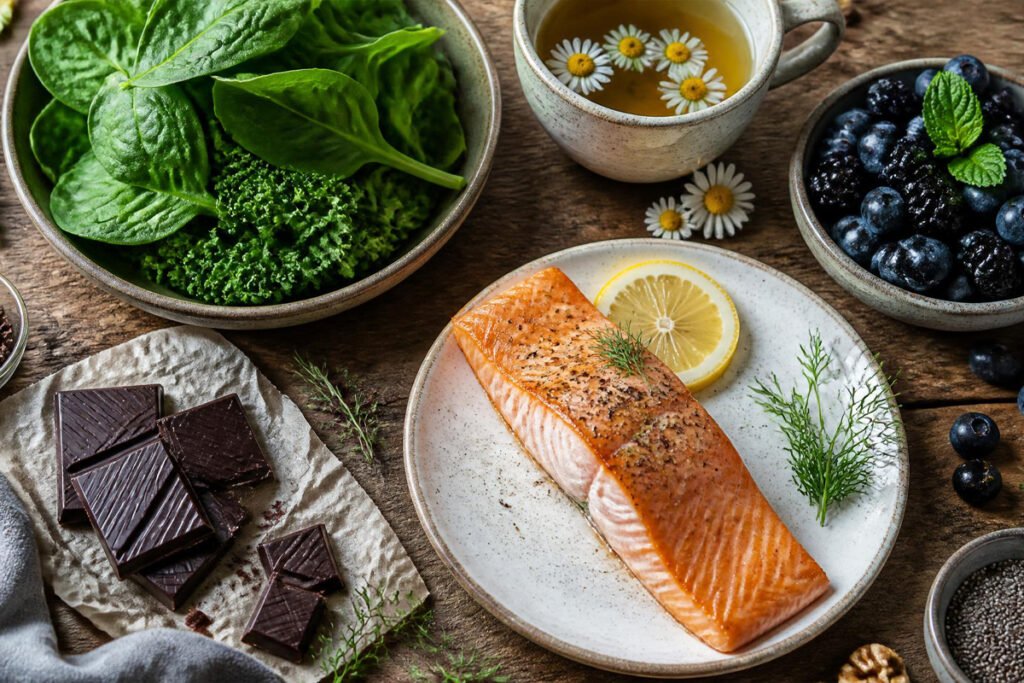
The best foods for anxiety and stress relief are the ones rich in magnesium, omega-3 fatty acids, and tryptophan — the building block for serotonin. Fatty fish, leafy greens, pumpkin seeds, eggs, and fermented foods like yogurt cover most of that ground. Dark chocolate and chamomile tea both have modest, evidence-backed calming effects in their own right. On the flip side, excess caffeine, alcohol, and added sugar are consistently linked to worse anxiety symptoms, which means managing what you limit matters nearly as much as what you add.
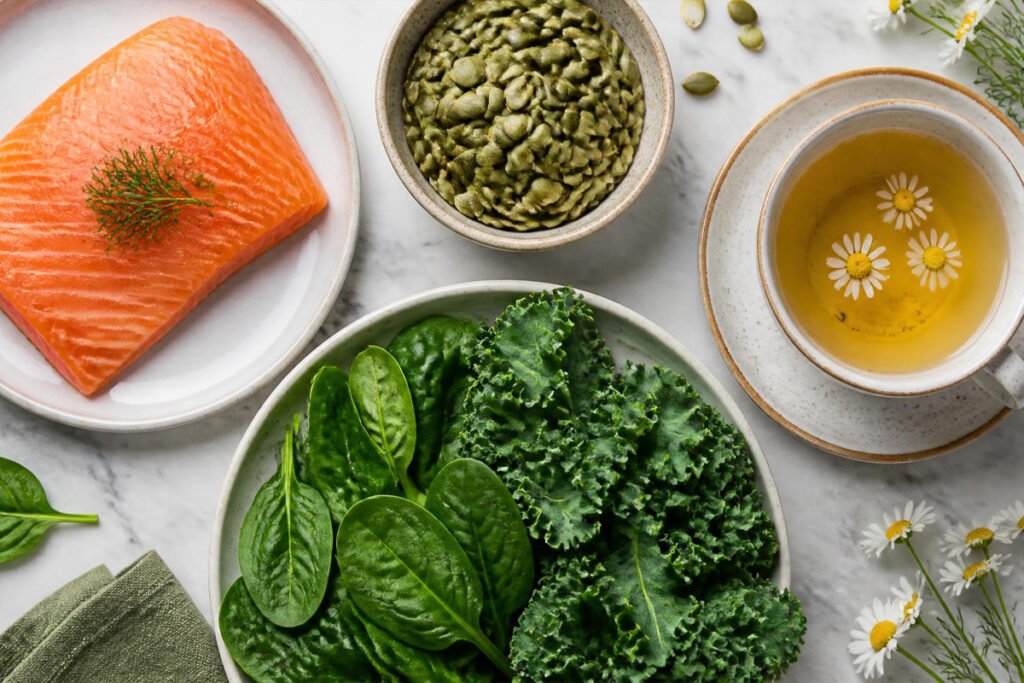
Table of Contents
- How Food Affects Anxiety and Stress
- How to Choose the Right Foods for You
- 15 Best Foods for Anxiety and Stress Relief
- Comparison Table
- Best Foods by Situation
- Foods and Habits That Worsen Anxiety
- Common Mistakes
- Expert Tips
- Final Thoughts
- FAQ
How Food Affects Anxiety and Stress {#how-food-affects}
The gut-brain axis is the two-way communication network linking your digestive system and your central nervous system, and it’s a bigger deal in mood regulation than most people expect — roughly 90-95% of the body’s serotonin, a neurotransmitter closely tied to feelings of calm and well-being, is actually produced in the gut, not the brain. That’s part of why gut health and mental health research increasingly overlap, and why our 30-Day Gut Health Reset Plan is a reasonable companion to this list.
Several specific nutrients play direct, mechanistic roles. Magnesium helps regulate the release of cortisol, the body’s primary stress hormone, and low magnesium levels are consistently linked to higher anxiety in research. Omega-3 fatty acids, especially DHA and EPA, support brain cell membrane health and have anti-inflammatory effects that may reduce the inflammation associated with anxiety and depression. Tryptophan, an amino acid found in protein-rich foods, is the direct precursor your body uses to synthesize serotonin — though it needs to be eaten alongside carbohydrates to cross into the brain effectively, which is part of why comfort-food cravings during stress aren’t entirely irrational.
How to Choose the Right Foods for You {#how-to-choose}
- Is your anxiety mostly situational (a big event, a stressful week) or ongoing? Ongoing anxiety benefits more from consistent, daily nutrient patterns; situational stress may respond to specific, in-the-moment choices like chamomile tea or a magnesium-rich snack.
- Do you already know your caffeine sensitivity? Caffeine affects anxiety differently person to person — some people tolerate it fine, others notice a clear worsening of symptoms. This matters more than any specific “add” food on this list.
- Are you on medication for anxiety or depression? Some supplements and even certain foods (like large amounts of foods high in tyramine, relevant to a specific class of antidepressants called MAOIs) can interact with medication — check with your doctor or pharmacist if you’re on treatment before making major dietary changes.
15 Best Foods for Anxiety and Stress Relief {#best-foods}
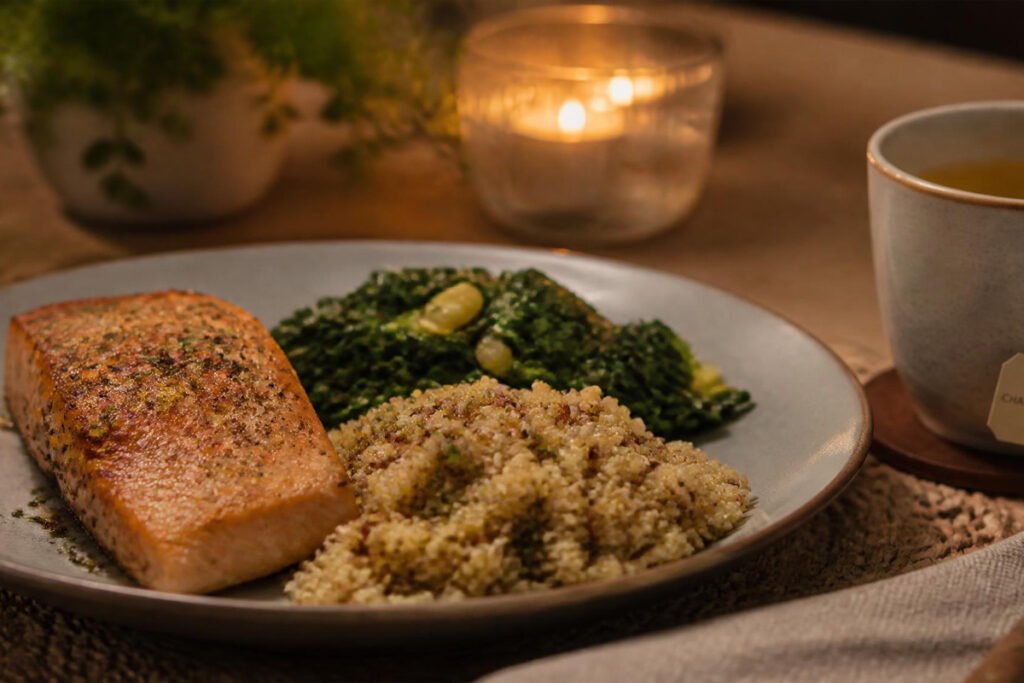
1. Fatty Fish (Salmon, Mackerel, Sardines)
Overview: Fatty fish are the richest common food source of omega-3 fatty acids, which support brain cell health and have anti-inflammatory effects linked to lower anxiety in research. Key Features:
- Rich in EPA and DHA omega-3s
- Good source of vitamin D, also linked to mood regulation
- Naturally low in sodium Best For: A twice-weekly protein swap Pros: ✅ Strong research support ✅ Dual benefit for heart and brain health Cons: ❌ Cost can add up ❌ Canned and smoked versions can be high in sodium Our Verdict: Two servings a week is a well-supported habit; our omega-3 supplement guide covers options if fish isn’t practical for you regularly.
2. Leafy Greens (Spinach, Swiss Chard, Kale)
Overview: Leafy greens are one of the most concentrated food sources of magnesium, the mineral most directly tied to cortisol regulation. Key Features:
- High in magnesium
- Low calorie, nutrient-dense
- Versatile — raw, sautéed, or blended Best For: A daily vegetable habit Pros: ✅ Directly supports cortisol regulation ✅ Cheap and widely available Cons: ❌ Easy to under-eat if you don’t plan for it Our Verdict: A cup of cooked greens most days is one of the simplest, most evidence-backed habits on this list.
3. Pumpkin Seeds
Overview: A convenient source of both magnesium and potassium, two minerals linked to lower cortisol and better stress resilience. Key Features:
- Good source of magnesium and potassium
- Portable, shelf-stable snack
- Unsalted versions keep sodium low Best For: An afternoon snack that doubles as stress support Pros: ✅ Easy to portion ✅ No prep required Cons: ❌ Roasted/salted versions can undercut the benefit — choose unsalted Our Verdict: A small handful (about an ounce) makes a genuinely useful stress-supportive snack.
4. Eggs
Overview: Eggs provide choline, a nutrient involved in producing calming neurotransmitters, along with tryptophan and vitamin D. Key Features:
- Rich in choline, concentrated in the yolk
- Contains tryptophan, the precursor to serotonin
- Good source of vitamin D Best For: A daily breakfast staple Pros: ✅ Multiple mood-relevant nutrients in one food ✅ Affordable and versatile Cons: ❌ Choline is concentrated in the yolk — egg-white-only versions miss the benefit Our Verdict: One of the easiest daily habits on this list; see our best breakfast foods for blood sugar control for ways to build a fuller morning around it.
5. Greek Yogurt and Fermented Foods
Overview: Fermented foods deliver live cultures that support the gut microbiome, which plays a direct role in serotonin production and gut-brain signaling. Key Features:
- Contains live probiotic cultures
- Good source of protein and calcium
- Versatile — plain yogurt, kefir, or fermented vegetables all count Best For: A daily gut-brain-axis habit Pros: ✅ Supports the system responsible for most of the body’s serotonin production ✅ Convenient Cons: ❌ Flavored yogurts often carry significant added sugar, which can work against the goal Our Verdict: Choose plain and add your own fruit; our probiotic supplement guide covers options if you want a more targeted approach.
6. Dark Chocolate (70%+ cocoa)
Overview: Cocoa flavanols and a modest magnesium content give dark chocolate genuine, if modest, evidence behind its reputation as a mood food. Key Features:
- Contains flavanols studied for stress-related benefits
- Provides some magnesium
- Small servings go a long way Best For: An intentional, moderate treat during a stressful stretch Pros: ✅ Satisfies a craving while contributing something useful ✅ Widely available Cons: ❌ Easy to overeat ❌ Milk chocolate and candy bars don’t count Our Verdict: A square or two a few times a week is a reasonable, evidence-supported indulgence.
7. Chamomile Tea
Overview: One of the most studied herbal teas for anxiety, with modest but consistent evidence supporting a calming effect. Key Features:
- Contains apigenin, a compound studied for anxiolytic effects
- Caffeine-free, unlike most teas
- Easy evening ritual Best For: An evening wind-down routine Pros: ✅ Caffeine-free ✅ Doubles as a calming bedtime habit Cons: ❌ Effects are modest, not a substitute for treatment ❌ Can interact with certain blood thinners — check with your doctor if you’re on medication Our Verdict: A low-risk, pleasant addition to an evening routine, especially paired with reduced screen time.
8. Berries (Blueberries, Strawberries)
Overview: Rich in antioxidants that help combat the oxidative stress associated with chronic anxiety and inflammation. Key Features:
- High in antioxidants and fiber
- Lower in sugar than many fruits
- Freeze well for year-round use Best For: A daily fruit habit Pros: ✅ Supports the inflammation side of the anxiety-diet connection ✅ Freezer-friendly and affordable frozen Cons: ❌ Fresh berries can be pricier out of season Our Verdict: A half-cup to a cup daily is an easy, low-effort addition.
9. Turkey and Poultry
Overview: A lean protein rich in tryptophan, the amino acid your body converts into serotonin. Key Features:
- Good tryptophan content
- Lean, versatile protein
- Widely available Best For: A dinner protein choice, ideally paired with a complex carbohydrate Pros: ✅ Direct serotonin-precursor content ✅ Affordable and accessible Cons: ❌ Tryptophan needs to be paired with carbs to cross into the brain effectively — protein alone is less effective Our Verdict: Pair with a whole-grain side rather than eating it in isolation for the intended effect.
10. Oats and Whole Grains
Overview: Complex carbohydrates help tryptophan cross into the brain and support steady blood sugar, which itself affects mood stability. Key Features:
- High in complex carbohydrates and fiber
- Naturally low sodium
- Cheap, shelf-stable staple Best For: A daily breakfast or side dish habit Pros: ✅ Supports tryptophan uptake ✅ Helps prevent blood-sugar swings linked to mood dips Cons: ❌ Flavored/instant packets are often high in added sugar Our Verdict: Stick with plain oats and add your own toppings, similar to the approach in our best breakfast foods for blood sugar control guide.
11. Avocados
Overview: A source of B vitamins and healthy monounsaturated fats, both linked in research to lower anxiety scores. Key Features:
- Rich in B vitamins and healthy fats
- Naturally low sodium
- Filling due to fat content Best For: Replacing less nutrient-dense fats Pros: ✅ B vitamins support stress-hormone regulation ✅ Satisfying Cons: ❌ Calorie-dense, so portion matters if you’re also managing weight Our Verdict: Half an avocado a few times a week fits naturally into a stress-supportive diet.
12. Walnuts and Almonds
Overview: A plant-based source of omega-3s (walnuts specifically) and vitamin E, alongside magnesium. Key Features:
- Walnuts provide ALA, a plant omega-3
- Good source of magnesium and vitamin E
- Portable, shelf-stable snack Best For: A daily nut-based snack Pros: ✅ Convenient plant-based omega-3 source ✅ Easy to portion Cons: ❌ Calorie-dense — a small handful, not a full bag Our Verdict: A quarter-cup a day is a reasonable, sustainable habit.
13. Turmeric
Overview: Contains curcumin, a compound studied for anti-inflammatory effects that may play a role in reducing anxiety and depressive symptoms. Key Features:
- Contains curcumin
- Best absorbed when paired with black pepper and a fat source
- Easy to add to cooking Best For: A cooking spice that pulls double duty Pros: ✅ Anti-inflammatory profile relevant to mood ✅ Zero sodium, zero calories in typical amounts Cons: ❌ Culinary amounts have a more modest effect than concentrated supplement doses studied in research Our Verdict: A reasonable, low-effort addition to soups, curries, and roasted vegetables.
14. Asparagus
Overview: A folate-rich vegetable — folate deficiency has been linked in research to higher rates of depression and anxiety symptoms. Key Features:
- High in folate
- Low calorie, versatile
- Easy to roast, steam, or grill Best For: A rotating vegetable side Pros: ✅ Directly addresses a nutrient gap linked to mood symptoms Cons: ❌ Not a dramatic, fast-acting fix — folate status builds over time Our Verdict: A solid, unglamorous addition worth including in a varied vegetable rotation.
15. Water (Staying Hydrated)
Overview: Not a food, but worth including — even mild dehydration is linked in research to worsened mood and increased anxiety and fatigue symptoms. Key Features:
- No calories, no cost
- Directly affects cognitive and mood function
- Easy to track and improve Best For: Everyone, especially during high-stress periods when water intake often drops Pros: ✅ Free, immediate, and foundational ✅ Often the most overlooked factor on this entire list Cons: ❌ Easy to underestimate as “not really nutrition” Our Verdict: Before adding a single new food, checking whether you’re actually drinking enough water is worth doing first.
Comparison Table {#comparison-table}
| Food | Best For | Key Mechanism | Effort Level | Daily Use |
|---|---|---|---|---|
| Fatty Fish | Omega-3 support | Anti-inflammatory, DHA | Medium | 2x/week |
| Leafy Greens | Cortisol regulation | Magnesium | Low | Daily |
| Fermented Foods | Gut-brain axis | Probiotics, serotonin support | Low | Daily |
| Dark Chocolate | Mood + magnesium | Flavanols | Low | A few times/week |
| Chamomile Tea | Evening calm | Apigenin | Low | Daily (evening) |
| Turkey + Whole Grains | Serotonin synthesis | Tryptophan + carbs | Medium | A few times/week |
| Water | Foundational | Hydration/cognition | None | Daily, constant |
Best Foods by Situation {#by-situation}
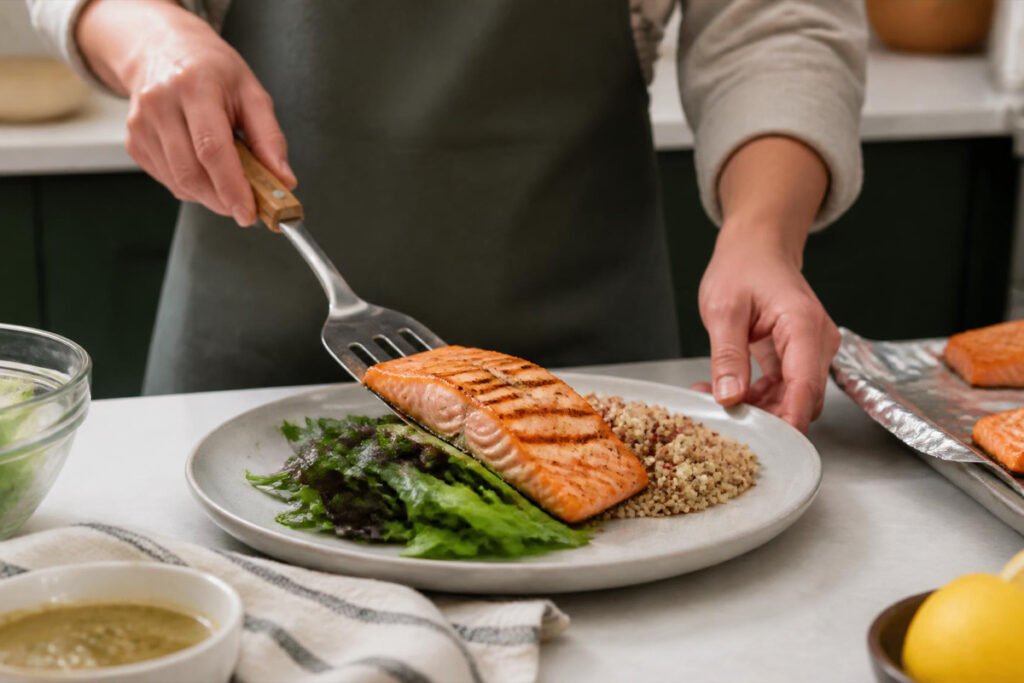
If You’re Dealing with Ongoing, Daily Anxiety
Focus on consistency: daily magnesium (leafy greens, pumpkin seeds), regular omega-3 intake, and steady hydration matter more here than any single “calming” food eaten once. Pair this with the sleep-supportive habits in our best magnesium foods for better sleep guide, since poor sleep and anxiety often reinforce each other.
If You’re Facing a Specific Stressful Event
Chamomile tea, a square of dark chocolate, and simply making sure you’re hydrated can provide modest in-the-moment support, even though they’re not a substitute for longer-term dietary patterns.
If Gut Symptoms and Anxiety Seem Connected for You
This is a common and increasingly well-researched overlap. Fermented foods, fiber-rich vegetables, and the broader approach in our 30-Day Gut Health Reset Plan address both systems at once, since they’re more connected than most people realize.
Foods and Habits That Worsen Anxiety {#foods-to-limit}
Excess caffeine. Caffeine can trigger or worsen anxiety symptoms, particularly in people who are already prone to anxiety or who consume it inconsistently. This doesn’t mean everyone needs to quit coffee, but noticing your own sensitivity matters.
Alcohol. While it can feel relaxing in the moment, alcohol disrupts sleep architecture and is linked to rebound anxiety as it wears off — a pattern well-documented in both research and clinical experience.
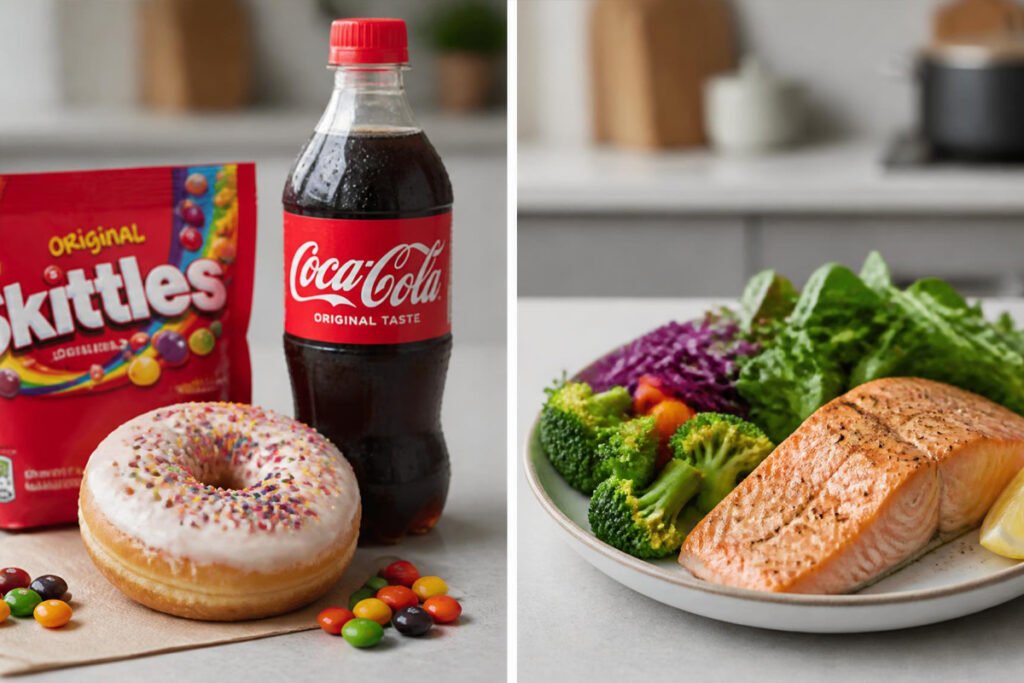
Added sugar and refined carbohydrates. These cause blood sugar spikes and crashes that can mimic or worsen anxiety symptoms — shakiness, irritability, and a racing feeling are common during a sugar crash.
Skipping meals. Low blood sugar itself can trigger physical anxiety-like symptoms (shakiness, irritability, difficulty concentrating), independent of any underlying anxiety condition.
Common Mistakes {#common-mistakes}
- Treating food as a replacement for treatment. Diet is a genuine, evidence-backed piece of anxiety management, but it doesn’t replace therapy or medication when those are needed — the two work together, not against each other.
- Overhauling everything at once. A dramatic diet change during an already stressful period can itself become a source of stress. Adding one or two habits from this list is more sustainable than trying all fifteen this week.
- Ignoring the “limit” side of the equation. Adding magnesium-rich foods while still drinking five cups of coffee a day is working against yourself — both sides of the list matter.
Expert Tips {#expert-tips}
- Pair tryptophan-rich foods with carbohydrates. Turkey or eggs alone are less effective at boosting serotonin than the same protein eaten alongside a whole grain — the carb helps tryptophan cross into the brain.
- Track your caffeine and alcohol alongside your anxiety, not just your food. A simple daily note of intake and how you felt can reveal patterns diet alone won’t show.
- Don’t underestimate water. In practice, this is one of the most commonly overlooked pieces of the anxiety-and-diet conversation — checking hydration before adding anything new is a five-minute habit with real payoff.
Final Thoughts {#final-thoughts}
Best overall: Fatty fish and leafy greens together, covering both the omega-3 and magnesium mechanisms most directly linked to anxiety in research. Best for evenings: Chamomile tea, as a low-risk, genuinely calming ritual. Best for beginners: Simply drinking enough water — the most overlooked, lowest-effort item on this entire list.
None of these foods work like medication, and none of them replace professional support when anxiety is significantly affecting your life. But as one piece of a broader approach — alongside sleep, movement, and, where needed, therapy or medication — nutrition is a genuinely useful lever. For a broader look at supporting your nervous system through diet and rest, our best magnesium foods for better sleep and 30-Day Gut Health Reset Plan both complement this list well.
Frequently Asked Questions {#faq}
Can changing my diet cure anxiety? No. Diet is a supportive piece of anxiety management, not a cure, and it works best alongside other strategies like sleep, movement, and professional support when needed. Anyone with significant or persistent anxiety symptoms should talk to a doctor or therapist.
How quickly can food changes affect anxiety? Some effects, like a blood-sugar crash from skipped meals or excess sugar, can happen within hours. Others, like correcting a magnesium or folate gap, tend to build over weeks of consistent intake rather than showing up immediately.
Is caffeine always bad for anxiety? Not necessarily — sensitivity varies significantly from person to person. Some people tolerate moderate caffeine without any issue, while others notice a clear worsening of anxiety symptoms. Paying attention to your own pattern matters more than a blanket rule.
Do I need a magnesium supplement, or is food enough? For many people, consistent food sources (leafy greens, pumpkin seeds, nuts) provide enough magnesium. Our magnesium glycinate supplement guide covers when a supplement might make sense as an addition.
Can alcohol help me relax if I’m anxious? It might feel that way in the moment, but alcohol disrupts sleep and is linked to rebound anxiety as it metabolizes — often making next-day anxiety worse, not better.
What’s the connection between gut health and anxiety? The majority of the body’s serotonin is produced in the gut, and the gut and brain communicate constantly through the gut-brain axis. This is why gut-supportive foods (fiber, fermented foods) show up repeatedly in anxiety-related nutrition research.
Should I avoid all sugar if I have anxiety? Not entirely — occasional treats aren’t the issue. The concern is more about frequent blood-sugar spikes and crashes from regularly relying on refined sugar, which can produce physical symptoms that mimic or worsen anxiety.
Are anxiety supplements like ashwagandha better than food? They’re different tools. Supplements like ashwagandha are more concentrated and studied for specific effects, while food-based nutrition builds a broader foundation. Our ashwagandha supplement guide covers that option in more depth if you’re considering it alongside diet changes.
Can dehydration really cause anxiety-like symptoms? Yes — even mild dehydration is linked in research to worsened mood, fatigue, and difficulty concentrating, all of which can resemble or intensify anxiety symptoms.
When should I see a doctor instead of just changing my diet? If anxiety is significantly affecting your daily life, relationships, or ability to function, or if you’re experiencing panic attacks, it’s time to talk to a doctor or therapist rather than relying on diet alone. Food supports treatment — it isn’t a substitute for it.
Author: Howdy, Adam Last Updated: August 2026
Pingback: 15 Best Foods for Better Sleep: Proven Picks | nutrieatss