

Blog Summary
Magnesium plays an important role in muscle relaxation, nerve function, and healthy sleep. Eating magnesium-rich foods such as pumpkin seeds, almonds, spinach, chia seeds, and whole grains may support better sleep quality and help reduce stress. A balanced diet combined with good sleep habits can naturally improve restful sleep.
Discover the best magnesium foods for better sleep, backed by science, plus easy bedtime snacks to try tonight.
It’s 1 a.m. You’ve counted sheep, rearranged your pillows twice, and stared at the ceiling long enough to memorize every crack in it. Sound familiar? You’re not alone. Millions of people lie awake every night, minds racing, bodies too tense to relax.
Poor sleep rarely comes from just one cause. Stress, screen time, and irregular schedules all play a role. But there’s a piece of the puzzle that often gets overlooked: what you eat. Your diet has a direct line to your nervous system, and one nutrient in particular — magnesium — plays a starring role in how well you wind down at night.
Magnesium helps relax your muscles, calm your nervous system, and support the hormones that regulate your sleep-wake cycle. When you’re low on it, sleep can become lighter, more fragmented, and harder to fall into in the first place.
The good news? You don’t need a prescription or an expensive supplement to start. This guide walks you through the best magnesium foods for better sleep, why they work, and how to build them into an evening routine that actually helps you rest. We’ll cover the science, the best foods, smart bedtime snacks, and practical lifestyle habits that work alongside good nutrition — all in plain, everyday language.
What Is Magnesium?
Magnesium is an essential mineral, meaning your body needs it to function but can’t produce it on its own. You have to get it from food or supplements.
It’s involved in more than 300 biochemical reactions throughout the body, including:
- Muscle contraction and relaxation
- Nervous system regulation
- Protein and DNA synthesis
- Blood sugar and blood pressure control
- Energy production
- Hormone regulation, including hormones tied to sleep
Roughly half of the magnesium in your body is stored in your bones, with the rest distributed through muscles, soft tissue, and blood. Because it touches so many systems, a shortfall doesn’t just cause one symptom — it can quietly affect your energy, mood, muscles, and yes, your sleep.
How Magnesium Improves Sleep
Magnesium supports sleep through several connected pathways. Here’s what’s happening beneath the surface.
Magnesium helps muscles let go of tension after a long day. It works as a natural counterbalance to calcium, which triggers muscle contraction. Without enough magnesium, muscles can stay slightly tense, which makes it harder to physically settle into rest.
Magnesium helps regulate your autonomic nervous system, the part responsible for shifting your body between “fight or flight” and “rest and digest” modes. Adequate magnesium levels support the shift into the calmer, parasympathetic state your body needs before sleep.
GABA is a neurotransmitter that quiets down brain activity. Magnesium helps regulate GABA receptors, supporting the kind of mental quiet that makes falling asleep easier.
Cortisol is your body’s primary stress hormone. When it stays elevated in the evening, it can keep you wired instead of sleepy. Magnesium plays a role in regulating the stress-response system, helping prevent cortisol from staying too high at bedtime.
Melatonin is the hormone that signals to your body that it’s time to sleep. Magnesium is involved in the enzymatic pathways that support healthy melatonin production and release.
Taken together, these effects mean magnesium doesn’t just help you fall asleep faster — for some people, it also supports deeper, more restorative sleep with fewer nighttime awakenings. Research on this connection is still developing, and results vary by individual, but the physiological groundwork is well established.
Signs You May Be Low in Magnesium
Magnesium deficiency can be subtle, and many people don’t realize it’s affecting them. Common signs include:
- Trouble falling or staying asleep
- Muscle cramps or spasms
- Restless legs at night
- Increased anxiety or irritability
- Chronic stress that feels hard to shake
- Persistent fatigue
- Frequent headaches
- Irregular heartbeat
- Muscle twitching, especially around the eyes
- General weakness
If several of these sound familiar, it may be worth looking at your magnesium intake — and talking to a healthcare provider, especially if symptoms are persistent or severe.
Best Magnesium Foods for Better Sleep
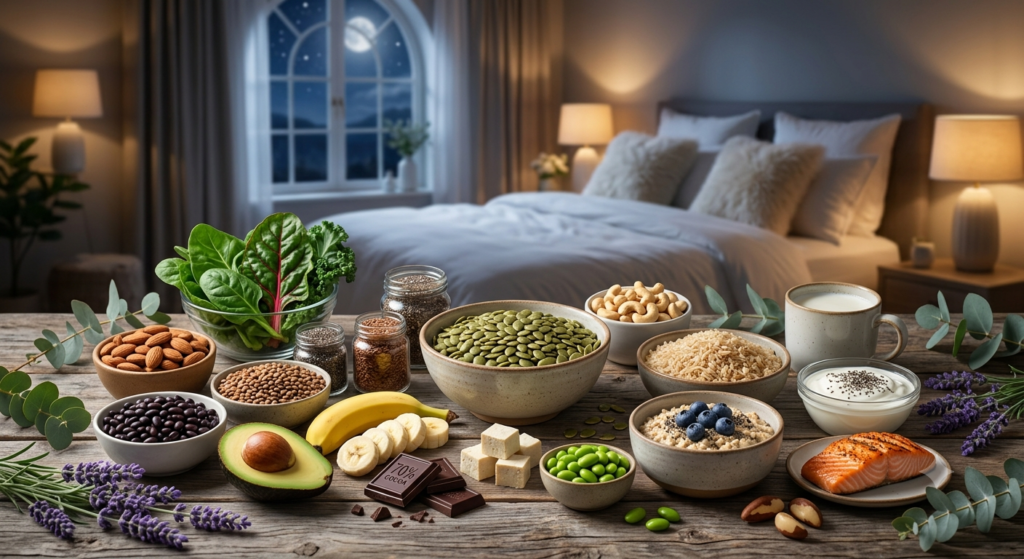
Here are 20 of the best magnesium-rich foods to add to your diet, along with why each one supports sleep.
1. Pumpkin Seeds
About 150–160 mg of magnesium per ounce, making them one of the richest food sources available. They also contain zinc and tryptophan, both linked to melatonin production. Sprinkle roasted pumpkin seeds over yogurt or eat a small handful as an evening snack.
2. Almonds
Around 80 mg of magnesium per ounce. Almonds also provide healthy fats and a modest amount of tryptophan. A small handful with a piece of fruit makes a simple, sleep-friendly snack.
3. Cashews
Roughly 70–75 mg of magnesium per ounce. Cashews are creamy, satisfying, and work well blended into a warm milk drink or eaten on their own.
4. Spinach
About 78 mg of magnesium per half-cup cooked. Spinach is also rich in calcium and folate. Try it wilted into a warm dinner bowl a few hours before bed.
5. Swiss Chard
A close cousin to spinach nutritionally, Swiss chard delivers a similar magnesium boost along with potassium, which supports muscle and nerve function.
6. Kale
Slightly lower in magnesium than spinach but still a solid leafy green source, kale also brings calcium and vitamin K to the table.
7. Chia Seeds
Around 110 mg of magnesium per ounce. Chia seeds absorb liquid and form a gel, making them ideal for an overnight pudding you can enjoy the next morning — or a small evening snack mixed into yogurt.
8. Flax Seeds
About 40 mg of magnesium per tablespoon. Ground flax blends easily into smoothies, oatmeal, or yogurt.
9. Black Beans
Roughly 60 mg of magnesium per half-cup cooked. Beans are also rich in fiber, which supports stable blood sugar overnight.
10. Lentils
A good plant-based source of magnesium along with B vitamins, which support nervous system health.
11. Avocado
About 22–45 mg of magnesium per half fruit depending on size, plus healthy fats and potassium that support relaxation.
12. Bananas
Around 30–32 mg of magnesium per medium banana. Bananas also contain potassium and a small amount of tryptophan, making them a classic bedtime snack pairing.
13. Dark Chocolate (70%+ cocoa)
About 50–65 mg of magnesium per ounce. Dark chocolate in moderation can be part of a sleep-supportive evening routine, though portion size matters due to its calorie density and small caffeine content.
14. Tofu
A plant-based protein that offers a meaningful magnesium contribution along with calcium, useful for evening meals.
15. Edamame
About 50 mg of magnesium per half-cup cooked. Edamame makes an easy, protein-rich snack earlier in the evening.
16. Oats
A comforting source of magnesium and complex carbohydrates. Carbohydrates can help tryptophan cross into the brain more efficiently, supporting serotonin and melatonin production — one reason a small bowl of oatmeal is a popular bedtime choice.
17. Brown Rice
A modest source of magnesium that also provides steady, slow-digesting carbohydrates for an evening meal.
18. Yogurt
Contains calcium and a smaller amount of magnesium, along with tryptophan. Plain yogurt paired with magnesium-rich toppings like chia or pumpkin seeds makes an effective combination.
19. Salmon
A good source of magnesium plus omega-3 fatty acids and vitamin D, both linked to overall sleep health in research.
20. Brazil Nuts
Very high in magnesium — often over 100 mg for just a few nuts — though they’re also high in selenium, so they’re best eaten in small amounts (2–3 nuts) rather than by the handful.
Best Bedtime Snacks Rich in Magnesium
If you want something simple to reach for in the evening, try:
- Banana with a spoonful of almond butter
- Greek yogurt topped with chia seeds
- A small handful of pumpkin seeds
- Warm oatmeal with a few walnuts
- Kiwi with plain yogurt
- Warm milk with a pinch of cinnamon
- A square or two of dark chocolate with almonds
Keep portions modest — a heavy meal close to bedtime can work against sleep, even if the ingredients are sleep-friendly.
Foods That Improve Sleep Beyond Magnesium
Magnesium isn’t the only nutrient that matters for sleep. These compounds work alongside it:
- Melatonin — found naturally in tart cherries and, in smaller amounts, kiwi
- Tryptophan — found in turkey, eggs, oats, and dairy; this amino acid is a building block for serotonin and melatonin
- Potassium — found in bananas and leafy greens; supports muscle relaxation alongside magnesium
- Calcium — found in milk and yogurt; works with magnesium to regulate muscle and nerve signaling
- Vitamin B6 — found in salmon, chickpeas, and potatoes; helps convert tryptophan into serotonin
Foods like tart cherries, kiwi, turkey, eggs, oats, and milk are worth rotating into your evening meals alongside your magnesium-rich choices.
Foods That Can Disrupt Sleep
Just as important as what to add is what to limit, especially in the hours before bed:
- Caffeine — can stay in your system for six or more hours
- Alcohol — may help you fall asleep initially but tends to fragment sleep later in the night
- Sugary desserts — can cause blood sugar swings that disrupt rest
- Energy drinks — combine caffeine with sugar, a difficult mix for sleep
- Heavy, fried meals — slow digestion and can cause discomfort when lying down
- Excess spicy food — may raise body temperature and trigger reflux
- Ultra-processed snacks — often low in nutrients that support relaxation
Cutting back on these in the evening gives your magnesium-rich foods a better chance to do their job.
Daily Magnesium Requirements
Magnesium needs vary by age, sex, and life stage. Here’s a general guide based on established nutrition references:
| Group | Recommended Daily Magnesium |
| Adult men (19–30) | 400 mg |
| Adult men (31+) | 420 mg |
| Adult women (19–30) | 310 mg |
| Adult women (31+) | 320 mg |
| Pregnancy | 350–360 mg |
| Breastfeeding | 310–320 mg |
| Older adults | Similar to standard adult ranges, though absorption can decline with age |
These figures reflect totals from food and any supplements combined. Most people can get close to these targets through a varied diet rich in leafy greens, seeds, nuts, and legumes.
Can Magnesium Supplements Help?
Food first is generally the better approach. Whole foods provide magnesium alongside fiber, protein, and other nutrients that work together, and it’s very difficult to overdo magnesium from food alone since healthy kidneys clear the excess.
That said, supplements can be appropriate for people who:
- Have a diagnosed or suspected deficiency
- Struggle to eat a varied diet
- Have digestive conditions that limit absorption
- Are specifically advised by a doctor to supplement
If you do consider a supplement, you’ll notice a few common forms:
- Magnesium glycinate — generally well tolerated and often chosen for relaxation and sleep support
- Magnesium citrate — well absorbed, but can have a laxative effect at higher doses
- Magnesium oxide — less well absorbed, more commonly used for constipation relief
Because supplemental magnesium has its own upper intake limit and can interact with certain medications, it’s important to talk with a healthcare professional before starting one, particularly if you have kidney issues or take other medications.
Lifestyle Tips for Better Sleep
Diet works best alongside supportive daily habits. Consider:
- Keep a consistent bedtime and wake time, even on weekends
- Get morning sunlight exposure to help regulate your circadian rhythm
- Exercise regularly, but not too close to bedtime
- Reduce screen time in the hour before sleep
- Limit caffeine after early afternoon
- Practice a relaxation technique, such as deep breathing or gentle stretching
- Create a sleep-friendly bedroom — cool, dark, and quiet
- Stay hydrated throughout the day, tapering off close to bedtime
Small, consistent changes tend to matter more than any single fix.
Frequently Asked Questions (FAQ)
Which food has the most magnesium? Pumpkin seeds are among the most concentrated whole-food sources, providing well over 100 mg per ounce. Spinach and other seeds like chia are close behind.
Are bananas high in magnesium? Bananas contain a moderate amount — about 30 mg per medium banana — which is helpful but modest compared to seeds, nuts, and leafy greens. Their real strength for sleep comes from the combination of magnesium, potassium, and a small amount of tryptophan.
Is dark chocolate good before bed? In small amounts, yes. Dark chocolate offers a meaningful dose of magnesium, but it also contains some caffeine, so stick to a small portion (about one ounce) and avoid eating a large amount right before sleep.
Can magnesium stop insomnia? Magnesium can support the biological processes involved in relaxation and sleep, and correcting a deficiency may improve sleep for some people. However, insomnia often has multiple causes, so magnesium is best viewed as one part of a broader approach rather than a guaranteed fix.
How long does magnesium take to improve sleep? This varies by person. Some notice a difference within a couple of weeks of consistently improving their intake, while for others it takes longer, especially if the starting deficiency was significant.
Is it better to get magnesium from food or supplements? Food is generally the preferred first approach because it comes packaged with other beneficial nutrients and carries less risk of side effects. Supplements can help fill specific gaps but are best used under guidance from a healthcare provider.
What is the best bedtime snack for sleep? A combination snack tends to work well — something with magnesium, a little protein, and a small amount of carbohydrate. Greek yogurt with chia seeds, or a banana with almond butter, are both solid choices.
Key Takeaways
- Magnesium supports muscle relaxation, nervous system regulation, and melatonin production — all important for quality sleep.
- Whole foods like pumpkin seeds, almonds, spinach, and legumes are among the best natural sources.
- Pairing magnesium-rich foods with other sleep-supportive nutrients, like tryptophan and potassium, can enhance the effect.
- Limiting caffeine, alcohol, and heavy or sugary foods in the evening helps magnesium-rich choices work better.
- Supplements can help in specific situations, but should be used with professional guidance.
- Persistent sleep problems deserve a conversation with a doctor, since diet is only one piece of the picture.
Conclusion
Better sleep rarely comes from one dramatic change — it’s usually the result of small, steady habits working together. Adding more magnesium-rich foods to your plate is one of the simplest, most natural steps you can take. Start small: swap an afternoon snack for a handful of pumpkin seeds, add spinach to dinner, or try a banana with almond butter before bed. Combined with consistent sleep habits, these changes can add up to real, lasting improvement in how you rest.
If sleep troubles persist despite dietary and lifestyle changes, reach out to a healthcare professional. This article is intended for educational purposes only and is not a substitute for personalized medical advice.
Did you try any of these magnesium-rich foods before bed? Share your favorite sleep-supporting snack in the comments below, and subscribe to the newsletter for more evidence-based nutrition and sleep tips. Explore our related articles on natural sleep remedies and follow us on Pinterest for more healthy eating inspiration.
Pingback: 15 Best Foods for Anxiety and Stress Relief Guide | nutrieatss