
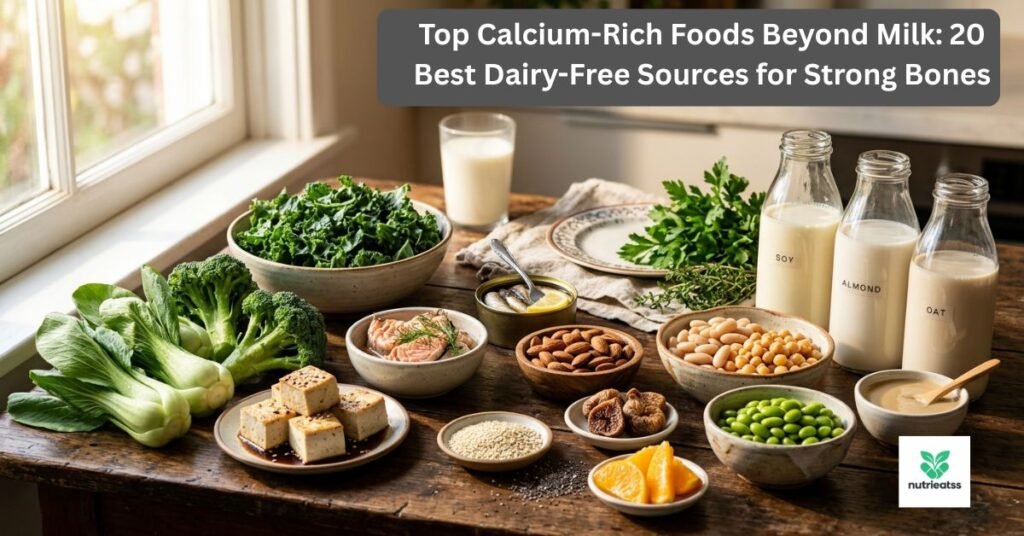
Discover the top calcium-rich foods beyond milk. Learn the best dairy-free sources of calcium for stronger bones, teeth, and overall health
Calcium has a reputation problem. Ask most people where it comes from and you’ll get one answer: milk. But for the roughly 65% of the world’s population with reduced ability to digest lactose after infancy, along with millions who follow vegan or plant-based diets, avoid dairy for allergy reasons, or simply prefer not to drink it, that answer isn’t very useful. The good news is that some of the top calcium-rich foods beyond milk deliver just as much — or even more — calcium per serving than a glass of the real thing.
This guide walks through why calcium matters, the warning signs of low intake, twenty excellent dairy-free calcium sources, and how to build meals around them so your bones get everything they need without a single dairy product in sight.
If you’re managing a medical condition, are pregnant, or have specific dietary restrictions, talk to a registered dietitian or physician before making major changes to your diet. This article is educational and isn’t a substitute for personalized medical advice.
Why Calcium Matters
Calcium is the most abundant mineral in the human body, and about 99% of it is stored in bones and teeth, where it provides structure and strength. The remaining 1% circulates in blood, muscle, and other tissues, where it plays roles that are just as critical to daily function:
- Bone strength — calcium is the primary building block of bone tissue, and bone density depends on a steady supply throughout life.
- Teeth health — calcium keeps tooth enamel and the jawbone strong.
- Muscle contraction — every muscle movement, from blinking to walking, relies on calcium signaling.
- Nerve function — calcium helps transmit messages between the brain and the rest of the body.
- Heart rhythm — calcium ions help regulate the heartbeat.
- Hormone release — calcium triggers the release of hormones and enzymes involved in digestion and metabolism.
- Blood clotting — calcium is essential to the clotting cascade that stops bleeding after an injury.
Recommended Daily Calcium Intake by Age
Recommended Daily Calcium Intake by Age
| Age Group | Recommended Daily Intake |
| Children 1–3 years | 700 mg |
| Children 4–8 years | 1,000 mg |
| Children 9–18 years | 1,300 mg |
| Adults 19–50 years | 1,000 mg |
| Women 51–70 years | 1,200 mg |
| Men 51–70 years | 1,000 mg |
| Adults 71+ years | 1,200 mg |
| Pregnant/breastfeeding teens | 1,300 mg |
| Pregnant/breastfeeding adults | 1,000 mg |
Signs You May Not Be Getting Enough Calcium
Because the body prioritizes blood calcium levels above all else, it will pull calcium from bone reserves when dietary intake falls short — often silently, for years, before symptoms appear. Watch for:
- Frequent muscle cramps or spasms
- Brittle, weak, or slow-growing nails
- Numbness or tingling in the fingers
- Persistent fatigue
- Increased frequency of bone fractures
- Tooth decay or gum problems
- Reduced bone density, which over time raises the risk of osteoporosis
If several of these apply to you, it’s worth discussing a bone-density or blood calcium test with your doctor.
Top Calcium-Rich Foods Beyond Milk
Here are twenty of the best dairy-free calcium sources, each with what a serving provides and how to work it into your routine.
1. Sardines (with bones)
A 3.75-oz can of sardines with bones provides roughly 325 mg of calcium — about a quarter of the daily target in one small can. Sardines also deliver omega-3 fatty acids, vitamin D, and high-quality protein, a combination that supports both bone and heart health. Eat them on whole-grain toast, tossed into a salad, or straight from the can. They’re especially useful for people who need both calcium and vitamin D from a single food.
2. Canned Salmon (with bones)
Like sardines, canned salmon with soft, edible bones is a calcium powerhouse, offering around 180–210 mg per 3-oz serving, plus a strong dose of vitamin D and omega-3s. Use it in salmon cakes, pasta, or a quick salad. It’s a great option for anyone trying to combine calcium intake with heart-healthy fats.
3. Tofu (Calcium-set)
Tofu made with calcium sulfate can provide up to 350 mg of calcium per half-cup — check the label, since not all tofu is processed the same way. It’s also a complete plant protein. Stir-fry it, cube it into soups, or blend silken tofu into smoothies. Ideal for vegans and anyone looking for a versatile, neutral-tasting calcium source.
4. Fortified Soy Milk
Fortified soy milk typically matches cow’s milk almost exactly, with about 300 mg of calcium per cup, along with a comparable protein content. It’s one of the closest dairy substitutes nutritionally. Use it in coffee, cereal, or baking. Great for those replacing dairy milk one-for-one.
5. Fortified Almond Milk
Fortified almond milk usually contains 300–450 mg of calcium per cup, though protein content is much lower than dairy or soy milk. It works well in smoothies, oatmeal, and baked goods. Best suited for people who want a lighter, lower-calorie milk alternative.
6. Fortified Oat Milk
Fortified oat milk provides around 350 mg of calcium per cup and a naturally creamy texture that performs well in coffee and cooking. It’s a solid choice for anyone with nut or soy allergies who still wants a fortified, calcium-rich milk alternative.
7. Sesame Seeds
Just one tablespoon of sesame seeds contains about 88 mg of calcium, and they’re rich in magnesium and healthy fats too. Sprinkle them on salads, stir-fries, or homemade bread. Toasting them slightly improves flavor without affecting calcium content.
8. Tahini
Made from ground sesame seeds, tahini delivers about 130 mg of calcium per 2-tablespoon serving. It’s a staple in hummus and salad dressings, and can be drizzled over roasted vegetables. A simple way to add calcium to savory dishes without dairy.
9. Chia Seeds
Two tablespoons of chia seeds provide roughly 150–180 mg of calcium, along with fiber and omega-3 fatty acids. Add them to smoothies, yogurt alternatives, or make a chia pudding. Their gel-forming texture also makes them a satisfying breakfast base.
10. Almonds
A quarter-cup of almonds contains about 95–100 mg of calcium, plus vitamin E and healthy fats. Eat them as a snack, or use almond butter on toast. A convenient, portable calcium source for busy schedules.
11. White Beans
A cup of cooked white beans offers around 160 mg of calcium, along with fiber and plant-based protein. Add them to soups, stews, or a simple bean salad. Especially useful for anyone building calcium-rich vegetarian meals.
12. Chickpeas
One cup of cooked chickpeas provides about 80 mg of calcium, along with protein and fiber that support satiety. Use them in hummus, curries, or roasted as a crunchy snack. A pantry staple that adds up over multiple servings a week.
13. Edamame
A cup of cooked edamame contains roughly 98 mg of calcium and about 17 grams of protein, making it one of the more balanced plant-based options. Enjoy it steamed with a pinch of salt or added to grain bowls.
14. Kale
One cup of cooked kale delivers about 94 mg of calcium, and — importantly — kale’s calcium is highly bioavailable, meaning the body absorbs a large share of it. Sauté it, blend it into smoothies, or bake it into kale chips.
15. Bok Choy
A cup of cooked bok choy provides around 158 mg of calcium and is another leafy green with excellent absorption rates. Stir-fry it with garlic, or add it to soups and noodle dishes.
16. Collard Greens
Cooked collard greens offer about 266 mg of calcium per cup, making them one of the richest leafy green sources on this list. Simmer them slowly with onions and garlic, or add to soups for a nutrient-dense side dish.
17. Broccoli
A cup of cooked broccoli contains roughly 62 mg of calcium, plus vitamin C, which supports overall immune and connective tissue health. Roast, steam, or stir-fry it as a simple side that pairs with almost any meal.
18. Figs (Dried)
A quarter-cup of dried figs provides about 60–65 mg of calcium, along with fiber and potassium. Eat them as a snack, chop them into oatmeal, or pair with nuts for a naturally sweet, calcium-boosting bite.
19. Oranges
One medium orange contains roughly 50–60 mg of calcium, along with vitamin C, which can support collagen production for bone matrix health. Eat them whole rather than juiced to retain fiber alongside the calcium.
20. Calcium-Fortified Orange Juice
Fortified orange juice can provide as much as 300–350 mg of calcium per cup, rivaling milk, and it also delivers vitamin C and often vitamin D. Choose the fortified version specifically, since regular orange juice contains far less calcium. It’s a practical way to boost intake at breakfast.
Foods That Improve Calcium Absorption
Calcium intake alone isn’t the full picture — the body also needs support to absorb and use it effectively:
- Vitamin D helps the intestines absorb calcium efficiently; sources include sunlight exposure, fatty fish, and fortified foods.
- Magnesium, found in nuts, seeds, and whole grains, helps convert vitamin D into its active form.
- Vitamin K2, present in fermented foods like natto, helps direct calcium into bones rather than soft tissue.
- Adequate protein supports the bone matrix that calcium binds to.
- Regular weight-bearing exercise, such as walking, dancing, or resistance training, stimulates bone remodeling and density.
- Sunlight exposure triggers natural vitamin D synthesis in the skin.
Foods That Reduce Calcium Absorption
Certain dietary habits, in excess, can interfere with calcium absorption or increase calcium loss:
- Excess sodium increases calcium excretion through urine.
- Soft drinks, particularly those high in phosphoric acid, may be linked to lower bone density when they replace calcium-rich beverages.
- High alcohol intake can interfere with the body’s ability to absorb calcium and vitamin D.
- Excess caffeine may modestly increase calcium loss, particularly when calcium intake is already low.
- Too much added sugar is often associated with diets that displace nutrient-dense, calcium-rich foods.
Moderation, not elimination, is generally the practical approach — an occasional coffee or soda isn’t cause for concern within an otherwise balanced diet.
Dairy vs Non-Dairy Calcium Sources
| Factor | Dairy Milk (1 cup) | Fortified Soy Milk (1 cup) | Tofu (½ cup) | Kale (1 cup, cooked) |
| Calcium | ~300 mg | ~300 mg | ~350 mg | ~94 mg |
| Protein | ~8 g | ~7–8 g | ~10 g | ~2.5 g |
| Vitamin D | Often fortified | Often fortified | None (unless fortified) | None |
| Lactose | Yes | No | No | No |
| Vegan-Friendly | No | Yes | Yes | Yes |
| Bioavailability | High (~30%) | High (~30%, similar to milk) | Moderate–High | Very High (~40–50%+) |
Leafy greens like kale and bok choy have lower oxalate content than spinach, which allows the body to absorb a larger percentage of the calcium they contain — a detail that’s often overlooked when comparing plant sources to dairy.
Best Calcium-Rich Meal Ideas
Breakfast: Oatmeal made with fortified oat milk, topped with chia seeds and sliced almonds; or scrambled tofu with sautéed kale.
Lunch: A white bean and collard green soup, or a chickpea salad with tahini dressing.
Dinner: Baked salmon (with bones, if canned/mashed in) alongside roasted broccoli and bok choy stir-fry.
Snacks: A handful of almonds and dried figs, or roasted edamame with sea salt.
Smoothies: Blend fortified soy milk, a spoonful of tahini, chia seeds, and frozen fruit for a calcium-dense smoothie that works any time of day.
Frequently Asked Questions
Can you get enough calcium without milk?
Yes. By combining fortified plant milks, leafy greens, tofu, seeds, and legumes throughout the day, it’s entirely possible to meet or exceed the recommended daily calcium intake without dairy.
Which fruit has the most calcium?
Dried figs are among the highest-calcium fruits, though fortified orange juice (technically a fruit product) contains considerably more calcium per serving than whole fruit.
Are plant sources absorbed as well as dairy?
It varies. Low-oxalate greens like kale and bok choy are absorbed even better than dairy calcium, while high-oxalate greens like spinach are absorbed far less efficiently. Fortified plant milks and tofu are generally comparable to dairy.
Is tofu high in calcium?
Yes, particularly calcium-set tofu, which can provide as much calcium per serving as a cup of milk. Always check the label, since silken and some other tofu varieties use different coagulants with less calcium.
Which milk alternative has the most calcium? Fortified almond and oat milks often lead on calcium content per cup, though soy milk offers the closest overall nutritional match to dairy milk, including protein.
How much calcium do adults need daily? Most adults aged 19–50 need about 1,000 mg per day, while women over 50 and adults over 70 need closer to 1,200 mg per day.
Can calcium supplements replace food? Supplements can help fill gaps, but food sources are generally preferred because they come packaged with complementary nutrients like magnesium, vitamin K2, and protein that support absorption. Speak with a healthcare provider before starting a supplement regimen.
Expert Tips for Increasing Calcium Without Dairy
- Choose calcium-set tofu over silken tofu when calcium content matters most.
- Rotate leafy greens — kale and bok choy absorb better than spinach.
- Always check labels on plant milks, since fortification levels vary by brand.
- Pair calcium-rich foods with a vitamin D source for better absorption.
- Add sesame seeds or tahini to dressings and dips as an easy calcium boost.
- Include canned fish with bones a couple of times a week.
- Don’t overlook beans and legumes — they add up across multiple meals.
- Get 10–15 minutes of sunlight exposure when possible to support vitamin D.
- Incorporate weight-bearing exercise several times a week for bone density.
- Track your intake occasionally to confirm you’re meeting your daily target.
Conclusion
Strong bones don’t require a glass of milk. Between fortified plant milks, calcium-set tofu, leafy greens, seeds, legumes, and bone-in canned fish, there are more than enough calcium-rich foods beyond milk to build a diet that supports lifelong bone health. Pair these foods with vitamin D, regular movement, and mindful habits around sodium, caffeine, and alcohol, and your bones, teeth, and muscles will have everything they need — dairy-free or not.
This article is for educational purposes only and is not a substitute for professional medical advice. If you have a medical condition, are pregnant, or follow a restricted diet, consult a registered dietitian or physician before making significant dietary changes.