
You probably don’t think about your eyes until something changes — text starts blurring at arm’s length, night driving feels harder than it used to, or a routine eye exam turns up a note you weren’t expecting. Vision changes can feel like they come out of nowhere, but many of the most common age-related eye conditions develop slowly, over years, and diet plays a real, measurable role in that timeline.
This isn’t just folk wisdom about carrots. Large, long-running studies — most notably the Age-Related Eye Disease Studies (AREDS and AREDS2) — have identified specific nutrients that measurably reduce the risk of age-related macular degeneration progressing, and other research consistently links diet quality to cataract risk as well. Food can’t reverse existing eye damage or replace regular eye exams, but it’s one of the more evidence-backed, low-risk tools available for protecting the vision you have. This guide covers the best foods for eye health, the nutrients behind them, and what tends to work against you. If heart health is also on your radar, our foods that help lower cholesterol naturally guide overlaps closely, since eye and cardiovascular health share several of the same dietary risk factors.
Quick Answer
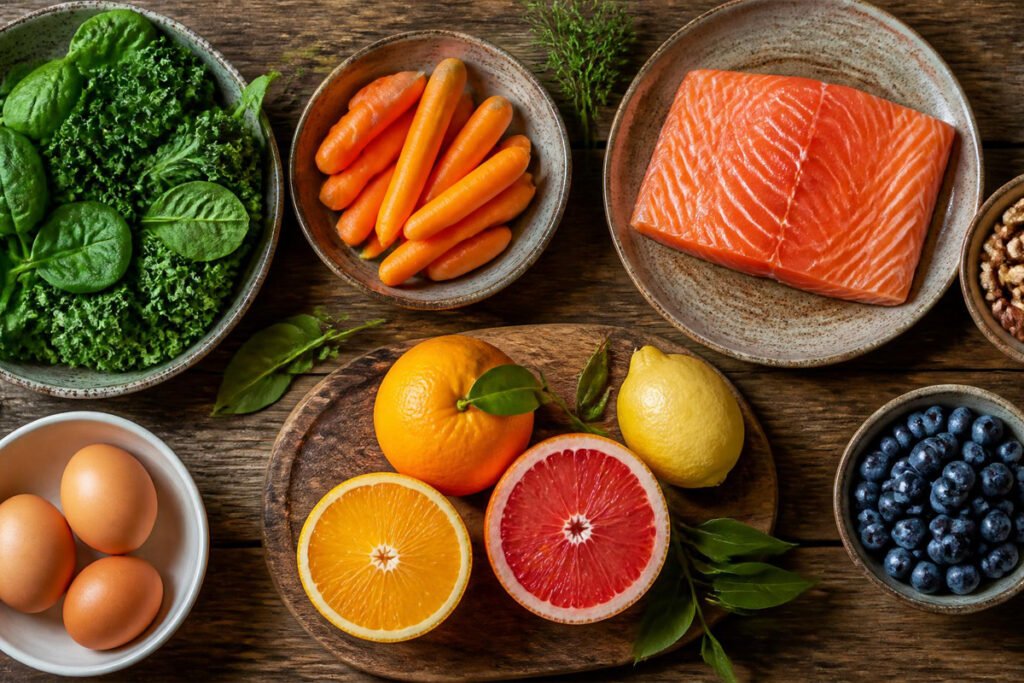
The best foods for eye health are leafy greens (for lutein and zeaxanthin), fatty fish (for omega-3s), citrus fruits and bell peppers (for vitamin C), nuts and seeds (for vitamin E), and orange vegetables like carrots and sweet potatoes (for beta-carotene). These nutrients work together to protect against oxidative damage in the eye and are the same combination studied in the AREDS2 formula, which was shown to slow the progression of age-related macular degeneration. Eating a broadly Mediterranean-style diet, rich in these foods, is consistently linked to lower rates of AMD, cataracts, and other vision problems.
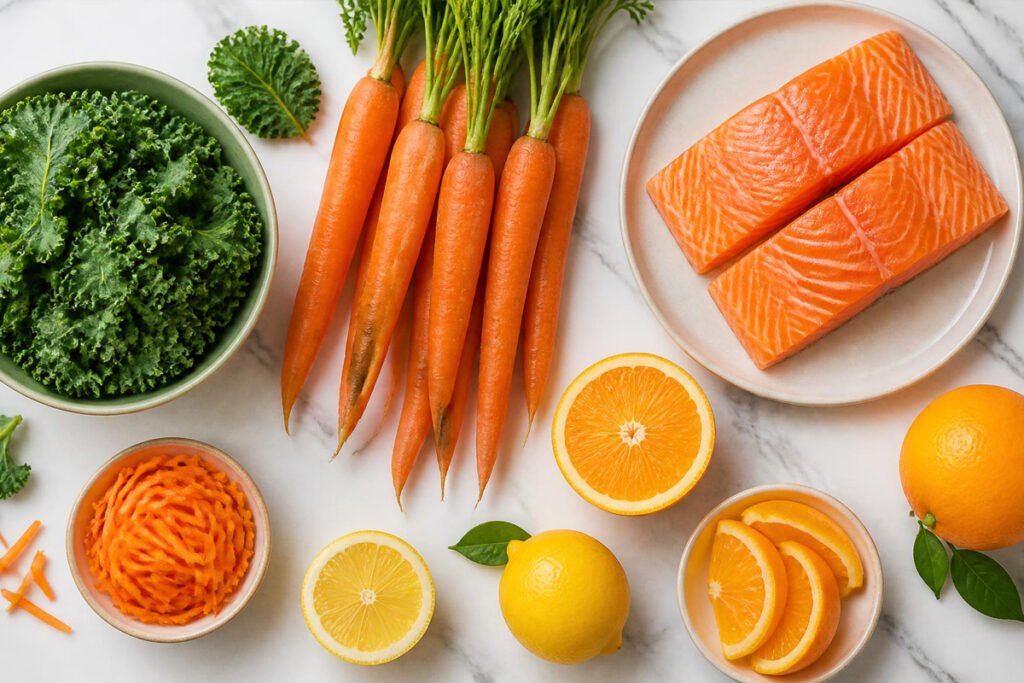
Table of Contents
- How Diet Affects Eye Health
- How to Choose the Right Foods for You
- 16 Best Foods for Eye Health
- Comparison Table
- Best Foods by Eye Health Goal
- How to Build an Eye-Healthy Plate
- Common Mistakes
- Expert Tips
- Final Thoughts
- FAQ
How Diet Affects Eye Health {#how-diet-affects}
Your eyes are metabolically demanding, light-exposed tissue, which makes them particularly vulnerable to oxidative stress — the same kind of cellular damage antioxidants throughout your diet help protect against elsewhere in the body. Two carotenoids in particular, lutein and zeaxanthin, accumulate specifically in the macula (the part of the retina responsible for sharp, central vision) and are thought to act like an internal pair of sunglasses, filtering harmful high-energy light and neutralizing free radicals before they damage retinal cells.
The evidence here isn’t theoretical. The AREDS2 study, a major clinical trial, found that a nutrient formula containing lutein, zeaxanthin, vitamin C, vitamin E, zinc, and copper reduced the risk of intermediate AMD progressing to late-stage disease. While that trial specifically studied a supplement formula, the same nutrients are abundant in whole foods, and dietary patterns rich in them — most notably the Mediterranean diet — are independently linked to lower AMD risk in observational research. Omega-3 fatty acids add another layer of protection, supporting the structural health of retinal cell membranes and contributing anti-inflammatory effects relevant to several eye conditions. If you’re building a broader Mediterranean-style pattern, our Mediterranean diet meal plan for beginners is a natural companion to this list.
How to Choose the Right Foods for You {#how-to-choose}
- Do you have a diagnosed eye condition, or are you focused on prevention? People with diagnosed intermediate AMD are sometimes specifically advised by an ophthalmologist to take an AREDS2-formula supplement alongside diet — this is a case where personalized medical guidance matters more than a general food list.
- Are you managing diabetes? Diabetic eye disease is a leading cause of vision loss, and blood sugar control is arguably as important as any single “eye food” if this applies to you — our best foods for insulin resistance guide is directly relevant here.
- Do you smoke? Smoking is one of the strongest modifiable risk factors for AMD and cataracts, and no amount of dietary optimization fully offsets that risk — this is worth naming plainly rather than glossing over.
16 Best Foods for Eye Health {#best-foods}
1. Kale
Overview: One of the most concentrated food sources of lutein and zeaxanthin, the two carotenoids most specifically linked to macular protection. Key Features:
- Very high in lutein and zeaxanthin
- Also provides vitamin C and vitamin A
- Versatile — raw, sautéed, or blended Best For: A daily leafy green habit focused specifically on eye health Pros: ✅ Among the most concentrated lutein/zeaxanthin sources available ✅ Low calorie, nutrient-dense Cons: ❌ Easy to under-eat if you don’t plan for it Our Verdict: A cup of cooked kale a few times a week is one of the most targeted habits on this list.
2. Spinach
Overview: Similar to kale in its lutein and zeaxanthin content, with the advantage of being easier to incorporate into more dishes. Key Features:
- High in lutein, zeaxanthin, and vitamin A
- Very versatile in cooking
- Cooking increases the bioavailability of some carotenoids Best For: An everyday vegetable base Pros: ✅ Nutrient-dense ✅ Easy to add to almost any meal Cons: ❌ Best absorbed with a little fat — pair with olive oil or a fat-containing food Our Verdict: Sautéed in a bit of olive oil is both a flavor and an absorption upgrade over eating it raw and dry.
3. Fatty Fish (Salmon, Mackerel, Sardines)
Overview: The richest common source of omega-3 fatty acids, which research links to reduced dry eye symptoms and long-term AMD risk reduction when consumed as food. Key Features:
- Rich in EPA and DHA omega-3s
- Also provides vitamin D
- Naturally low sodium Best For: A twice-weekly protein swap Pros: ✅ Notably, research suggests the benefit is stronger from food than from supplements for this specific outcome ✅ Dual heart and eye benefit Cons: ❌ Cost can add up ❌ Canned/smoked versions can be high in sodium Our Verdict: Two servings a week is well-supported; see our omega-3 supplement guide for options if fish isn’t practical regularly.
4. Eggs
Overview: Egg yolks contain both lutein and zeaxanthin in a form that may be more bioavailable than from vegetables, thanks to the fat content of the yolk. Key Features:
- Contains lutein and zeaxanthin
- Good source of zinc
- Fat content may aid carotenoid absorption Best For: A daily breakfast staple Pros: ✅ Bioavailability advantage due to fat content ✅ Affordable and versatile Cons: ❌ Egg-white-only diets miss this benefit entirely, since it’s concentrated in the yolk Our Verdict: A genuinely underrated eye-health food; pair with our best breakfast foods for blood sugar control guide for a fuller morning routine.
5. Carrots
Overview: The classic “eat your carrots” advice has real substance — carrots are a strong source of beta-carotene, which the body converts to vitamin A, essential for healthy vision, particularly in low light. Key Features:
- High in beta-carotene
- Converts to vitamin A in the body
- Easy, versatile vegetable Best For: A daily snack or side dish Pros: ✅ Directly supports the vitamin A pathway relevant to night vision ✅ Widely available and affordable Cons: ❌ Best absorbed with a little fat, like most fat-soluble vitamin A precursors Our Verdict: Roasted with a drizzle of olive oil is a simple way to maximize absorption.
6. Sweet Potatoes
Overview: Another concentrated beta-carotene source, with added fiber compared to carrots. Key Features:
- High in beta-carotene
- Good source of fiber
- Versatile — roasted, mashed, or baked Best For: A side dish swap Pros: ✅ Filling ✅ Kid-friendly Cons: ❌ Toppings (butter, added sugar) can offset the benefit Our Verdict: Roast with olive oil and herbs rather than butter and brown sugar to keep the nutrient profile intact.
7. Citrus Fruits (Oranges, Grapefruit)
Overview: A reliable vitamin C source — an antioxidant specifically studied, alongside vitamin E, zinc, and the carotenoids, in the AREDS2 formula for AMD risk reduction. Key Features:
- High vitamin C content
- Naturally low sodium
- Easy to add to any meal Best For: Pairing with other eye-healthy foods throughout the day Pros: ✅ Directly relevant to the AREDS2 nutrient combination ✅ Refreshing, versatile Cons: ❌ Grapefruit interacts with several medications — check with a pharmacist if you take prescriptions Our Verdict: An easy daily habit that supports the same nutrient combination studied for AMD.
8. Bell Peppers
Overview: Often higher in vitamin C per serving than citrus, and a good source of both vitamin C and some carotenoids. Key Features:
- Very high vitamin C content
- Some lutein and zeaxanthin, especially in red/orange varieties
- Crunchy, versatile raw or cooked Best For: A snack or side that quietly covers two nutrient categories at once Pros: ✅ Genuinely high vitamin C content ✅ Works in almost any savory dish Cons: ❌ Cooking reduces vitamin C content somewhat Our Verdict: An underrated, easy daily addition alongside your protein source.
9. Almonds
Overview: One of the best food sources of vitamin E, an antioxidant included in the AREDS2 formula and linked to cataract risk reduction in research. Key Features:
- High in vitamin E
- Portable, shelf-stable snack
- Contains healthy fats Best For: A daily nut-based snack Pros: ✅ Directly relevant to the AREDS2 nutrient combination ✅ Easy to portion Cons: ❌ Calorie-dense — a small handful, not a full bag Our Verdict: A quarter-cup a day is a reasonable, sustainable vitamin E habit.
10. Sunflower Seeds
Overview: Another strong vitamin E source, useful as an alternative or addition to almonds. Key Features:
- High in vitamin E
- Portable, shelf-stable snack
- Also provides some zinc Best For: A snack rotation alongside almonds Pros: ✅ Convenient ✅ Two AREDS2-relevant nutrients in one food Cons: ❌ Salted versions add unnecessary sodium — choose unsalted Our Verdict: A small handful makes a smart, easy addition.
11. Oysters
Overview: One of the richest natural sources of zinc, a mineral that helps transport vitamin A from the liver to the retina, where it’s used to produce melanin — a protective pigment in the eye. Key Features:
- Extremely high zinc content
- Also provides some vitamin A precursors
- Nutrient-dense in a small serving Best For: An occasional zinc-focused meal Pros: ✅ Directly relevant to the AREDS2 nutrient combination Cons: ❌ Less accessible or affordable than other zinc sources for regular use Our Verdict: A great occasional choice; beans and pumpkin seeds are more everyday zinc alternatives.
12. Beans and Legumes
Overview: A plant-based zinc source, useful for anyone who doesn’t eat much seafood or red meat. Key Features:
- Good source of zinc
- High in fiber and plant protein
- Affordable and versatile Best For: Plant-forward eaters building zinc intake Pros: ✅ Budget-friendly ✅ Doubles as a fiber source Cons: ❌ Plant-based zinc is somewhat less bioavailable than animal sources Our Verdict: A solid everyday zinc contributor, especially combined with vitamin C-rich foods, which can help offset the lower absorption.
13. Corn
Overview: An underrated source of lutein and zeaxanthin, worth including alongside the more commonly cited leafy greens. Key Features:
- Contains lutein and zeaxanthin
- Widely available, easy to prepare
- Naturally sweet, easy to like Best For: A rotating side dish that adds carotenoid variety Pros: ✅ A pleasant, easy way to diversify carotenoid sources beyond leafy greens Cons: ❌ Lower concentration than kale or spinach — a supporting source, not a primary one Our Verdict: A reasonable, easy addition to a varied vegetable rotation.
14. Eggs’ Cousin: Whole Grains (for supporting blood sugar)
Overview: Not a direct eye-nutrient source, but whole grains support stable blood sugar, which matters significantly for anyone managing or preventing diabetic eye disease. Key Features:
- High in fiber
- Supports steady blood sugar compared to refined grains
- Versatile base for meals Best For: Anyone prioritizing blood-sugar-related eye protection Pros: ✅ Indirectly protects retinal blood vessels by supporting glucose control Cons: ❌ Doesn’t directly supply the eye-specific antioxidants on this list — a supporting player Our Verdict: Swap refined grains for whole grains as a blood-sugar-protective habit that indirectly protects vision.
15. Avocados
Overview: Provides both vitamin E and healthy fat, which helps with the absorption of the fat-soluble carotenoids and vitamin A found in other foods on this list. Key Features:
- Good source of vitamin E and monounsaturated fat
- Helps absorb fat-soluble nutrients from other foods eaten alongside it
- Naturally low sodium Best For: Pairing with carrots, leafy greens, or sweet potatoes to boost absorption Pros: ✅ Functional pairing food, not just a standalone nutrient source Cons: ❌ Calorie-dense, so portion matters if you’re also managing weight Our Verdict: Adding avocado to a salad with leafy greens and carrots is a smart, absorption-boosting combination.
16. Water (Staying Hydrated)
Overview: Not a food, but relevant — adequate hydration supports tear film production and reduces dry eye symptoms, a common and often overlooked eye-comfort issue. Key Features:
- No calories, no cost
- Directly supports tear film and eye surface comfort
- Easy to track and improve Best For: Anyone experiencing dry, irritated eyes, especially with screen-heavy days Pros: ✅ Free, immediate, and foundational ✅ Often the most overlooked factor on this entire list Cons: ❌ Easy to underestimate as “not really nutrition” Our Verdict: Before adding a single new food, checking whether you’re drinking enough water is worth doing first — especially if dryness, not just long-term risk, is your main concern.
Comparison Table {#comparison-table}
| Food | Best For | Key Nutrient | AREDS2-Relevant | Daily Use |
|---|---|---|---|---|
| Kale | Macular protection | Lutein, zeaxanthin | Yes | A few times/week |
| Fatty Fish | Long-term AMD risk | Omega-3s | Supporting | 2x/week |
| Eggs | Bioavailable carotenoids | Lutein, zeaxanthin | Yes | Daily |
| Carrots | Night vision | Beta-carotene | Supporting | Daily |
| Citrus | Antioxidant support | Vitamin C | Yes | Daily |
| Almonds | Cataract risk | Vitamin E | Yes | Daily |
| Oysters/Beans | Retinal pigment support | Zinc | Yes | A few times/week |

Best Foods by Eye Health Goal {#by-goal}
If You Have Diagnosed Intermediate AMD
Talk to your ophthalmologist about whether an AREDS2-formula supplement is right for you — this is a case where the clinical trial evidence specifically supports supplementation alongside diet, not diet alone.
If You’re Focused on General Prevention
A broadly Mediterranean-style pattern — rich in leafy greens, fatty fish, nuts, and olive oil — has the strongest observational evidence for long-term eye health. Our Mediterranean diet meal plan for beginners is a practical starting point.
If You Have Diabetes or Prediabetes
Blood sugar control is arguably as important as any single food on this list for preventing diabetic retinopathy. Our best foods for insulin resistance guide is directly relevant here.
If Dry Eyes Are Your Main Complaint
Prioritize omega-3s (fatty fish) and hydration specifically — both have more direct evidence for dry eye symptom relief than the carotenoid-focused foods aimed at long-term disease prevention.
How to Build an Eye-Healthy Plate {#how-to-build}
Step 1: Start With a Leafy Green Base
Kale, spinach, or a mix — this is your lutein and zeaxanthin foundation.
Step 2: Add a Fat Source
Olive oil, avocado, or a handful of almonds — fat-soluble nutrients like beta-carotene and vitamin A need fat to absorb well.
Step 3: Include a Protein With Zinc or Omega-3s
Fatty fish, eggs, oysters, or beans, rotating through the week.
Step 4: Add a Vitamin C Food
Citrus or bell peppers, ideally in the same meal to round out the AREDS2-relevant nutrient set.
Step 5: Don’t Forget Hydration and Sun Protection
Sunglasses with UV protection and adequate water intake support eye health in ways food alone can’t cover.
Common Mistakes {#common-mistakes}
- Relying on carrots alone. The “carrots are good for your eyes” advice is true but incomplete — lutein, zeaxanthin, omega-3s, vitamin C, vitamin E, and zinc all play distinct, complementary roles.
- Eating carotenoid-rich foods without any fat. A completely fat-free salad of leafy greens absorbs meaningfully less beta-carotene, lutein, and zeaxanthin than the same salad with a drizzle of olive oil or some avocado.
- Ignoring smoking and blood sugar as bigger levers. No amount of dietary optimization fully offsets the eye-health risks of smoking or poorly controlled blood sugar — food is one piece of a larger picture, not a replacement for addressing those factors.
Expert Tips {#expert-tips}
- Pair fat with your carotenoid-rich vegetables every time, not just occasionally. This single habit meaningfully changes how much of the nutrient your body actually absorbs.
- Get regular eye exams regardless of how well you eat. Many eye conditions, including glaucoma, develop with few or no early symptoms — diet supports long-term health but doesn’t replace screening. Our glaucoma guide covers why early detection matters so much for that specific condition.
- If you’re at higher risk for AMD (family history, smoking history, or already diagnosed with early disease), ask your ophthalmologist specifically about AREDS2 supplementation rather than assuming diet alone covers the same ground the clinical trial tested.
Final Thoughts {#final-thoughts}
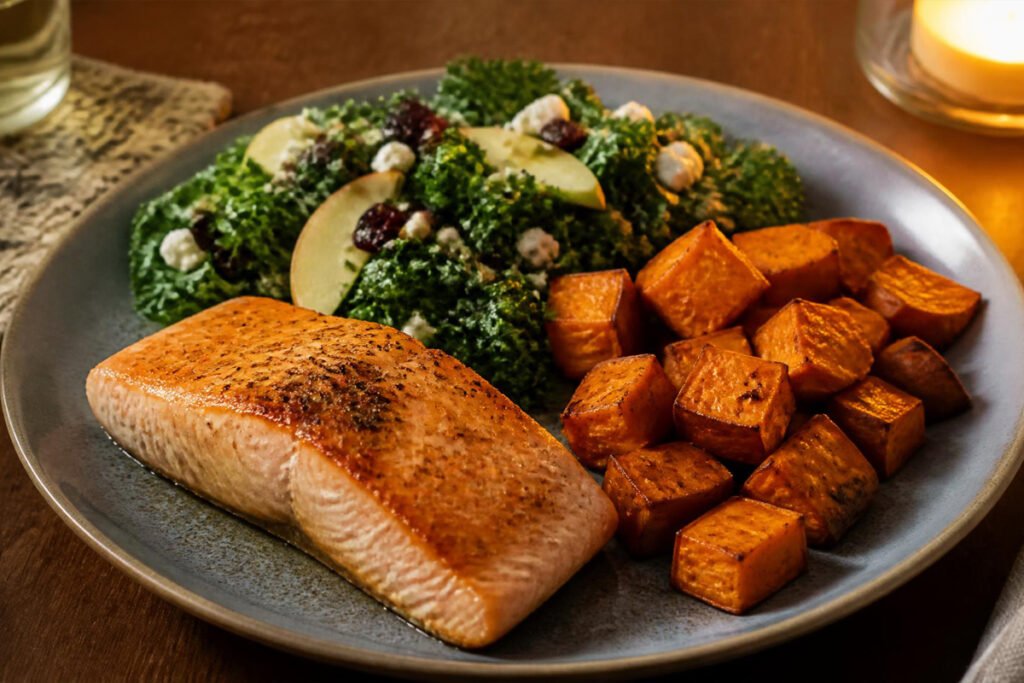
Best overall: Kale and salmon together, covering both the carotenoid and omega-3 sides of eye protection most directly studied in research. Best budget pick: Carrots and beans — inexpensive, widely available, and each covering a distinct nutrient category. Best for beginners: Simply adding a drizzle of olive oil to your next salad — the lowest-effort, highest-impact habit on this entire list, since it improves absorption of nearly everything else here.
Diet can’t cure existing eye disease or replace professional care, but the evidence behind foods like these — particularly the AREDS2-studied nutrient combination — is some of the more solid, specific nutrition science available for any single organ system. If you’re building a broader long-term health strategy, our Mediterranean diet meal plan for beginners and foods that help lower cholesterol naturally guides both complement this list well, since eye and cardiovascular health share so much of the same dietary foundation.
Frequently Asked Questions {#faq}
Can eating carrots actually improve my eyesight? Carrots support healthy vision through beta-carotene and vitamin A, particularly relevant to night vision, but they won’t correct nearsightedness, farsightedness, or reverse existing vision loss. The benefit is protective and gradual, not corrective.
What is the AREDS2 formula, and do I need to take it? AREDS2 is a specific nutrient combination (vitamin C, vitamin E, zinc, copper, lutein, and zeaxanthin) studied in a major clinical trial and shown to slow progression in people with intermediate age-related macular degeneration. It’s generally recommended specifically for that diagnosed population — ask your ophthalmologist whether it applies to you rather than assuming everyone needs it.
How long does it take for diet to affect eye health? Most of the research behind these foods concerns long-term risk reduction over years, not rapid change. Dry eye symptoms may respond to hydration and omega-3 intake within weeks, but broader protective effects build over a much longer timeframe.
Are eye vitamin supplements better than food? For people with diagnosed intermediate AMD, the AREDS2 supplement formula has specific trial evidence behind it. For general prevention, whole foods provide the same nutrients alongside fiber and other benefits supplements don’t offer, making food a reasonable first approach for most people.
Does screen time damage your eyes permanently? Extended screen time is more strongly linked to eye strain and dry eye symptoms than permanent damage, though the research is still developing. Taking regular breaks and maintaining adequate hydration addresses the more established near-term effects.
Can diet help with diabetic eye disease? Blood sugar control is central to preventing and slowing diabetic retinopathy — this is a case where overall dietary pattern (see our insulin resistance foods guide) matters more than any single “eye food” on this list.
Is fish oil as good as eating fish for eye health? Research specifically looking at omega-3s and eye health has found more consistent benefits from dietary fish intake than from fish oil supplements for some outcomes, which is part of why whole-food sources are emphasized in this guide.
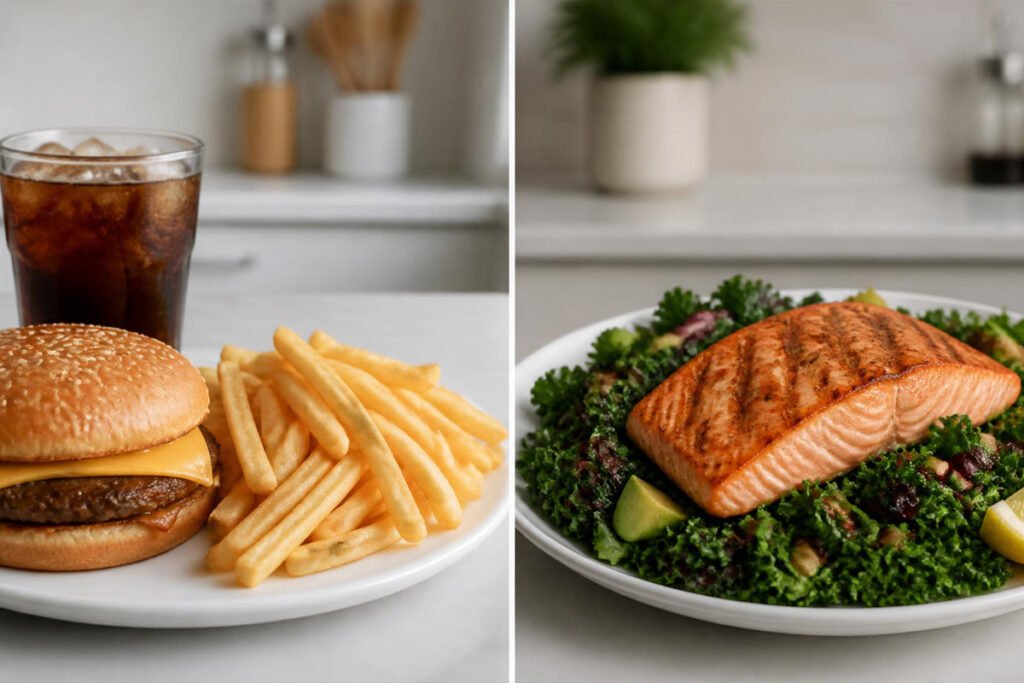
What foods should I limit for eye health? Foods high in saturated fat, added sugar, refined carbohydrates, and excess sodium are each linked in research to worse outcomes for macular degeneration, diabetic eye disease, or general vascular health relevant to the eyes.
Do I need to eat these foods every single day to see a benefit? Consistency over months and years matters more than daily perfection. Building a few of these foods into your regular rotation — rather than eating all sixteen every day — is both more realistic and reflects how the underlying research was actually conducted.
Should I see an eye doctor even if my vision feels fine? Yes. Several serious eye conditions, including glaucoma and early AMD, often have no noticeable symptoms until meaningful damage has occurred. Regular eye exams remain essential regardless of diet quality.
Author: Howdy Last Updated: August 2026
Pingback: 18 Best Foods to Boost Immunity Naturally Guide | nutrieatss
Pingback: 17 Best Foods for Weight Loss and Burning Belly Fat Naturally | nutrieatss
Pingback: 16 Best Foods for Hair Growth and Thickness Naturally | nutrieatss
Pingback: 17 Best Foods to Boost Memory and Brain Function Naturally | nutrieatss