
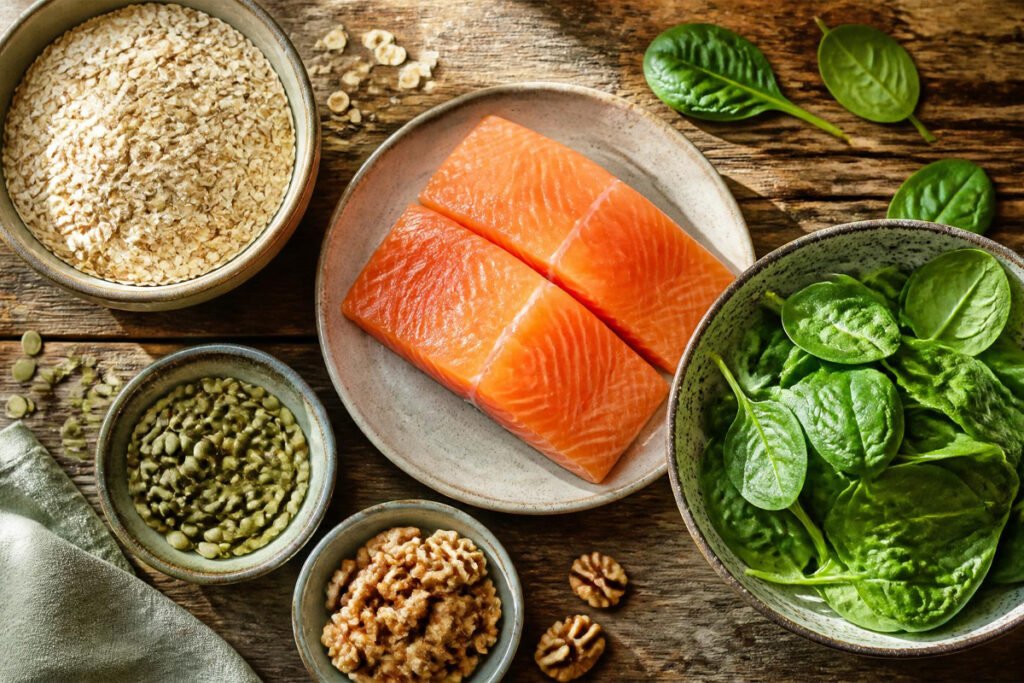
It’s 2 p.m., your third coffee has worn off in under an hour, and you’re staring at your screen through a fog that no amount of caffeine seems to touch anymore. If that sounds familiar, you’re not alone — and more people are quietly looking for a way off the caffeine rollercoaster entirely. The jitters, the afternoon crash, the 4 p.m. dependence on “just one more cup” are signs your energy is being borrowed, not built.
The real problem usually isn’t a lack of stimulants — it’s what’s (or isn’t) happening at the cellular level: unstable blood sugar, low iron, poor sleep, or a diet missing the nutrients your body actually converts into usable energy. Foods that support blood sugar control and healthy iron levels tend to produce steadier, longer-lasting energy than any stimulant can.
This guide breaks down the best natural energy foods without caffeine, how to choose the right ones for your body, and exactly how to build a fatigue-fighting routine that doesn’t rely on a coffee IV drip.
Quick Answer
The best natural energy foods without caffeine depend on what’s actually draining you. If you crash mid-morning, iron-rich foods and steady-protein breakfasts stabilize blood sugar swings. If you feel foggy and unfocused, B-vitamin and omega-3-rich foods support the nerve signaling behind mental clarity. If your fatigue is tied to poor sleep, magnesium-rich foods help you recover overnight so you wake up with energy already in the tank. In short: pair a slow-burning carbohydrate with protein, iron, and B vitamins at each meal, and your energy will stop depending on what’s in your mug.
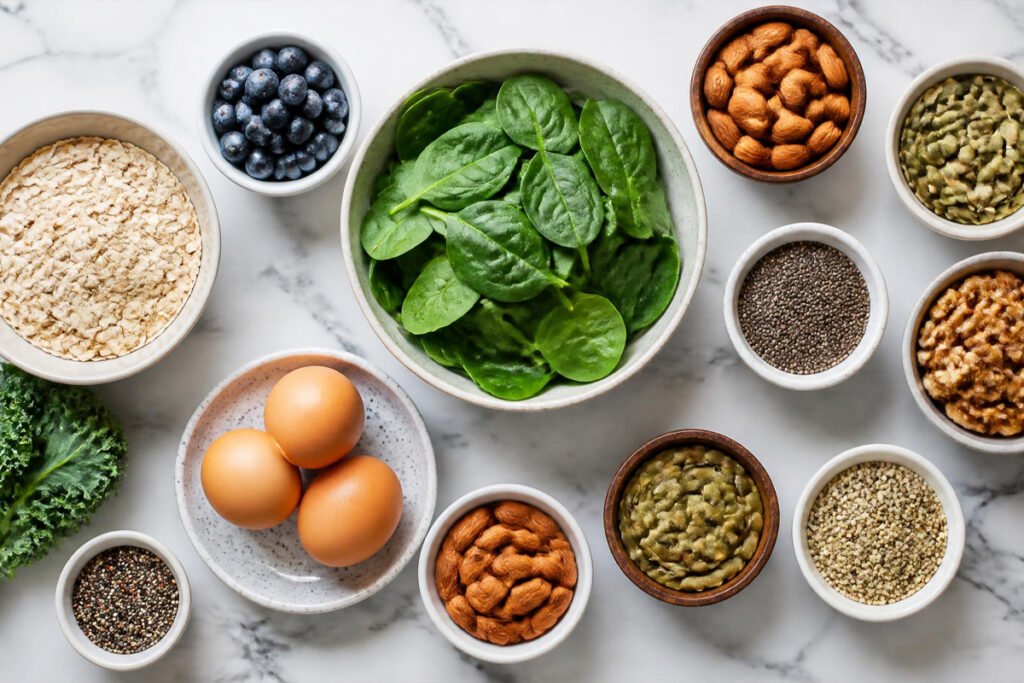
Table of Contents
- How Natural Energy Foods Work
- How to Choose the Right Energy Foods for You
- Best Natural Energy Foods Without Caffeine
- Comparison Table
- Best Energy Foods for Different Situations
- How to Build a Caffeine-Free Energy Routine
- Common Mistakes
- Expert Tips
- Final Thoughts
- FAQs
How Natural Energy Foods Work {#how-they-work}
Caffeine works by blocking adenosine, the chemical that makes you feel sleepy — it doesn’t actually create energy, it just delays the crash. Food-based energy works differently: it fuels the mitochondria in your cells, the tiny engines that convert nutrients into ATP, your body’s actual energy currency.
Three nutrient groups matter most:
- Complex carbohydrates (oats, whole grains, legumes) release glucose slowly, avoiding the spike-and-crash pattern of sugar or an empty-stomach coffee.
- Iron and B vitamins are essential for carrying oxygen to your cells and converting food into usable energy — deficiencies in either are one of the most common, and most overlooked, causes of chronic tiredness.
- Healthy fats and protein slow digestion, keep blood sugar stable for hours, and support the neurotransmitters behind sustained focus.
This is also why a Mediterranean-style eating pattern, built around whole grains, fish, and vegetables, is consistently linked to steadier energy and better long-term health than diets built around refined carbs and stimulants.
Natural energy foods work with your biology instead of overriding it, which is why the effect feels different: less “buzzed,” more genuinely awake.
How to Choose the Right Energy Foods for You {#how-to-choose}
Before restocking your pantry, ask yourself three questions:
- When does my energy dip? Mid-morning crashes usually point to blood sugar swings; late-afternoon fog often points to dehydration or low iron; all-day tiredness may point to poor sleep or a nutrient deficiency worth discussing with a doctor.
- What does my current diet lack? If you rarely eat leafy greens, legumes, or fatty fish, you may be missing the iron, B12, and omega-3s that directly fuel energy production.
- Am I trying to reduce caffeine, or eliminate it? Tapering slowly with food-based support causes far fewer withdrawal headaches than quitting cold turkey.
For a broader look at how nutrient deficiencies are diagnosed, the National Institutes of Health Office of Dietary Supplements offers science-backed fact sheets on iron, B12, and other nutrients tied to fatigue — a useful starting point if you suspect a deficiency rather than just a diet gap.
Best Natural Energy Foods Without Caffeine {#best-foods}
1. Iron-Rich Foods (Spinach, Lentils, Red Meat, Pumpkin Seeds)
Overview: Iron carries oxygen to every cell in your body. When levels run low — even before you’re diagnosed as anemic — fatigue is often the first and most persistent symptom. Plant sources like lentils and spinach pair well with vitamin C to improve absorption; animal sources like red meat and poultry are absorbed more efficiently on their own.
Key Features:
- Supports oxygen transport and cellular energy production
- Available in both plant-based and animal-based forms
- Absorption improves significantly when paired with vitamin C
Best For: People with mid-morning or all-day fatigue, especially those who menstruate, follow a vegetarian diet, or have been told their iron runs low.
Pros: ✅ Addresses a root cause of fatigue, not just a symptom ✅ Widely available and inexpensive ✅ Plant and animal options for any diet
Cons: ❌ Excess iron can be harmful, so supplementing without testing isn’t advised ❌ Plant-based iron is less bioavailable and needs pairing with vitamin C
Our Verdict: If your fatigue has a pattern rather than a trigger, iron is one of the first things worth checking. Our full breakdown of the best iron-rich foods for anemia and fatigue covers absorption tips and daily targets in more depth.
2. B-Vitamin-Rich Foods (Eggs, Salmon, Leafy Greens, Whole Grains)
Overview: B vitamins, especially B12, B6, and folate, are directly involved in converting the food you eat into usable cellular energy. A shortfall shows up as brain fog and sluggishness long before it shows up on a blood test.
Key Features:
- Supports energy metabolism at the cellular level
- Found in eggs, fish, fortified grains, and leafy greens
- Particularly important for vegetarians and older adults, who absorb B12 less efficiently
Best For: Anyone experiencing brain fog alongside physical tiredness.
Pros: ✅ Directly tied to mental clarity, not just physical energy ✅ Easy to get from whole foods ✅ Supports mood as well as focus
Cons: ❌ B12 is mostly found in animal products, so vegans may need a fortified source or supplement ❌ Effects build over days to weeks, not instantly
Our Verdict: For a deeper look at how these nutrients affect mental sharpness, see our guide to the best B-complex vitamins for brain fog and mental clarity.
3. Complex Carbohydrates (Oats, Quinoa, Sweet Potatoes)
Overview: Unlike sugar or a coffee-on-an-empty-stomach, complex carbs release glucose gradually, giving you hours of stable energy instead of a 45-minute spike.
Key Features:
- High in fiber, which slows glucose absorption
- Provide steady fuel for both brain and muscle
- Pair well with protein for even longer-lasting energy
Best For: People who experience a hard crash 1–2 hours after eating.
Pros: ✅ Prevents the blood sugar rollercoaster ✅ Naturally filling, reducing snack-driven crashes ✅ Inexpensive and versatile
Cons: ❌ Portion size still matters — even complex carbs can spike blood sugar in excess ❌ Less effective alone; best paired with protein or fat
Our Verdict: Our guide to breakfast foods for blood sugar control shows exactly how to build a morning meal that keeps you steady until lunch.
4. Omega-3-Rich Foods (Fatty Fish, Walnuts, Chia Seeds)
Overview: Omega-3 fatty acids support the brain cell membranes involved in focus and mental stamina, and they’ve been linked to reduced mental fatigue in people with low dietary intake.
Key Features:
- Supports cognitive stamina, not just physical energy
- Found in fatty fish, walnuts, chia, and flax
- Anti-inflammatory, which may indirectly support energy levels
Best For: People whose “tiredness” is really mental fatigue — difficulty concentrating rather than physical exhaustion.
Pros: ✅ Dual benefit for brain and heart health ✅ Plant-based options available (walnuts, chia, flax) ✅ Well-researched safety profile
Cons: ❌ Plant-based omega-3s (ALA) convert to the active forms less efficiently than fish sources ❌ Fish sources carry a mercury consideration in some species
Our Verdict: If you already supplement, our comparison of the best omega-3 supplements for brain health can help you choose between fish oil and algae-based options.
5. Magnesium-Rich Foods (Pumpkin Seeds, Almonds, Dark Chocolate)
Overview: Magnesium is involved in over 300 enzyme reactions, including the ones that produce ATP. It also plays a major role in sleep quality — and poor sleep is one of the most common hidden causes of daytime fatigue.
Key Features:
- Supports both energy production and muscle relaxation
- Found in seeds, nuts, leafy greens, and dark chocolate
- Directly tied to deeper, more restorative sleep
Best For: People whose energy problem is really a sleep problem.
Pros: ✅ Addresses fatigue at its root (poor sleep) rather than masking it ✅ Widely available in everyday snack foods ✅ Also supports stress and muscle recovery
Cons: ❌ Effects on sleep may take a few weeks to become noticeable ❌ Very high supplemental doses can cause digestive upset
Our Verdict: For food-based options, see our list of the best magnesium foods for better sleep; if you’ve already tried food sources, our magnesium supplement rankings go a step further.

Comparison Table {#comparison-table}
| Food Group | Best For | Speed of Effect | Best Time to Eat | Diet Compatibility |
|---|---|---|---|---|
| Iron-rich foods | All-day or mid-morning fatigue | Weeks (cumulative) | Any meal, with vitamin C | Omnivore & vegetarian |
| B-vitamin foods | Brain fog | Days to weeks | Breakfast or lunch | Omnivore (vegan needs fortified source) |
| Complex carbs | Mid-morning crash | Immediate–hours | Breakfast | All diets |
| Omega-3 foods | Mental fatigue | Weeks (cumulative) | Any meal | Omnivore & plant-based options |
| Magnesium foods | Poor sleep-driven fatigue | Days to weeks | Evening | All diets |
Best Energy Foods for Different Situations {#different-situations}
For the Mid-Morning Crash
If your energy tanks two hours after breakfast, the culprit is usually a carb-heavy, protein-light meal. Swap sugary cereal or a plain bagel for blood sugar-friendly breakfast options that pair protein with fiber. Adding a source of high-protein foods at breakfast is one of the single most effective changes for flattening that crash.
For Brain Fog and Poor Focus
When it’s less about physical tiredness and more about difficulty thinking clearly, look at B vitamins, omega-3s, and even mushroom-based nootropics. Foods and supplements that support cognitive function like Lion’s Mane or targeted nootropic supplements for focus and memory can complement a food-first approach if diet alone isn’t enough.
For Fatigue Tied to Poor Sleep or Stress
Sometimes the “energy” problem is actually a recovery problem. Magnesium-rich foods, along with tools like a weighted blanket for better sleep or melatonin-free sleep aids, address fatigue at its source. If chronic stress is driving both poor sleep and low energy, adaptogens such as ashwagandha for stress and cortisol support are worth researching alongside diet changes.

How to Build a Caffeine-Free Energy Routine {#how-to}
Weaning off caffeine dependence works best gradually and with food-based support in place first. The CDC’s guidance on healthy eating patterns is a useful general reference for building meals that support steady energy throughout the day.
Step 1: Audit Your Mornings
Track what you eat and when your energy dips for 3–4 days before changing anything. Patterns matter more than guesses.
Step 2: Rebuild Breakfast First
Start with a protein-plus-fiber breakfast — eggs and oats, or Greek yogurt with berries — before touching any other meal.
Step 3: Add One Energy Food at a Time
Introduce iron-, magnesium-, or B-vitamin-rich foods gradually rather than overhauling your whole diet at once, so you can track what actually helps.
Step 4: Taper Caffeine, Don’t Cut It Cold
Reduce your intake by about 25% every few days to avoid withdrawal headaches, while your food-based energy sources take over the slack.
Step 5: Reassess After Two Weeks
Nutrient-based changes take longer to show effects than a cup of coffee. Give your new routine 10–14 days before judging whether it’s working.
Common Mistakes
Skipping breakfast entirely. Going hours without eating after waking forces your body to run on stress hormones for energy, which backfires by early afternoon. Pairing a real breakfast with blood sugar-friendly foods prevents this spiral before it starts.
Relying on sugar as a quick fix. A candy bar or sugary latte gives a fast spike and an even faster crash, often leaving you more tired than before. Complex carbs and protein provide the same lift without the drop.
Ignoring gut health. Poor digestion can limit how well you absorb the very nutrients — iron, B12, magnesium — that fuel energy. A 30-day gut health reset or probiotic-rich foods can improve nutrient absorption over time.
Expert Tips
Pair iron with vitamin C, not calcium. Calcium-rich foods (like dairy) can block iron absorption if eaten in the same meal — save the yogurt for a different time of day than your spinach salad.
Hydrate before you caffeinate. Mild dehydration mimics fatigue almost exactly. A glass of water first thing in the morning often resolves what feels like an energy problem within minutes.
Don’t underestimate stable blood sugar. People chasing “energy foods” often overlook that consistent meal timing — not skipping meals, not overeating at once — does more for steady energy than any single ingredient.

Final Thoughts
Best overall: Iron-rich foods paired with vitamin C for anyone with a consistent afternoon crash. Best for brain fog: B-vitamin-rich foods like eggs, salmon, and leafy greens. Best for sleep-driven fatigue: Magnesium-rich foods eaten in the evening. Best for beginners: Start simply — a protein-and-fiber breakfast solves more energy complaints than any other single change.
Whichever path fits your situation, pairing these foods with supportive habits — better gut health, stable blood sugar, and a Mediterranean-style eating pattern — will get you further than any stimulant ever could.
Frequently Asked Questions
Do I need to cut out caffeine completely to see results? No. Many people simply reduce their intake and use food-based energy sources to fill the gap, rather than eliminating caffeine entirely. Gradual tapering also avoids withdrawal headaches.
How long does it take to notice more energy from food changes? Some effects, like avoiding a sugar crash, are immediate. Nutrient-based changes like correcting low iron or B12 typically take 2–4 weeks of consistent eating to show a noticeable difference.
What’s the single best food for energy without caffeine? There isn’t one universal answer — it depends on your specific fatigue pattern. Iron-rich foods help most people with persistent daytime tiredness, while magnesium-rich foods help those whose fatigue stems from poor sleep.
Iron-rich foods vs. B-vitamin foods: which should I prioritize? If your fatigue is physical (heavy legs, general exhaustion), start with iron. If it’s mental (fogginess, trouble concentrating), prioritize B vitamins. Many people benefit from both together.
Why do I still feel tired even after eating “energy foods”? Persistent fatigue despite dietary changes can signal an underlying issue like anemia, thyroid dysfunction, or a sleep disorder. If tiredness doesn’t improve after a few weeks of consistent changes, it’s worth discussing bloodwork with a doctor rather than adjusting diet further on your own.
Can these foods replace caffeine’s alertness effect entirely? For most people, yes — over time. The effect feels different (steadier, less “buzzed”) because it comes from stable blood sugar and cellular energy production rather than blocking sleep signals.
Is dark chocolate actually a good energy food, or just a treat? In moderation, dark chocolate (70%+ cacao) provides magnesium and a small amount of natural stimulant compounds, making it a reasonable choice — but it shouldn’t replace whole-food sources of these nutrients.
Are energy foods safe for people with diabetes? Complex carbohydrates and high-fiber foods are generally diabetes-friendly, but portion size and pairing with protein still matter. Anyone managing blood sugar should check with their doctor before making significant dietary changes.
What should I eat right before a workout instead of a caffeine drink? A small combination of complex carbs and protein — like oats with nut butter — about 30–60 minutes beforehand provides steady fuel without a crash mid-session.
Do energy drinks count as a “natural” option? Most energy drinks rely on high caffeine and added sugar, which produces the same spike-and-crash pattern this guide is designed to avoid. Whole foods are a more sustainable alternative.
Author: Rathat Last Updated: August 2026
Pingback: 5 Best Foods to Improve Focus and Concentration: A Proven Guide | nutrieatss