

Discover the 5 best weighted blankets for anxiety and better sleep in 2026. Compare features, benefits, pros, cons, and buying tips to find your perfect blanket. Struggling with anxiety and restless nights? Compare the 5 best weighted blankets for anxiety and better sleep in 2026, plus a full buying guide.
It’s 1:47 a.m., and Maya is staring at the ceiling again. Her mind is running through tomorrow’s to-do list, replaying an awkward conversation from work, and somehow also worrying about whether she left the stove on. She’s tired, but her body won’t settle. Sound familiar?
Millions of people know exactly what Maya is going through. Stress and anxiety don’t clock out at bedtime — they often get louder once the distractions of the day fall away. That mental noise keeps the nervous system in a low-grade “alert” state, which makes it harder to fall asleep and easier to wake up throughout the night.
This is a big part of why weighted blankets have become one of the most talked-about sleep products of the last several years. They’re simple in concept: a blanket filled with evenly distributed weight, designed to apply gentle, consistent pressure across your body. Many people describe the feeling as being hugged, swaddled, or held down in a comforting way.
In this guide, we’ll break down what weighted blankets are, how they work, what the current evidence does and doesn’t say, and how to pick the right weight, size, and material for your needs. We’ll also walk through five well-regarded weighted blankets on the market today so you can compare them side by side. Every product mentioned here was independently researched using publicly available specifications, brand information, and third-party testing coverage — not paid placements.
Let’s find the right blanket for calmer nights and better sle
What Is a Weighted Blanket?
A weighted blanket is exactly what it sounds like: a blanket that’s been engineered to weigh significantly more than a standard comforter, usually somewhere between 5 and 30 pounds. Instead of just providing warmth, its main job is to apply steady, even pressure across your body while you sleep, rest, or relax.
How It Works: Deep Pressure Stimulation
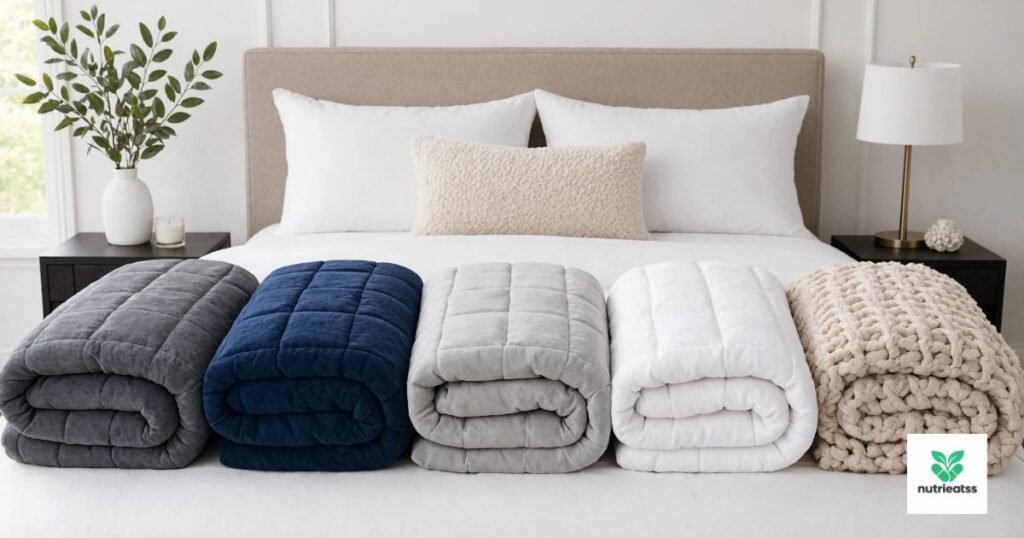
The mechanism behind weighted blankets is called deep pressure stimulation (DPS) — sometimes also referred to as deep touch pressure. It’s the same general principle behind swaddling a baby, a firm hug, or the calming effect of being tucked in tightly.
The idea is that firm, evenly distributed pressure on the body may help activate the parasympathetic nervous system — the part of your nervous system responsible for “rest and digest” functions, as opposed to the “fight or flight” response. Some researchers and clinicians believe this can be associated with a reduction in physiological arousal, which may translate to feeling calmer and more relaxed.
It’s worth being direct here: while deep pressure stimulation has a plausible physiological basis and a growing body of interest from sleep and occupational therapy researchers, weighted blankets are still a relatively young area of formal study. The evidence is promising, particularly for sleep quality and self-reported anxiety, but it isn’t as extensive or definitive as research on, say, cognitive behavioral therapy for insomnia. Think of a weighted blanket as one useful tool in a broader toolkit — not a guaranteed fix.
Common Materials and Fill Types
Weighted blankets typically consist of two parts: an outer shell (the fabric you touch and see) and an inner fill (what actually gives the blanket its weight).
Fill materials generally fall into two categories:
- Glass beads — Small, sand-like glass beads that are dense, quiet, and don’t add noticeable bulk. Most premium weighted blankets use glass beads because they distribute weight without making the blanket feel overly thick.
- Plastic pellets — A more budget-friendly fill option. Plastic pellets are lighter by volume than glass, so blankets using them tend to be bulkier for the same weight, and some users report more noise or shifting.
Some blankets, like Bearaby’s knitted designs, skip loose fill altogether and use the weight of thick, chunky-knit fabric itself to create pressure — a fill-free approach that appeals to people who want to avoid beads entirely.
Benefits of Weighted Blankets
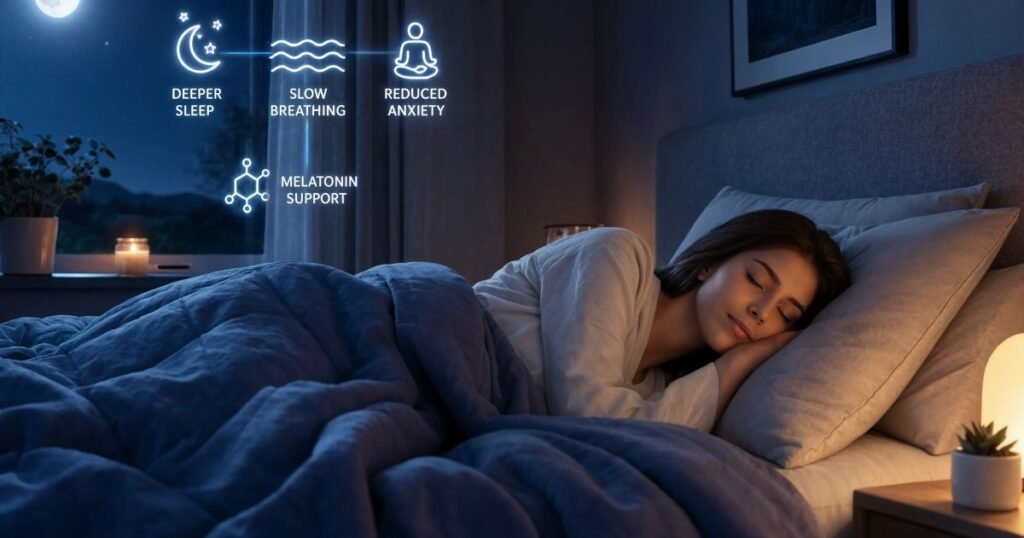
People reach for weighted blankets for a range of reasons. Here’s what the current interest and research point to:
- Reduced anxiety — Many users report a calmer, more grounded feeling under a weighted blanket, both at bedtime and during the day.
- Better sleep quality — Some sleep studies and user-reported data suggest weighted blankets may help people fall asleep faster and experience fewer nighttime awakenings.
- Lower stress levels — The pressure sensation is often compared to a hug, which may help ease tension after a stressful day.
- Improved relaxation — Many people use weighted blankets while reading, watching TV, or winding down, not just while sleeping.
- Potential support for ADHD — Some occupational therapists use weighted products as part of sensory-based strategies for children and adults with ADHD, though more research is needed.
- Sensory support for autism — Deep pressure input is a well-established tool in occupational therapy for some autistic individuals, and weighted blankets are sometimes incorporated into broader sensory routines.
- Reduced nighttime movement — The added weight can naturally discourage tossing and turning.
- Cozy comfort in colder months — Beyond any therapeutic benefit, plenty of people simply enjoy the warmth and heft during winter.
It’s important to frame this honestly: the research on weighted blankets is encouraging but still developing. Most existing studies are small, and results vary based on the population studied and the outcome measured. Weighted blankets are a comfort and self-care tool — not a clinically validated treatment for anxiety disorders or insomnia, and they shouldn’t replace therapy, medication, or medical guidance when those are needed.
How to Choose the Right Weighted Blanket
Not all weighted blankets are created equal. Here’s what actually matters when you’re comparing options.
Weight
The most common guideline is to choose a blanket that’s roughly 10% of your body weight, give or take a pound or two. Someone who weighs 150 pounds, for example, would typically look at a 15-pound blanket. This isn’t an exact science — some people prefer slightly heavier or lighter blankets based on personal preference — but it’s a reliable starting point.
Size
- Twin/Throw — Best for one person, a couch, or a smaller bed.
- Queen — A common choice for one adult who wants extra coverage or two people who want to share a lighter blanket.
- King — Designed for couples or anyone who wants a blanket that fully covers a larger bed.
Keep in mind that weighted blankets generally shouldn’t hang far off the edges of the bed the way a normal comforter does — extra overhang adds weight to the parts of the blanket that aren’t on your body, which can throw off the intended pressure distribution.
Fabric
- Cotton — Breathable, natural, and a solid all-around choice, especially for people who sleep warm.
- Bamboo viscose — Soft, smooth, and known for good moisture-wicking and cooling properties.
- Minky — A plush, fuzzy fabric that feels luxurious but tends to trap more heat.
- Cooling/technical fabrics — Designed specifically to pull heat and moisture away from the body.
- Fleece — Warm and cozy, best suited for colder climates or people who run cold at night.
Fill Material
As covered above, glass beads tend to offer a smoother, quieter, more evenly distributed feel, while plastic pellets are typically more budget-friendly but bulkier.
Washability
Some blankets have a removable, machine-washable duvet cover with a separate weighted insert that’s hand-wash or spot-clean only. Others are fully machine washable as a single piece. If you don’t want to deal with hauling a heavy, wet blanket to a laundromat, a removable cover is worth prioritizing.
Certifications
Look for safety certifications like OEKO-TEX Standard 100, which verifies that a textile has been tested for harmful substances. This is especially relevant for weighted blankets since you’re in prolonged, close contact with the fabric and fill night after night.
Top 5 Weighted Blankets for Anxiety and Better Sleep
Here’s a closer look at five widely reviewed weighted blankets, based on published specifications and independent testing coverage.
1. Gravity Blanket
Best for: Shoppers who want a premium, well-established option with consistent weight distribution.
The Gravity Blanket is one of the brands that helped popularize the category. It uses fine-grade glass beads secured with precise gridded stitching, which testers consistently note keeps the fill from clumping or shifting, even during active use.
Key Features
- Micro-plush duvet cover (with cooling and cotton cover variants also available)
- Fine-grade glass bead fill with gridded stitching for even weight distribution
- Machine-washable cover; hand-wash, air-dry weighted insert
Materials: Micro-fleece or cooling duvet cover with a glass bead and cotton weighted inner
Sizes: Single/Twin and Queen/King
Weight Options: 15, 20, and 35 lbs
Cooling Performance: The original Micro-Plush version runs warm and is best for average-to-cool sleepers; the Cooling Blanket variant is a better fit for hot sleepers
Durability: Strong — the gridded stitching helps the blanket hold its shape and weight distribution over time
Ease of Cleaning: Moderate — the outer cover is machine washable, but the weighted insert requires hand-washing
Pros
- Very even, consistent pressure with minimal bead clumping
- Reputable, long-standing brand with a track record in independent reviews
- Multiple cover options (plush, cooling, cotton) sold separately
Cons
- Limited to three weight options, with a gap between 20 and 35 lbs
- The original cover isn’t ideal for hot sleepers
- Higher price point than budget competitors
Who Should Buy It: People who want a dependable, well-tested weighted blanket and don’t mind paying a bit more for consistent construction.
Overall Rating: 4.5/5
2. YnM Weighted Blanket
Best for: Shoppers who want the widest range of weight and size options at a budget-friendly price.
YnM has built a reputation as one of the best-selling weighted blanket brands, largely because of its sheer range: sizes from child-sized throws up to California King, and weight options in smaller increments than most competitors offer.
Key Features
- Seven-layer construction with small stitched pockets to hold fill in place
- Glass beads (in most lines) or a glass bead/fiberfill blend for weight distribution
- Available in cotton, bamboo, and Minky shell options
Materials: Cotton, bamboo viscose, or Minky shell, depending on the line
Sizes: Youth, Twin, Full, Queen, King, and California King
Weight Options: As granular as 5, 7, 10, 12, 15, 17, 20, 22, 25, and 30 lbs, depending on the specific product
Cooling Performance: The bamboo line is specifically designed for temperature regulation and is a strong pick for hot sleepers; the standard cotton and Minky lines run warmer
Durability: Generally solid, though some long-term users report occasional seam wear or minor bead leakage over extended use — a common issue at this price point
Ease of Cleaning: Some versions lack a removable cover, meaning the entire blanket needs washing, which can be cumbersome given the weight
Pros
- Unmatched range of sizes and weight increments
- Very competitive pricing relative to premium brands
- OEKO-TEX certified cotton on core lines
Cons
- No removable cover on some models
- Occasional reports of bead leakage at seams over time
- Quality can vary somewhat between product lines
Who Should Buy It: Anyone who wants to dial in an exact weight (including smaller adults, teens, or people who fall between standard weight tiers) without paying premium prices.
Overall Rating: 4.3/5
3. Luna Weighted Blanket
Best for: Value-focused shoppers who still want solid breathability and a range of options.
Luna has positioned itself as an affordable, mental-health-conscious brand, with a wide weight range and a layered cotton construction designed for airflow.
Key Features
- Layered construction with air channels intended to boost breathability
- 100% cotton (often OEKO-TEX certified) outer shell
- Glass bead and fiberfill blend sewn into pockets for even distribution
Materials: 100% cotton shell with a glass bead/microfiber fill
Sizes: Child, Twin, Full, Queen, and King
Weight Options: Ranges from roughly 5 to 30 lbs depending on the specific model
Cooling Performance: Above average for the price point, thanks to the cotton shell and layered airflow design — a good option for warmer sleepers on a budget
Durability: Generally good; the stitched-pocket construction keeps beads from shifting
Ease of Cleaning: Some Luna models are machine washable, and duvet covers are sold separately for easier maintenance
Pros
- Strong value for the price compared to premium competitors
- Wide weight and size range, including options for children
- Breathable cotton construction suited to warmer sleepers
Cons
- Color and pattern options are more limited than some competitors
- Not all sizes are available at every weight
- Premium cooling fabric options cost extra
Who Should Buy It: Budget-conscious shoppers who still want a breathable, well-constructed blanket, including those shopping for a lighter-weight option for a child or smaller adult.
Overall Rating: 4.2/5
4. Baloo Living Weighted Blanket
Best for: Eco-conscious shoppers, hot sleepers, and anyone who wants an all-natural, chemical-free construction.
Baloo stands out for using 100% cotton throughout — shell, batting, and all — with no synthetic liners. That makes it one of the more breathable options on this list, and a strong pick for people with sensitivities to synthetic fabrics.
Key Features
- All-cotton shell and batting (no polyester liner)
- Lead-free glass microbead fill
- OEKO-TEX Standard 100 certified; marketed as vegan and carbon-neutral
Materials: 100% cotton shell and cotton batting with glass microbead fill
Sizes: Ranges from a compact throw up to King
Weight Options: Roughly 9 to 25 lbs depending on the product line
Cooling Performance: Among the best on this list for hot sleepers, since there’s no synthetic liner trapping heat
Durability: Strong, with double-stitched pockets designed to keep beads in place
Ease of Cleaning: Machine washable and dryer safe, which is a notable convenience compared to brands requiring hand-washing
Pros
- All-natural, chemical-free materials with no synthetic filler
- Excellent breathability for hot sleepers
- Fully machine washable and dryer safe
Cons
- Priced higher than budget brands like YnM or Luna
- Fewer color/pattern choices than some competitors
- Weight range tops out lower than some heavier-duty options
Who Should Buy It: Hot sleepers, people who prefer natural materials, and anyone prioritizing easy machine-wash care.
Overall Rating: 4.6/5
5. Bearaby Cotton Napper
Best for: Shoppers who want a bead-free, sustainable, and strikingly cozy design.
The Bearaby Cotton Napper takes a completely different approach: instead of glass beads or plastic pellets, it uses a chunky, hand-knit-style organic cotton fabric where the weight of the material itself creates the pressure. There’s nothing to leak, clump, or shift.
Key Features
- Bead-free, fill-free construction using thick knitted organic cotton
- GOTS-certified organic cotton, pre-washed for softness
- OEKO-TEX 100 and Fairtrade International certified
Materials: 100% GOTS-certified organic cotton (no beads or pellets)
Sizes: Available in a range of sizes up to king-equivalent coverage
Weight Options: Multiple weight tiers, generally in the 15–25 lb range depending on size
Cooling Performance: Very good — the open-knit structure allows airflow, making it one of the more breathable picks here despite its bulky look
Durability: Strong, though the knitted loops can loosen slightly with heavy use over time; hang-drying is not recommended, as it can stretch the loops
Ease of Cleaning: Machine washable on a cold, delicate cycle; best in a front-loading machine
Pros
- No beads or pellets means nothing to leak or clump
- Sustainably sourced, certified organic materials
- Striking, cozy knit design that doubles as a decor piece
Cons
- Premium price point
- Bulkier and more visually chunky than traditional blankets
- Limited color range compared to bead-filled competitors
Who Should Buy It: Eco-conscious shoppers, people who want to avoid bead-filled blankets entirely, and anyone who wants a design-forward piece for the couch as much as the bed.
Overall Rating: 4.5/5
Comparison Table
| Blanket | Best For | Material | Weight Options | Cooling | Washable | Rating |
|---|---|---|---|---|---|---|
| Gravity Blanket | Premium, consistent pressure | Micro-fleece/cooling cover, glass beads | 15, 20, 35 lbs | Moderate (better with cooling cover) | Cover only (insert hand-wash) | 4.5/5 |
| YnM Weighted Blanket | Widest range of sizes/weights | Cotton, bamboo, or Minky, glass beads | 5–30 lbs (varies by line) | Good (bamboo line) | Varies by model | 4.3/5 |
| Luna Weighted Blanket | Budget value | Cotton shell, glass bead/fiberfill | ~5–30 lbs | Above average | Varies by model | 4.2/5 |
| Baloo Living Weighted Blanket | Hot sleepers, all-natural | 100% cotton shell and fill, glass microbeads | ~9–25 lbs | Excellent | Fully machine washable | 4.6/5 |
| Bearaby Cotton Napper | Bead-free, sustainable | Organic knitted cotton (no fill) | ~15–25 lbs | Very good | Machine washable (cold, delicate) | 4.5/5 |
Pros and Cons of Weighted Blankets
Advantages
- May support better sleep quality for some users
- Can help ease feelings of anxiety and stress before bed
- Comfortable, hug-like sensation many people find soothing
- A relaxing addition to a broader self-care or wind-down routine
Disadvantages
- Can feel hot, especially with non-breathable fabrics
- Heavy and sometimes awkward to move, wash, or travel with
- Higher upfront cost than a standard blanket
- Not the right fit for everyone, including certain medical conditions (see below)
Safety Considerations
Weighted blankets aren’t appropriate for everyone. You should generally avoid using a weighted blanket, or check with a healthcare provider first, if you fall into any of these groups:
- Infants and very young children — Weighted blankets are not recommended for babies or toddlers due to suffocation risk.
- Children, unless medically advised — Kids should only use a weighted blanket under the guidance of a pediatrician or occupational therapist, with appropriate weight limits.
- People with severe respiratory disorders — Conditions like severe asthma or COPD may make added chest weight risky.
- Those with certain circulation problems — Conditions affecting blood flow may be aggravated by sustained pressure.
- People with limited mobility — Anyone who might struggle to move or remove the blanket independently should use caution.
If you’re unsure whether a weighted blanket is safe for your specific health situation, talk to a doctor or healthcare provider before purchasing one.
Weighted Blanket Care Guide
A little maintenance goes a long way toward extending the life of your blanket.
- Washing: Check the care label first. Many blankets have a removable, machine-washable duvet cover, while the weighted insert may require hand-washing or spot cleaning.
- Drying: Tumble dry on low when permitted, or air dry flat. Avoid hanging knitted blankets like the Bearaby Napper, as this can stretch the material.
- Storage: Store in a cool, dry place. Folding rather than cramming into a small bag helps prevent uneven bead distribution over time.
- Cover usage: Using a duvet cover (even if not required) can reduce how often you need to wash the heavier weighted insert.
- Spot cleaning: For small spills, spot clean promptly rather than waiting for a full wash cycle.
- Extending lifespan: Avoid overloading a washing machine with a heavy blanket, since this can strain both the machine and the blanket’s seams.
Are Weighted Blankets Worth It?
This depends on your priorities and budget. Weighted blankets typically range from around $60 on the budget end to $250 or more for premium options — a real investment compared to a standard blanket.
That said, many users find the cost justified by:
- Longevity — A well-made weighted blanket, properly cared for, can last for years.
- Consistent comfort — Unlike a supplement or single therapy session, a blanket offers repeatable, on-demand comfort every night.
- Multi-use value — Many people use their weighted blanket for naps, reading, or relaxing on the couch, not just overnight sleep.
Weighted blankets are generally worth considering if you’re looking for an accessible, low-risk way to add more comfort and calm to your evening routine — especially as a complement to healthy sleep habits. They’re not a substitute for addressing an underlying anxiety disorder, chronic insomnia, or other medical condition, and they shouldn’t be treated as one.
Frequently Asked Questions
Do weighted blankets really work?
Many users report feeling calmer and sleeping better with a weighted blanket, and the concept is grounded in the plausible physiology of deep pressure stimulation. However, formal research is still developing, so results vary from person to person.
Can you sleep with one every night?
Yes, for most healthy adults, nightly use is considered safe. If you have any of the health conditions mentioned in the safety section, check with a doctor first.
What’s the best weight for a weighted blanket?
A common guideline is about 10% of your body weight, though personal preference plays a role — some people prefer slightly lighter or heavier options.
Are weighted blankets safe?
For most healthy adults, yes. They’re not recommended for infants, and children should only use them under medical guidance.
Do weighted blankets help with anxiety?
Many people report feeling calmer while using one, and deep pressure stimulation has a plausible calming mechanism. It’s a helpful comfort tool, though not a clinical treatment for diagnosed anxiety disorders.
Do weighted blankets make you hot?
They can, especially with non-breathable fabrics like standard Minky or fleece. Cotton, bamboo, and dedicated cooling fabrics help reduce this issue.
Can children use weighted blankets?
Only under guidance from a pediatrician or occupational therapist, using an appropriately sized and weighted product — never an adult-sized blanket.
How do you wash a weighted blanket?
Check the specific care label. Many have a machine-washable cover with a hand-wash-only weighted insert; some fully knitted or all-cotton designs are entirely machine washable.
Are glass beads better than plastic pellets?
Generally, yes — glass beads are denser, quieter, and allow for a slimmer, more evenly distributed blanket compared to bulkier plastic pellet fills.
Can weighted blankets reduce insomnia?
Some studies and a substantial amount of user-reported experience suggest they may help with falling asleep and staying asleep, though they work best as part of a broader healthy sleep routine rather than as a standalone fix for chronic insomnia.
Expert Tips
- Pair your blanket with good sleep hygiene — consistent bedtimes, a dark room, and a comfortable mattress all matter just as much as the blanket itself.
- Keep your bedroom cool — even a breathable blanket works better in a room that isn’t overheated.
- Stick to a consistent bedtime — your body’s internal clock responds to routine, and a weighted blanket can become part of that cue.
- Limit screens before bed — blue light exposure can counteract the calming effect you’re trying to create.
- Combine with relaxation techniques — deep breathing, light stretching, or a short meditation can pair well with the physical calm of a weighted blanket.
Conclusion
Anxiety and poor sleep have a way of feeding each other — the more stressed you feel, the harder it is to sleep, and the less you sleep, the harder it is to manage stress. A weighted blanket won’t break that cycle on its own, but for many people, it’s a genuinely comforting, low-effort addition to a healthier nighttime routine.
Of the five options covered here, the Gravity Blanket remains a dependable, well-tested overall pick for shoppers who want consistent pressure and a trusted brand. If you run hot at night, Baloo Living or YnM’s bamboo line are worth a close look. Budget-focused shoppers will appreciate Luna’s value and flexibility, while anyone who wants to skip beads entirely should consider the Bearaby Cotton Napper.
Whichever you choose, remember the basics: aim for roughly 10% of your body weight, pick a breathable fabric if you sleep warm, and check for safety certifications like OEKO-TEX. From there, it’s about finding the blanket that feels right for you — and giving yourself the chance to settle into calmer, more restful nights.
This article is for informational purposes only and is not a substitute for professional medical advice. If you have a chronic health condition or ongoing anxiety or sleep concerns, consult a healthcare provider.
Pingback: 15 Best Foods for Better Sleep: Proven Picks | nutrieatss