
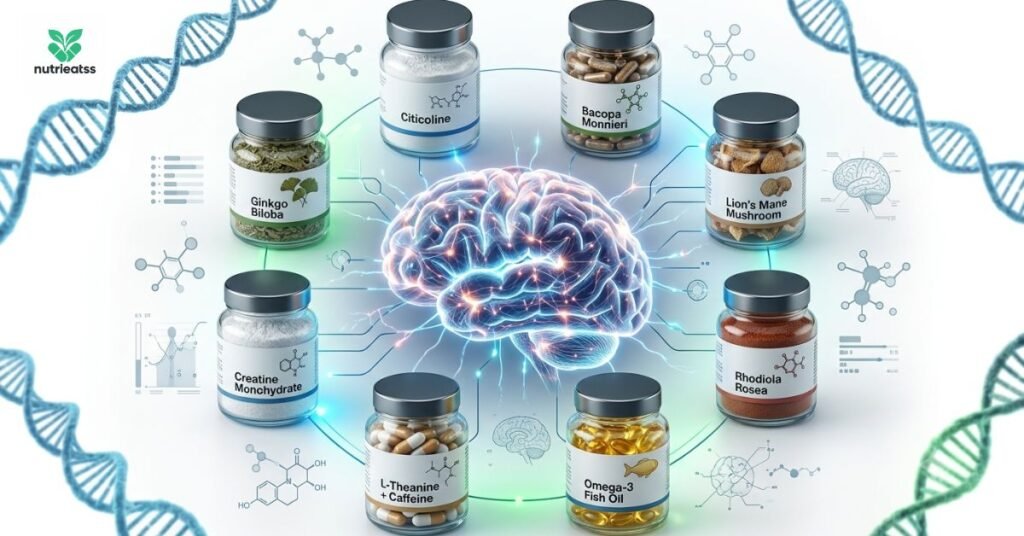
Discover the best nootropic supplements for focus and memory, backed by science. Compare top brain supplements, dosages, benefits, and safety tips.
If your brain feels like it’s running twenty browser tabs at once — half-finished tasks, a foggy afternoon slump, a memory that used to be sharper — you’re not imagining it. Between constant notifications, poor sleep, and information overload, sustained focus has become one of the hardest things to protect in modern life. It’s no surprise that nootropic supplements have moved from niche biohacker forums into the daily routines of students, professionals, and anyone chasing a little more mental clarity.
But “brain supplement” is a crowded, noisy category, and not everything on the shelf is backed by real evidence. This guide cuts through the marketing to look at what nootropics actually are, what the science says about the best-researched options, and how to think about them realistically — as one piece of a bigger brain-health picture, not a magic switch for a smarter you.
In this guide, you’ll learn:
- What nootropics are and how they work in the brain
- Whether the science actually supports them
- Our evaluation criteria for ranking supplements
- Detailed breakdowns of the 8 best-researched nootropics for focus and memory
- A side-by-side comparison table
- Who should (and shouldn’t) consider taking them
- Natural, supplement-free ways to sharpen focus
- Answers to the most common nootropic questions
What Are Nootropic Supplements?
Nootropics (sometimes called “smart drugs” or cognitive enhancers) are substances — natural compounds, nutrients, herbal extracts, or synthetic molecules — taken with the goal of supporting brain functions like memory, focus, learning, and mental energy. The term was coined in the 1970s from the Greek words for “mind” (nous) and “to bend or turn” (trepein), roughly translating to “mind-bending.”
Natural vs. synthetic nootropics
- Natural nootropics include plant extracts (Bacopa monnieri, Rhodiola rosea, Ginkgo biloba), amino acids (L-theanine), mushrooms (Lion’s Mane), and nutrients your body already uses (choline compounds, omega-3 fatty acids, creatine).
- Synthetic nootropics include lab-made compounds like racetams or prescription stimulants (e.g., modafinil, methylphenidate). This article focuses exclusively on over-the-counter, natural and nutrient-based supplements — not prescription drugs, which carry different risk profiles and require medical supervision.
How nootropics work in the brain
Most evidence-based nootropics act through one or more of these mechanisms:
- Neurotransmitter support — providing raw materials (like choline) for acetylcholine, a neurotransmitter central to memory and learning, or modulating GABA, dopamine, and serotonin activity.
- Cerebral blood flow — some botanicals, like Ginkgo biloba, are thought to support circulation to the brain, which may aid oxygen and nutrient delivery.
- Brain energy metabolism — nutrients like creatine help buffer cellular energy (ATP) production, which matters for brain tissue as much as muscle.
- Stress and cortisol modulation — adaptogens like Rhodiola rosea may help the body respond to mental and physical stress more efficiently, indirectly protecting focus.
- Neuroprotection and neurotrophic support — compounds like Lion’s Mane are studied for their potential to stimulate nerve growth factor (NGF), a protein involved in maintaining and repairing neurons.
Understanding these mechanisms is useful, but it’s important to separate plausible biology from proven outcomes — which is exactly what the next section addresses.
Do Nootropic Supplements Really Work?
The honest answer: some do, modestly — and none work like a movie-style “limitless pill.”
What the current evidence shows
- A handful of nootropics (citicoline, Bacopa monnieri, caffeine plus L-theanine, creatine) have multiple randomized, placebo-controlled human trials showing measurable — though usually modest — improvements in specific cognitive domains like working memory, attention, or processing speed.
- Many other “brain supplements” rely mostly on animal studies, small pilot trials, or traditional use, which is a much weaker form of evidence.
- Effects are typically incremental, not transformative. Think “10–15% faster reaction time” or “improved memory recall after 12 weeks,” not “instant genius.”
Why individual results vary
Response to nootropics depends on baseline nutrient status (someone choline-deficient may respond more to citicoline than someone who isn’t), genetics, age, existing health conditions, and even the specific extract and dose used — bacoside content in Bacopa monnieri products, for example, varies significantly between brands.
Why lifestyle still matters more
No supplement outperforms the fundamentals. Sleep deprivation alone can impair memory and attention more than any nootropic can compensate for. Regular exercise increases blood flow and supports the growth of new neurons. A nutrient-dense diet supplies the raw materials your brain needs. Nootropics work best as a supplement to these habits — not a replacement for them.
How We Chose These Top 8 Supplements
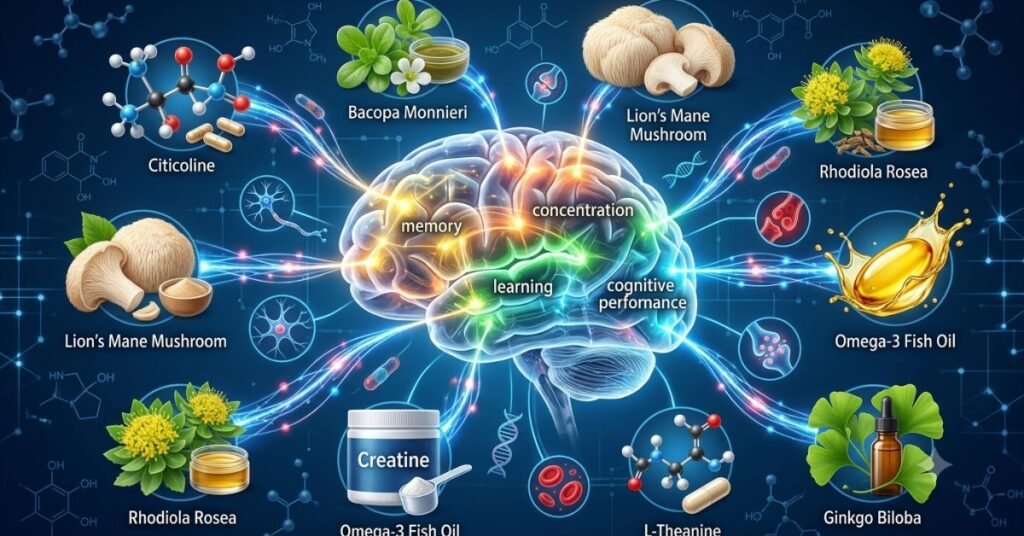
To keep this list evidence-based rather than trend-based, each supplement had to meet the following criteria:
- Clinical evidence — supported by at least one randomized, placebo-controlled human trial (not just animal studies or anecdote)
- Safety profile — a well-documented history of use with a manageable side-effect profile at standard doses
- Bioavailability — meaningful evidence the compound (or its active form) is actually absorbed and reaches the brain
- Third-party testing availability — reputable brands offer independent purity/potency verification (e.g., NSF, USP, Informed Sport)
- Realistic side-effect profile — no supplement with serious, common adverse effects at recommended doses
- Value for money — reasonably priced relative to effective dosing, not premium-priced with no added benefit
Supplements that are popular in marketing but lack meaningful human trial data (like many proprietary “brain blends”) were excluded in favor of well-studied, single-ingredient standouts.
Top 8 Best Nootropic Supplements
1. Citicoline (CDP-Choline)
Overview: Citicoline is a naturally occurring compound your body already produces as an intermediate in building brain cell membranes. As a supplement, it’s one of the better-studied nootropics for memory support, particularly in older adults.
Scientific benefits: Supports acetylcholine production, contributes to healthy neuronal membrane structure, and may support attention and working memory.
How it works: Once ingested, citicoline breaks down into choline and cytidine. Choline is a precursor to acetylcholine, the neurotransmitter most closely tied to learning and memory, while cytidine converts to uridine, which supports synaptic membrane formation.
Research summary: A 12-week randomized, double-blind, placebo-controlled trial published in The Journal of Nutrition gave 500 mg/day of citicoline to healthy older adults with age-related memory complaints and found improvements in episodic memory compared to placebo. Other trials and reviews report similar cognitive benefits in populations with memory impairment, though a 2024 EFSA scientific opinion concluded the evidence wasn’t yet strong enough to support an official EU health claim for memory in healthy adults — a useful reminder that “promising” and “proven” aren’t the same thing.
Recommended dosage: 250–500 mg per day, typically with food.
Best for: Adults focused on long-term memory support, particularly those over 50.
Possible side effects: Generally well-tolerated; mild headache, stomach upset, or insomnia if taken late in the day.
Pros:
- Naturally occurring in the body, well-tolerated
- Strongest evidence base of any choline-based nootropic
- May benefit both memory and general alertness
Cons:
- Effects take weeks, not days
- Regulatory bodies note evidence is still developing for healthy (non-impaired) adults
2. Bacopa Monnieri
Overview: A staple of traditional Ayurvedic medicine, Bacopa monnieri is one of the most heavily studied herbal nootropics, with dozens of clinical trials examining its effects on memory, learning, and anxiety.
Scientific benefits: Associated with improved verbal learning, memory consolidation, and information processing speed after consistent, longer-term use.
How it works: Bacopa’s active compounds, bacosides A and B, are thought to support nerve signal transmission, antioxidant activity in brain tissue, and acetylcholine-related pathways.
Research summary: A meta-analysis of randomized controlled trials found Bacopa improved measures like reaction time and certain cognitive test scores, generally after at least 12 weeks of consistent use — Bacopa is a slow-acting, cumulative nootropic, not an acute one. A more recent systematic review covering 22 clinical trials described the evidence as promising but noted many trials were small or methodologically inconsistent, calling for larger, more rigorous studies.
Recommended dosage: 300–450 mg/day of an extract standardized to 50–55% bacosides.
Best for: Long-term memory support and reducing mental fatigue with sustained use.
Possible side effects: Digestive upset (nausea, cramping, dry mouth) is the most commonly reported issue, especially without food.
Pros:
- Extensive traditional and clinical research history
- Non-stimulant, won’t interfere with sleep
- Reasonably affordable
Cons:
- Slow onset — typically 8–12 weeks before noticeable effects
- GI side effects are common enough to be worth planning around
- Quality varies significantly between bacoside-standardized and non-standardized products
3. Lion’s Mane Mushroom
Overview: This distinctive, shaggy white mushroom has a long history in East Asian traditional medicine and has become one of the most talked-about “brain mushrooms” in the wellness world.
Scientific benefits: Preliminary evidence suggests support for cognitive function in older adults and those with mild cognitive concerns, along with possible mood benefits.
How it works: Lion’s Mane contains hericenones and erinacines, compounds able to cross the blood-brain barrier that are believed to stimulate nerve growth factor (NGF) synthesis, a protein involved in the growth, maintenance, and survival of neurons.
Research summary: Evidence here is genuinely mixed and worth stating plainly. Several small trials in middle-aged and older adults — including one in people with mild cognitive impairment — found improvements in cognitive test scores after 8–16 weeks of supplementation. However, more recent trials in healthy young adults have found no benefit, or even slightly worse short-term memory recall in one case, suggesting Lion’s Mane may help more in aging or cognitively compromised brains than in already-healthy young ones.
Recommended dosage: 500–1,000 mg twice daily of fruiting body or mycelium extract, typically over 8+ weeks.
Best for: Middle-aged and older adults interested in long-term neuroprotective support.
Possible side effects: Generally very well tolerated; occasional mild digestive discomfort.
Pros:
- Excellent safety profile
- Interesting neuroprotective mechanism with real biological plausibility
- Well suited to long-term daily use
Cons:
- Evidence in healthy young adults is inconsistent at best
- Effects, where present, take weeks to appear
- Extract quality (fruiting body vs. mycelium, concentration) varies widely between brands
4. Rhodiola Rosea
Overview: Rhodiola is an adaptogenic herb traditionally used in Scandinavian and Russian folk medicine to combat fatigue and support endurance under stress — including mental stress.
Scientific benefits: Most consistently associated with reduced mental fatigue and improved subjective performance during periods of stress, rather than raw memory enhancement.
How it works: As an adaptogen, Rhodiola is thought to help modulate the body’s stress-response systems, potentially through effects on serotonin and dopamine activity, which may help preserve mental performance when you’re tired or under pressure.
Research summary: A systematic review of randomized and controlled trials found evidence that Rhodiola may help with physical and mental fatigue, though the review’s authors flagged methodological limitations across many of the underlying studies that make it hard to pin down exact effect sizes. More recent research exploring Rhodiola alongside Ginkgo biloba for post-viral fatigue and cognitive impairment has been described as promising but still preliminary.
Recommended dosage: 200–400 mg/day of extract standardized to 3% rosavins and 1% salidroside.
Best for: People whose focus problems are driven more by stress or fatigue than by memory itself — think burnout-adjacent brain fog.
Possible side effects: Can be mildly stimulating; some people report jitteriness, dry mouth, or dizziness, especially at higher doses or taken late in the day.
Pros:
- Helpful for stress-related mental fatigue specifically
- Fast-acting compared to many other herbal nootropics
- Non-habit-forming
Cons:
- Evidence base is smaller and more mixed than citicoline or Bacopa
- Mildly stimulating effect may not suit everyone
- Less useful if your main issue is memory rather than fatigue
5. Omega-3 Fish Oil (DHA & EPA)
Overview: Omega-3 fatty acids, particularly DHA and EPA, are structural building blocks of brain cell membranes and among the most well-established nutrients for long-term brain health.
Scientific benefits: Strong observational and trial evidence links adequate omega-3 intake to healthy brain aging, mood regulation, and — in people with low baseline intake — modest cognitive benefits.
How it works: DHA is a major structural fat in neuronal membranes, supporting membrane fluidity and synaptic function. EPA is associated with anti-inflammatory processes that may protect brain tissue over time.
Research summary: Population studies consistently associate higher omega-3 intake, particularly from fatty fish, with better cognitive aging outcomes. Randomized trials show more modest, variable results in people who already eat fish regularly, but tend to show clearer benefits in those with low baseline omega-3 levels — reinforcing that this is more of a foundational nutrient than an acute focus booster.
Recommended dosage: 1,000–2,000 mg combined EPA/DHA per day.
Best for: Long-term brain health maintenance, especially for people who rarely eat fatty fish.
Possible side effects: Fishy aftertaste, mild GI upset; high doses can have a mild blood-thinning effect.
Pros:
- Backed by decades of nutritional research
- Supports cardiovascular and brain health simultaneously
- Well tolerated by most people
Cons:
- Benefits are most noticeable in people who were previously deficient
- Not a fast-acting “focus” supplement
- Fish oil quality (oxidation, purity) varies significantly between brands
6. L-Theanine + Caffeine
Overview: This pairing — an amino acid from tea leaves combined with the world’s most-used stimulant — is one of the best-researched “focus stacks” available, and arguably the most reliably fast-acting option on this list.
Scientific benefits: Multiple trials show the combination improves attention, accuracy, and alertness more effectively than either ingredient alone, while reducing the jitteriness commonly associated with caffeine on its own.
How it works: Caffeine blocks adenosine receptors, increasing alertness, while L-theanine promotes calming alpha-brain-wave activity and modulates GABA, glutamate, and dopamine. Together, they appear to produce a “calm alertness” that neither ingredient produces alone.
Research summary: Controlled studies — including EEG-based research measuring brainwave activity — have repeatedly found that a combined dose (commonly around 100 mg caffeine with 200 mg L-theanine, or similar 1:2 ratios) improves task accuracy, sustained attention, and reaction time compared to placebo, with effects appearing within roughly 30–60 minutes. This is one of the few nootropic combinations with genuinely fast, reproducible acute effects in healthy adults.
Recommended dosage: 100–200 mg caffeine with 200–400 mg L-theanine (roughly a 1:2 caffeine-to-theanine ratio).
Best for: Same-day focus for study sessions, deadlines, or demanding cognitive work.
Possible side effects: Caffeine-related effects (increased heart rate, disrupted sleep if taken late, tolerance with daily use) are still possible, though L-theanine helps blunt some jitteriness.
Pros:
- Fast onset — effects within an hour
- Strong, reproducible evidence base
- Widely available and inexpensive (a cup of green tea provides a small amount of both)
Cons:
- Still a stimulant combination — not ideal late in the day or for the caffeine-sensitive
- Tolerance to caffeine’s effects can build with daily use
- Doesn’t address underlying memory or long-term brain health
7. Creatine Monohydrate
Overview: Best known as a sports-performance supplement, creatine has increasingly strong evidence for a second use case: supporting brain energy metabolism, particularly under conditions of mental fatigue or sleep deprivation.
Scientific benefits: Research points to benefits for working memory and processing speed, especially in vegetarians/vegans (who have lower baseline creatine stores) and during sleep deprivation.
How it works: Creatine helps regenerate ATP, the cell’s primary energy currency. Brain tissue is highly energy-demanding, and some research suggests boosting the brain’s creatine-phosphate reserves may help maintain cognitive performance when energy supply is under strain.
Research summary: Trials in vegetarians — who typically have lower muscle and brain creatine levels since dietary creatine comes mainly from meat and fish — have shown some of the clearest cognitive benefits, including improved working memory and intelligence-test performance. Other studies looking at sleep-deprived individuals have found creatine may help preserve cognitive performance and mood under that kind of acute stress, though effects in well-rested, non-vegetarian adults tend to be smaller.
Recommended dosage: 3–5 g per day of creatine monohydrate.
Best for: Vegetarians/vegans, people under sleep pressure, and anyone already using creatine for fitness who wants a possible cognitive bonus.
Possible side effects: Generally very safe; mild water retention or GI discomfort in some users at higher doses.
Pros:
- One of the most extensively safety-tested supplements in existence
- Dual benefit for both physical and cognitive performance
- Inexpensive and widely available
Cons:
- Cognitive benefits are most pronounced in specific groups (vegetarians, sleep-deprived)
- Less impactful for well-rested omnivores
- Requires consistent daily use to maintain elevated creatine stores
8. Ginkgo Biloba
Overview: One of the oldest and most recognizable “brain herbs,” Ginkgo biloba extract has been studied for decades, primarily in the context of circulation and memory support in older adults.
Scientific benefits: Some evidence supports improved attention and processing speed, with effects reported to appear relatively quickly after dosing in certain studies.
How it works: Ginkgo is thought to support cerebral blood flow and has antioxidant properties; some research suggests it may influence norepinephrine reuptake, which could relate to its attention-related effects.
Research summary: Ginkgo has one of the longest research histories of any herbal nootropic, with a genuinely mixed evidence base — some trials in healthy adults show measurable, fairly fast improvements in attention, while broader reviews of Ginkgo for dementia prevention and general cognitive enhancement have been more equivocal. Recent interest has also focused on Ginkgo (often alongside Rhodiola) for post-viral cognitive fatigue, an area still considered preliminary.
Recommended dosage: 120–240 mg/day of standardized extract (containing 24% flavone glycosides and 6% terpene lactones).
Best for: Older adults interested in circulation-supported cognitive maintenance.
Possible side effects: Mild headache, GI upset, dizziness; has blood-thinning properties, so caution is warranted around surgery or with anticoagulant medications.
Pros:
- Decades of research and traditional use
- May offer relatively fast-onset attention benefits in some studies
- Widely available and inexpensive
Cons:
- Evidence for meaningful, lasting cognitive enhancement is mixed
- Blood-thinning effect requires caution with certain medications
- Effect sizes in the strongest trials are still modest
Comparison Table
| Supplement | Main Benefit | Evidence Level | Best For | Time to Notice Effects | Typical Dosage |
| Citicoline (CDP-Choline) | Memory, mental clarity | Moderate-High | Adults 50+ focused on memory | 4–12 weeks | 250–500 mg/day |
| Bacopa Monnieri | Memory consolidation | Moderate | Long-term memory & learning | 8–12 weeks | 300–450 mg/day |
| Lion’s Mane Mushroom | Neuroprotection, mood | Low-Moderate | Older adults, long-term use | 8–16 weeks | 500–1,000 mg 2x/day |
| Rhodiola Rosea | Mental fatigue reduction | Moderate | Stress-related brain fog | Days to weeks | 200–400 mg/day |
| Omega-3 Fish Oil | Long-term brain structure/health | High (for deficiency) | Low fish intake, general health | Weeks to months | 1,000–2,000 mg EPA/DHA |
| L-Theanine + Caffeine | Fast acute focus | High | Same-day focus needs | 30–60 minutes | 100–200 mg + 200–400 mg |
| Creatine Monohydrate | Brain energy, working memory | Moderate-High | Vegetarians, sleep-deprived | 2–4 weeks (loading) | 3–5 g/day |
| Ginkgo Biloba | Attention, circulation | Mixed/Moderate | Older adults | Hours to weeks | 120–240 mg/day |
Who Should Consider Nootropics?
- Students managing heavy course loads, exam prep, or long study sessions
- Professionals juggling deep-focus work, meetings, and decision fatigue
- Entrepreneurs who need sustained mental stamina across long, unpredictable days
- Gamers and competitive players relying on sustained attention and reaction time
- Older adults interested in proactive, evidence-supported brain-health maintenance
- Anyone experiencing mental fatigue from stress, poor sleep, or demanding cognitive workloads — as a complement to, not a replacement for, addressing the root cause
Who Should Avoid Them?
Nootropics aren’t appropriate for everyone. You should avoid supplementing — or only do so under a doctor’s guidance — if you are:
- Pregnant or breastfeeding (most nootropics lack sufficient safety data for this population)
- A child or adolescent (most trials only involve adults)
- Taking prescription medications, especially blood thinners (Ginkgo, high-dose omega-3), medications metabolized by the liver, or antidepressants/stimulants that could interact with adaptogens or caffeine
- Managing a diagnosed medical condition, particularly bleeding disorders, epilepsy, thyroid disorders, or cardiovascular disease
- Living with high blood pressure, especially before using stimulant-containing stacks like caffeine + L-theanine
- Managing an anxiety disorder, where stimulating compounds (caffeine, Rhodiola, high-dose Ginkgo) could worsen symptoms
Always consult a healthcare professional before starting any new supplement, particularly if you fall into any of the categories above or take regular medication.
Natural Ways to Improve Focus Without Supplements
Before — or alongside — reaching for a bottle, these habits have some of the strongest evidence of all for supporting focus and memory:
- Prioritize sleep quality and consistency. Sleep is when the brain consolidates memories; even one poor night measurably impairs attention and recall.
- Exercise regularly. Aerobic activity increases blood flow to the brain and supports the growth of new neurons, particularly in memory-related regions.
- Follow a Mediterranean-style diet. Rich in omega-3s, antioxidants, and whole foods, this eating pattern is consistently linked to better cognitive aging outcomes.
- Stay hydrated. Even mild dehydration can measurably impair concentration and short-term memory.
- Practice meditation or mindfulness. Regular practice is associated with improved attention control and reduced mind-wandering.
- Use deep work techniques. Working in focused, distraction-free blocks (rather than constant multitasking) improves both output and mental clarity.
- Try time blocking. Structuring your day around dedicated focus periods reduces the cognitive cost of constant task-switching.
- Manage chronic stress. Elevated cortisol over time is associated with impaired memory and executive function — stress management isn’t just about mood, it’s a cognitive intervention.
Frequently Asked Questions
What is the most effective nootropic? There’s no single “most effective” nootropic — it depends on your goal. For fast, same-day focus, L-theanine + caffeine has the strongest acute evidence. For long-term memory support, citicoline and Bacopa monnieri have the most consistent research.
Are nootropics safe? The natural nootropics covered in this guide are generally considered safe for healthy adults at recommended doses, with good long-term safety records. That said, “natural” doesn’t mean risk-free — interactions with medications and individual sensitivities are real considerations, which is why checking with a healthcare provider is worthwhile.
How long do nootropics take to work? It varies widely. L-theanine + caffeine can produce noticeable effects within 30–60 minutes. Herbal options like Bacopa monnieri or Lion’s Mane typically require 8–12+ weeks of consistent daily use before effects become apparent.
Can I stack multiple nootropics? Many people combine complementary nootropics (e.g., citicoline with L-theanine and caffeine), and some combinations have research support. However, more isn’t automatically better — stacking increases the complexity of side effects and interactions, so it’s best to introduce one new supplement at a time.
Do nootropics improve IQ? No credible evidence supports nootropics meaningfully raising IQ. They may improve specific, measurable functions like working memory, attention, or processing speed under certain conditions — that’s a different (and more realistic) claim than “getting smarter.”
Are nootropics addictive? Most natural nootropics on this list are not considered addictive. The exception is caffeine, which can produce tolerance and mild withdrawal symptoms (headache, fatigue) with regular use.
Can students use them? Generally yes, for healthy adult students. The L-theanine + caffeine combination has particularly strong evidence for exam-style focus tasks. Students should still prioritize sleep and avoid using stimulants to compensate for chronic sleep deprivation.
Which supplement is best for memory specifically? Citicoline and Bacopa monnieri have the strongest evidence specifically tied to memory function, particularly with consistent long-term use.
What’s best for ADHD-like symptoms of inattention? None of these supplements are treatments for clinically diagnosed ADHD, which should be managed with a healthcare provider. That said, some preliminary research has explored L-theanine + caffeine combinations for attention-related outcomes. This is not a substitute for professional evaluation and treatment.
Are natural nootropics better than synthetic ones? “Better” depends on the metric. Natural nootropics generally have milder effects and lower risk profiles; synthetic options (including prescription stimulants) tend to have stronger effects but also higher risks, side effects, and in many cases legal restrictions. For most people seeking everyday focus support, natural, well-studied options are the more appropriate starting point.
Expert Tips
- Start with one supplement at a time. This makes it far easier to identify what’s actually helping (or causing side effects).
- Track your results. A simple daily log of focus, mood, and sleep quality helps you objectively evaluate whether something is working, rather than relying on impression alone.
- Avoid megadosing. More is not more effective — sticking to studied dose ranges is both safer and more likely to reflect the actual research outcomes.
- Prioritize sleep above all else. No nootropic will outperform the cognitive cost of chronic sleep deprivation.
- Buy third-party tested brands. Look for NSF Certified for Sport, USP Verified, or Informed Choice/Informed Sport seals to reduce the risk of contamination or mislabeled dosing.
- Cycle stimulant-based nootropics if needed. If you use caffeine-containing stacks daily, consider periodic breaks to avoid building excessive tolerance.
Conclusion
The best nootropic supplements for focus and memory aren’t miracle pills — they’re modest, evidence-supported tools that can meaningfully support specific cognitive functions when used consistently and appropriately. Citicoline and Bacopa monnieri stand out for memory support over time; L-theanine + caffeine remains the most reliable option for fast, same-day focus; and options like creatine, omega-3s, Rhodiola, Lion’s Mane, and Ginkgo each offer more targeted, situational benefits.
The right choice depends on your specific goal — long-term brain health, acute focus for a deadline, or support during a stressful season — and should always sit on top of the fundamentals: quality sleep, regular movement, good nutrition, and stress management. No supplement compensates for skipping those basics.
Before starting any new supplement, especially if you take medication or manage a health condition, talk with a healthcare professional who can help you weigh the evidence against your personal health picture.
If you found this guide helpful, consider sharing it with a friend, classmate, or colleague who could use a sharper afternoon — and explore our other brain-health content for more evidence-based ways to support your focus, memory, and mental performance.
Medical Disclaimer: This article is for educational and informational purposes only and is not intended as medical advice. It is not a substitute for professional medical consultation, diagnosis, or treatment. Always consult a qualified healthcare provider before starting any new supplement, especially if you are pregnant, breastfeeding, managing a medical condition, or taking medication.
Pingback: 5 Best Foods to Fight Brain Fog and Restore Mental Clarity: A Proven Guide | nutrieatss