
Discover the top 6 B-complex vitamins for brain fog and mental clarity. Learn their benefits, food sources, deficiency signs, and how they support healthy brain function.
You sit down to work, and your thoughts feel like they’re moving through wet sand. You reread the same sentence three times. You forget why you walked into the room. If this sounds familiar, you’re not alone — brain fog is one of the most common complaints among busy professionals, students, remote workers, and people recovering from illness or chronic stress.
Brain fog isn’t a medical diagnosis on its own — it’s a symptom, and it can have many causes, including poor sleep, high stress, certain medications, underlying health conditions, and nutritional gaps. B vitamins such as B6, folate (B9), and B12 play important roles in cognitive function and neurotransmitter synthesis, which is why they’re often discussed alongside brain fog. When a deficiency in one or more B vitamins is the underlying issue, correcting it may support mental clarity — though B vitamins are not a cure-all, and they won’t resolve brain fog caused by other factors.
In this guide, you’ll learn which six B vitamins matter most for brain health, the signs of deficiency to watch for, where to find them in food, when a supplement might help, and what the current evidence actually says — without exaggeration.
Table of Contents
- What Is Brain Fog?
- Why B-Complex Vitamins Matter for Brain Health
- Top 6 B-Complex Vitamins for Brain Fog
- Signs You May Have a B Vitamin Deficiency
- Best Food Sources of B Vitamins
- Should You Take a B-Complex Supplement?
- Lifestyle Tips to Reduce Brain Fog Naturally
- Common Mistakes
- FAQ
- Conclusion
What Is Brain Fog?

Brain fog describes a cluster of symptoms rather than a single condition. People typically describe it as mental fatigue, difficulty concentrating, forgetfulness, slower thinking, or a general sense of mental “haziness.”
Common symptoms include:
- Difficulty focusing or staying on task
- Short-term memory lapses
- Mental fatigue that doesn’t improve with rest
- Feeling mentally “slow” or disconnected
- Trouble finding words
Common causes include poor or insufficient sleep, chronic stress, certain medications, hormonal changes, dehydration, blood sugar fluctuations, underlying medical conditions such as thyroid disorders or anemia, and — in some cases — nutrient deficiencies, including certain B vitamins.
Occasional mental fatigue (like after a poor night’s sleep) is normal and usually resolves on its own. Persistent brain fog — lasting weeks or interfering with daily function — is different and deserves attention. If brain fog is severe, sudden, or accompanied by other symptoms like numbness, vision changes, or significant mood changes, it’s important to see a healthcare provider rather than self-treating with supplements.
💡 Expert Tip #1: Keep a simple daily log of sleep, stress levels, and diet for two weeks. Patterns often reveal an obvious lifestyle cause before you assume a nutrient deficiency is to blame.
Why B-Complex Vitamins Matter for Brain Health
B-complex vitamins are a group of eight water-soluble vitamins that support numerous processes tied to brain function. They aren’t stored in large amounts in the body, which means consistent intake — through diet or, when appropriate, supplementation — matters.
Key roles B vitamins play in brain health:
- Energy production — B vitamins act as coenzymes that help convert food into usable cellular energy, including in brain cells, which are highly energy-demanding. Folate and vitamin B12 in particular are involved in numerous physiological processes tied to cognitive function.
- Neurotransmitter synthesis — B6, B9, and B12 are involved in producing neurotransmitters like serotonin and dopamine, which affect mood, focus, and mental clarity.
- DNA production — Folate and B12 are essential for DNA synthesis and repair, including in rapidly dividing cells.
- Red blood cell formation — B12 and folate help form healthy red blood cells, which carry oxygen to the brain; deficiency can lead to a type of anemia associated with fatigue and cognitive symptoms.
- Nervous system function — B1, B6, and B12 support the maintenance of nerve cells and the protective myelin sheath.
- Homocysteine metabolism — B6, B9, and B12 help regulate homocysteine, an amino acid that, at elevated levels, has been studied in relation to cognitive health.
💡 Expert Tip #2: Because B vitamins work interdependently, a deficiency in one (like B12) can sometimes mask or worsen the effects of a deficiency in another (like folate) — which is why a healthcare provider’s blood panel is more reliable than guessing.
Top 6 B-Complex Vitamins for Brain Fog
Vitamin B1 (Thiamine)
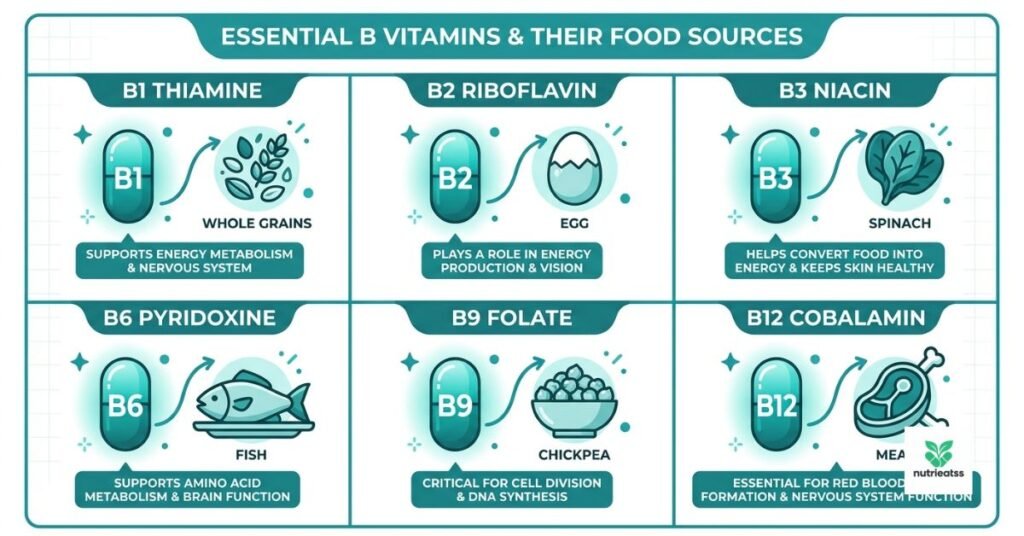
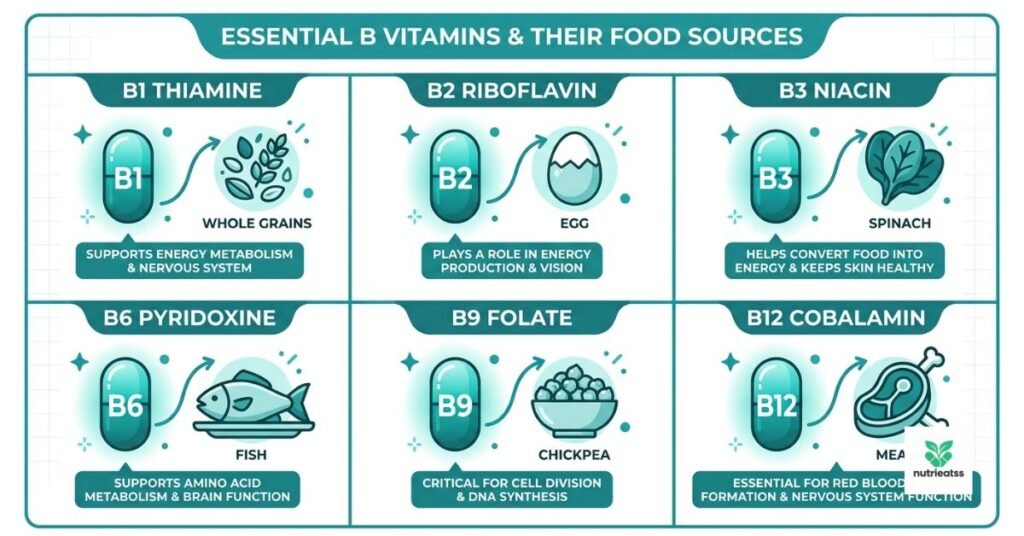
Thiamine plays a central role in converting carbohydrates into energy that fuels brain activity. Because the brain relies heavily on glucose for fuel, adequate thiamine is important for sustained mental energy.
Deficiency symptoms can include fatigue, irritability, poor concentration, and in severe, prolonged deficiency, more serious neurological effects.
Food sources: whole grains, pork, legumes, seeds, and fortified cereals.
Supplement considerations: Thiamine deficiency is relatively uncommon in people eating a varied diet but is more common in people with alcohol use disorder, malabsorption conditions, or very restrictive diets. Supplementation is generally most beneficial when a deficiency is confirmed.
💡 Expert Tip #3: If you rely heavily on refined carbohydrates and processed foods, you may be getting less thiamine than you think — whole grains are a meaningfully richer source.
Vitamin B2 (Riboflavin)
Riboflavin supports cellular energy production and acts as a building block for antioxidant enzymes that help protect brain cells from oxidative stress.
Cognitive benefits: By supporting mitochondrial energy production, adequate riboflavin may help support sustained mental energy, though it’s rarely studied in isolation for cognitive outcomes.
Food sources: eggs, dairy products, lean meats, green leafy vegetables, and fortified grains.
💡 Expert Tip #4: Riboflavin is sensitive to light — store milk and grains away from direct sunlight to preserve their vitamin content.
Vitamin B3 (Niacin)
Niacin is essential for energy metabolism and supports the health of the nervous system.
Deficiency risks: Severe niacin deficiency (pellagra) is rare in developed countries with adequate nutrition but can occur with alcohol use disorder or certain malabsorption conditions, and can involve cognitive symptoms among other effects.
Food sources: poultry, fish, beef, peanuts, and fortified grains.
💡 Expert Tip #5: High-dose niacin supplements can cause flushing and should only be taken under medical supervision — food sources are sufficient for most healthy adults.
Vitamin B6 (Pyridoxine)
Vitamin B6 is directly involved in producing neurotransmitters such as serotonin, dopamine, and GABA, which influence mood, focus, and memory.
Mood and memory: Because of its role in neurotransmitter synthesis, low B6 status has been studied in relation to mood changes and cognitive performance, particularly in older adults.
Food sources: poultry, fish, potatoes, chickpeas, bananas, and fortified cereals.
💡 Expert Tip #6: B6 needs are generally easy to meet through diet — supplementing beyond recommended amounts doesn’t necessarily provide added cognitive benefit and can carry risks at high doses (see Section 6).
Vitamin B9 (Folate)
Folate is essential for DNA synthesis, cell division, and healthy brain development, and it works closely with B12 to regulate homocysteine levels.
Cognitive connection: Because of its role in homocysteine metabolism and neurotransmitter pathways, folate status has been studied in relation to mood and cognitive health, especially in combination with B12.
Food sources: leafy greens like spinach, lentils, chickpeas, and fortified cereals — folate is also available as folic acid, its synthetic, more bioavailable form, in many fortified foods and supplements.
💡 Expert Tip #7: Lightly steaming leafy greens rather than boiling them helps preserve more folate, which is water-soluble and can leach into cooking water.
Vitamin B12 (Cobalamin)
Of all the B vitamins, B12 has the strongest and most consistent link to brain fog, largely because deficiency is relatively common and its neurological effects are well documented. B12, alongside nutrients like omega-3 fatty acids, is frequently cited for its support of brain and energy function.
Role: B12 supports nerve cell maintenance (including the myelin sheath), red blood cell production, and DNA synthesis.
Deficiency symptoms: fatigue, brain fog, memory problems, tingling or numbness in hands and feet, and in more severe or prolonged cases, more significant neurological symptoms.
Risk groups: older adults (due to reduced absorption), vegans and strict vegetarians (since B12 is found almost exclusively in animal products), and people with digestive conditions affecting absorption, such as pernicious anemia or after certain gastrointestinal surgeries.
Food sources: meat, fish, eggs, dairy, and fortified plant-based foods (like some plant milks and nutritional yeast) for those following a vegan diet.
💡 Expert Tip #8: If you follow a vegan or vegetarian diet, ask your doctor about periodic B12 blood testing — deficiency can develop slowly and symptoms are easy to attribute to other causes.
Signs You May Have a B Vitamin Deficiency
While symptoms vary depending on which B vitamin is low, several signs commonly overlap:
- Persistent fatigue
- Brain fog or difficulty concentrating
- Tingling or numbness in the hands or feet
- Memory problems
- Mood changes, including irritability or low mood
- General weakness
- Poor concentration or slower thinking
These symptoms are not exclusive to B vitamin deficiencies — they overlap with many other conditions, from thyroid disorders to sleep disorders to anemia unrelated to B vitamins. The only reliable way to confirm a deficiency is through blood testing ordered by a healthcare professional. Self-diagnosing based on symptoms alone can lead to unnecessary supplementation or, worse, delay diagnosis of an unrelated underlying condition.
💡 Expert Tip #9: Bring a symptom log to your doctor’s appointment. Specific details (when symptoms started, what makes them better or worse) help guide more targeted testing.
Best Food Sources of B Vitamins
For most healthy adults without an absorption issue, a varied diet can supply adequate B vitamins. Here’s a comparison of common food sources:
| Food | B1 | B2 | B3 | B6 | B9 (Folate) | B12 |
| Eggs | ✔ | ✔✔ | — | ✔ | ✔ | ✔✔ |
| Fish (salmon, tuna) | ✔ | ✔ | ✔✔ | ✔✔ | — | ✔✔ |
| Poultry | ✔ | ✔ | ✔✔ | ✔✔ | — | ✔ |
| Beef | ✔ | ✔ | ✔✔ | ✔ | — | ✔✔ |
| Dairy (milk, yogurt) | ✔ | ✔✔ | — | ✔ | — | ✔✔ |
| Spinach | ✔ | ✔ | — | ✔ | ✔✔ | — |
| Lentils | ✔ | — | ✔ | ✔ | ✔✔ | — |
| Chickpeas | ✔ | — | ✔ | ✔✔ | ✔✔ | — |
| Whole grains | ✔✔ | ✔ | ✔✔ | ✔ | ✔ | — |
| Nutritional yeast | ✔✔ | ✔✔ | ✔✔ | ✔✔ | ✔ | ✔ (fortified) |
| Fortified cereals | ✔✔ | ✔✔ | ✔✔ | ✔✔ | ✔✔ | ✔✔ |
✔ = good source, ✔✔ = excellent source. Nutrient content varies by brand, preparation, and fortification.
💡 Expert Tip #10: If you eat mostly plant-based, prioritize fortified cereals, nutritional yeast, and legumes — and speak with your doctor about B12, since it’s the vitamin most likely to fall short on a plant-based diet.
Should You Take a B-Complex Supplement?
For many healthy people eating a varied diet, a B-complex supplement isn’t necessary. However, supplementation may be worth discussing with a healthcare provider if you:
- Have a confirmed deficiency through blood testing
- Follow a vegan or strict vegetarian diet (particularly for B12)
- Are older and have reduced absorption capacity
- Have a digestive condition affecting nutrient absorption
- Take medications known to interfere with B vitamin absorption (such as certain diabetes or acid-reducing medications)
- Are pregnant or breastfeeding (folate needs increase, and supplementation is often specifically recommended by providers)
Should You Take a B-Complex Supplement?Potential interactions and upper limits: Some B vitamins have established upper intake limits, and megadosing isn’t automatically safer or more effective. For example, very high doses of vitamin B6 taken over long periods have been associated with nerve-related side effects in some cases. B vitamins can also interact with certain medications, including some used for diabetes, seizures, and Parkinson’s disease.
This is general information, not a recommendation to self-supplement. A healthcare professional can help determine whether supplementation is appropriate for your specific situation, especially if you’re pregnant, managing a chronic condition, or taking prescription medications.
💡 Expert Tip #11: If a provider does recommend a B-complex supplement, look for third-party tested products (such as those verified by USP or NSF) to help ensure label accuracy and purity.
Lifestyle Tips to Reduce Brain Fog Naturally
Nutrition is only one piece of the brain fog puzzle. These lifestyle factors are well supported by evidence as contributors to mental clarity:
- Prioritize sleep — aim for consistent, sufficient sleep, since poor sleep is one of the most common contributors to brain fog
- Stay hydrated — even mild dehydration can impair concentration and mood
- Move regularly — physical activity supports blood flow to the brain and has been linked to improved cognitive function
- Manage stress — chronic stress affects memory and focus; techniques like mindfulness, breathing exercises, or short walks can help
- Eat a balanced diet — consistent, nutrient-dense meals help stabilize energy and mood throughout the day
- Take regular breaks — mental fatigue builds with prolonged, uninterrupted focus; short breaks can restore attention
- Manage blood sugar — large blood sugar swings from high-sugar meals can contribute to energy crashes and fog
- Limit alcohol — excessive alcohol intake can interfere with B vitamin absorption and directly affect cognitive function
💡 Expert Tip #12: Try pairing a 5-minute walk with your afternoon slump instead of reaching for caffeine or sugar — light movement often clears mental fog more sustainably.
Common Mistakes
- Assuming supplements replace a healthy diet — supplements are meant to fill gaps, not substitute for varied nutrition
- Ignoring underlying medical conditions — brain fog with a medical cause won’t improve with vitamins alone
- Taking excessive doses — more isn’t better, and some B vitamins carry risks at high doses
- Choosing low-quality products — not all supplements are manufactured or tested to the same standard
- Expecting instant results — correcting a genuine deficiency can take weeks to noticeably improve symptoms
💡 Expert Tip #13: Give any dietary change or supplement at least 8–12 weeks before evaluating whether it’s making a difference, unless a provider advises otherwise.
💡 Expert Tip #14: Track your symptoms weekly rather than daily — day-to-day fluctuations are normal and can obscure genuine trends.
💡 Expert Tip #15: When in doubt, address sleep and stress first — they’re the most common, and most fixable, contributors to brain fog for most people.
FAQ
Which B vitamin is best for brain fog?
Vitamin B12 has the strongest and most well-documented link to brain fog, particularly because B12 deficiency is relatively common and its neurological symptoms are well studied. However, folate and B6 also play important supporting roles.
Does B12 help mental clarity?
In people with a genuine B12 deficiency, correcting it can improve fatigue and cognitive symptoms. In people who aren’t deficient, evidence doesn’t consistently show additional cognitive benefit from extra B12.
Can B-complex improve memory?
B-complex vitamins support the underlying processes involved in memory and brain function, but they aren’t a guaranteed memory enhancer — benefits are most likely when an existing deficiency is corrected.
How long does it take for B vitamins to work?
This varies by individual and by the severity of any deficiency, but noticeable improvement, if it occurs, often takes several weeks to a few months of consistent intake.
Are B vitamins safe daily?
For most healthy adults, B vitamins from a balanced diet and standard supplement doses are considered safe, since most are water-soluble and excess is excreted. However, some B vitamins have upper limits, so it’s best to follow product labels and professional guidance.
Can stress cause brain fog?
Yes. Chronic stress affects sleep, hormone balance, and cognitive function, and is one of the most common contributors to brain fog.
Should vegetarians take B12?
Vegans and strict vegetarians are at higher risk of B12 deficiency since it’s found almost exclusively in animal products, and many providers recommend fortified foods or supplementation — this is worth discussing individually with a healthcare provider.
Can too much vitamin B6 be harmful?
Yes, long-term high-dose B6 supplementation has been associated with nerve-related side effects in some cases, which is why staying within recommended intake levels matters.
What foods contain the most B vitamins?
Eggs, fish, poultry, dairy, leafy greens, legumes, whole grains, and fortified cereals collectively provide a broad range of B vitamins.
When should I see a doctor for brain fog? See a doctor if brain fog is persistent, worsening, interfering with daily life, or accompanied by other symptoms like numbness, vision changes, or significant mood changes.
Conclusion
B-complex vitamins — particularly B1, B2, B3, B6, B9, and B12 — play well-established roles in energy production, neurotransmitter synthesis, and nervous system health, all of which are connected to how clearly we think and focus. When brain fog stems from an actual deficiency, correcting it through diet or, when appropriate, supplementation may genuinely help. But B vitamins are not a cure-all, and brain fog with other underlying causes needs a different approach.
The most reliable path forward starts with a balanced diet rich in whole foods, consistent sleep and stress management, and a conversation with a healthcare professional if symptoms persist — rather than guessing and self-supplementing.
Medical Disclaimer
This article is for informational purposes only and is not intended to diagnose, treat, cure, or prevent any disease. It is not a substitute for professional medical advice. Always consult a qualified healthcare provider before starting any new supplement, especially if you are pregnant, breastfeeding, taking medications, or managing a chronic health condition