
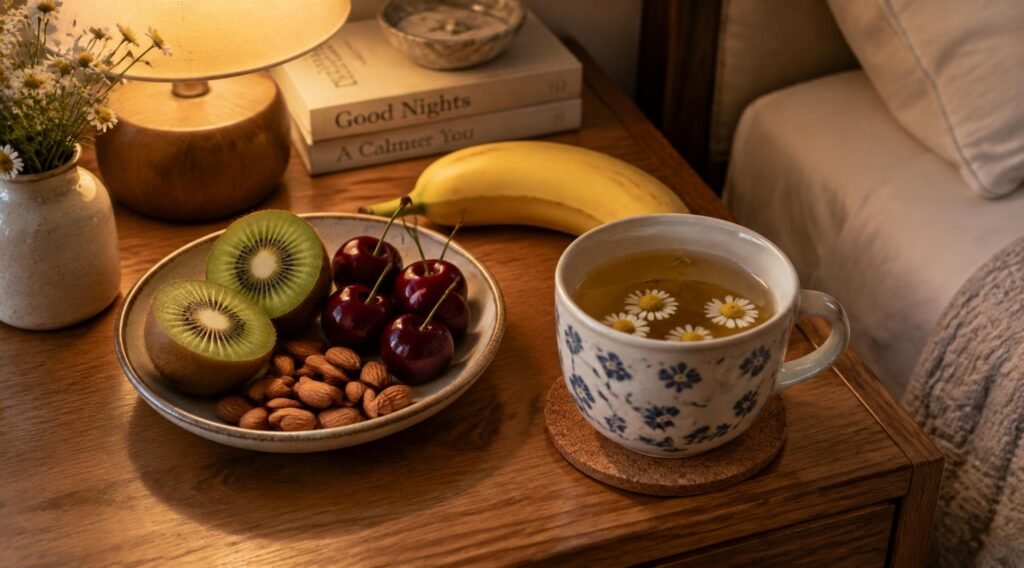
You’re exhausted all day, then wide awake at 11 p.m. Or you fall asleep fine and wake at 3 a.m., staring at the ceiling. Most people blame stress, screens, or caffeine, and those matter. But what you eat in the hours before bed quietly shapes how quickly you fall asleep and how deeply you stay there.
The best foods for better sleep work in a few ways. Some supply magnesium, which helps the nervous system settle. Some contain tryptophan or small amounts of melatonin, the raw materials your body uses to regulate its sleep cycle. Others steady your blood sugar overnight so you don’t wake up wired. If stress is the real culprit, our guide to the best foods for anxiety and stress relief pairs well with this one.
Food isn’t a sleeping pill, and no single snack will fix chronic insomnia. But the right choices, at the right time, make good sleep easier. If you’ve already tried magnesium supplements for sleep, this guide shows how to get similar benefits from your plate.
Quick Answer
The best foods for better sleep depend on what’s keeping you up. Trouble falling asleep responds well to kiwi, tart cherries, and a small carb-plus-protein snack. Waking in the night is often helped by magnesium-rich foods like almonds, pumpkin seeds, and spinach. Stress-driven restlessness improves with chamomile tea, oats, and warm milk. The general principle: eat lighter in the evening, favor magnesium, tryptophan, and complex carbs, and avoid caffeine, alcohol, and heavy meals close to bedtime.
Table of Contents
- What Are the Best Foods for Better Sleep, and How Do They Work?
- How to Choose the Right Sleep Foods
- The 15 Best Foods for Better Sleep
- Comparison Table
- Best Sleep Foods for Different Needs
- How to Build a Sleep-Friendly Evening Eating Routine
- Common Mistakes
- Expert Tips
- Final Verdict
- Frequently Asked Questions
What Are the Best Foods for Better Sleep, and How Do They Work?
Sleep is regulated by a handful of chemical messengers and nutrients, and food supplies many of them.
Tryptophan is an amino acid your body converts into serotonin, then into melatonin. You can’t make it yourself, so it has to come from food. Magnesium supports GABA, a calming neurotransmitter, and low intake is associated with lighter, more fragmented sleep. Melatonin itself appears in small amounts in foods like tart cherries and walnuts, though far less than in supplements. Complex carbohydrates help tryptophan reach the brain, and they keep blood sugar steadier overnight.
Timing matters as much as content. A large, fatty, or spicy dinner eaten late forces your body to digest when it should be winding down. A small, targeted snack one to two hours before bed is a different story.
One honest caveat: much of the research on individual foods is small or short-term. Think of these foods as supportive habits, not treatments. If you’ve been sleeping badly for weeks, talk to a doctor, since conditions like sleep apnea, thyroid problems, and anemia can all disrupt sleep. Our guides to thyroid-supportive foods and iron-rich foods for fatigue cover two common culprits.
How to Choose the Right Sleep Foods
Ask yourself three questions:
- When do I struggle? Falling asleep, staying asleep, or waking too early each point to different foods.
- How late do I eat? Heavier foods like fish or turkey belong at dinner. Light snacks like a banana or kiwi suit the hour before bed.
- Do I have a health condition? If you manage blood sugar, kidney disease, or take medications, check with your doctor before adding large amounts of any food. See our guide on foods for insulin resistance if blood sugar is a concern.
For general background on how much sleep adults need and why it matters, the CDC’s sleep overview is a solid starting point.
The 15 Best Foods for Better Sleep
1. Kiwi
Overview: Kiwi is one of the more studied sleep foods. In a small trial, adults who ate two kiwis an hour before bed for four weeks reported falling asleep faster and sleeping longer. Researchers suspect its serotonin and antioxidant content play a role, though larger studies are needed.
Key nutrients: Vitamin C, folate, serotonin, fiber.
Best for: Trouble falling asleep.
Try it: Two peeled kiwis, about an hour before bed.
2. Tart Cherries
Overview: Tart (Montmorency) cherries are among the few whole foods with naturally occurring melatonin. Small studies suggest tart cherry juice may modestly increase sleep time. Choose unsweetened juice, since sugary versions can backfire.
Key nutrients: Melatonin, anthocyanins, potassium.
Best for: Irregular sleep schedules and shift work.
Try it: About half a cup of unsweetened juice, or a small handful of dried tart cherries, in the evening.
3. Fatty Fish (Salmon, Mackerel, Sardines)
Overview: Fatty fish provides omega-3s and vitamin D, both linked to better sleep quality in observational research. It’s also a protein source that supports steady blood sugar. Eat it at dinner rather than right before bed. For the brain side of omega-3s, see our omega-3 supplement guide.
Key nutrients: Omega-3 (EPA and DHA), vitamin D, B6.
Best for: Overall sleep quality.
Try it: Baked salmon with vegetables at dinner, two to three times a week.
4. Walnuts
Overview: Walnuts contain small amounts of melatonin along with alpha-linolenic acid, a plant omega-3. They’re calorie-dense, so a small portion is enough.
Key nutrients: Melatonin, ALA omega-3, magnesium.
Best for: A light bedtime snack.
Try it: About a quarter cup (a small handful).
5. Almonds
Overview: A one-ounce serving delivers roughly 75 to 80 mg of magnesium, around a fifth of the daily need for many adults, per the NIH Office of Dietary Supplements. Magnesium supports muscle relaxation and nervous system calm.
Key nutrients: Magnesium, healthy fats, vitamin E.
Best for: Night waking and restless legs.
Try it: A small handful, or almond butter on whole-grain toast.
6. Pumpkin Seeds
Overview: Pumpkin seeds are one of the most concentrated food sources of magnesium, at roughly 150 mg per ounce of roasted seeds. They also contain tryptophan and zinc.
Key nutrients: Magnesium, zinc, tryptophan.
Best for: Magnesium-focused eating.
Try it: Sprinkle on yogurt or oatmeal, or snack on a small handful.
7. Bananas
Overview: Bananas offer potassium and magnesium, both involved in muscle relaxation, plus vitamin B6, which helps convert tryptophan into serotonin. They’re easy to digest, which makes them a gentle pre-bed option.
Key nutrients: Potassium, magnesium, B6.
Best for: Muscle cramps and late-night hunger.
Try it: One banana, or half with a spoonful of almond butter.
8. Oats
Overview: Oats are a complex carbohydrate that digests slowly, helping keep blood sugar steady overnight. They also contain small amounts of melatonin and magnesium. Warm oatmeal feels soothing, which counts for something.
Key nutrients: Complex carbs, fiber, magnesium.
Best for: Stress-related sleeplessness and waking hungry.
Try it: A small bowl of oatmeal with banana and walnuts.
9. Spinach and Dark Leafy Greens
Overview: Spinach is rich in magnesium, with about 75 to 80 mg per half cup cooked, plus folate and calcium. Dinner is the natural place for it, and it’s an easy way to build magnesium into the day.
Key nutrients: Magnesium, calcium, folate.
Best for: Staying asleep.
Try it: Sautéed spinach with eggs, or blended into a smoothie earlier in the evening.
10. Chamomile Tea
Overview: Chamomile contains apigenin, a compound that binds to calming receptors in the brain. Small trials show modest improvements in sleep quality, and the ritual of a warm cup may help as much as the herb. It’s caffeine-free.
Key nutrients: Apigenin and other polyphenols.
Best for: Winding down and stress.
Try it: One cup, steeped five minutes, 30 to 60 minutes before bed. People with ragweed allergies should be cautious.
11. Warm Milk
Overview: Milk provides tryptophan and calcium, and its reputation is partly about routine and comfort. The evidence is modest, but if it works for you, it’s a harmless habit. Plant milks fortified with calcium work too.
Key nutrients: Tryptophan, calcium, B vitamins.
Best for: A comforting bedtime ritual.
Try it: A small warm cup, optionally with a pinch of cinnamon.
12. Turkey
Overview: Turkey contains tryptophan, though not dramatically more than other poultry. Its real strength is protein paired with carbs at dinner, which may help tryptophan reach the brain. It also keeps you full overnight.
Key nutrients: Tryptophan, protein, B6.
Best for: A satisfying, sleep-friendly dinner.
Try it: Turkey with brown rice or sweet potato.
13. Sweet Potatoes
Overview: Sweet potatoes are a slow-digesting carbohydrate with potassium and B6. Eaten at dinner, they support steady energy through the night and help the body use tryptophan.
Key nutrients: Complex carbs, potassium, B6.
Best for: Pairing with protein at dinner.
Try it: Roasted wedges alongside fish or turkey.
14. Chickpeas
Overview: Chickpeas supply plant protein, fiber, magnesium, and some B6. They keep blood sugar steady and fit easily into a Mediterranean-style dinner. Our Mediterranean meal plan is full of ideas.
Key nutrients: Protein, fiber, magnesium.
Best for: Plant-based eaters and steady overnight energy.
Try it: Roasted chickpeas or hummus with vegetables at dinner.
15. Kefir and Fermented Foods
Overview: Gut health and sleep appear to influence each other, though this research is still early. Kefir, yogurt, and other fermented foods support a healthy microbiome and provide protein and calcium. Start with our 30-day gut health reset plan or the probiotic supplement guide.
Key nutrients: Probiotics, protein, calcium.
Best for: Long-term, gut-first sleep support.
Try it: A small glass of kefir or a bowl of plain yogurt in the evening.

Comparison Table
| Food | Key sleep nutrient | Best for | Best timing |
|---|---|---|---|
| Kiwi | Serotonin, antioxidants | Falling asleep | 1 hour before bed |
| Tart cherries | Melatonin | Irregular schedules | Evening |
| Fatty fish | Omega-3, vitamin D | Sleep quality | Dinner |
| Walnuts | Melatonin, ALA | Light snack | 1 to 2 hours before bed |
| Almonds | Magnesium | Night waking | 1 to 2 hours before bed |
| Pumpkin seeds | Magnesium, zinc | Magnesium boost | Evening |
| Bananas | Potassium, B6 | Cramps, hunger | 1 hour before bed |
| Oats | Complex carbs | Stress, hunger | Evening |
| Leafy greens | Magnesium | Staying asleep | Dinner |
| Chamomile tea | Apigenin | Winding down | 30 to 60 minutes before bed |
| Warm milk | Tryptophan, calcium | Ritual | Before bed |
| Turkey | Tryptophan | Satisfying dinner | Dinner |
| Sweet potato | Complex carbs, B6 | Steady energy | Dinner |
| Chickpeas | Protein, magnesium | Plant-based eaters | Dinner |
| Kefir | Probiotics | Gut-sleep link | Evening |
Best Foods for Better Sleep for Different Needs
If You Can’t Fall Asleep
Focus on kiwi, tart cherries, and a banana. Keep portions small and eat one to two hours before bed. If your mind races, pair this with the habits in our anxiety and stress relief foods guide, and consider a weighted blanket for a calmer wind-down.
If You Wake Up at 3 A.M.
Night waking often involves blood sugar dips or low magnesium. Build dinner around protein, vegetables, and a complex carb like sweet potato or oats. Add almonds or pumpkin seeds as an evening snack. If supplements are on your radar, compare them with our melatonin-free sleep aids and B-complex guide.
If Hormones or Stress Are Involved
Hot flashes, cortisol spikes, and perimenopause can all wreck sleep. Chamomile tea, oats, leafy greens, and fatty fish are gentle starting points. Our menopause diet guide and ashwagandha guide go deeper on both.
How to Build a Sleep-Friendly Evening Eating Routine
Step 1: Finish Dinner Early
Aim to finish your main meal two to three hours before bed. This gives your body time to digest before lying down.
Step 2: Balance Your Plate
Include lean protein, a complex carbohydrate, and vegetables. A plate like salmon, sweet potato, and spinach covers tryptophan, magnesium, and slow-release carbs at once.
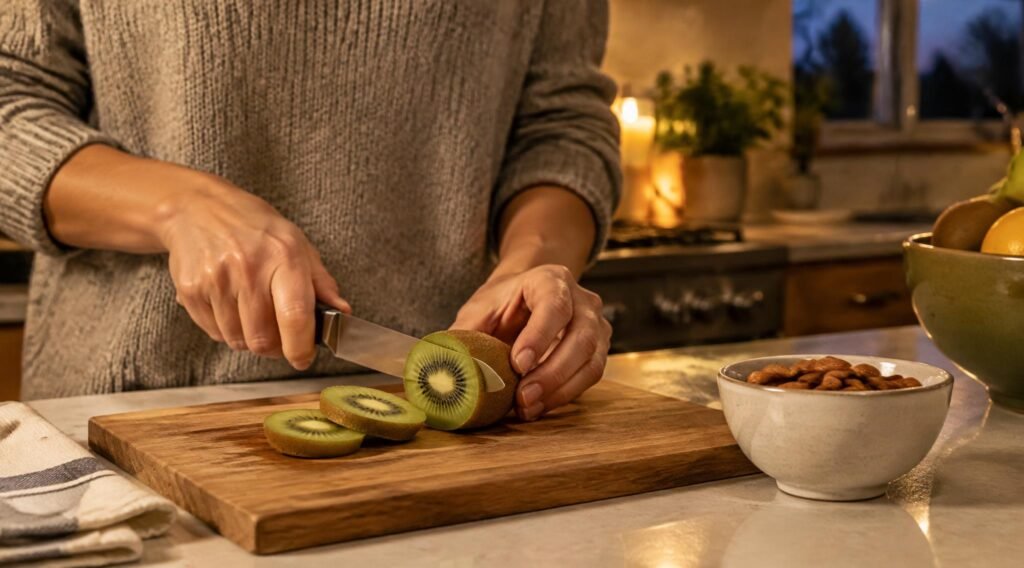
Step 3: Pick One Light Snack
If you get hungry before bed, choose one small item: a kiwi, a banana, a handful of almonds, or a small bowl of oats. Keep it under about 200 calories.
Step 4: Add a Calming Drink
Swap evening coffee or alcohol for chamomile tea or warm milk. Stop caffeine by early afternoon if you’re sensitive.
Step 5: Stay Consistent for Two Weeks
Sleep changes are gradual. Keep a simple note of what you ate and how you slept, and adjust from there.
Common Mistakes
1. Eating a heavy meal right before bed. Large, greasy, or spicy meals can cause reflux and fragmented sleep. Keep late eating light, and see our anti-inflammatory meal plan for gentler dinner ideas.
2. Relying on alcohol or sugary snacks. Alcohol may make you drowsy but disrupts deep sleep later in the night. Sugary snacks spike and crash blood sugar, which can wake you up.
3. Ignoring caffeine and energy habits. Afternoon coffee can linger in your system for hours. If you lean on caffeine to get through the day, try the swaps in our natural energy foods without caffeine guide.
Expert Tips
Pair a carb with a protein. Something like a banana with almond butter, or oats with walnuts, helps tryptophan reach the brain and keeps blood sugar steady.
Think in whole days, not just bedtime. Magnesium-rich foods at lunch and dinner count too. A steady daily pattern beats a single “magic” snack.
Watch the sugar in “sleep” products. Tart cherry juice, flavored teas, and sleepy-time snacks can contain a lot of added sugar. Read labels.

Final Verdict
If you only change one thing, make dinner lighter and add a small, magnesium-rich or tryptophan-rich snack an hour or two before bed.
- Best overall: Kiwi and almonds, a simple, low-effort combination.
- Best for stress: Chamomile tea and oats.
- Best for night waking: Pumpkin seeds, spinach, and a complex-carb dinner.
- Best for beginners: A banana with almond butter.
Food works best alongside good sleep habits. For more brain-supporting nutrition, explore our guides to memory-boosting foods, foods for focus and concentration, and fighting brain fog.
Frequently Asked Questions
Do I need to eat before bed to sleep well?
Not necessarily. Many people sleep fine without a snack. But if you go to bed hungry or wake up hungry, a small snack can help. Keep it light and balanced.
How long before bed should I eat these foods?
Eat a full dinner two to three hours before bed. Light snacks like kiwi, a banana, or almonds work well one to two hours before. Warm drinks like chamomile tea can be taken 30 to 60 minutes before.
How long until I notice better sleep?
Some people notice a difference within a few days, but most research on food and sleep runs two to four weeks. Give any change at least two weeks before judging it.
Are food sources better than sleep supplements?
Food is a good first step because it provides nutrients alongside fiber and other compounds, with lower risk of overdoing it. Supplements can help in specific cases. Compare options in our magnesium supplement guide.
Does turkey really make you sleepy?
Turkey contains tryptophan, but not uniquely more than other poultry. The post-holiday drowsiness is more likely from big portions, carbs, and alcohol. A normal turkey dinner can still support sleep.
Is warm milk before bed actually effective?
The science is modest, but the routine can be calming. If you enjoy it and tolerate dairy, it’s a low-risk habit. Calcium-fortified plant milk is a fine alternative.
What foods should I avoid before bed?
Limit caffeine, alcohol, large or spicy meals, and sugary snacks in the evening. These can cause reflux, blood sugar swings, or lighter, more fragmented sleep.
Can eating late cause weight gain or poor sleep?
Large late meals may affect sleep and digestion. A small, balanced snack is generally fine, and total daily intake matters more for weight. See our metabolism foods guide for more.
Which is better for sleep, kiwi or tart cherry juice?
Both have small studies behind them. Kiwi is whole fruit with fiber and less sugar. Tart cherry juice contains melatonin but is higher in sugar. Choose whichever you’ll actually stick with.
When should I see a doctor about my sleep?
If you’ve had trouble sleeping for several weeks, snore loudly, wake gasping, or feel exhausted despite enough hours, see a doctor. Diet can support sleep but can’t treat conditions like sleep apnea.
Author: Adam
Last Updated: October 2026