
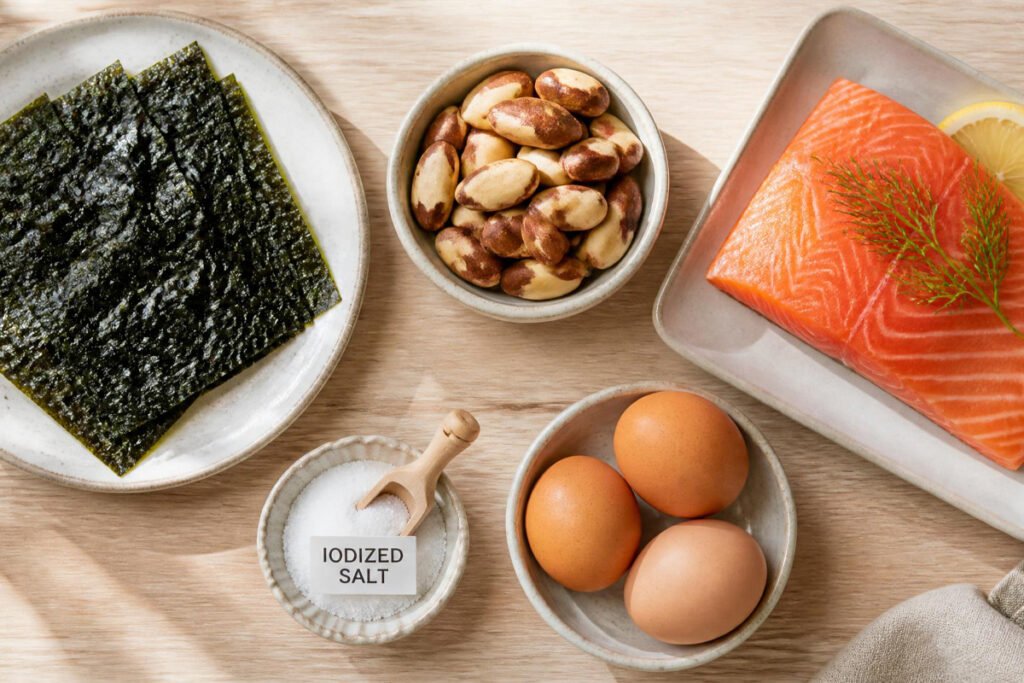
If you’ve been dragging through the afternoon, gaining weight despite eating the same as always, or feeling foggy no matter how much sleep you get, it’s worth asking whether your thyroid is getting what it needs. The thyroid is a small gland with an outsized job: it produces the hormones that set the pace for metabolism, energy, mood, and even how clearly you think. Making those hormones depends almost entirely on nutrients you get from food.
Most people only think about the thyroid when something goes wrong, and by then the conversation usually jumps straight to medication or supplements. Diet gets treated as an afterthought, even though it’s the raw material the gland runs on. Chronic fatigue and restless nights are also often tangled up with the same mineral gaps that undercut thyroid function, which is part of why diet changes tend to move more than one symptom at once.
This guide breaks down the specific foods that support healthy thyroid hormone production, the foods and habits worth limiting, a simple way to structure a thyroid-friendly day of eating, and the mistakes that quietly undo good intentions. None of this replaces a diagnosis or medication — think of it as the nutrition foundation that works alongside whatever care plan you and your doctor land on.
Quick Answer
The best foods for thyroid health are the ones that supply iodine, selenium, zinc, iron, and vitamin D — the specific nutrients the thyroid needs to build and activate its hormones. That means seafood, eggs, dairy or fortified alternatives, Brazil nuts, lean meats, legumes, and colorful vegetables. If you have a diagnosed thyroid condition, the more useful question isn’t “what’s the one best food” but “am I consistently getting these five nutrients, and am I eating any one food (like raw cruciferous vegetables or unregulated iodine supplements) in amounts that could work against me?”
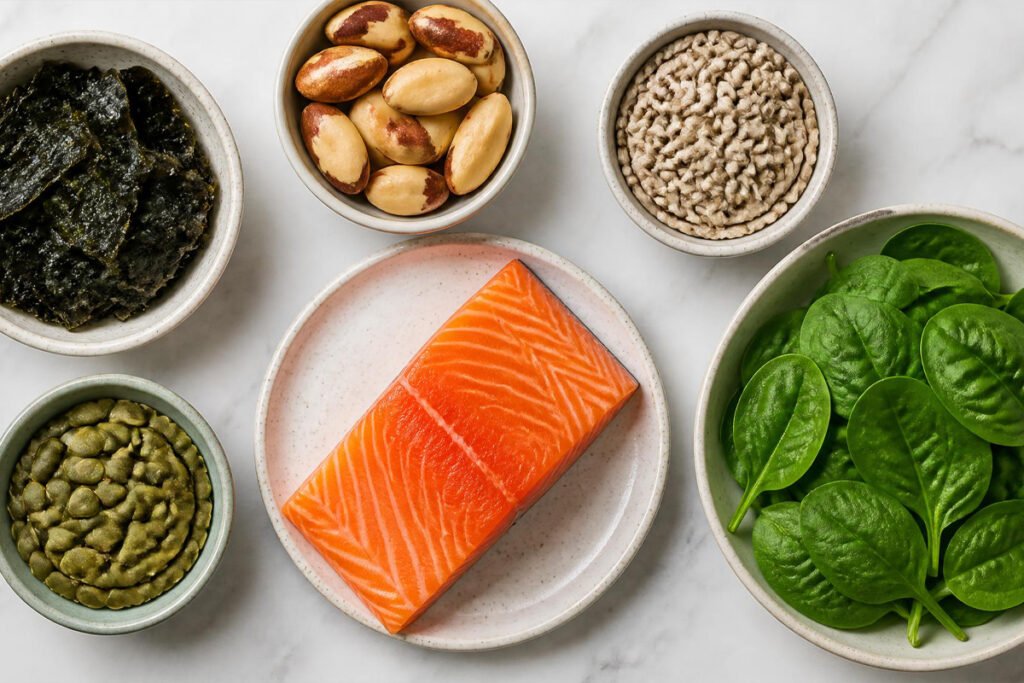
Table of Contents
- 1. What Is Thyroid Health and How Does Diet Affect It?
- 2. How to Choose the Right Foods for Your Thyroid
- 3. Best Foods for Thyroid Health
- 4. Nutrient Comparison Table
- 5. Foods and Habits to Limit for Thyroid Health
- 6. How to Build a Thyroid-Friendly Day of Eating
- 7. Common Mistakes
- 8. Expert Tips
- 9. Final Thoughts
- 10. Frequently Asked Questions
What Is Thyroid Health and How Does Diet Affect It?
The thyroid is a butterfly-shaped gland at the base of your neck. It takes iodine from your bloodstream and combines it with the amino acid tyrosine to produce two hormones, T4 (thyroxine) and T3 (triiodothyronine). T3 is the active form that actually reaches your cells and drives metabolism, so your body constantly converts a portion of T4 into T3 using selenium-dependent enzymes. When the gland makes too little hormone, that’s hypothyroidism — associated with fatigue, weight gain, dry skin, and feeling cold. When it makes too much, that’s hyperthyroidism, associated with anxiety, weight loss, and a racing heart.
Diet influences this process at almost every step. Without enough iodine, the thyroid can’t build hormone in the first place. Without enough selenium, it struggles to activate the hormone it does make. Zinc, iron, and vitamin D all play supporting roles in production and in how the body responds to thyroid hormone once it’s released. Because thyroid hormone also touches brain function and mood, a diet that’s quietly falling short on these nutrients can show up as symptoms that don’t obviously look thyroid-related at first.
None of this means food can replace a prescribed treatment for a diagnosed thyroid disorder — it can’t, and stopping medication in favor of diet changes is not something to do without medical guidance. What food can do is make sure your thyroid has the raw materials to function as well as it’s able to, and support the rest of your metabolism in the process.
How to Choose the Right Foods for Your Thyroid
Before restructuring your diet around thyroid health, it helps to ask a few questions:
- Am I getting iodine from food sources at all, or am I relying on the assumption that “most people get enough”? Iodized salt, dairy, seafood, and eggs are the main contributors — if you eat little of any of these, it’s worth paying attention.
- Am I eating mostly whole foods, or is a large share of my diet ultra-processed? Processed foods tend to be low in the trace minerals (selenium, zinc, iodine) that thyroid hormone production depends on.
- Do I have a diagnosed thyroid condition that changes the calculus? If so, some general advice below (like cruciferous vegetables or soy) may need to be adjusted with your doctor or dietitian rather than applied as a blanket rule.
For a deeper, clinical breakdown of iodine specifically — how much you need, which foods contain how much, and what happens at both deficient and excessive intakes — the NIH Office of Dietary Supplements’ iodine fact sheet is a reliable, non-commercial reference.
Best Foods for Thyroid Health
Iodine-Rich Foods
Iodine is the mineral your thyroid literally builds its hormones out of, which makes it the most fundamental piece of a thyroid-supportive diet.
- Seaweed (nori, kelp, wakame) — among the most concentrated natural sources of iodine
- Iodized salt — a simple, low-effort way to cover baseline iodine needs
- Cod, shrimp, and other seafood — iodine plus lean protein
Best for: anyone who eats little dairy or seafood and wants an easy baseline. Pair it with a calcium check — if you’re avoiding dairy for other reasons, dairy-free calcium sources and plant milks vary a lot in iodine content, so don’t assume a fortified plant milk covers the same ground as dairy.
Selenium-Rich Foods
Selenium is what allows your body to convert the T4 hormone into the active T3 form, and it also protects thyroid tissue from oxidative damage.
- Brazil nuts — two nuts a day can meaningfully raise selenium levels
- Tuna and sardines — selenium alongside omega-3 fatty acids
- Sunflower seeds and mushrooms — easy additions to salads, oatmeal, or stir-fries
Best for: people who eat few nuts, seeds, or fish. If you already lean on mushroom-based supplements for cognitive support, whole mushrooms in meals add selenium on top of whatever cognitive benefit you’re after, and fatty fish covers both selenium and omega-3s in one food.
Zinc-Rich Foods
Zinc supports both the synthesis of thyroid hormone and its conversion to the active form, and a deficiency can contribute to thyroid dysfunction on its own.
- Oysters — one of the most concentrated zinc sources available
- Beef and chicken — zinc plus complete protein
- Pumpkin seeds and chickpeas — solid plant-based options
Best for: filling a gap if your diet leans heavily plant-based. These same foods double as part of a broader high-protein eating pattern if satiety is also a goal.
Iron and B12-Rich Foods
Iron is a cofactor for the enzyme that produces thyroid hormone, and low iron has been linked to impaired thyroid performance — even before it shows up as classic anemia symptoms.
- Red meat and poultry — heme iron, which the body absorbs efficiently
- Lentils, beans, and spinach — non-heme iron, best paired with vitamin C for absorption
- Fortified cereals — an easy top-up on busy mornings
Best for: anyone dealing with fatigue or brain fog, since low iron and low thyroid hormone can produce very similar symptoms. See our guide to B-complex vitamins for brain fog for how B12 and iron intersect.
Omega-3 and Anti-Inflammatory Foods
Chronic low-grade inflammation can interfere with how well thyroid hormone signaling works throughout the body, which is part of why an anti-inflammatory eating pattern shows up so often in thyroid guidance.
- Salmon, sardines, and mackerel — omega-3s plus selenium and vitamin D in one food
- Walnuts and flaxseed — plant-based omega-3s
- Olive oil and colorful vegetables — broader anti-inflammatory support
Best for: a foundational approach rather than a quick fix. Our anti-inflammatory meal plan for beginners and guide to foods that help lower cholesterol both build on the same principles.
Vitamin D Sources
Vitamin D helps regulate the immune system, and low levels are common in people with autoimmune thyroid conditions, though it plays a supporting rather than a starring role.
- Fatty fish and egg yolks — direct dietary sources
- Fortified milk or plant milk — an easy daily top-up
- Sensible sun exposure — the body’s primary natural source
Best for: people in low-sunlight climates or who spend most of the day indoors. If you already take a magnesium glycinate supplement for sleep, it’s worth checking whether it also covers vitamin D, since the two are commonly paired in combination formulas.
Nutrient Comparison Table
| Nutrient | Top Food Sources | Role in Thyroid Health | Easy Way to Add It |
| Iodine | Seaweed, cod, shrimp, iodized salt, dairy, eggs | Building block for T3 and T4 thyroid hormones | Swap plain salt for iodized salt; add a seaweed snack |
| Selenium | Brazil nuts, tuna, sardines, sunflower seeds, mushrooms | Helps convert T4 into active T3 and protects the gland from oxidative stress | 2 Brazil nuts a day covers most adults’ needs |
| Zinc | Oysters, beef, chicken, pumpkin seeds, chickpeas | Involved in making and converting thyroid hormones | Add pumpkin seeds to salads or oatmeal |
| Iron | Red meat, lentils, beans, spinach, fortified cereal | Needed for the enzyme that produces thyroid hormone | Pair iron-rich plant foods with vitamin C for absorption |
| Vitamin D | Fatty fish, egg yolks, fortified milk, sunlight | Supports immune regulation linked to thyroid function | Have salmon or sardines twice a week |
| Omega-3s | Salmon, sardines, walnuts, flaxseed | Lowers inflammation that can interfere with thyroid signaling | Swap a weekly red-meat dinner for baked fish |
Foods and Habits to Limit for Thyroid Health
Raw Cruciferous Vegetables in Large Amounts
Broccoli, cabbage, cauliflower, and Brussels sprouts contain compounds that can interfere with how the thyroid uses iodine when eaten raw in large quantities. Cooking largely deactivates these compounds, so this isn’t a reason to avoid the vegetables — it’s a reason to cook them, especially if your iodine intake is already on the lower side. These same vegetables carry real benefits elsewhere, including for gut health and blood sugar stability, so the goal is moderation and cooking method, not elimination.
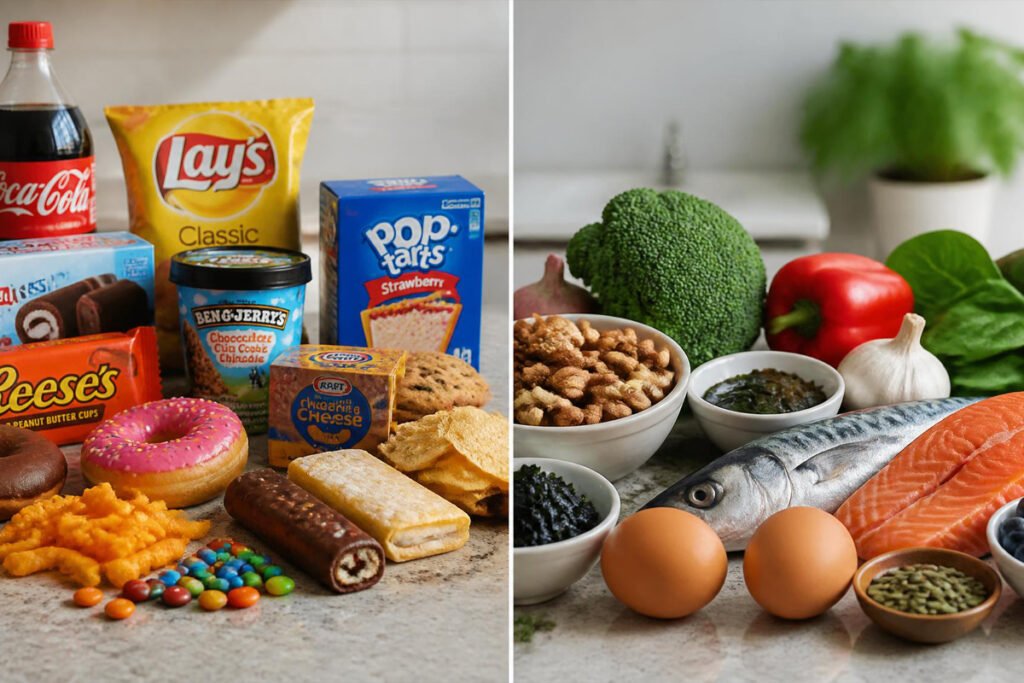
Highly Processed and Sugary Foods
Ultra-processed foods tend to displace the nutrient-dense foods your thyroid actually needs, and diets heavy in added sugar are linked to the kind of chronic inflammation that can interfere with hormone signaling. Blood sugar swings from sugary breakfasts can also compound the fatigue that low thyroid function already causes — our guide to breakfast foods for blood sugar control covers swaps that help. Chronic stress and poor sleep tend to travel with poor diet quality too, and elevated cortisol can further complicate hormone balance.
Excess Soy and Unmonitored Iodine Supplements
Soy foods aren’t dangerous for most people, but in very large amounts they may interfere with thyroid hormone absorption, particularly around the timing of thyroid medication. Similarly, iodine supplements can help someone who’s deficient but can push someone with adequate intake into excess, which carries its own risks. If you’re managing a hormone-sensitive condition already — the way many people navigate PCOS-related hormonal balance — the same principle applies: food-first, and treat concentrated supplements as something to discuss with a professional rather than self-prescribe. A varied, Mediterranean-style eating pattern naturally avoids the extremes in either direction.
How to Build a Thyroid-Friendly Day of Eating
Step 1: Start the Day With Protein and an Iodine Source
Eggs, Greek yogurt, or fortified cereal at breakfast cover both protein and iodine without much planning.
Step 2: Add a Selenium Source at Lunch
A couple of Brazil nuts, a tuna salad, or a handful of sunflower seeds is enough — selenium needs are small but consistent.
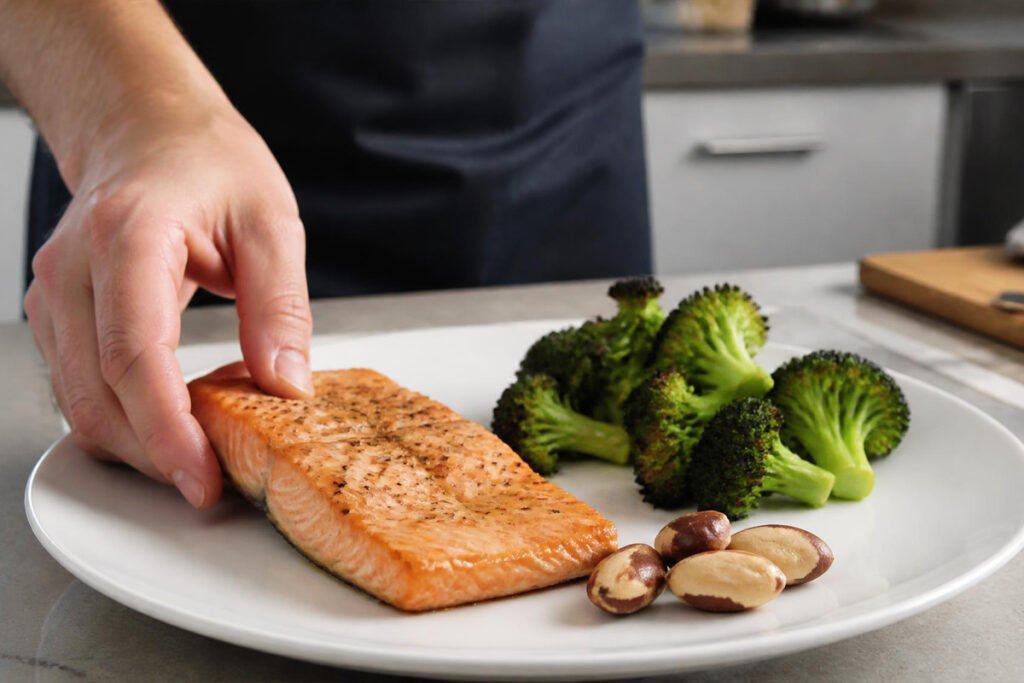
Step 3: Cook Your Cruciferous Vegetables
If broccoli, cabbage, or Brussels sprouts are on the plate, steaming, roasting, or sautéing them is enough to reduce their goitrogenic effect.
Step 4: Separate Supplements and Medication From Calcium and Iron
If you take thyroid medication, calcium and iron-rich foods (including dairy and some fortified cereals) can reduce how well it’s absorbed if eaten too close together — most guidance suggests spacing them out by a few hours, though your prescribing doctor’s specific instructions should take priority. This is also a good moment to review your overall supplement stack for timing conflicts.
Step 5: Keep the Pattern Consistent, Not Perfect
Thyroid hormone production responds to consistent nutrient intake over weeks, not a single perfect day. Building a repeatable pattern — the same way a 30-day gut health reset works by consistency rather than intensity — tends to outperform an all-or-nothing approach.
Common Mistakes
Overdoing iodine supplements without testing. More iodine is not automatically better — excess intake can trigger the same symptoms as deficiency and, in some cases, thyroid inflammation. Food sources are self-limiting in a way supplements aren’t.
Relying on a single food source for a nutrient. Eating Brazil nuts once and assuming selenium is “handled” ignores that these are nutrients your body needs on an ongoing basis. Rotating sources — the same logic behind a well-rounded brain-supplement routine — is more sustainable than a single hero food.
Ignoring the gut-thyroid connection. Poor gut health can affect how well minerals like zinc and selenium are absorbed in the first place, so digestive issues are worth addressing alongside a gut health reset rather than treated as unrelated.
Expert Tips
Pair iodine and selenium foods in the same meal. A tuna sandwich or a shrimp-and-seaweed bowl covers both nutrients at once instead of trying to remember two separate targets.
Batch-cook cruciferous vegetables once a week. Roasting a tray of broccoli or Brussels sprouts on a Sunday means you’re never tempted to eat them raw out of convenience.
Track energy and sleep, not just symptoms you associate with the thyroid. Because thyroid hormone touches so many systems, changes often show up first as better sleep quality or steadier energy rather than any single dramatic shift.
Final Thoughts
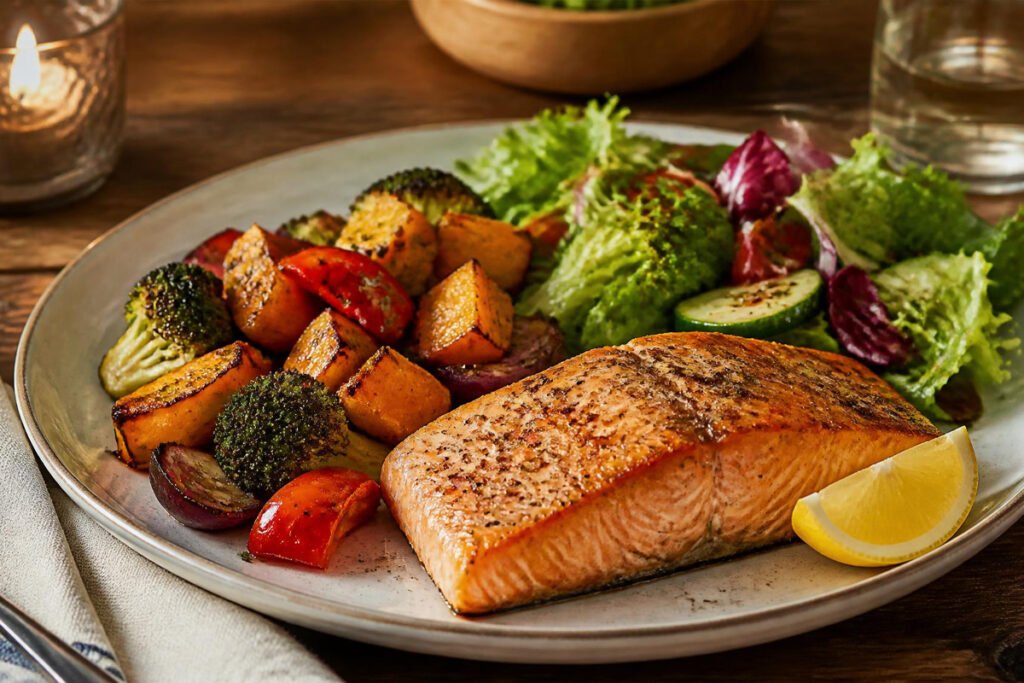
There’s no single miracle food for thyroid health — it comes down to consistently covering iodine, selenium, zinc, iron, and vitamin D while keeping processed food and raw cruciferous vegetables in check. Best overall: a rotation of fatty fish, eggs, Brazil nuts, and iodized salt. Best budget-friendly: canned sardines, eggs, and lentils. Best for beginners: start with the Mediterranean diet framework and layer thyroid-specific foods on top.
If you want to build this out further, our anti-inflammatory meal plan for beginners and high-protein food list both pair naturally with the foods covered here.
Frequently Asked Questions
Can diet alone fix hypothyroidism?
No. Diet supports thyroid function and can address nutrient gaps, but a diagnosed thyroid disorder typically requires medical treatment. Talk to your doctor before changing or stopping any prescribed medication.
How much iodine do I need daily?
Most adults need around 150 micrograms a day, with higher needs during pregnancy and breastfeeding. A varied diet with iodized salt, dairy, or seafood generally covers this without supplementation.
Are cruciferous vegetables bad for my thyroid?
Not when cooked. Raw, large quantities can interfere with iodine uptake, but cooking largely neutralizes this effect, and these vegetables offer other real health benefits worth keeping in your diet.
Is soy safe for thyroid health?
For most people, moderate soy intake is fine. It’s mainly a concern in very large amounts or when eaten too close to thyroid medication, which can reduce absorption.
How long until diet changes affect my thyroid?
Nutrient status typically shifts over several weeks of consistent eating, not days. Thyroid hormone levels themselves are best tracked with bloodwork rather than by how you feel day to day.
Is a thyroid diet the same as a weight-loss diet?
Not necessarily. A thyroid-supportive diet focuses on specific nutrients rather than calorie targets, though addressing a genuine deficiency can indirectly help with energy and metabolism.
Can I take thyroid medication with breakfast?
Many people are instructed to take thyroid medication on an empty stomach and wait before eating, especially foods high in calcium or iron. Follow your prescribing doctor’s specific instructions, since protocols vary.
What foods should I avoid completely?
Very few foods need to be avoided entirely. The bigger levers are moderation (raw cruciferous vegetables, soy in excess) and consistency (getting enough iodine, selenium, and zinc) rather than an outright avoid list.
Do I need a supplement if I already eat well?
If you’re consistently eating iodine, selenium, and zinc-rich foods, many people don’t need a dedicated supplement. If you suspect a gap — or you’re managing symptoms that also overlap with menopause-related hormone shifts — bloodwork is a more reliable guide than guessing.
Does thyroid health affect weight?
Yes. Because thyroid hormone sets your metabolic rate, both underactive and overactive thyroid function can affect weight, though it’s rarely the only factor at play.
Author: Rathat
Last Updated: August 2026