
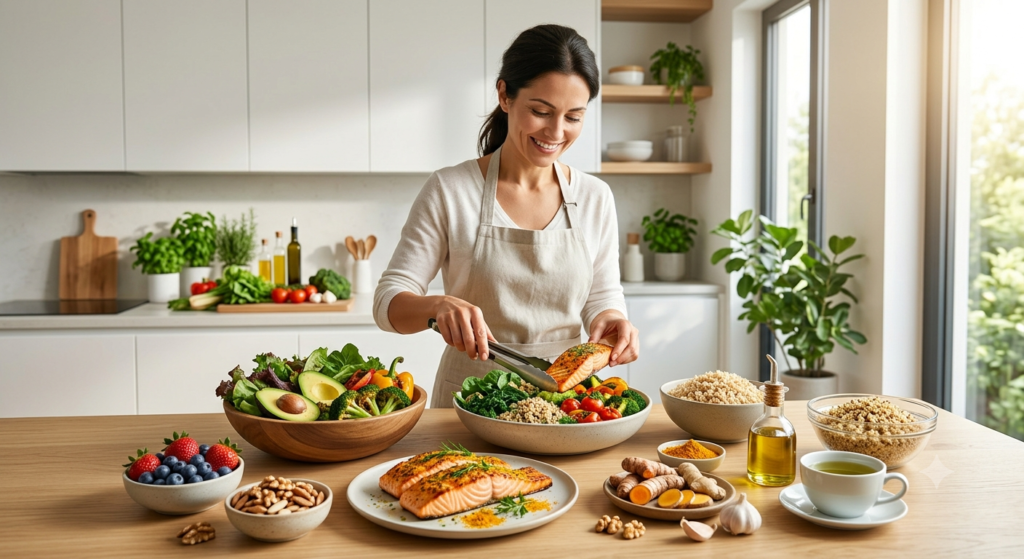
Start an anti-inflammatory meal plan for beginners with this evidence-based guide—a 7-day meal plan, shopping list, food swaps, and lifestyle tips from a registered dietitian.
If your joints ache more than they used to, your energy dips by mid-afternoon, or you’ve simply heard the word “inflammation” thrown around so often you’re not sure what it actually means for your plate — you’re in the right place. As a registered dietitian, one of the most common questions I get is some version of: “Where do I even start with anti-inflammatory eating?”
This Anti-Inflammatory Meal Plan for Beginners is built to answer exactly that. Rather than a restrictive diet full of rules, it’s a practical, whole-foods eating pattern grounded in nutrition science — one that emphasizes vegetables, fruits, legumes, healthy fats, and complex carbohydrates, while gently limiting the foods most associated with excess inflammation.
By the end of this guide, you’ll understand the science of inflammation, know exactly which foods to prioritize and which to limit, have a complete 7-day meal plan and shopping list, and walk away with realistic strategies for making this way of eating stick — without needing to overhaul your entire kitchen overnight.
What Inflammation Is: Acute vs. Chronic
Inflammation itself isn’t the enemy — it’s actually a normal, essential part of how your body protects and heals itself. The distinction that matters is between acute and chronic inflammation.
Acute inflammation is short-term and purposeful. Think of the redness and swelling around a cut, or the soreness after an intense workout. Your immune system sends white blood cells and inflammatory compounds to the area, resolves the issue, and the inflammation subsides within days.
Chronic inflammation is different. It’s a low-grade, persistent inflammatory response that can continue for months or years, often without obvious symptoms at first. Over time, this ongoing inflammatory state has been associated with an increased risk of conditions such as heart disease, type 2 diabetes, certain autoimmune conditions, and some forms of joint pain.
Chronic inflammation can be influenced by a combination of factors: genetics, poor sleep, chronic stress, smoking, lack of physical activity, excess body fat (particularly visceral fat), and — importantly for this guide — long-term dietary patterns, especially diets high in ultra-processed foods, refined carbohydrates, and added sugar.
This is where an anti-inflammatory meal plan for beginners comes in: it’s not about eliminating inflammation entirely (which would actually be harmful), but about shifting your everyday eating pattern to help reduce the chronic, low-grade inflammation associated with long-term health risks.
Benefits of an Anti-Inflammatory Diet
An anti-inflammatory eating pattern isn’t a fad — it closely resembles well-studied patterns like the Mediterranean diet, which has decades of research behind it. Potential benefits include:
- Supports cardiovascular health by emphasizing healthy fats and fiber while limiting saturated and trans fats
- May help manage blood sugar through an emphasis on fiber-rich complex carbohydrates over refined ones
- Supports joint comfort for some people, particularly when replacing pro-inflammatory foods with omega-3-rich options
- Promotes gut health, since the diet is naturally high in fiber, plant diversity, and fermented foods
- Supports a healthy weight as a natural side effect of eating more whole foods and fewer calorie-dense processed foods
- May improve energy and mood, since blood sugar stability and gut health are both linked to more consistent energy levels
It’s worth noting that while research strongly supports anti-inflammatory eating patterns for general health, no diet — including this one — is a guaranteed treatment for any diagnosed inflammatory condition.
Foods to Eat and Foods to Limit
Comparison Table: Anti-Inflammatory Foods vs. Pro-Inflammatory Foods
| Category | Emphasize | Limit |
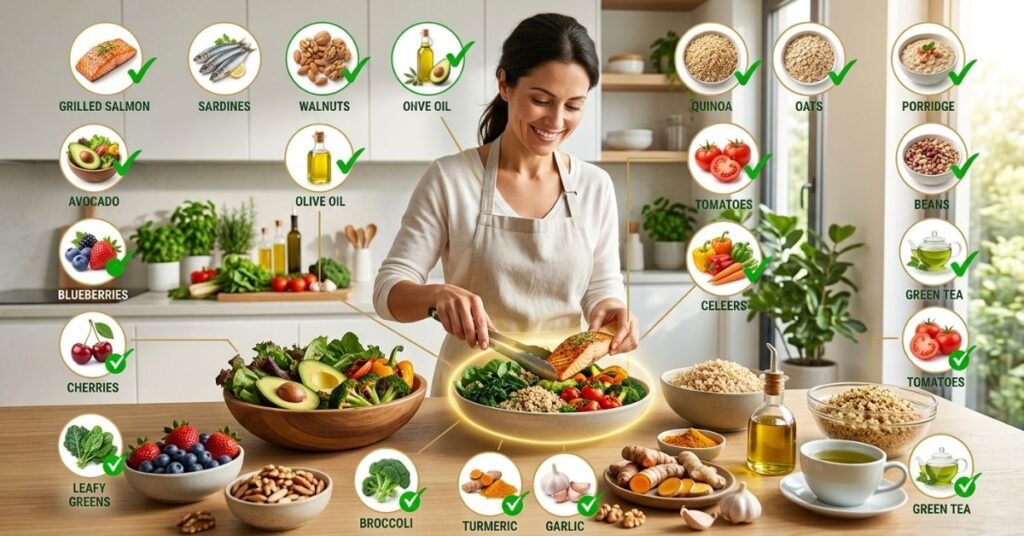
| Fats | Extra virgin olive oil, avocado, nuts, seeds, fatty fish (salmon, sardines, mackerel) | Fried foods, trans fats, heavily processed vegetable oils |
| Carbohydrates | Whole grains (oats, quinoa, brown rice, farro), legumes, sweet potatoes | White bread, pastries, sugary cereals, refined pasta |
| Protein | Fish, poultry, legumes, tofu, tempeh, eggs | Processed meats (bacon, sausage, deli meat), excessive red meat |
| Produce | Leafy greens, berries, cruciferous vegetables, colorful vegetables and fruits | Heavily processed fruit snacks, vegetables fried or drowned in cream-based sauces |
| Dairy | Plain yogurt, kefir, moderate amounts of cheese | Sweetened flavored yogurts, excessive high-fat processed dairy |
| Beverages | Water, green tea, herbal tea | Sugar-sweetened sodas, excessive alcohol, energy drinks |
| Seasonings | Turmeric, ginger, garlic, cinnamon | Excess added salt and sugar in sauces and condiments |
Featured snippet summary: An anti-inflammatory meal plan for beginners emphasizes whole foods — vegetables, fruits, legumes, whole grains, healthy fats, and fatty fish — while limiting ultra-processed foods, refined sugar, fried foods, and processed meats.
Essential Pantry Shopping List
Stocking a few staples makes it much easier to throw together anti-inflammatory meals on busy days.
Healthy fats: extra virgin olive oil, avocado oil, raw or dry-roasted nuts (walnuts, almonds), seeds (chia, flax, pumpkin), natural nut butter
Whole grains & legumes: rolled oats, quinoa, brown rice, farro or barley, canned or dried lentils, chickpeas, black beans
Canned & jarred staples: canned wild salmon or sardines, canned diced tomatoes, low-sodium vegetable or chicken broth, tomato paste
Herbs & spices: turmeric, ginger (fresh or ground), garlic, cinnamon, black pepper (which enhances turmeric absorption), oregano, basil
Frozen staples: frozen berries, frozen leafy greens, frozen mixed vegetables (great for reducing food waste and cost)
Fresh essentials (restock weekly): leafy greens, cruciferous vegetables (broccoli, cauliflower, Brussels sprouts), colorful seasonal vegetables, citrus fruits, berries, avocado
Dairy or dairy alternatives: plain Greek yogurt, kefir, unsweetened plant-based milk
Complete 7-Day Beginner Meal Plan
This plan is designed to be simple, budget-conscious, and repeatable — many meals intentionally reuse ingredients to reduce food waste and cost.
Day 1
- Breakfast: Overnight oats with chia seeds, walnuts, and blueberries
- Lunch: Mixed greens salad with chickpeas, cherry tomatoes, cucumber, olive oil, and lemon dressing
- Dinner: Baked salmon, roasted broccoli, and quinoa
- Snack: Apple slices with almond butter
Day 2
- Breakfast: Greek yogurt with ground flaxseed, sliced banana, and cinnamon
- Lunch: Lentil soup with a side of whole-grain bread
- Dinner: Turmeric-spiced chicken thighs, roasted sweet potato, and sautéed spinach
- Snack: Handful of walnuts and an orange
Day 3
- Breakfast: Veggie omelet (spinach, tomato, bell pepper) with a slice of whole-grain toast
- Lunch: Quinoa bowl with black beans, corn, avocado, and lime dressing
- Dinner: Baked cod, steamed green beans, and brown rice
- Snack: Carrot and celery sticks with hummus
Day 4
- Breakfast: Smoothie with spinach, frozen berries, plain yogurt, and flaxseed
- Lunch: Leftover turmeric chicken over mixed greens
- Dinner: Vegetable and chickpea curry with brown rice
- Snack: Plain Greek yogurt with a drizzle of honey and cinnamon
Day 5
- Breakfast: Oatmeal topped with sliced almonds and stewed cinnamon apples
- Lunch: Tuna or salmon salad (made with olive oil and lemon instead of mayo) over greens
- Dinner: Baked chicken breast, roasted Brussels sprouts, and farro
- Snack: Orange slices and a small handful of pumpkin seeds
Day 6
- Breakfast: Whole-grain toast with mashed avocado, a boiled egg, and chili flakes
- Lunch: Leftover vegetable and chickpea curry
- Dinner: Shrimp stir-fry with broccoli, garlic, ginger, and brown rice
- Snack: Kefir with a handful of berries
Day 7
- Breakfast: Chia pudding made with unsweetened almond milk, topped with mango
- Lunch: Big Mediterranean-style bowl: greens, chickpeas, cucumber, olives, feta, olive oil dressing
- Dinner: Baked salmon, roasted cauliflower, and quinoa (repeat of Day 1’s core proteins to simplify shopping)
- Snack: Apple with a small handful of walnuts
Lifestyle Habits That Support Lower Inflammation
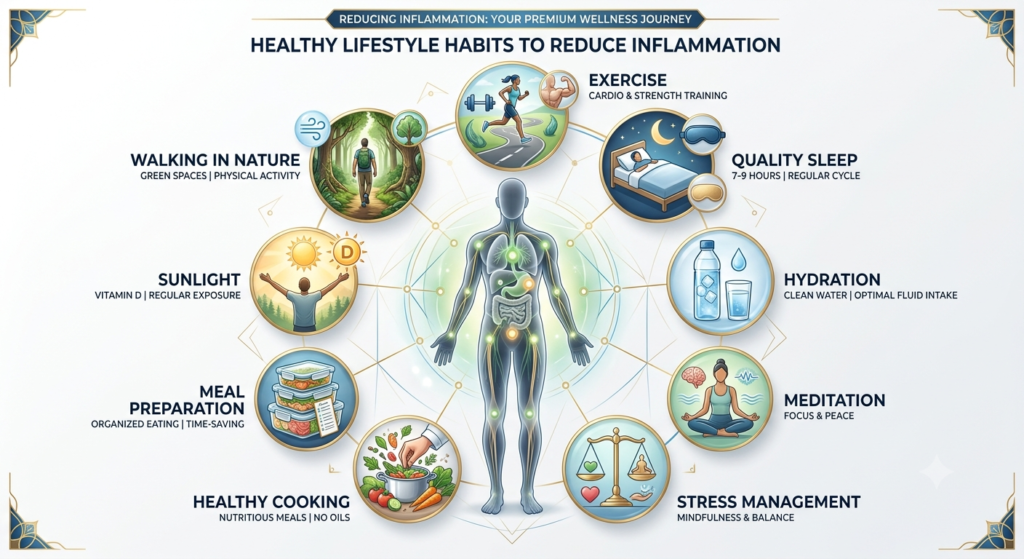
Diet is a major lever, but it works best alongside a few key lifestyle habits:
Regular moderate physical activity—such as 150 minutes of brisk walking, cycling, or swimming per week—has been associated with lower markers of chronic inflammation. Both aerobic activity and resistance training appear to contribute.
Consistently getting fewer than 6–7 hours of sleep per night has been linked to elevated inflammatory markers. Prioritizing 7–9 hours of quality sleep supports both immune regulation and appetite hormones.
Chronic psychological stress is associated with elevated inflammatory markers over time. Practices like short daily walks, breathing exercises, journaling, or simply setting boundaries around work can meaningfully support a lower-inflammation lifestyle.
Avoiding smoking and limiting alcohol: Both are independently associated with increased chronic inflammation, regardless of diet quality otherwise.
Maintaining a healthy weight range: Excess visceral fat is metabolically active and can contribute to a chronic low-grade inflammatory state — another reason a sustainable, whole-foods eating pattern (rather than a short-term restrictive diet) tends to be more effective long-term.
Frequently Asked Questions
What is an anti-inflammatory meal plan for beginners?
It’s a whole-foods-based eating pattern that emphasizes vegetables, fruits, legumes, whole grains, healthy fats, and fatty fish, while limiting ultra-processed foods, added sugar, and fried foods—designed to help reduce chronic, low-grade inflammation over time.
How quickly will I notice a difference?
Some people report feeling more energized or experiencing less bloating within one to two weeks, though meaningful changes in inflammatory markers typically take several weeks to months of consistent eating and lifestyle habits.
Do I need to eliminate all sugar and gluten?
Not necessarily. This eating pattern emphasizes limiting added sugar and refined carbohydrates rather than eliminating entire food groups. Unless you have a diagnosed gluten sensitivity or celiac disease, whole grains containing gluten (like farro or whole wheat) can still fit into an anti-inflammatory diet.
Is this the same as the Mediterranean diet?
They overlap significantly. Both emphasize olive oil, fish, legumes, vegetables, and whole grains while limiting processed foods — the Mediterranean diet is often used as a research-backed model for anti-inflammatory eating patterns.
Can this meal plan help with arthritis or joint pain?
Some people with joint discomfort report improvement with anti-inflammatory eating patterns, particularly those higher in omega-3s and lower in processed foods. However, this plan is not a treatment for arthritis or any diagnosed condition, and you should work with your doctor or a dietitian for a personalized approach.
What foods should I avoid completely?
Very few foods need to be avoided completely for most people. The focus is on limiting items like fried foods, sugary drinks, processed meats, and refined carbohydrates rather than banning them outright—occasional indulgences fit within a sustainable pattern.
Conclusion: Your Next Steps
Starting an anti-inflammatory meal plan for beginners doesn’t require a perfect kitchen overhaul or an all-or-nothing mindset. It’s about consistently leaning toward whole foods — vegetables, fruits, legumes, whole grains, and healthy fats — while gradually limiting the ultra-processed foods, added sugar, and fried foods most associated with chronic inflammation.
Start small: pick one or two meals from the 7-day plan to try this week, stock a few pantry staples like olive oil, oats, and canned beans, and build from there. Combined with regular movement, consistent sleep, and stress management, these everyday choices add up to a sustainable, anti-inflammatory way of eating — not a short-term fix, but a foundation you can maintain for the long run.
Reminder: This guide is educational and not a substitute for professional medical advice. If you have a chronic inflammatory condition or other health concern, consult your doctor or a registered dietitian before making significant dietary changes.
Is this meal plan expensive to follow?
It doesn’t have to be. Leaning on frozen produce, canned fish and legumes, and batch-cooked grains keeps costs manageable, and many anti-inflammatory staples (oats, beans, lentils, frozen vegetables) are among the most affordable items in the grocery store.
Can I follow this plan if I’m vegetarian or vegan?
Yes. Replace fish and poultry with plant-based proteins like lentils, chickpeas, tofu, and tempeh, and consider an algae-based omega-3 supplement if you’re not eating fatty fish, after discussing it with a healthcare provider.
Do I need supplements for this to work?
Supplements aren’t required. A varied, whole-foods diet can provide many of the anti-inflammatory nutrients (omega-3s, antioxidants, fiber) this plan emphasizes. If you’re considering a supplement like fish oil or turmeric/curcumin, discuss appropriate dosing with your healthcare provider first.
How is this different from a weight-loss diet?
While some people do lose weight on an anti-inflammatory eating pattern as a side effect of eating more whole foods, the primary goal here is reducing chronic inflammation and supporting overall health—not calorie restriction.
Pingback: 7 Best Probiotic Supplements for Gut Health: Proven Picks | nutrieatss
Pingback: 15 Best Foods for Thyroid Health: A Proven Diet Guide | nutrieatss
Pingback: 15 Best Collagen-Rich Foods for Firmer, Healthier Skin | nutrieatss
Pingback: 17 Best Foods for Joint Pain and Arthritis Relief: A Proven Anti-Inflammatory Guide | nutrieatss
Pingback: 15 Best Foods for Bone Health: A Proven Guide | nutrieatss