

Follow this evidence-based 30-Day Gut Health Reset Plan to improve digestion, support your microbiome, and build sustainable habits — with a week-by-week guide, meal plan, and shopping list.
If you’ve ever noticed that a stressful week left your stomach in knots, or that a poor night’s sleep seemed to follow a heavy, processed meal, you’ve already experienced firsthand how closely your gut is tied to the rest of your body. As a registered dietitian, gut health is one of the most common concerns I hear about — bloating, irregularity, low energy, and vague digestive discomfort are everyday complaints that often trace back to the trillions of microorganisms living in the digestive tract.
This 30-Day Gut Health Reset Plan is designed to help you rebuild a foundation of good digestive habits over four structured weeks — not through restrictive fasting or a detox in the trendy sense, but through evidence-based nutrition and lifestyle changes that support your gut microbiome long after day 30 is over.
By the end of this guide, you’ll have a week-by-week roadmap, a 7-day sample meal plan and shopping list, a comparison table of gut-friendly foods, and practical strategies for making these habits stick.
How the Gut Microbiome Affects Digestion, Immunity, and Overall Health
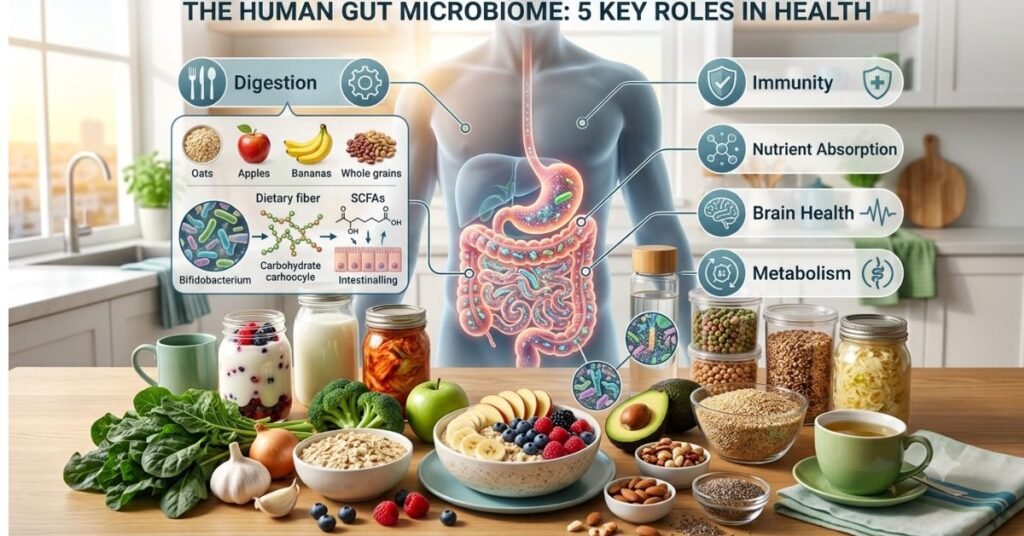
Your gut is home to an estimated 100 trillion microorganisms — bacteria, yeasts, and other microbes — collectively known as the gut microbiome. Far from being passive passengers, these microbes actively participate in several core body functions:
- Digestion: Gut bacteria help break down fiber and complex carbohydrates that your body can’t digest on its own, producing short-chain fatty acids (SCFAs) like butyrate, which nourish the cells lining your colon.
- Immune function: Roughly 70% of your immune tissue is located in the gut. A diverse, balanced microbiome helps train and regulate immune responses, while an imbalanced one (often called dysbiosis) is associated with increased inflammation.
- Nutrient absorption: Healthy gut bacteria assist in synthesizing certain vitamins, including some B vitamins and vitamin K, and support the absorption of minerals like magnesium and calcium.
- Mood and cognition: The gut and brain communicate constantly through the gut-brain axis, partly via the vagus nerve and neurotransmitter production. This is why digestive distress and mood changes so often show up together.
- Metabolic health: Emerging research links microbiome diversity to healthier blood sugar regulation and weight management, though this is an active and evolving area of research rather than a settled one.
The key takeaway: a diverse, well-fed microbiome is associated with better digestion, stronger immunity, more stable mood, and improved metabolic health — which is exactly what this reset plan aims to support.
Benefits of a 30-Day Gut Health Reset Plan
A structured, month-long approach offers a few advantages over trying to change everything overnight:
Research suggests gut microbiome composition can begin shifting within days of a dietary change, but noticeable, more stable improvements in diversity typically take several weeks of consistent habits.
Adding fiber and fermented foods too quickly can cause bloating and gas. A phased, week-by-week approach lets your gut adjust gradually Because the plan progresses from removing potential irritants to adding supportive foods to reinforcing lifestyle habits, it’s designed to outlast the 30 days themselves.
Sleep, stress, hydration, and movement all influence gut health—this plan treats digestion as part of a bigger picture, not an isolated issue.
Common benefits people report after a structured gut-focused reset include reduced bloating, more regular bowel movements, steadier energy, and improved digestive comfort after meals — though individual results vary, and this plan is not a guaranteed treatment for any diagnosed condition.
Week-by-Week Plan
Week 1: Remove Ultra-Processed Foods and Excess Sugar
The first week is about creating space — clearing out the foods most likely to feed unfavorable bacteria, disrupt blood sugar, and irritate the gut lining.
Focus for this week:
- Reduce ultra-processed foods (packaged snacks, fast food, sugary cereals, processed deli meats)
- Cut back on added sugars, including sugary drinks and desserts
- Limit alcohol intake
- Reduce artificial sweeteners, which some research suggests may alter gut bacteria composition in certain people
- Start reading ingredient labels and cooking more meals at home
Diets high in ultra-processed foods and added sugar are consistently associated with lower microbiome diversity and a higher proportion of inflammation-associated bacteria. Removing these first creates a cleaner baseline before you start adding beneficial foods.
Practical tip: Don’t aim for perfection. Swapping one processed snack a day for a whole-food alternative (like fruit and nuts instead of a packaged pastry) is a realistic, sustainable start.
Week 2: Add Fiber-Rich Foods and Fermented Foods
With ultra-processed foods scaled back, Week 2 shifts the focus to actively feeding your microbiome.
Focus for this week:
- Gradually increase fiber intake through vegetables, fruits, legumes, and whole grains
- Introduce fermented foods like plain yogurt, kefir, sauerkraut, kimchi, and miso
- Aim to include a source of fiber at every meal
- Increase water intake alongside fiber to support digestion and prevent constipation
Fiber is the primary fuel source for beneficial gut bacteria, which ferment it into short-chain fatty acids that support colon health. Fermented foods can introduce beneficial live cultures, though it’s worth noting that not all fermented foods contain live active cultures (some are pasteurized after fermentation, which kills the bacteria) — check labels for “live and active cultures.”
Increase fiber gradually rather than all at once. Jumping from a low-fiber diet to 30+ grams a day overnight is a common cause of bloating and discomfort.
Week 3: Support the Microbiome with Prebiotic Foods, Hydration, Sleep, and Stress Management
By Week 3, your gut has had time to adjust to more fiber and fermented foods. This week broadens the focus beyond food alone.
Focus for this week:
- Add prebiotic foods—garlic, onions, leeks, asparagus, bananas, oats, and Jerusalem artichokes—which feed beneficial bacteria directly
- Prioritize hydration, aiming for consistent water intake throughout the day
- Protect 7–9 hours of sleep per night; poor sleep is linked to reduced microbiome diversity
- Incorporate stress-reduction practices such as short walks, breathing exercises, or journaling, since chronic stress affects gut motility and the gut-brain axis
Prebiotics and probiotics work together—prebiotics are the “fertilizer” that helps beneficial bacteria (including any introduced through fermented foods) thrive. Meanwhile, sleep and stress are frequently overlooked but significantly influence gut function, sometimes as much as diet itself.
Try pairing one prebiotic food with one fermented food in the same meal (like oats with kefir or a banana with yogurt) to support a synergistic effect.
Week 4: Build Long-Term Healthy Habits
The final week is about consolidation — turning what you’ve learned into habits that don’t require a “reset” mentality to maintain.
Focus for this week:
- Reflect on which changes felt sustainable and which felt like a stretch
- Build a “flexible template” for meals that includes fiber, protein, healthy fat, and color at most meals
- Keep 1–2 fermented foods and a few prebiotic staples as regular grocery items
- Plan for imperfect days—a processed meal or missed workout doesn’t undo the previous weeks’ progress
- Set a realistic, ongoing goal (e.g., “fiber at every meal” or “fermented food most days”) rather than trying to maintain a rigid 30-day structure forever
Microbiome improvements are not permanent by default—they respond to your ongoing diet and lifestyle. The goal of Week 4 is to make gut-supportive choices feel normal rather than restrictive, so the benefits continue well past day 30.
Sample 7-Day Meal Plan
This sample plan reflects the habits built by Weeks 2–3 (fiber, fermented foods, prebiotics, hydration) and can be used as a template throughout the month, adjusting portion sizes and specific foods to your preferences and any medical guidance you’ve received.
| Day | Breakfast | Lunch | Dinner | Snack |
| 1 | Oatmeal with banana, chia seeds, walnuts | Lentil and vegetable soup with whole-grain bread | Baked salmon, roasted asparagus, quinoa | Plain yogurt with berries |
| 2 | Greek yogurt with ground flaxseed and mixed berries | Big leafy salad with chickpeas, olive oil dressing | Stir-fried tofu with broccoli, garlic, brown rice | Apple slices with almond butter |
| 3 | Kefir smoothie with spinach and frozen mango | Turkey and avocado wrap with whole-grain tortilla | Grilled chicken, roasted sweet potato, sautéed kale | Handful of walnuts |
| 4 | Whole-grain toast with avocado and a boiled egg | Quinoa bowl with black beans, corn, salsa | Baked cod, steamed green beans, farro | Carrot sticks with hummus |
| 5 | Overnight oats with kefir and sliced pear | Vegetable and bean chili | Shrimp and vegetable stir-fry with soba noodles | Small bowl of edamame |
| 6 | Smoothie bowl with yogurt, oats, and berries | Leftover chili or soup | Turkey meatballs with whole-wheat pasta, marinara, side salad | Kimchi with rice crackers |
| 7 | Vegetable omelet with sourdough toast | Buddha bowl: brown rice, roasted vegetables, chickpeas, tahini | Baked chicken thighs, roasted Brussels sprouts, barley | Miso soup |
Best Foods to Eat and Foods to Limit
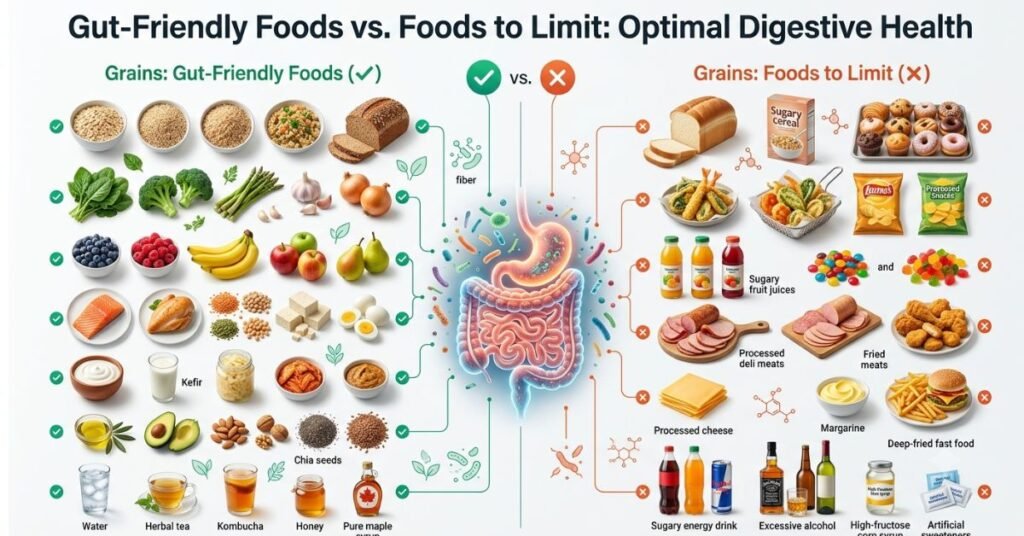
Comparison Table: Gut-Friendly Foods vs. Foods to Limit
| Category | Gut-Friendly Choices | Foods to Limit |
| Grains | Oats, quinoa, brown rice, barley, whole-grain bread | Refined white bread, sugary cereals, pastries |
| Vegetables | Leafy greens, broccoli, asparagus, garlic, onions | Deep-fried vegetables, heavily processed vegetable snacks |
| Fruits | Berries, bananas, apples, pears | Fruit snacks and juices with added sugar |
| Protein | Fish, poultry, legumes, tofu, eggs | Processed deli meats, fried meats |
| Dairy/Fermented | Plain yogurt, kefir, sauerkraut, kimchi, miso | Sweetened flavored yogurts, processed cheese products |
| Fats | Olive oil, avocado, nuts, seeds | Trans fats, heavily processed vegetable oils used in fried foods |
| Beverages | Water, herbal tea, kombucha (in moderation) | Sugary sodas, excessive alcohol, energy drinks |
| Sweeteners | Small amounts of honey or maple syrup | High-fructose corn syrup, excessive artificial sweeteners |
Why this balance matters: No single food will “fix” gut health, and no single food needs to be eliminated entirely for most healthy adults. The pattern — mostly whole, fiber-rich, minimally processed foods, most of the time — is what the research consistently supports.
Lifestyle Habits: Exercise, Sleep, and Stress Reduction
Gut health isn’t just about what’s on your plate. Three lifestyle factors consistently show up in the research as meaningful contributors:
Regular moderate physical activity — even brisk walking for 30 minutes most days — has been associated with greater gut microbial diversity. Exercise also supports healthy gut motility, which can help with regularity.
Poor or irregular sleep is linked to disruptions in the gut microbiome and increased inflammation. Aiming for consistent sleep and wake times, even on weekends, supports both your circadian rhythm and your gut.
The gut and brain are in constant communication via the gut-brain axis. Chronic stress can alter gut motility, increase gut permeability, and shift microbiome composition. Simple, consistent practices — a daily walk, deep breathing, journaling, or time away from screens — can meaningfully support digestive health over time.
Common Mistakes to Avoid
This is one of the most common causes of bloating and discomfort during a gut reset. Increase gradually and drink plenty of water.
- Probiotic supplements can be helpful, but they’re not a substitute for a fiber-rich, diverse diet, which feeds a broader range of bacteria than any single supplement strain.
- Extremely restrictive “cleanses” are not necessary and can backfire, especially if they eliminate entire food groups without medical guidance.
- Focusing on food alone while neglecting sleep and stress management often limits results.
- Microbiome changes happen gradually; some people notice improvements within a week or two, while others need the full 30 days or longer.
- Anyone with a diagnosed digestive condition should tailor this plan with a healthcare provider, since some “gut-healthy” foods (like certain high-fiber or fermented foods) can worsen symptoms in conditions like IBS or SIBO.
Frequently Asked Questions
How quickly will I see results from a 30-Day Gut Health Reset Plan? Some people notice changes like reduced bloating or more regular digestion within one to two weeks, while more substantial shifts in microbiome diversity typically take the full 30 days or longer of consistent habits.
Do I need to take a probiotic supplement during the reset? Not necessarily. Whole, fiber-rich, and fermented foods can support a diverse microbiome on their own. If you’re considering a probiotic supplement, especially for a specific symptom or condition, it’s best to discuss the right strain and dose with a healthcare provider.
Can I do this reset if I have IBS or another digestive condition? This plan is designed for generally healthy adults looking to improve digestive habits. If you have IBS, IBD, SIBO, or another diagnosed condition, please work with a gastroenterologist or registered dietitian, since certain high-fiber, prebiotic, or fermented foods can trigger symptoms in some people with these conditions.
Is this plan the same as a “detox” or “cleanse”? No. This plan does not involve juice fasting, laxatives, or eliminating entire food groups. It focuses on gradually reducing processed foods and added sugar while increasing fiber, fermented foods, hydration, and supportive lifestyle habits.
What if I experience bloating during the plan? Some bloating is common when fiber intake increases, especially in Week 2. Increase fiber gradually, drink enough water, and consider spacing out fiber-rich meals rather than adding everything at once. If bloating is severe or persistent, consult a healthcare provider.
Can I follow this plan if I’m vegetarian or vegan? Yes. The plan’s core principles — reducing processed foods, increasing fiber and fermented foods, and prioritizing hydration, sleep, and stress management — work well with a vegetarian or vegan approach. Swap animal proteins for plant-based options like legumes, tofu, and tempeh.
Will this plan help me lose weight? Weight change isn’t the primary goal of this plan, though some people notice changes in bloating, water retention, or appetite regulation as digestion improves. This plan should be viewed as a digestive health and habit-building tool rather than a weight-loss program.
How much fiber should I be eating each day? General dietary guidelines commonly recommend around 25–38 grams of fiber per day for adults, though individual needs vary. If you’re currently eating well below this amount, increase gradually rather than jumping to the full target immediately.
Do I need to avoid dairy or gluten during the reset? Not unless you have a diagnosed intolerance, sensitivity, or allergy. This plan doesn’t require eliminating dairy or gluten; it simply emphasizes whole, minimally processed versions of foods (like plain yogurt over flavored, sugary yogurt, or whole grains over refined ones).
Can I repeat the 30-day plan, or do this long-term? The habits in this plan — adequate fiber, some fermented foods, hydration, sleep, and stress management — are meant to be sustained long-term, not just for 30 days. Many people use the structured version periodically as a “reset” when habits have slipped, then return to a more flexible version day-to-day.
9. Conclusion: Your Next Steps
Gut health isn’t built in a single meal or undone by a single indulgent day — it’s shaped by the patterns you repeat most often. This 30-Day Gut Health Reset Plan gives you a realistic, evidence-based structure: clearing out ultra-processed foods and excess sugar in Week 1, rebuilding with fiber and fermented foods in Week 2, broadening your focus to prebiotics, hydration, sleep, and stress in Week 3, and locking in sustainable habits in Week 4.
You don’t need to execute this perfectly to benefit from it. Start with one change this week — swap a processed snack for a piece of fruit, add a serving of vegetables to dinner, or commit to an earlier bedtime — and build from there. Small, consistent choices, repeated over 30 days and beyond, are what actually shape a healthier gut over time.
Reminder: This plan is educational in nature and is not a medical treatment. If you have a diagnosed digestive condition or underlying health concern, consult a physician or registered dietitian before beginning any new dietary or lifestyle plan.
Pingback: 7 Best Probiotic Supplements for Gut Health: Proven Picks | nutrieatss
Pingback: 15 Best Foods for Thyroid Health: A Proven Diet Guide | nutrieatss
Pingback: 15 Best Collagen-Rich Foods for Firmer, Healthier Skin | nutrieatss
Pingback: 15 Best Foods for Anxiety and Stress Relief Guide | nutrieatss