

The common foods that cause brain fog and secretly steal your mental clarity. Learn exactly which ingredients to avoid and the best brain-boosting foods to eat instead for sharper focus and better concentration.
You slept 8 hours. You had your coffee. You sat down to work — and still felt like your brain was wrapped in wet cotton.
Sound familiar?
If you’ve been blaming stress, aging, or “just being tired,” I need you to read this carefully — because the real culprit might be sitting on your plate right now.
Brain fog isn’t a personality trait. It’s not laziness. And for millions of people, it’s almost entirely driven by what they eat every single day.
Here’s what nobody tells you: your brain is the most metabolically demanding organ in your body. It burns roughly 20% of your total energy — despite being only 2% of your body weight. That means it’s incredibly sensitive to the quality of fuel you give it.
Feed it junk, and it runs like junk.
The frustrating part? Most of the foods causing your mental cloudiness are things you’ve been told are “fine in moderation.” Things that feel harmless. Things that are literally everywhere.
Let’s break them down — one by one.
The 6 Foods That Are Quietly Clouding Your Mind
- Refined Sugar and High-Glycemic Carbs — The Blood Sugar Rollercoaster
That 3 PM brain crash you get every day? That’s not normal tiredness. That’s your blood sugar bottoming out after a spike.
When you eat white bread, pastries, sugary drinks, candy, or white rice, your blood sugar shoots up fast. Your body panics, floods your system with insulin, and your blood sugar crashes back down — hard. Your brain, which needs a steady supply of glucose, suddenly finds itself running on fumes.
The result? Fatigue, poor concentration, slow thinking, irritability.
Do this repeatedly, day after day, and something worse happens. Your brain starts losing sensitivity to insulin — a pattern researchers are now calling “Type 3 diabetes,” directly linked to accelerated cognitive decline and increased Alzheimer’s risk.
What to do instead:
Swap white bread for whole grain alternatives
Choose sweet potatoes over white potatoes
Eat whole fruit instead of fruit juice
Always pair carbs with protein or healthy fat to slow glucose absorption
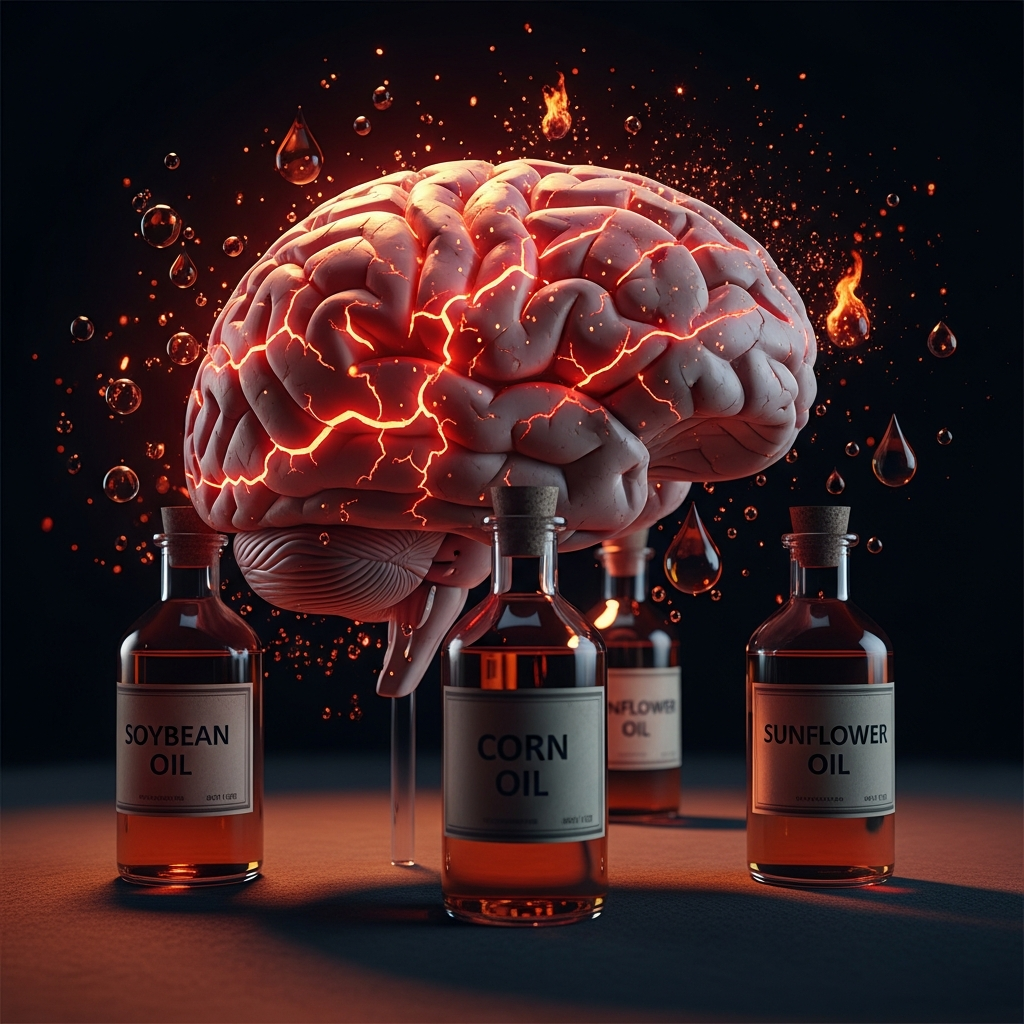
- Industrial Seed Oils — The Silent Inflammation Trigger
This one surprises most people.
Soybean oil. Corn oil. Sunflower oil. Cottonseed oil. They’re in everything — your salad dressing, your restaurant food, your “healthy” snacks, your store-bought sauces.
These oils are loaded with omega-6 fatty acids, which in excess create systemic inflammation throughout the body — including your brain.
Here’s the scary part: our ancestors consumed omega-6 and omega-3 fats at a ratio of roughly 1:1 to 4:1. Today, the average person eats at a ratio of 15–20:1 in favor of omega-6. That imbalance directly impairs neurotransmitter function, crushes neuroplasticity, and creates the neurological environment associated with depression, anxiety, and persistent cognitive fog.
What to do instead:
Cook with extra virgin olive oil, avocado oil, coconut oil, or grass-fed butter
Read ingredient labels obsessively — seed oils hide where you least expect them
- Trans Fats — The Memory Wrecker
Partially hydrogenated oils — the source of artificial trans fats — have been reduced in many countries through regulation, but they haven’t disappeared. They still lurk in certain packaged foods, fast food, and commercial baked goods.
These fats are uniquely damaging to brain tissue. Research links them to impaired memory, increased neuroinflammation, and reduced levels of BDNF (brain-derived neurotrophic factor) — essentially the growth hormone your brain uses to form new connections and memories.
What to do instead:
Check every label for the words “partially hydrogenated oil”
If you see it, put it back. No exceptions.
- Alcohol — The Fog You’ve Normalized
This might be the hardest one to hear.
Alcohol is, by clinical definition, a neurotoxin. Even at socially accepted levels of consumption, habitual drinking is associated with measurable reductions in brain volume — particularly in the hippocampus, the region responsible for memory and learning.
Beyond volume loss, regular alcohol disrupts your sleep architecture, robbing you of the deep, restorative sleep stages where your brain literally clears out metabolic waste. It depletes B vitamins critical for neurological function. And it impairs memory consolidation night after night.
Here’s the insidious part: when you drink regularly, the cognitive fog it causes becomes your baseline. You stop noticing it because you’ve forgotten what clarity actually feels like.
What to do instead:
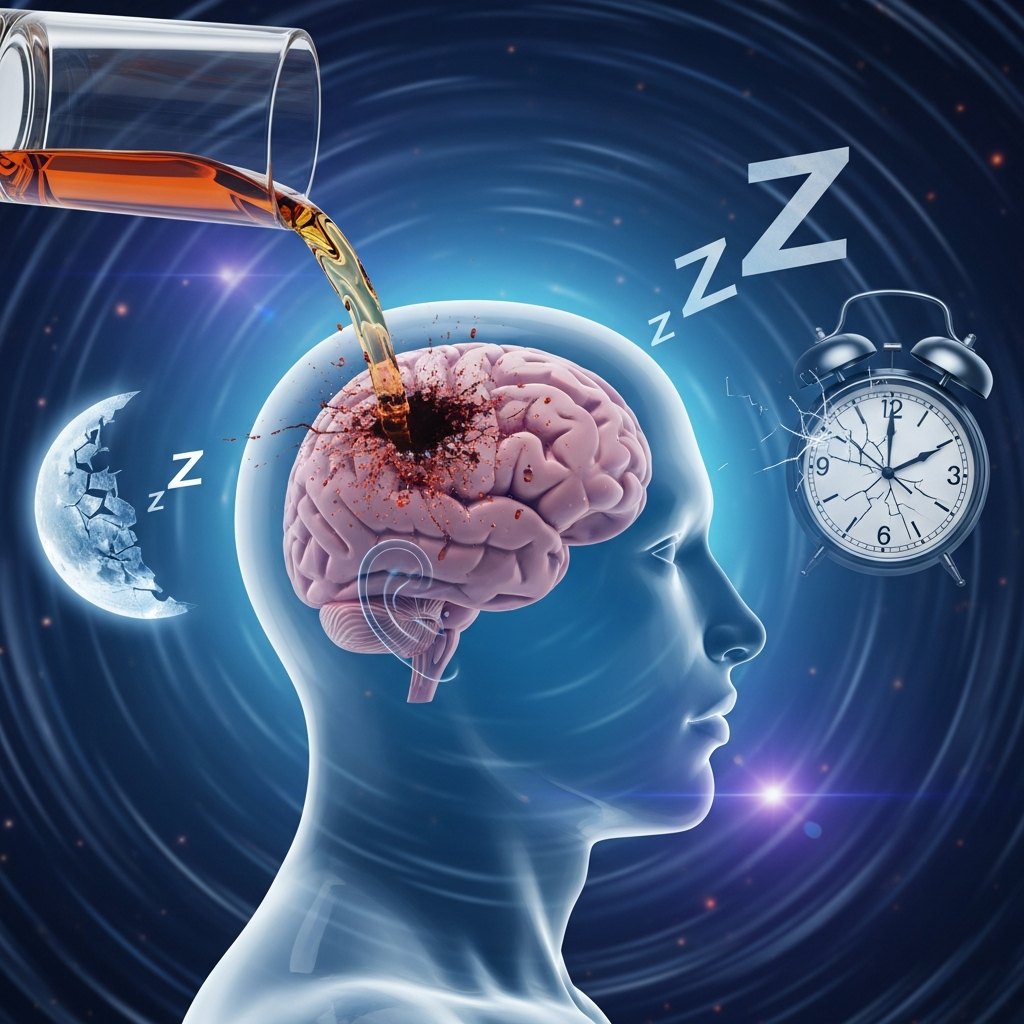
Try a 30-day alcohol-free experiment — most people are stunned by the cognitive shift they experience
If complete elimination feels like too much, start by cutting out midweek drinking entirely
- Ultra-Processed Foods — Nutritional Bankruptcy in a Package
Ultra-processed foods aren’t just “unhealthy.” They are, by design, industrial formulations with minimal real food content and maximum palatability engineering.
Large-scale epidemiological studies consistently link high ultra-processed food consumption with increased rates of depression, anxiety, accelerated brain aging, and cognitive decline. The mechanisms are layered:
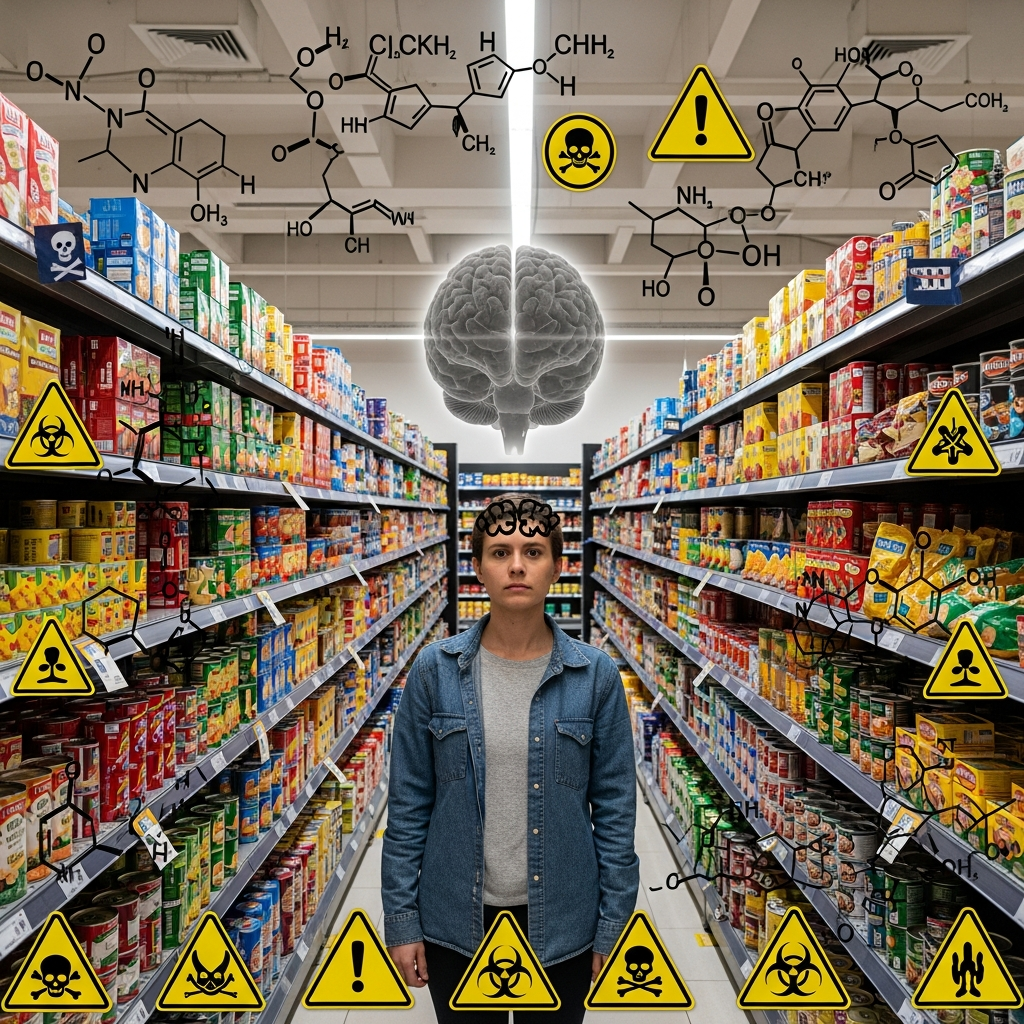
They devastate your gut microbiome, which directly communicates with your brain via the gut-brain axis
They contain additives that disrupt brain chemistry
They flood your system with omega-6 fats and refined carbs simultaneously
They are stripped of the vitamins, minerals, and antioxidants your brain needs to function
A simple test: Can you make this food in your own kitchen from real ingredients? If the answer is no, it’s almost certainly ultra-processed.
What to do instead:
Build your diet around foods that had a life: vegetables, fruits, eggs, meat, fish, legumes, whole grains
Cook from scratch as often as practically possible — even three home-cooked meals a week makes a measurable difference
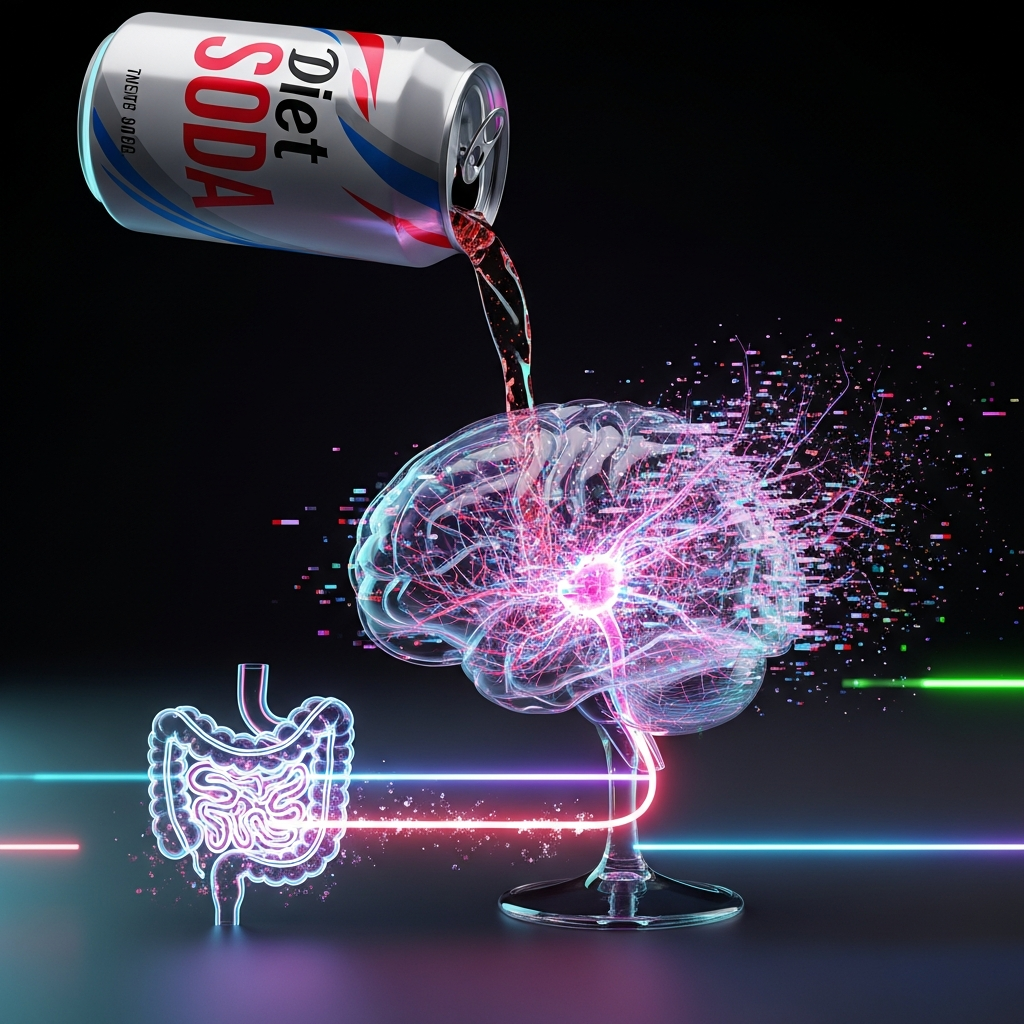
- Artificial Sweeteners — The “Healthy” Swap That May Backfire
Swapped sugar for aspartame or saccharin and still feeling foggy? There’s emerging research you need to know about.
Certain artificial sweeteners appear to negatively alter gut microbiome composition in ways that impair glucose metabolism. Aspartame, specifically, breaks down into phenylalanine and methanol in the body — metabolic byproducts that at higher intake levels may interfere with neurotransmitter production and balance.
The evidence is still developing, but the pattern is concerning enough that it’s worth paying attention to.
What to do instead:
Rather than swapping one sweetener for another, work on gradually reducing your overall sweetness threshold
Your palate adjusts within 2–4 weeks — foods that seem bland now will taste completely different once your taste buds recalibrate
How to Know Which Foods Are Affecting You Specifically
The most powerful tool in your arsenal isn’t a supplement or a lab test — it’s a structured elimination protocol.
Here’s how it works:
Week 1–4: Remove all six major culprits — refined sugar, seed oils, trans fats, alcohol, ultra-processed foods, and artificial sweeteners. Eat whole, real foods. Track your energy, focus, mood, and sleep quality daily.
Week 5 onward: Reintroduce one category at a time, every 4–5 days. Note any changes in cognition, mood, or energy within 48–72 hours of reintroduction.
Many people experience a significant shift within the first two weeks — often describing it as a “mental lifting” sensation they hadn’t realized was possible. That’s not placebo. That’s your brain getting what it needs and finally being able to do its job.
What Your Brain Actually Wants You to Eat
You don’t need to be perfect. You need to be directional.
Start crowding out the brain fog foods with:
Fatty fish (salmon, sardines, mackerel) — rich in EPA and DHA, the omega-3s your brain is literally made of
Eggs — a complete package of choline, B vitamins, and healthy fat
Leafy greens — folate and magnesium for neurotransmitter support
Blueberries — anthocyanins shown to improve memory and slow cognitive aging
Walnuts — the brain-shaped nut that’s genuinely brain-supportive (omega-3s, polyphenols, vitamin E)
Extra virgin olive oil — the most researched oil for cognitive protection
Dark chocolate (85%+) — flavonols that improve blood flow to the brain
The Bottom Line
Brain fog is not your destiny.
For the majority of people who experience it chronically, it is a dietary problem with a dietary solution. The foods disrupting your blood sugar, inflaming your brain, damaging your gut, and depleting your nutrient stores are identifiable and removable.
You don’t need a prescription. You don’t need to accept “this is just how I am.” You need to take one honest look at what you’re eating — and make the changes your brain has been asking for.
Start with one swap this week. One.
Replace the seed oil in your kitchen. Drop the afternoon soda. Cook one meal from scratch. The momentum builds faster than you think.
Your brain is capable of remarkable clarity. The only question is whether you’re willing to stop feeding it fog.