
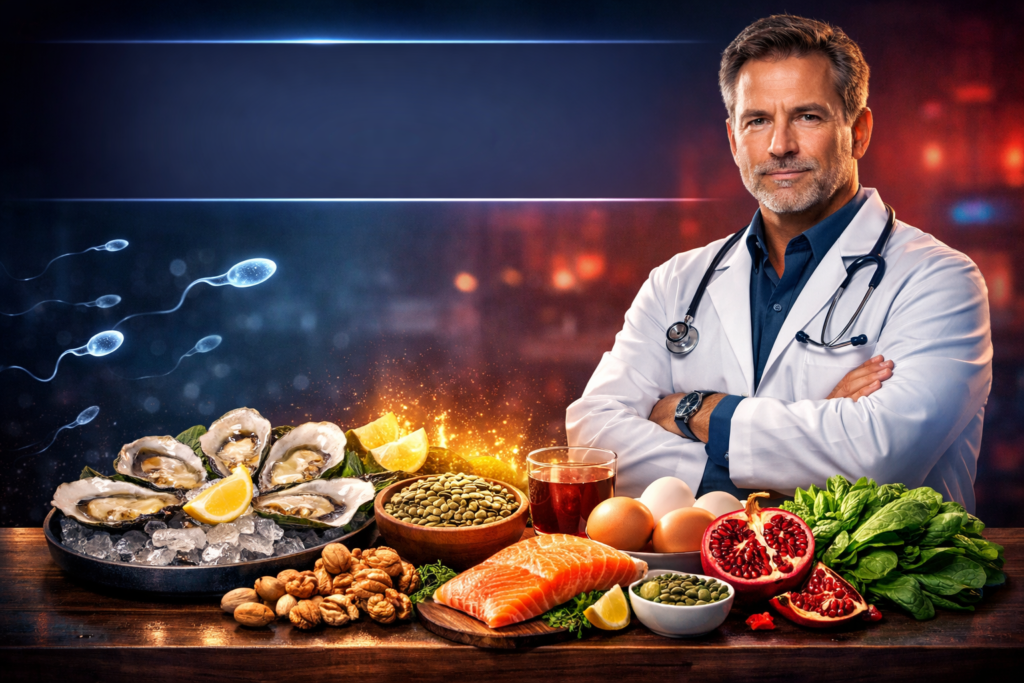
Discover 8 powerful foods that boost male fertility naturally — from zinc-rich oysters to antioxidant-packed pomegranate. Science-backed nutrition advice every man should read before it’s too late.
8 Foods That Boost Male Fertility Naturally — What Most Men Are Never Told
If you’ve been eating carefully, exercising, doing everything “right” — and your fertility numbers still aren’t where they should be — there’s a very good chance the missing piece isn’t in a clinic. It’s in your kitchen.
Male fertility has a problem that nobody wants to talk about openly. Sperm counts across the developed world have dropped by more than 50% over the past four decades. Not a slight dip. Half. In one generation.
Researchers are still debating the full explanation — environmental toxins, endocrine disruptors, sedentary lifestyles, processed food consumption. But what the research is increasingly clear on is this: what a man eats has a direct, measurable, and surprisingly rapid effect on the quality, quantity, motility, and DNA integrity of his sperm.
This matters whether you’re actively trying to conceive or simply care about the long-term health of your hormonal system. Sperm quality is not just a fertility metric. It’s a window into your overall metabolic health, your hormonal balance, and your biological age.
The foods below are not obscure superfoods that require a specialist to source. They are accessible, affordable, evidence-backed, and — when eaten consistently — capable of making a measurable difference in the numbers that matter most.
Here’s what most men are never told.

Why Nutrition Is the Most Underrated Factor in Male Fertility
Before the list, a brief but important piece of biology — because understanding the mechanism makes the recommendations infinitely easier to follow consistently.
Sperm are among the most nutritionally sensitive cells in the human body. They are produced continuously — approximately 1,500 sperm per second in a healthy male — through a process called spermatogenesis that takes roughly 74 days from start to finish. Every single sperm produced during that period is built from the raw materials available in the body at the time.
Feed the body adequate zinc, selenium, omega-3 fatty acids, antioxidants, folate, and vitamin D during those 74 days — and the sperm produced will reflect that nutritional abundance. They will be well-formed, motile, with intact DNA and robust membranes capable of surviving the journey to fertilization.
Deprive the body of those same nutrients — flood it instead with processed fats, refined carbohydrates, environmental toxins, and nutritional deficiencies — and the sperm produced will reflect that too. Poor morphology. Reduced motility. Fragmented DNA. Low count.
Here’s the practical implication: the dietary changes you make today will be reflected meaningfully in your sperm quality in approximately three months. That timeline is not discouraging — it is empowering. It means the situation is not fixed. It means you have real, biological leverage over a metric most men assume is determined by genetics alone.
Now — what to actually eat.
8 Foods That Boost Male Fertility — And the Science Behind Each One
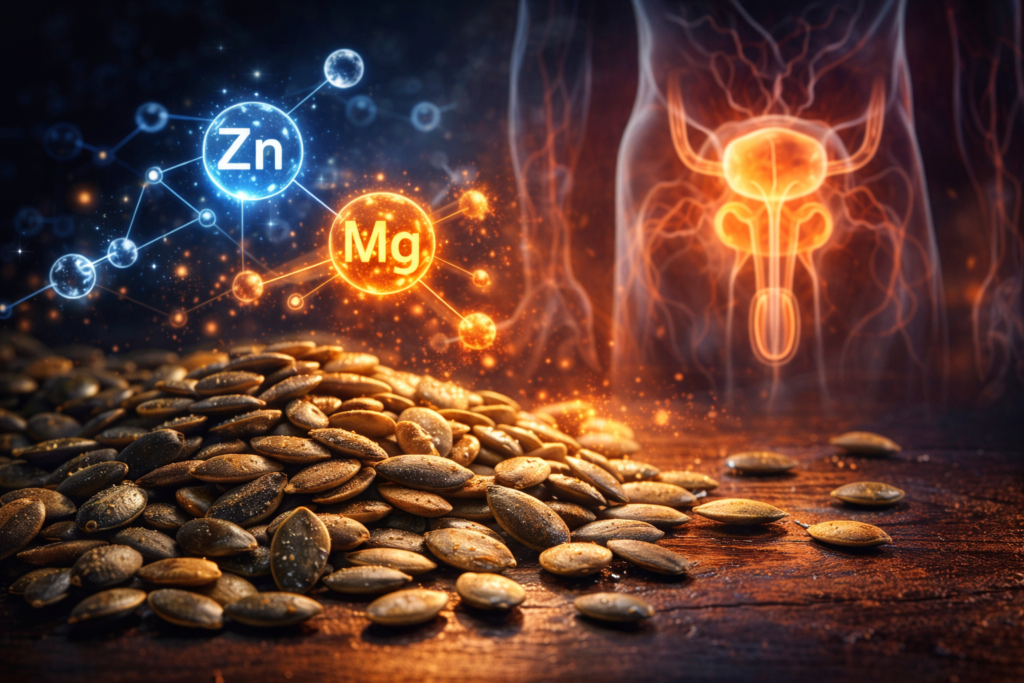
- Pumpkin Seeds — The Zinc and Magnesium Powerhouse Most Men Overlook
If there is a single snack that deserves a permanent place in a fertility-focused diet, it is pumpkin seeds. Small, inexpensive, and almost absurdly nutrient-dense, they are one of the most concentrated food sources of two minerals that are absolutely critical to male reproductive function: zinc and magnesium.
Zinc is not optional for male fertility. It is foundational. It is required for testosterone synthesis, for sperm cell production, for the structural integrity of sperm DNA, and for the motility that allows sperm to navigate toward an egg. Low zinc does not just correlate with reduced fertility — it directly causes it. Studies consistently show that zinc supplementation in deficient men produces significant improvements in sperm count, motility, and morphology.
Magnesium works alongside zinc in ways that are deeply interrelated. It regulates over 300 enzymatic reactions in the body — including many involved in hormone production and cellular energy generation. Magnesium deficiency suppresses testosterone, impairs sleep quality (which further disrupts hormone balance), and increases the systemic inflammation that damages sperm cells.
Pumpkin seeds deliver both in a single, convenient, affordable package — alongside antioxidants that protect sperm DNA from oxidative damage during the long journey of spermatogenesis.
A large handful daily — raw or lightly toasted, without added oils or salt — is the recommendation. Add them to salads, stir them into oats, or eat them as a standalone snack. The consistency matters more than the delivery method. - Oysters and Shellfish — The Single Most Zinc-Dense Food on Earth
If pumpkin seeds are the affordable daily zinc source, oysters are the premium, high-impact version — and the data on their zinc content is genuinely staggering.
A single serving of six oysters contains more zinc than most men get in an entire week from their regular diet. Six oysters. That’s how nutritionally concentrated they are in the one mineral most critical to male hormonal and reproductive function.
The connection between zinc and male fertility runs deep. Zinc is found in extraordinarily high concentrations in seminal plasma — the fluid that carries and protects sperm. It plays a direct role in sperm cell maturation, in the formation of the outer membrane of each sperm cell, in the DNA compaction that protects genetic material during fertilization, and in the motility mechanisms that determine swimming speed and direction.
Men with chronically low zinc levels consistently show lower sperm counts, poorer motility, impaired morphology, and reduced testosterone levels compared to zinc-sufficient men. The deficiency is not just associated with these outcomes — it causes them. And correction of the deficiency consistently reverses them.
Two to three servings of oysters or other shellfish — mussels, clams, crab — per week provides a zinc input that most dietary patterns simply cannot match through other sources. If shellfish is inaccessible or unpalatable, pumpkin seeds plus a quality zinc supplement in the zinc glycinate form is a viable alternative. - Whole Eggs — Every Single Part of Them
The decades-long cultural war against egg yolks has caused more nutritional harm than almost any other dietary misconception of the modern era — and for men concerned about fertility, the cost has been particularly significant.
Here’s what you lose when you eat only egg whites: cholesterol, vitamin D, choline, vitamin A, vitamin K2, and the full spectrum of fat-soluble nutrients the yolk contains. Here’s why that matters for fertility:
Cholesterol is the direct precursor to testosterone and all other steroid hormones. Without adequate dietary cholesterol, your body’s capacity to produce testosterone is compromised at the foundational level. The fear that dietary cholesterol raises cardiovascular risk has been substantially revised by the research of the last decade — but the damage to men’s fertility is ongoing in the form of men who meticulously separate yolks and wonder why their hormonal labs are suboptimal.
Vitamin D from egg yolks directly supports testosterone production and sperm quality. Vitamin D deficiency — endemic in modern populations — is independently associated with reduced testosterone and impaired sperm function. Choline is essential for cellular membrane integrity and for the neurological development of any child conceived.
Four to six whole eggs daily, cooked in any way that suits you, provides a foundation of hormonal raw materials that no other single food matches for accessibility and cost-effectiveness. Eat the whole egg. Both parts exist for a reason. - Fatty Fish — Salmon, Sardines, and Mackerel
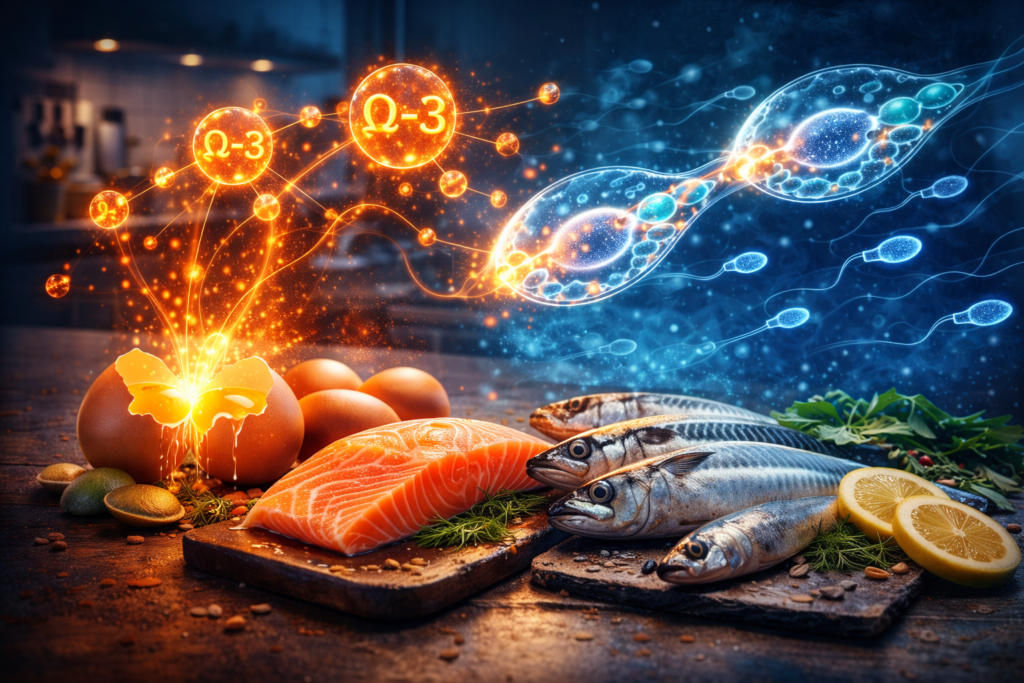
The membrane of a sperm cell is primarily composed of long-chain omega-3 fatty acids — specifically DHA (docosahexaenoic acid). The quality of that membrane determines the sperm’s flexibility, its ability to fuse with an egg, and its swimming efficiency.
Men with low DHA concentrations in their sperm consistently show poorer motility, more abnormal morphology, and lower fertilization rates than men with adequate omega-3 status. This is not a correlation that requires careful interpretation. The sperm membrane is literally made from the omega-3s you eat. The input determines the output.
Fatty fish — salmon, sardines, mackerel, anchovies, herring — are the most bioavailable sources of the long-chain omega-3s that sperm cells require. Two to three servings per week produces measurable improvements in sperm quality over the three-month spermatogenesis cycle.
There is also a critically important displacement effect worth mentioning here: men who eat more fatty fish naturally eat less of the refined seed oils — soybean oil, corn oil, sunflower oil — that are high in omega-6 fatty acids and that, in excess, directly compete with omega-3 incorporation into cell membranes and drive the systemic inflammation that damages sperm DNA.
Less seed oil. More real fish. The sperm quality shift this produces over twelve weeks is documented and significant. - Walnuts — The Snack With Peer-Reviewed Fertility Data
Walnuts occupy a rare position in nutrition research: they are among the few specific foods that have been the subject of controlled clinical trials examining their effect on human sperm quality.
A landmark study from the University of California found that men who added 75 grams of walnuts daily to their regular diet for twelve weeks showed significant improvements in sperm vitality, motility, and morphology compared to a control group. These weren’t subtle statistical blips. They were meaningful, measurable improvements in the metrics that fertility specialists use to assess reproductive potential.
The mechanism is multifactorial. Walnuts are the richest nut source of ALA omega-3 fatty acids, contributing to the sperm membrane DHA that fatty fish also supports. They are also rich in folate, antioxidants including vitamin E and polyphenols, and zinc — creating a broad-spectrum fertility support profile in a single food.
A handful of raw walnuts daily — approximately 75 grams — is the dose used in the clinical research. Lightly soaked overnight, they’re easier to digest and their nutrients are more bioavailable. This is possibly the single most evidence-backed dietary change for male fertility that doesn’t require significant effort or expense. - Pomegranate — The Testosterone and Sperm Protector
Pomegranate has been revered in traditional medicine across cultures for centuries. Modern research is validating that reputation with a specificity the ancients couldn’t have anticipated.
Pomegranate is one of the most antioxidant-rich foods in the human diet — containing punicalagins and punicic acid, compounds with antioxidant activity that research suggests significantly exceeds that of red wine and green tea. For male fertility, this matters enormously.
Oxidative stress — the damage caused by free radicals overwhelming the body’s antioxidant defenses — is one of the primary mechanisms of sperm DNA fragmentation. Sperm with fragmented DNA may fertilize an egg but will fail to produce a viable pregnancy, or will contribute to developmental problems that aren’t immediately apparent. Reducing oxidative stress is therefore one of the most important interventions for improving the biological quality of sperm beyond just count and motility.
Beyond antioxidant protection, pomegranate has been shown in clinical research to directly elevate testosterone levels. One study found that drinking pomegranate juice daily for two weeks produced a 24% increase in salivary testosterone levels in participants — a finding that was accompanied by improved mood, reduced blood pressure, and enhanced physical performance.
Drink 200–300ml of pure pomegranate juice daily — not pomegranate-flavored drinks loaded with added sugar, but pure pressed juice — or eat the seeds directly. The difference to sperm quality and testosterone over three months of consistent use is real and measurable. - Brazil Nuts — Two Nuts Is All You Need
Selenium is a trace mineral that sits at the intersection of thyroid function, antioxidant defense, and male reproductive biology. It is an essential component of selenoproteins that protect sperm from oxidative damage, and it is directly involved in the process of sperm tail formation — the structure responsible for propulsion and motility.
Men with selenium deficiency consistently show reduced sperm motility and increased rates of morphological abnormality. Correction of the deficiency produces improvements in both. In regions where soil selenium content is low — much of Europe, parts of Asia — dietary selenium insufficiency is common and represents a modifiable fertility risk that most men are entirely unaware of.
Brazil nuts are the most concentrated dietary source of selenium in existence. Two to three Brazil nuts daily provides the optimal selenium intake for most men. This is not a typo and it is not an oversimplification. Two to three nuts. That’s the dose.
The important caveat: selenium toxicity is real, and it produces serious health consequences. Do not take selenium supplements and eat large quantities of Brazil nuts simultaneously. Do not eat handfuls of them on the theory that more is better. Two to three per day, consistently. The precision here is part of what makes this one of the most practical fertility interventions available. - Leafy Greens — Spinach, Kale, and Rocket
Leafy green vegetables occupy a foundational position in fertility nutrition that no amount of targeted supplementation fully replaces — because they deliver an integrated package of nutrients that work synergistically in ways isolated supplements cannot replicate.
Folate is the most fertility-relevant nutrient in leafy greens. While folate is almost universally discussed in the context of female fertility and pregnancy, its role in male fertility is equally significant and far less often communicated. Folate is essential for DNA synthesis and repair — the processes that determine the genetic integrity of every sperm produced. Low folate intake in men is directly associated with increased rates of sperm DNA strand breaks and chromosomal abnormalities.
Alongside folate, leafy greens provide magnesium, iron, vitamin K, vitamin C, and a broad spectrum of polyphenol antioxidants that collectively reduce oxidative stress, support testosterone metabolism, and contribute to the cellular health that underpins sperm quality.
Spinach is the highest folate-containing of the common leafy greens. Kale adds vitamin C and sulforaphane — a compound with particularly potent antioxidant and anti-inflammatory properties. Rocket (arugula) contributes nitrates that support blood flow, which is relevant not just to reproductive function but to overall vascular health.
Eat them in substantial quantities — not a garnish portion, but a meaningful serving that constitutes a real part of your meal. Daily, consistently, across months. The nutritional benefit compounds over the spermatogenesis cycle in ways that a once-weekly salad cannot produce.
What to Stop Eating — Because the Addition Only Works If You Address the Subtraction
The eight foods above will meaningfully improve sperm quality when eaten consistently. But they will work against a constant headwind if the foods that damage male fertility remain a significant part of your diet.
Processed seed oils — soybean, corn, sunflower, cottonseed — are extraordinarily high in omega-6 fatty acids that directly compete with omega-3 incorporation into sperm membranes and drive systemic inflammation. They are in virtually every processed food, every restaurant fryer, every bottled sauce and dressing. Read labels. Cook with olive oil, avocado oil, or butter instead.
Ultra-processed foods collectively assault male fertility through multiple mechanisms simultaneously: they deliver excess refined carbohydrates that disrupt insulin sensitivity and testosterone production, seed oils that damage sperm membranes, food additives that act as endocrine disruptors, and nutritional emptiness in place of the vitamins and minerals sperm production requires.
Chronic alcohol consumption suppresses testosterone, elevates estrogen, increases oxidative stress in testicular tissue, and directly impairs sperm production at multiple stages of spermatogenesis. Occasional, moderate alcohol is unlikely to be a primary fertility issue. Regular, habitual consumption is.
The fertility-boosting foods work best in the context of a diet that has reduced or eliminated the worst offenders. Think of it as clearing the runway before attempting to take off.
The 90-Day Commitment That Can Change Your Numbers
Here is what the biology tells us about the timeline for dietary change to translate into measurable sperm improvement: approximately 74 days for a full spermatogenesis cycle, meaning the sperm available for analysis today were produced over the past two and a half months.
If you eat the foods on this list consistently for ninety days — pumpkin seeds daily, fatty fish three times per week, whole eggs every morning, walnuts as your regular snack, leafy greens with every meal, pomegranate juice daily, oysters weekly, two Brazil nuts per day — and reduce or eliminate the foods that work against fertility, your sperm quality at day ninety will be substantially different from your sperm quality today.
Not marginally different. Substantially different — in count, in motility, in morphology, and in DNA integrity.
This is not a promise that diet alone resolves every fertility challenge. There are medical conditions — varicocele, hormonal disorders, genetic factors — that require clinical evaluation and intervention. If you have been trying to conceive for twelve months or more without success, see a specialist. Nutrition is foundational, but it is not the answer to every question.
What it is, unambiguously, is the most actionable, accessible, cost-effective lever available to the majority of men whose fertility is being quietly undermined by what they are — and are not — eating every day.
Your sperm quality three months from now is being determined by the decisions you make starting today.
The kitchen is a very good place to begin.