
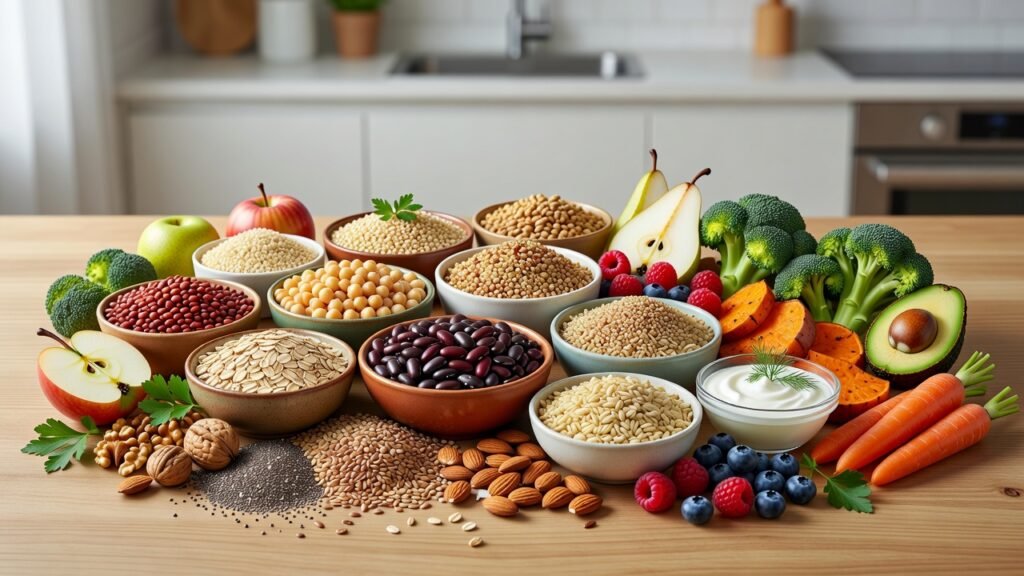
Discover the top 20 high-fiber foods that support digestion, feed good gut bacteria, and improve overall health—plus tips, tables, and a sample meal plan.
Your gut does a lot more than digest your lunch. It plays a role in your immune system, your mood, your energy levels, and even how well you sleep. And one of the simplest, most effective ways to support it? Eating enough fiber.
Most people know fiber is “good for digestion,” but few realize just how much it influences the gut microbiome—the trillions of bacteria living in your digestive tract that affect everything from inflammation to nutrient absorption. Despite this, most adults fall short of recommended fiber intake by a wide margin.
The good news is that boosting your fiber intake doesn’t require a complicated diet overhaul. It just requires knowing which foods deliver the most benefit—and how to add them to your day without digestive discomfort.
In this guide, you’ll learn what fiber actually is, why it matters, the top 20 high-fiber foods worth adding to your plate, how soluble and insoluble fiber differ, which foods feed good gut bacteria, and how to build a simple high-fiber day of eating.
What Is Dietary Fiber?
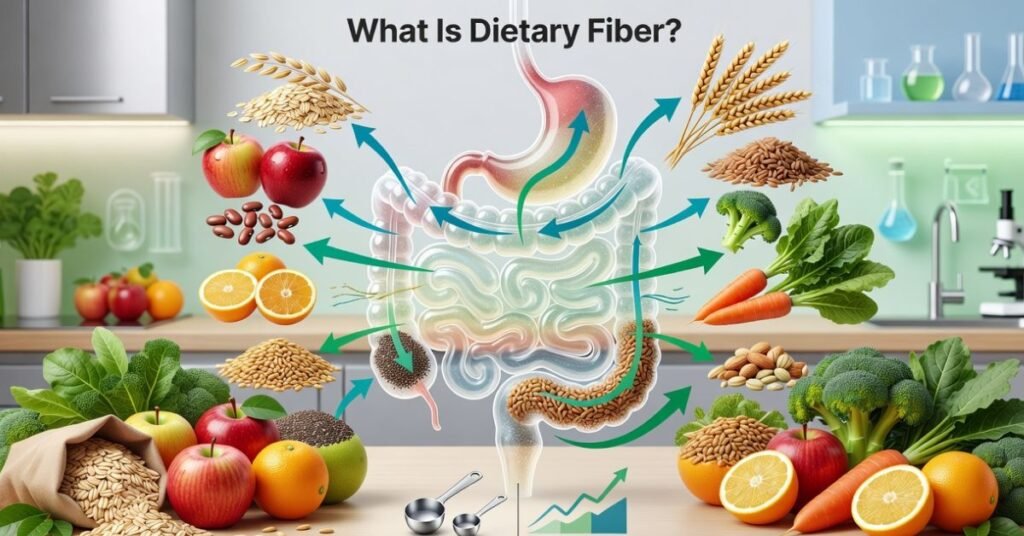
Dietary fiber is a type of carbohydrate found in plant foods that your body can’t fully digest. Instead of being broken down and absorbed like other carbs, fiber passes largely intact through your digestive system—which is exactly what makes it so valuable.
There are two main types:
Soluble fiber dissolves in water, forming a gel-like substance in the digestive tract. It helps slow digestion, moderate blood sugar spikes, and lower cholesterol.
Insoluble fiber does not dissolve in water. It adds bulk to stool and helps food move more efficiently through the digestive system, supporting regularity.
Recommended daily intake: Most health guidelines suggest around 25 grams of fiber per day for adult women and about 38 grams per day for adult men, though individual needs can vary.
Why most people fall short: Modern diets tend to be heavy in refined grains, processed snacks, and animal products—all of which contain little to no fiber. Meanwhile, whole plant foods like vegetables, legumes, and whole grains, the primary sources of fiber, often make up a smaller portion of the average diet than recommended.
Health Benefits of Eating More Fiber
Increasing your fiber intake can support your health in several interconnected ways:
- Better digestion — fiber adds bulk and helps move waste through the digestive tract efficiently.
- Improved gut microbiome — certain fibers act as food for beneficial gut bacteria, encouraging a healthier microbial balance.
- Reduced constipation — insoluble fiber in particular helps promote regular bowel movements.
- Supports healthy weight — fiber-rich foods tend to be more filling, which can help manage appetite and portion sizes.
- Better blood sugar control — soluble fiber slows the absorption of sugar, helping prevent sharp blood sugar spikes.
- Heart health — certain fibers help reduce LDL (“bad”) cholesterol levels.
- Lower cholesterol — soluble fiber binds to cholesterol particles in the digestive tract, aiding their elimination.
- Reduced inflammation — a healthier gut microbiome, supported by fiber, is linked to lower markers of inflammation.
- Increased satiety — fiber slows digestion, helping you feel fuller for longer after meals.
- Colon health — adequate fiber intake is associated with better long-term colon health.
Top 20 High-Fiber Foods for Better Gut Health
1. Chia Seeds
Fiber: ~10g per 2 tbsp (28g) Main nutrients: Omega-3 fatty acids, calcium, protein Gut benefits: Forms a gel in the stomach that supports regularity and slows digestion. Best ways to eat it: Soaked in liquid to make chia pudding, or sprinkled on yogurt and smoothies.
2. Flaxseeds
Fiber: ~2g per tbsp (ground) Main nutrients: Omega-3s, lignans, protein Gut benefits: Supports regularity and provides prebiotic compounds for gut bacteria. Best ways to eat it: Ground and added to oatmeal, smoothies, or baked goods (whole flaxseeds pass through undigested).
3. Lentils
Fiber: ~15.6g per cooked cup Main nutrients: Plant protein, iron, folate Gut benefits: A mix of soluble and insoluble fiber supports both regularity and healthy gut bacteria. Best ways to eat it: In soups, stews, or as a base for grain bowls.
4. Black Beans
Fiber: ~15g per cooked cup Main nutrients: Plant protein, magnesium, folate Gut benefits: Rich in resistant starch, which feeds beneficial gut bacteria. Best ways to eat it: In tacos, salads, or blended into dips.
5. Chickpeas
Fiber: ~12.5g per cooked cup Main nutrients: Plant protein, manganese, folate Gut benefits: Supports microbiome diversity and steady digestion. Best ways to eat it: Roasted as a snack, in hummus, or added to salads.
6. Oats
Fiber: ~4g per cooked cup Main nutrients: Beta-glucan (a soluble fiber), manganese Gut benefits: Beta-glucan supports healthy cholesterol and feeds gut bacteria. Best ways to eat it: As oatmeal, overnight oats, or in homemade granola.
7. Barley
Fiber: ~6g per cooked cup Main nutrients: Beta-glucan, selenium, B vitamins Gut benefits: Similar to oats, barley’s soluble fiber supports the gut microbiome and cholesterol levels. Best ways to eat it: In soups, pilafs, or grain salads.
8. Quinoa
Fiber: ~5g per cooked cup Main nutrients: Complete plant protein, magnesium, iron Gut benefits: A gentle fiber source that also delivers protein for overall digestive and metabolic support. Best ways to eat it: As a rice substitute, in salads, or as a breakfast porridge.
9. Apples
Fiber: ~4.4g per medium apple (with skin) Main nutrients: Vitamin C, potassium, antioxidants Gut benefits: Contains pectin, a soluble fiber known to support beneficial gut bacteria. Best ways to eat it: Fresh, with the skin on, or sliced into oatmeal or salads.
10. Pears
Fiber: ~5.5g per medium pear Main nutrients: Vitamin C, potassium Gut benefits: High in both soluble and insoluble fiber, supporting regularity and gut bacteria diversity. Best ways to eat it: Fresh, sliced into salads, or baked as a dessert.
11. Raspberries
Fiber: ~8g per cup Main nutrients: Vitamin C, manganese, antioxidants Gut benefits: One of the highest-fiber fruits, supporting regularity and microbiome health. Best ways to eat it: Fresh, in smoothies, or on top of yogurt.
12. Avocados
Fiber: ~10g per whole avocado Main nutrients: Healthy monounsaturated fats, potassium Gut benefits: Combines fiber with healthy fats to support satiety and digestion. Best ways to eat it: On toast, in salads, or blended into smoothies.
13. Broccoli
Fiber: ~5g per cooked cup Main nutrients: Vitamin C, vitamin K, sulforaphane Gut benefits: Supports microbiome diversity and provides compounds linked to gut lining health. Best ways to eat it: Steamed, roasted, or added to stir-fries.
14. Brussels Sprouts
Fiber: ~4g per cooked cup Main nutrients: Vitamin K, vitamin C, antioxidants Gut benefits: Rich in fiber and plant compounds that support a healthy gut lining. Best ways to eat it: Roasted with olive oil, or shredded into salads.
15. Sweet Potatoes
Fiber: ~4g per medium sweet potato (with skin) Main nutrients: Beta-carotene, potassium, vitamin C Gut benefits: Contains resistant starch, which feeds beneficial gut bacteria. Best ways to eat it: Baked, roasted, or mashed with the skin left on.
16. Spinach
Fiber: ~4g per cooked cup Main nutrients: Iron, folate, vitamin K Gut benefits: Adds fiber and supports overall nutrient density without heaviness. Best ways to eat it: Sautéed, in smoothies, or as a salad base.
17. Artichokes
Fiber: ~10g per medium artichoke Main nutrients: Folate, vitamin C, antioxidants Gut benefits: One of the richest sources of inulin, a prebiotic fiber that feeds beneficial gut bacteria. Best ways to eat it: Steamed and eaten leaf by leaf, or as artichoke hearts in salads.
18. Almonds
Fiber: ~3.5g per ounce (about 23 almonds) Main nutrients: Vitamin E, healthy fats, magnesium Gut benefits: Combines fiber and healthy fat for digestive support and satiety. Best ways to eat it: As a snack, or sliced onto oatmeal and salads.
19. Pumpkin Seeds
Fiber: ~5g per ounce Main nutrients: Magnesium, zinc, healthy fats Gut benefits: Supports regularity while providing minerals important for overall gut function. Best ways to eat it: Roasted as a snack or sprinkled on salads and soups.
20. Popcorn (Air-Popped)
Fiber: ~3.5g per 3 cups Main nutrients: Whole grain carbohydrates, small amounts of polyphenols Gut benefits: A whole-grain snack that contributes fiber without the downsides of refined snack foods. Best ways to eat it: Air-popped, lightly seasoned, without excess butter or sugar-based toppings.
Soluble vs Insoluble Fiber
| Category | Sources | Function | Health Benefits | Best Foods |
| Soluble Fiber | Oats, barley, apples, pears, chia seeds | Dissolves in water, forms a gel-like substance | Slows digestion, moderates blood sugar, helps lower cholesterol | Oats, apples, chia seeds, beans |
| Insoluble Fiber | Whole grains, vegetables, nuts | Adds bulk, speeds movement through the digestive tract | Supports regularity, reduces constipation | Broccoli, whole wheat, almonds, Brussels sprouts |
Most high-fiber foods contain a mix of both types, which is why eating a variety of plant foods is generally more effective than focusing on a single “best” source.
Foods That Feed Good Gut Bacteria
Beyond general fiber content, some foods are especially rich in prebiotics—specific types of fiber that directly feed beneficial gut bacteria. These include:
- Garlic — contains inulin, a well-studied prebiotic fiber.
- Onions — rich in fructooligosaccharides (FOS), which support beneficial bacteria growth.
- Asparagus — another strong source of inulin.
- Bananas — contain resistant starch, especially when slightly underripe.
- Oats — beta-glucan fiber supports a diverse gut microbiome.
- Chicory root — one of the richest known sources of inulin.
- Leeks — similar to onions and garlic, supportive of beneficial bacteria.
- Jerusalem artichokes — very high in inulin content.
These prebiotic foods work by traveling undigested to the colon, where gut bacteria ferment them, producing short-chain fatty acids that support gut lining health and reduce inflammation.
How to Increase Fiber Without Digestive Discomfort
Adding fiber too quickly can cause bloating, gas, or cramping. To ease the transition:
- Increase fiber gradually — add small amounts over several weeks rather than overhauling your diet overnight.
- Drink plenty of water — fiber needs adequate fluid to move smoothly through the digestive tract.
- Exercise regularly — physical activity supports healthy digestion and regularity.
- Eat a variety of plant foods — different fibers feed different types of gut bacteria, so variety matters more than volume alone.
- Avoid excessive processed foods — these often displace fiber-rich whole foods in the diet and can counteract your efforts.
Foods That May Harm Gut Health
Just as some foods support the gut, others may work against it when consumed in excess:
- Ultra-processed foods — often low in fiber and linked to reduced microbiome diversity.
- Sugary drinks — can promote the growth of less beneficial gut bacteria.
- Excess alcohol — may damage the gut lining and disrupt microbial balance.
- Refined carbohydrates — stripped of fiber during processing, offering little benefit to gut bacteria.
- Deep-fried foods — associated with increased inflammation and reduced gut microbial diversity.
This doesn’t mean these foods can never be enjoyed—moderation and overall dietary pattern matter more than any single food choice.
One-Day High-Fiber Meal Plan
Here’s a sample day that incorporates several high-fiber foods from this list:
Breakfast: Oatmeal made with rolled oats, topped with sliced pear and a tablespoon of chia seeds Morning Snack: A small handful of almonds and an apple Lunch: Quinoa bowl with black beans, roasted broccoli, and avocado Afternoon Snack: Hummus (made from chickpeas) with sliced vegetables Dinner: Lentil soup with a side of roasted Brussels sprouts and sweet potatoEstimated daily fiber total: Approximately 45–50 grams, comfortably exceeding standard daily recommendations
Frequently Asked Questions
How much fiber should I eat daily?
Most adult women are recommended to aim for around 25 grams per day, while adult men are typically advised to aim for about 38 grams, though individual needs may vary based on age and health status.
Can too much fiber be harmful?
Yes, in some cases. Increasing fiber too quickly, or consuming very high amounts without adequate water intake, can cause bloating, gas, or cramping. Gradual increases are generally better tolerated.
Which fruit has the most fiber?
Among common fruits, raspberries are one of the highest in fiber content, offering roughly 8 grams per cup, though avocados (technically a fruit) offer even more per serving.
Are fiber supplements as good as food?
Fiber supplements can help fill gaps, but whole foods offer additional benefits—like vitamins, minerals, and diverse fiber types—that supplements typically don’t replicate. Food sources are generally considered the better foundation.
Is fiber good for weight loss?
Fiber-rich foods tend to be more filling and slower to digest, which can support appetite regulation and help with weight management as part of an overall balanced diet.
Does fiber help constipation?
Yes, particularly insoluble fiber, which adds bulk to stool and supports more regular bowel movements. Adequate water intake is important alongside increased fiber for this benefit.
What’s the difference between probiotics and prebiotics?
Probiotics are live beneficial bacteria (often found in fermented foods or supplements), while prebiotics are fibers that feed the beneficial bacteria already living in your gut. Both play complementary roles in supporting gut health.
Conclusion
Fiber is one of the simplest and most powerful tools for supporting long-term gut health, and the good news is that it’s available in an enormous range of delicious, accessible whole foods—from chia seeds and lentils to apples and artichokes. Rather than aiming for perfection overnight, focus on gradually adding more fiber-rich foods to your meals, staying hydrated, and prioritizing variety over any single “superfood.”
Small, consistent changes to your plate can add up to meaningful improvements in digestion, energy, and overall wellness over time.
Medical Disclaimer:
This article is intended for general informational and educational purposes only and does not constitute medical or nutritional advice. It is not a substitute for professional guidance from a doctor or registered dietitian. Please consult a qualified healthcare provider before making significant changes to your diet, particularly if you have an existing digestive or medical condition.
Enjoyed this guide? Share it with a friend who’s working on their gut health, leave a comment with your favorite high-fiber food, and subscribe for more evidence-based nutrition content.