
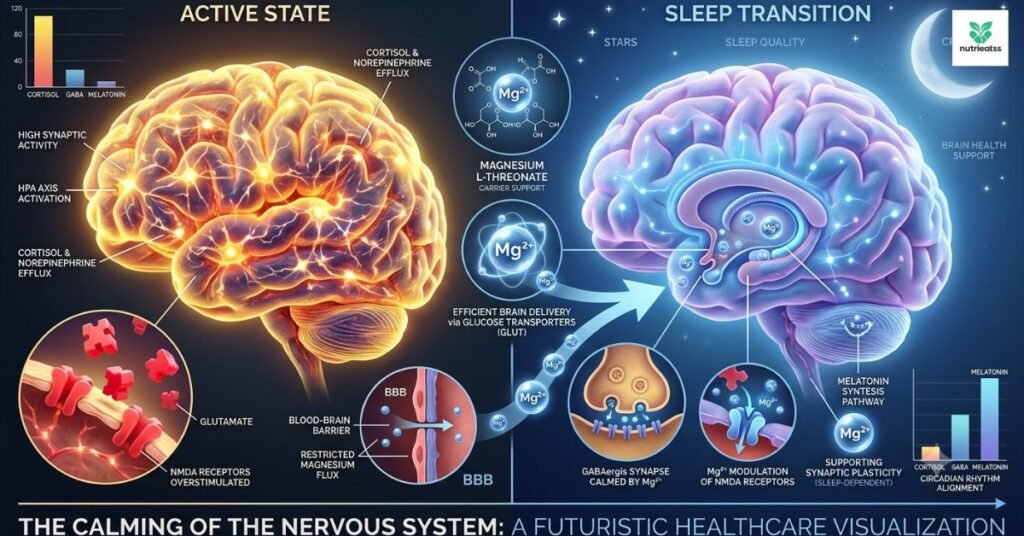
Discover the 10 best magnesium supplements for better sleep, ranked by absorption, quality, and effectiveness. Compare magnesium glycinate, L-threonate, citrate, and more to find the right sleep support.
If you’ve spent more nights than you’d like staring at the ceiling, scrolling through “how to fall asleep fast” articles at 2 a.m., you’re far from alone. Roughly one in three adults report getting less sleep than they need, and chronic poor sleep is linked to everything from weight gain and weakened immunity to anxiety, brain fog, and heart problems. It’s no surprise that people are looking beyond melatonin gummies and white noise machines for something that addresses sleep at a deeper, more physiological level.
Enter magnesium, a mineral that’s quietly become one of the most talked-about natural sleep aids of the last few years. Search interest in “magnesium for sleep” has climbed steadily, and pharmacy shelves (and Instagram ads) are now packed with dozens of magnesium formulas promising deeper, more restorative rest.
But here’s the catch: not all magnesium supplements are created equal. The type of magnesium, the dose, the added ingredients, and the manufacturing quality all matter—a lot. A poorly chosen magnesium supplement might do nothing for your sleep (or send you running to the bathroom instead of to bed).
This guide breaks down the science of how magnesium may support sleep, explains the different forms on the market, and ranks the 10 best magnesium supplements for sleep based on ingredient quality, absorption, third-party testing, and real-world value — so you can make an informed, evidence-based choice.
Note: This article is for informational purposes only and isn’t a substitute for medical advice. Always talk to your healthcare provider before starting a new supplement, especially if you take medications or have an existing health condition.
Why Sleep Quality Matters More Than You Think

Sleep isn’t just “downtime.” It’s when your brain clears out metabolic waste, consolidates memories, and regulates hormones like cortisol and insulin. Your body repairs tissue, your immune system recalibrates, and your nervous system resets. Skimp on sleep—or get poor-quality sleep—and the effects ripple into nearly every area of health, including mood, focus, appetite, and long-term cardiovascular risk.
For many people, the barrier to good sleep isn’t a lack of desire to rest — it’s an overactive nervous system. Racing thoughts, muscle tension, and a body that won’t downshift out of “alert mode” are some of the most common complaints among adults with insomnia or stress-related sleep issues. This is exactly where magnesium has drawn scientific and consumer interest: as a mineral involved in the very systems that help the body relax and wind down.
How Magnesium Supports Better Sleep
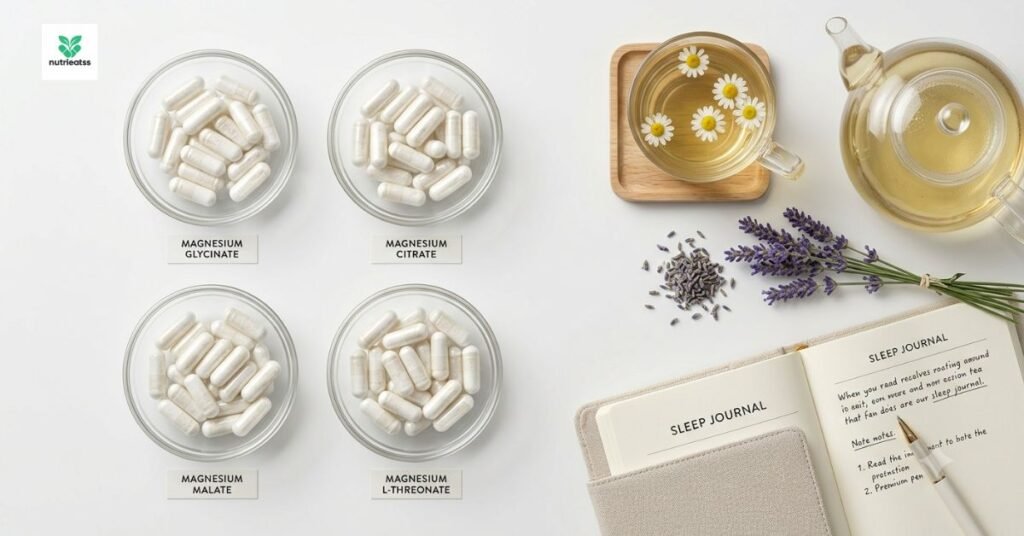
Magnesium is involved in more than 300 enzymatic reactions in the body, and several of them are directly tied to relaxation, stress regulation, and the sleep-wake cycle.
1. Regulating the Nervous System
Magnesium helps regulate the autonomic nervous system, which controls the shift between “fight-or-flight” (sympathetic) and “rest-and-digest” (parasympathetic) states. Adequate magnesium levels are associated with a nervous system that’s better able to downshift into a calmer, more sleep-ready state at night.
2. Activating GABA (Your Brain’s “Calm Down” Signal)
GABA (gamma-aminobutyric acid) is the brain’s primary inhibitory neurotransmitte .it quiets down neural activity so your mind can settle. Magnesium binds to and helps activate GABA receptors, which is part of why it’s often described as having a mild, natural calming effect. This is also why magnesium glycinate, in particular, is popular for sleep: it pairs magnesium with glycine, an amino acid that has its own calming, sleep-supportive properties.
3. Muscle Relaxation
Magnesium plays a key role in muscle contraction and relaxation by balancing calcium at the cellular level. This is one reason people who deal with restless legs, nighttime muscle cramps, or general physical tension often report feeling more physically “settled” after supplementing with magnesium.
4. Stress and Cortisol Management
Chronic stress depletes magnesium, and low magnesium can, in turn, make the body more reactive to stress — a frustrating cycle for anyone dealing with nighttime anxiety. Some research suggests magnesium may help modulate the HPA axis (the system that governs your cortisol response), which is one reason it’s frequently recommended for stress-related sleep disruption.
5. Supporting Melatonin and Sleep-Cycle Regulation
Magnesium is involved in the synthesis and regulation of melatonin, the hormone that signals to your body that it’s time to sleep. While magnesium isn’t a sedative in the way melatonin or prescription sleep aids are, it may help create the internal conditions your body needs to transition into sleep more smoothly.
Bottom line: Magnesium isn’t a knockout sleep dru . it’s a foundational mineral that supports the biological systems your body relies on to relax, quiet down, and stay asleep. That’s why consistency matters more than instant results.
Different Types of Magnesium, Explained
Not all magnesium supplements are formulated the same way, and the “type” of magnesium meaning what it’s bonded to significantly affects absorption, tolerability, and what it’s best used for.
Magnesium Glycinate (Bisglycinate)
Magnesium bound to glycine, an amino acid with its own calming properties. Known for high bioavailability and being gentle on the stomach. Widely considered the top choice for sleep and anxiety support.
Magnesium Citrate
Magnesium bound to citric acid. Well-absorbed and affordable, but has a natural laxative effect at higher doses, which makes it more commonly used for constipation than sleep—though lower doses are still used in sleep blends.
Magnesium Threonate
A newer form developed specifically for its ability to cross the blood-brain barrier more effectively. It’s popular for cognitive support and is increasingly used for sleep quality and memory consolidation, though it tends to be pricier.
Magnesium Malate
Bound to malic acid, this form is more associated with energy production and muscle recovery. It’s generally recommended for daytime use rather than sleep, since some users report it feels more energizing.
Magnesium Taurate
Paired with taurine, an amino acid linked to cardiovascular and nervous system support. Some people use it for a calming effect alongside heart health benefits, though it’s less commonly marketed specifically for sleep.
Magnesium Oxide
A common, inexpensive form with poor bioavailability (your body doesn’t absorb much of it). It’s mostly used as a laxative or for occasional heartburn relief and isn’t considered ideal for sleep support.
Which Forms Are Best for Sleep?

For most people, magnesium glycinate is the go-to choice for sleep because it’s well-absorbed, gentle on digestion, and pairs magnesium with the calming amino acid glycine. Magnesium threonate is a strong runner-up, especially for people whose sleep issues are tied to racing thoughts or mental overactivity. Lower-dose magnesium citrate blends can also work well for people who also deal with occasional constipation. Magnesium oxide is generally not recommended if sleep is your main goal.
How We Ranked These Supplements
To build this list, we evaluated dozens of magnesium products against six criteria:
- Ingredient quality — clean labels, minimal fillers, and well-sourced magnesium compounds
- Absorption rate — prioritizing chelated, bioavailable forms like glycinate and threonate over oxide
- Third-party testing — certifications like NSF Certified for Sport, USP Verified, or independent lab testing
- Customer reviews — consistent patterns in real-world feedback around sleep, tolerability, and taste
- Value for money — cost per serving relative to dose and quality
- Sleep-support ingredients — bonus points for thoughtfully added ingredients like L-theanine, glycine, or GABA (without overloading the formula with unnecessary additives)
Prices and formulations can change, so always check the brand’s current label before purchasing.
The 10 Best Magnesium Supplements for Better Sleep, Ranked
1. Thorne Magnesium Bisglycinate
Thorne is a favorite among healthcare providers for its rigorous testing standards, and its magnesium bisglycinate powder is widely regarded as one of the gold standards for sleep-focused magnesium. It’s a clean, single-ingredient formula with nothing to distract from the magnesium itself.
Key Ingredients: Magnesium bisglycinate (chelated with two glycine molecules for enhanced absorption)
Pros:
- NSF Certified for Sport, meaning it’s batch-tested for purity and banned substances
- Highly bioavailable form of magnesium
- Free of gluten, dairy, and soy
- Adjustable dosing since it’s a powder
Cons:
- Among the pricier options per serving
- Powder requires mixing, which is less convenient for travel
Best For: Anyone who wants a trusted, third-party-tested, no-frills magnesium supplement for sleep and stress support.
Dosage: Typically 100–200 mg elemental magnesium per serving (adjustable)
2. Pure Encapsulations Magnesium Glycinate
Product Overview: Pure Encapsulations built its reputation on hypoallergenic, filler-free formulations, making this a strong choice for people with sensitive stomachs or multiple food sensitivities.
Key Ingredients: Magnesium glycinate
Pros:
- Hypoallergenic, non-GMO, and free from common allergens
- Gentle on digestion — low risk of the laxative effect seen with citrate
- Trusted by physicians and often available through practitioner channels
Cons:
- No added calming ingredients like L-theanine or GABA
- Capsule form limits dose flexibility compared to powders
Best For: People with sensitive digestion or multiple allergies who still want a high-absorption sleep-support magnesium.
Dosage: Around 120 mg per capsule; most people take 1–2 capsules before bed
Price Range: $$ (Mid-range)
Overall Rating: 4.7/5
3. Natural Vitality Calm Sleep (Magnesium + Melatonin + L-Theanine + GABA)
Product Overview: A longtime favorite in the natural sleep aid category, Natural Vitality’s Calm Sleep formula combines magnesium with melatonin, L-theanine, and GABA for a more comprehensive “wind-down” effect rather than relying on magnesium alone.
Key Ingredients: Magnesium (citrate/glycinate blend), melatonin, L-theanine, GABA
Pros:
- Multi-ingredient approach targets several relaxation pathways at once
- Available in capsule and drink-mix form
- Widely available and reasonably priced
Cons:
- Melatonin isn’t ideal for nightly long-term use for everyone — some people prefer to save it for occasional use
- Citrate component may cause mild digestive effects in sensitive users
Best For: People who want an all-in-one bedtime formula rather than piecing together magnesium and melatonin separately.
Dosage: Follow label instructions; typically taken 30–60 minutes before bed
Price Range: $$ (Mid-range)
Overall Rating: 4.5/5
4. Doctor’s Best High Absorption Magnesium Glycinate Lysinate
Product Overview: Using Albion-chelated minerals (a well-regarded manufacturing process for mineral bioavailability), Doctor’s Best delivers a high-quality glycinate formula at one of the most competitive price points on this list.
Key Ingredients: Magnesium glycinate lysinate chelate (TRAACS)
Pros:
- Excellent cost-per-serving value
- Uses patented Albion mineral chelate technology for absorption
- Vegan and non-GMO
Cons:
- Tablet form isn’t as adjustable as powders
- No added sleep-support ingredients
Best For: Budget-conscious shoppers who still want a high-absorption glycinate form.
Dosage: ~100 mg elemental magnesium per tablet; commonly 2 tablets daily
Price Range: $ (Budget-friendly)
Overall Rating: 4.6/5
5. Life Extension Neuro-Mag (Magnesium L-Threonate)
Product Overview: If your sleep issues are tied more to a racing mind than physical tension, magnesium threonate’s ability to cross the blood-brain barrier makes this formula worth considering. It’s specifically formulated to support brain magnesium levels.
Key Ingredients: Magnesium L-threonate (Magtein)
Pros:
- Formulated for cognitive and brain-related benefits, including sleep quality tied to mental overactivity
- Backed by a growing body of research on brain magnesium levels
- Reputable, longstanding supplement brand
Cons:
- More expensive per milligram of elemental magnesium than glycinate options
- Lower elemental magnesium content per serving compared to other forms
Best For: People whose sleep struggles stem primarily from an overactive or anxious mind rather than physical restlessness.
Dosage: ~144 mg elemental magnesium per serving (check label, as threonate delivers less elemental magnesium by weight)
Price Range: $$$ (Premium)
Overall Rating: 4.5/5
6. NOW Foods Magnesium Glycinate
Product Overview: NOW Foods is a trusted, longstanding supplement brand known for offering solid quality at accessible prices, and its magnesium glycinate is no exception — delivering a comparable dose to premium brands at a fraction of the cost.
Key Ingredients: Magnesium glycinate
Pros:
- Excellent value for a high dose per serving
- Large bottle sizes mean fewer reorders
- Widely available in stores and online
Cons:
- Capsules are on the larger side, which some people find harder to swallow
- No third-party sport certification (though it undergoes standard quality testing)
Best For: Shoppers who want a reliable, high-dose glycinate option without a premium price tag.
Dosage: 200 mg per capsule
Price Range: $ (Budget-friendly)
Overall Rating: 4.4/5
7. Klean Athlete Klean Magnesium
Product Overview: Designed with athletes in mind, this citrate-malate blend supports both muscle recovery and relaxation, making it a solid pick for physically active people whose sleep is disrupted by muscle tightness or soreness.
Key Ingredients: Magnesium citrate and magnesium malate
Pros:
- NSF Certified for Sport, a plus for athletes subject to drug testing
- Supports muscle recovery as well as relaxation
- Clean, allergen-friendly formulation
Cons:
- Citrate component may not suit those with sensitive digestion
- Malate is more energizing, so timing matters — take it well before bed rather than right at bedtime
Best For: Athletes and active individuals dealing with muscle tension alongside sleep issues.
Dosage: 135 mg elemental magnesium per capsule; label suggests 2–3 capsules daily
Price Range: $$ (Mid-range)
Overall Rating: 4.3/5
8. Nature Made Magnesium Glycinate Gummies
Product Overview: For people who dislike swallowing pills or mixing powders, Nature Made’s glycinate gummies offer a rare combination: an easy-to-take format that still uses a high-absorption magnesium form, rather than the low-quality oxide typically found in gummy supplements.
Key Ingredients: Magnesium glycinate
Pros:
- USP Verified for label accuracy and quality
- Pleasant taste and easy to take
- From one of the most widely trusted vitamin brands in the U.S.
Cons:
- Gummies typically require more units to reach a full therapeutic dose
- Contains added sugars, which may matter for some users
Best For: People who dislike capsules or powders and want a simple, chewable option.
Dosage: Check label — often requires 2+ gummies to reach 100+ mg elemental magnesium
Price Range: $$ (Mid-range)
Overall Rating: 4.2/5
9. Double Wood Magnesium Glycinate
Product Overview: Double Wood has built a loyal following for offering research-backed supplement forms at prices well below premium competitors, and its glycinate formula is a standout budget pick for anyone who wants a higher dose per serving.
Key Ingredients: Magnesium glycinate
Pros:
- High dose per serving compared to many competitors
- Strong value for the price
- Manufactured in a cGMP-certified facility
Cons:
- Less brand recognition than legacy supplement companies
- No added calming ingredients
Best For: Budget shoppers who still want a meaningfully high dose of glycinate per serving.
Dosage: Around 400 mg per serving (check elemental magnesium content on label, as this may reflect total compound weight)
Price Range: $ (Budget-friendly)
Overall Rating: 4.1/5
10. Cardiovascular Research Magnesium Taurate
Product Overview: A niche but respected pick, this magnesium taurate formula pairs magnesium with taurine, an amino acid associated with nervous system and cardiovascular support. It’s a good option for people specifically interested in the heart-health angle alongside general relaxation.
Key Ingredients: Magnesium taurate
Pros:
- Combines magnesium with taurine for added nervous-system and cardiovascular support
- Simple, minimal-ingredient formula
- Long-standing, trusted supplement manufacturer
Cons:
- Less specifically studied for sleep compared to glycinate or threonate
- Smaller, more niche brand with less mainstream availability
Best For: People interested in a magnesium form that also supports cardiovascular health alongside relaxation.
Dosage: 125 mg elemental magnesium per tablet; label suggests 1–2 tablets daily
Price Range: $ (Budget-friendly)
Overall Rating: 4.0/5
Comparison Table

| Rank | Brand | Magnesium Type | Dosage | Best Use | Price | Rating |
| 1 | Thorne Magnesium Bisglycinate | Glycinate | 100–200 mg | Overall sleep & stress support | $$$ | 4.8/5 |
| 2 | Pure Encapsulations Magnesium Glycinate | Glycinate | ~120 mg/capsule | Sensitive digestion | $$ | 4.7/5 |
| 3 | Natural Vitality Calm Sleep | Citrate/Glycinate blend | Per label | All-in-one bedtime formula | $$ | 4.5/5 |
| 4 | Doctor’s Best Magnesium Glycinate Lysinate | Glycinate/Lysinate chelate | ~100 mg/tablet | Budget-friendly absorption | $ | 4.6/5 |
| 5 | Life Extension Neuro-Mag | Threonate | ~144 mg | Racing thoughts, cognitive support | $$$ | 4.5/5 |
| 6 | NOW Foods Magnesium Glycinate | Glycinate | 200 mg/capsule | High-dose value | $ | 4.4/5 |
| 7 | Klean Athlete Klean Magnesium | Citrate/Malate | 135 mg/capsule | Athletes & muscle recovery | $$ | 4.3/5 |
| 8 | Nature Made Glycinate Gummies | Glycinate | Per label | Easy-to-take format | $$ | 4.2/5 |
| 9 | Double Wood Magnesium Glycinate | Glycinate | ~400 mg/serving | Budget, higher dose | $ | 4.1/5 |
| 10 | Cardiovascular Research Magnesium Taurate | Taurate | 125 mg/tablet | Heart health + relaxation | $ | 4.0/5 |
Prices and formulations change over time — always verify current label details before purchasing.
How to Choose the Right Magnesium Supplement for You
With so many options, the “best” magnesium supplement really depends on what’s driving your sleep issues.
If your main issue is trouble falling or staying asleep: Magnesium glycinate is generally the best starting point, thanks to its high absorption and calming glycine component.
If nighttime anxiety or a racing mind is the problem: Consider magnesium threonate, which is specifically associated with brain-level magnesium support, or a glycinate formula combined with L-theanine.
If restless legs are keeping you up: Glycinate or citrate forms are commonly used, since magnesium plays a role in muscle and nerve signaling. Some people also find relief from taurate.
If muscle cramps or tension are the culprit: A citrate-malate blend (like the athlete-focused option above) can support both relaxation and muscle recovery — just take it earlier in the evening rather than right at bedtime, since malate can be mildly energizing.
If you have a sensitive stomach: Stick with glycinate forms and avoid citrate or oxide, which are more likely to cause digestive upset or a laxative effect at higher doses.
Actionable tip: Start with a lower dose (100–150 mg) for the first week to assess tolerance, then adjust based on how your body responds. More isn’t always better — excess magnesium the body can’t absorb is simply excreted, often with digestive side effects.
Potential Side Effects and Safety Considerations
Magnesium is generally well-tolerated, but it’s not entirely risk-free, especially at higher doses or for certain individuals.
Common side effects (usually dose-dependent):
- Digestive upset, loose stools, or diarrhea (most common with citrate and oxide forms)
- Nausea or stomach cramping
- Drowsiness, which is generally the intended effect when taken at night
Recommended dosage: The National Institutes of Health sets the Recommended Dietary Allowance (RDA) for magnesium at roughly 310–320 mg per day for adult women and 400–420 mg per day for adult men, factoring in dietary intake. Supplemental doses used for sleep support are often lower than this, since food also contributes magnesium — many sleep-focused products provide 100–200 mg of elemental magnesium per serving.
Medication interactions: Magnesium can interact with several common medications, including certain antibiotics (like tetracyclines and quinolones), diuretics, bisphosphonates (used for bone health), and some heart medications. It can also affect how these medications are absorbed if taken too close together.
Who should consult a doctor first:
- People with kidney disease or impaired kidney function (the kidneys regulate magnesium excretion, and reduced function raises the risk of magnesium buildup)
- Anyone taking prescription medications, especially antibiotics, diuretics, or heart medications
- Pregnant or breastfeeding individuals
- Older adults, who may be more sensitive to side effects or have other health conditions to consider
- Anyone with a history of low blood pressure, since magnesium can have a mild blood-pressure-lowering effect
Frequently Asked Questions
Which magnesium is best for sleep?
Magnesium glycinate is widely regarded as the best overall choice for sleep, thanks to its high bioavailability and the calming properties of glycine. Magnesium threonate is a strong alternative for people whose sleep issues are more tied to mental overactivity.
How long does magnesium take to work for sleep?
Unlike a sedative, magnesium generally doesn’t produce an immediate “knockout” effect. Most people notice gradual improvements in relaxation and sleep quality over 2 to 4 weeks of consistent use, as magnesium levels build up and support the body’s natural relaxation processes.
Can I take magnesium every night?
For most healthy adults, taking magnesium nightly within recommended dosage ranges is considered safe for ongoing use. That said, it’s a good idea to check in with a healthcare provider periodically, especially if you’re taking other supplements or medications.
Is magnesium safe for seniors?
Magnesium can be a helpful, gentle option for older adults dealing with sleep issues, but seniors are also more likely to take medications that interact with magnesium or have kidney function changes that affect how the body processes it. A conversation with a doctor before starting is especially important in this group.
Should magnesium be taken with food?
Taking magnesium with a meal or light snack can help reduce the risk of stomach upset, particularly with citrate or oxide forms. Glycinate is generally gentler and can often be taken with or without food, though many people still prefer taking it alongside a light evening snack about 30–60 minutes before bed.
Conclusion: Finding Your Best Magnesium Match
Magnesium isn’t a magic bullet, but for many people dealing with insomnia, nighttime anxiety, muscle tension, or stress-related sleep struggles, it can be a meaningful, evidence-informed piece of a better sleep routine.
If you want a single, no-frills, highly bioavailable option, Thorne Magnesium Bisglycinate and Pure Encapsulations Magnesium Glycinate are excellent places to start. If you prefer an all-in-one bedtime ritual, Natural Vitality Calm Sleep combines magnesium with other calming compounds in one formula. Budget-conscious shoppers can look to Doctor’s Best or NOW Foods, while those dealing with a racing mind at night may find Life Extension Neuro-Mag especially helpful.
Whichever you choose, give it time — magnesium works with your body’s systems rather than against them, so consistency over several weeks matters more than any single dose. And because sleep issues can have many underlying causes, magnesium works best as part of a broader approach that includes good sleep hygiene, stress management, and — when needed — a conversation with your doctor. Talk to your healthcare provider about whether magnesium is a good fit for your specific sleep concerns, choose a high-quality, third-party-tested form like glycinate or threonate, and give your body the consistent support it needs to find its way back to deeper, more restorative sleep.