

Discover the 10 best omega-3 supplements for brain health. Compare fish oil and algae oil, learn EPA vs DHA, dosage tips, and dietitian-reviewed picks for memory and focus.
Quick Answer
If you only remember one thing: look for a fish oil or algae oil supplement with at least 500 mg of combined EPA and DHA per serving, third-party testing for purity, and a form your body absorbs well (triglyceride form for fish oil). Our top overall picks below are Nordic Naturals Ultimate Omega for fish oil and Nordic Naturals Algae Omega for a vegan option — but the “best” one really depends on your budget, diet, and health goals, which we break down step by step.
You sit down to focus, and instead your mind wanders. You walk into a room and forget why. You reread the same paragraph three times before it sticks.
Brain fog, forgetfulness, and mental fatigue are incredibly common — and incredibly frustrating. Whether you’re a student cramming for exams, a professional juggling back-to-back meetings, or an adult over 40 starting to notice your memory isn’t quite what it used to be, you’ve probably wondered if there’s something you can do about it.
One of the most studied nutrients for brain health is omega-3 fatty acids, specifically DHA and EPA. These aren’t trendy supplements with thin science behind them — omega-3s have been researched for decades, and DHA in particular makes up a significant portion of the fat in your brain’s gray matter.
In this guide, we’ll break down:
- What omega-3s actually do for your brain
- How to evaluate supplement quality like a dietitian would
- Our picks for the 10 best omega-3 supplements for brain health
- How fish oil compares to krill oil and algae oil
- Dosage guidance, food sources, and potential side effects
Let’s start with the basics.
What Are Omega-3 Fatty Acids?

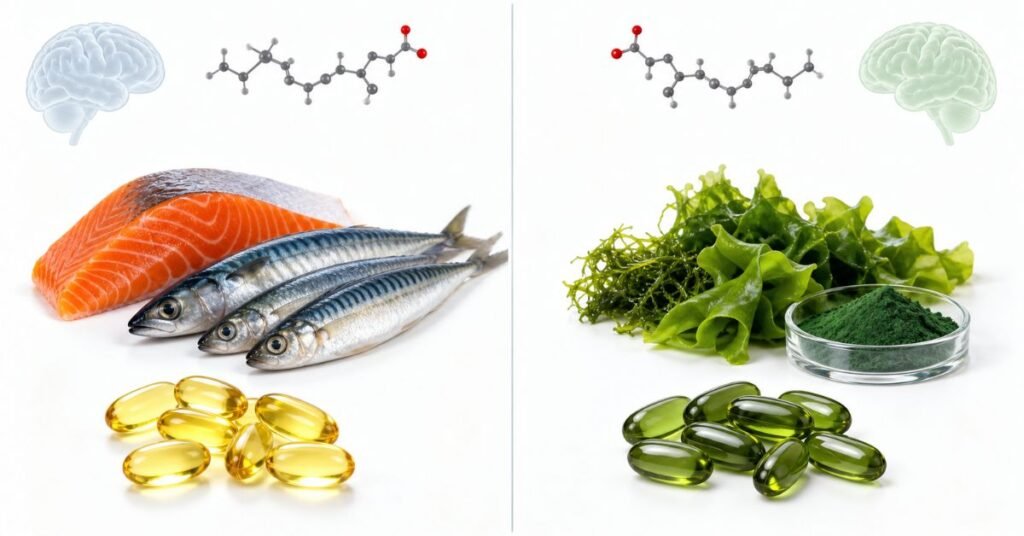
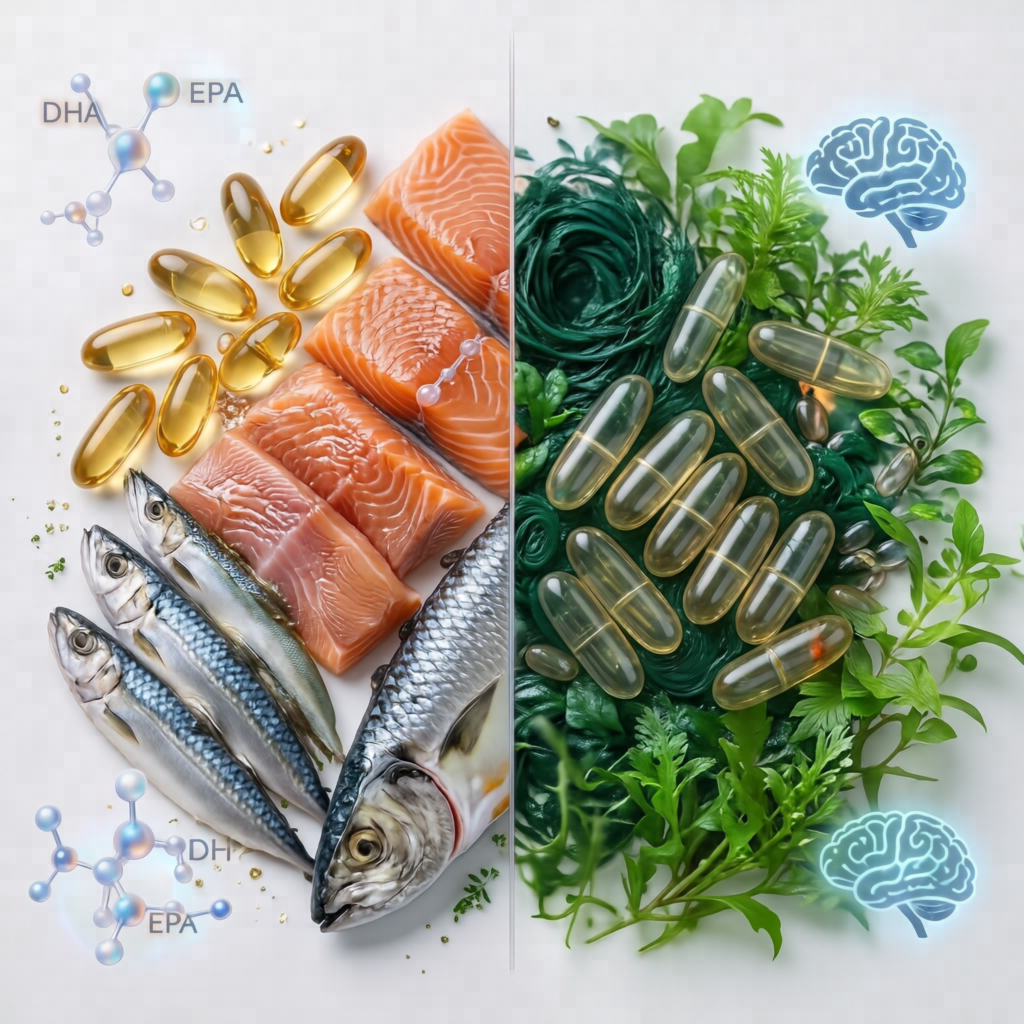
Omega-3 fatty acids are a family of polyunsaturated fats your body needs but can’t produce efficiently on its own — meaning you have to get them from food or supplements. There are three main types:
- EPA (eicosapentaenoic acid) — plays a role in inflammation regulation and is linked to mood support
- DHA (docosahexaenoic acid) — a major structural component of brain and eye tissue
- ALA (alpha-linolenic acid) — a plant-based omega-3 found in flaxseed, chia, and walnuts, which your body converts into small amounts of EPA and DHA (the conversion rate is low, often under 10%)
| Omega-3 Type | Main Source | Primary Role |
| EPA | Fish, krill, algae | Inflammation support, mood |
| DHA | Fish, krill, algae | Brain structure, cognitive function |
| ALA | Flaxseed, chia, walnuts | Precursor to EPA/DHA (limited conversion) |
For brain health specifically, DHA and EPA — collectively known as “long-chain omega-3s” — matter far more than ALA, which is why most brain-focused supplements are made from fish, krill, or algae rather than flaxseed oil.
These fats support:
- Brain cell membrane structure and flexibility
- Neurotransmitter signaling (how brain cells communicate)
- Learning and memory processes
- Mood regulation
- The body’s inflammatory response
Why Is DHA So Important for the Brain?

DHA isn’t just “good for you” in a vague sense — it’s structurally built into your brain. Roughly 8% of your brain’s weight comes from DHA, and it’s especially concentrated in the synapses, the connection points where brain cells communicate with each other.
Here’s what that means in practical terms:
Structural role in neurons. DHA keeps cell membranes flexible, which affects how efficiently signals travel between brain cells.
Brain development. DHA is critical during fetal and infant brain development, which is why it’s often recommended during pregnancy (always under a doctor’s guidance).
Cognitive function. Populations with diets rich in DHA-containing seafood tend to show associations with better cognitive outcomes in observational research, though it’s worth noting this research shows correlation, and results from supplement trials in adults have been more mixed than diet-based studies.
Healthy aging. As we age, maintaining adequate DHA levels is an area of active research related to long-term brain health.
Memory support. Some clinical trials suggest DHA supplementation may modestly support memory in certain populations, particularly older adults with lower baseline omega-3 levels — though it’s not a guaranteed fix for everyone.
The takeaway: DHA is one of the most well-researched nutrients for brain structure and function, but it works best as part of an overall healthy diet and lifestyle, not as a standalone miracle fix.
How Omega-3 Supports Brain Health

Let’s look at the specific areas where omega-3s have the most supporting evidence.
Memory and learning. Several studies, including research summarized by the National Institutes of Health (NIH) Office of Dietary Supplements, have examined omega-3 intake in relation to memory performance, particularly in older adults.
Focus and attention. Some research has explored omega-3 supplementation in children and adults with attention difficulties, with mixed but generally positive signals when combined with other interventions.
Cognitive performance under stress. Because DHA supports cell membrane function broadly, it’s been studied for its potential role in maintaining mental clarity during periods of high cognitive demand.
Brain aging. Harvard Health and other academic health sources have discussed omega-3s as part of a broader “brain-healthy” dietary pattern (alongside diets like the Mediterranean and MIND diets), rather than as a single solution.
Mood support. EPA in particular has been studied for its relationship to mood regulation, with some research suggesting a possible supportive role — though omega-3s are not a replacement for mental health treatment.
Neuroprotection. Omega-3s’ anti-inflammatory properties are of interest to researchers studying long-term brain health, though this remains an active and evolving area of study.
It’s important to be honest here: omega-3 research is strong on biological plausibility and moderately strong on associations, but not every supplement trial shows dramatic results. The clearest benefit tends to appear in people who are otherwise low in omega-3s to begin with. If your diet is already rich in fatty fish, supplementation may offer smaller marginal benefits.
A Dietitian’s Criteria for Choosing the Best Omega-3 Supplement
Not all fish oil is created equal. Here’s what actually separates a high-quality product from a mediocre one.
DHA and EPA amount. Check the supplement facts panel, not just the “fish oil” total. Some products list 1,000 mg of fish oil but only 300 mg of actual EPA + DHA — the rest is other fatty acids and filler.
Purity and heavy metal testing. Fish, especially larger species, can accumulate mercury and other contaminants. Reputable brands test finished products, not just raw materials.
Third-party certification. Look for testing through independent organizations such as NSF International, USP (United States Pharmacopeia), or IFOS (International Fish Oil Standards). These aren’t guarantees of effectiveness, but they are meaningful purity and label-accuracy checks.
Triglyceride vs. ethyl ester form. Fish oil in natural triglyceride (TG) or re-esterified triglyceride (rTG) form is generally better absorbed by the body than the cheaper ethyl ester (EE) form used in some budget products.
Freshness. Fish oil oxidizes over time, which can cause fishy burps and reduce potency. Look for products with added antioxidants (like vitamin E) and check expiration dates.
Sustainability. Certifications like Friend of the Sea or MSC (Marine Stewardship Council) indicate the fish were sourced responsibly.
Price vs. quality. Premium pricing doesn’t always mean premium quality, but very cheap fish oil (especially in ethyl ester form) is often a sign of corners being cut.
Top 10 Best Omega-3 Supplements for Brain Health
1. Nordic Naturals Ultimate Omega
Best for: Overall best fish oil for brain health
DHA & EPA content: Approximately 1,280 mg combined EPA/DHA per two-softgel serving
Key Features: Triglyceride-form fish oil from wild-caught sardines and anchovies, lemon-flavored to reduce fishy aftertaste, publicly available certificates of analysis, Friend of the Sea sustainability certification
Pros:
- High potency per serving
- Strong reputation among dietitians for transparency
- Good absorption due to triglyceride form
Cons:
- Priced at a premium compared to some competitors
- Certification programs used vary — check the current certificate of analysis if a specific certification matters to you
Third-Party Tested: Yes, with published certificates of analysis available by lot number
Price Range: Roughly $30–$65 depending on bottle size and retailer
Who Should Buy It: Anyone wanting a well-researched, high-potency, reputable fish oil without worrying about sourcing questions
Dietitian Rating: 9/10
2. Carlson The Very Finest Fish Oil
Best for: Liquid fish oil for those who dislike swallowing pills
DHA & EPA content: Approximately 1,600 mg combined EPA/DHA per teaspoon
Key Features: Liquid format, Norwegian-sourced, lemon flavor, easy dosage adjustment
Pros:
- Easy to adjust dosage precisely
- Good option for people who struggle with capsules
- Long-standing brand reputation
Cons:
- Liquid form requires refrigeration after opening
- Some users report a stronger fish taste than capsule alternatives
Third-Party Tested: Yes
Price Range: Roughly $20–$35
Who Should Buy It: People who prefer liquid supplements or need flexible dosing
Dietitian Rating: 8/10
3. Life Extension Super Omega-3
Best for: Budget-friendly, high-EPA formula
DHA & EPA content: Approximately 1,400 mg combined EPA/DHA per two-softgel serving, plus added sesame lignans and olive extract
Key Features: Enteric-coated option available to reduce fishy burps, added antioxidants for freshness
Pros:
- Strong EPA content, useful for those prioritizing mood/inflammation support alongside brain health
- Generally well-priced for the potency offered
- Enteric coating option helps with digestive comfort
Cons:
- Some formulations use ethyl ester rather than triglyceride form — check the label
- Fewer flavor options than competitors
Third-Party Tested: Yes
Price Range: Roughly $15–$25
Who Should Buy It: Budget-conscious buyers who still want a potent, well-formulated fish oil
Dietitian Rating: 8/10
4. Wiley’s Finest Wild Alaskan Fish Oil (Peak EPA/DHA)
Best for: Sustainably sourced, U.S.-based sourcing
DHA & EPA content: Approximately 1,250 mg combined EPA/DHA per serving (varies by product line)
Key Features: Sourced from wild Alaskan pollock, family-owned company, multiple potency options
Pros:
- Strong sustainability story with Alaskan sourcing
- Good potency-to-price ratio
- Multiple product lines for different needs (brain-specific, prenatal, kids)
Cons:
- Less internationally recognized brand name than Nordic Naturals
- Availability can be inconsistent at some retailers
Third-Party Tested: Yes
Price Range: Roughly $20–$30
Who Should Buy It: Buyers who prioritize wild-caught, domestically sourced fish oil
Dietitian Rating: 7.5/10
5. Sports Research Omega-3 Fish Oil
Best for: Budget-friendly option with certification transparency
DHA & EPA content: Approximately 1,250 mg combined EPA/DHA per two-softgel serving
Key Features: Triple-strength formula, sourced from anchovies and sardines, non-GMO
Pros:
- Competitive pricing relative to potency
- Widely available and frequently well-reviewed
- Triglyceride form for better absorption
Cons:
- Larger softgel size may be harder to swallow for some users
- Smaller brand footprint than Nordic Naturals in clinical circles
Third-Party Tested: Yes
Price Range: Roughly $15–$25
Who Should Buy It: Value-focused shoppers who still want a triglyceride-form, well-tested product
Dietitian Rating: 7.5/10
6. Viva Naturals Triple Strength Omega-3
Best for: High potency at a lower price point
DHA & EPA content: Approximately 1,400 mg combined EPA/DHA per two-softgel serving
Key Features: Burpless coating technology, sourced from wild fish, triglyceride form
Pros:
- Strong potency-to-price ratio
- Burpless coating is genuinely helpful for sensitive stomachs
- Widely available online
Cons:
- Less established in dietitian and clinical recommendation circles compared to premium brands
- Sourcing transparency is less detailed than some competitors
Third-Party Tested: Yes
Price Range: Roughly $15–$20
Who Should Buy It: Shoppers wanting high potency without a premium price tag
Dietitian Rating: 7/10
7. Thorne Super EPA
Best for: Clinical-grade quality, recommended by healthcare practitioners
DHA & EPA content: Approximately 1,000 mg EPA-heavy formula per two-gelcap serving (exact ratio varies by product line, including Super EPA and Super EPA Pro)
Key Features: NSF Certified for Sport, CO2 extraction method for purity, used by professional sports teams and healthcare practitioners
Pros:
- Exceptionally strong third-party testing credentials (NSF Certified for Sport)
- Trusted brand among healthcare professionals
- High purity standards
Cons:
- Premium pricing
- EPA-heavy formula may not be ideal if you specifically want a higher DHA ratio for brain focus
Third-Party Tested: Yes, NSF Certified for Sport
Price Range: Roughly $35–$50
Who Should Buy It: Those who want the highest level of third-party verification, including athletes subject to drug testing
Dietitian Rating: 9/10
8. NOW Ultra Omega-3
Best for: Small softgel size with high concentration
DHA & EPA content: Approximately 1,000 mg combined EPA/DHA per two-softgel serving
Key Features: Molecularly distilled for purity, smaller softgel size relative to potency, GMP-certified facility
Pros:
- Compact softgels are easier to swallow
- Long-standing, trusted supplement manufacturer
- Reasonable pricing
Cons:
- Less marketing emphasis on sustainability certifications compared to Nordic Naturals
- Some users report a milder fishy aftertaste
Third-Party Tested: Yes
Price Range: Roughly $15–$25
Who Should Buy It: People who struggle with large pills but still want high potency
Dietitian Rating: 7.5/10
9. Minami MorEPA Platinum
Best for: Ultra-high concentration in a small dose
DHA & EPA content: Approximately 1,500+ mg combined EPA/DHA in a single small softgel (varies by formulation)
Key Features: Very high concentration per capsule, popular in European markets, often formulated with vitamin D3
Pros:
- One of the highest concentrations per capsule on the market
- Convenient for people who want fewer pills per day
- Often includes added vitamin D3
Cons:
- Less widely available in the U.S. compared to other brands on this list
- Premium price per bottle
Third-Party Tested: Yes
Price Range: Roughly $30–$45
Who Should Buy It: Those who want maximum potency with minimal pill burden
Dietitian Rating: 8/10
10. Nordic Naturals Algae Omega (Vegan)
Best for: Best vegan/vegetarian omega-3 option
DHA & EPA content: Approximately 715 mg combined EPA/DHA per two-softgel serving, sourced from algae
Key Features: Plant-based source of DHA and EPA (not just ALA), sustainably farmed algae, non-GMO
Pros:
- One of the few vegan options that provides true EPA and DHA, not just ALA
- Reputable brand with transparent testing
- Environmentally sustainable sourcing
Cons:
- Generally lower potency per serving than fish oil options, often requiring a larger serving size to match fish oil doses
- Higher cost per mg of EPA/DHA compared to fish oil
Third-Party Tested: Yes
Price Range: Roughly $25–$40
Who Should Buy It: Vegans, vegetarians, or anyone avoiding fish-based products who still wants meaningful EPA and DHA intake
Dietitian Rating: 8.5/10
Comparison Table: Top Omega-3 Supplements at a Glance
| Product | Best For | EPA/DHA per Serving | Form | Price Range | Rating |
| Nordic Naturals Ultimate Omega | Overall best | ~1,280 mg | Triglyceride | $30–$65 | 9/10 |
| Carlson Very Finest Fish Oil | Liquid format | ~1,600 mg/tsp | Triglyceride | $20–$35 | 8/10 |
| Life Extension Super Omega-3 | Budget, high EPA | ~1,400 mg | Mixed | $15–$25 | 8/10 |
| Wiley’s Finest Peak Omega-3 | Sustainable sourcing | ~1,250 mg | Triglyceride | $20–$30 | 7.5/10 |
| Sports Research Omega-3 | Budget value | ~1,250 mg | Triglyceride | $15–$25 | 7.5/10 |
| Viva Naturals Triple Strength | High potency/low cost | ~1,400 mg | Triglyceride | $15–$20 | 7/10 |
| Thorne Super EPA | Clinical-grade | ~1,000 mg | Triglyceride | $35–$50 | 9/10 |
| NOW Ultra Omega-3 | Small softgels | ~1,000 mg | Triglyceride | $15–$25 | 7.5/10 |
| Minami MorEPA Platinum | Max potency, fewer pills | ~1,500+ mg | Triglyceride | $30–$45 | 8/10 |
| Nordic Naturals Algae Omega | Best vegan option | ~715 mg | Algae oil | $25–$40 | 8.5/10 |
Fish Oil vs. Krill Oil vs. Algae Oil
| Factor | Fish Oil | Krill Oil | Algae Oil |
| DHA content | Moderate to high | Lower per serving | Moderate |
| EPA content | Moderate to high | Moderate | Lower (varies by product) |
| Sustainability | Varies by sourcing | Concerns about krill population impact on marine food chain | Generally considered highly sustainable |
| Cost | Low to moderate | Higher per mg of omega-3 | Higher per mg of omega-3 |
| Absorption | Good, especially triglyceride form | Phospholipid form may enhance absorption for some | Well-absorbed, plant-based |
| Best for | Most adults seeking cost-effective brain support | Those wanting phospholipid-bound omega-3s and added astaxanthin | Vegans, vegetarians, those avoiding fish allergens |
Our take: For most people, a high-quality triglyceride-form fish oil offers the best balance of potency, absorption, and cost. Krill oil is worth considering if you want the phospholipid form and don’t mind paying more. Algae oil is the clear choice for anyone avoiding animal products, though you may need a higher serving size to match the EPA/DHA levels found in fish oil.
Who Should Take Omega-3 Supplements?
Adults who don’t regularly eat fatty fish (at least two servings per week) are the most common candidates for supplementation.
Seniors concerned about cognitive aging may benefit from ensuring adequate omega-3 intake, ideally discussed with a healthcare provider given potential medication interactions.
Students and professionals under high cognitive demand sometimes use omega-3s as part of a broader focus-supporting routine, alongside sleep, hydration, and diet.
Office workers with sedentary, high-stress lifestyles may have diets lower in omega-3-rich foods.
Pregnant women are often advised by their OB-GYN to ensure adequate DHA intake for fetal brain development — but supplement choice and dosage should always be discussed directly with a healthcare provider during pregnancy.
Vegetarians and vegans typically have lower blood levels of EPA and DHA since these are found primarily in seafood, making algae-based supplements particularly relevant for this group.
Recommended Daily Dosage
Dosage recommendations vary by source, and there isn’t one universal number that fits everyone. That said, here are commonly cited general guidelines:
- General wellness: Many health organizations, including the American Heart Association, have referenced combined EPA/DHA intakes in the range of 250–500 mg per day for general adult health.
- Cognitive support: Some research studies on cognitive outcomes have used higher doses, often in the 1,000–2,000 mg combined EPA/DHA range, though this is not a universally established clinical recommendation.
- Seniors: Higher-potency products are sometimes used under medical guidance, particularly for those with lower baseline omega-3 status.
- Medical guidance matters: If you’re on blood thinners, have a bleeding disorder, or are pregnant, talk to your doctor before starting any omega-3 supplement, as dosage needs can vary significantly by individual health status.
There is no single “correct” dose for everyone — this is genuinely an area where personalized guidance from a doctor or registered dietitian is valuable, especially at higher doses.
Can You Get Enough Omega-3 from Food?
For many people, yes — especially if you eat fatty fish regularly. Here’s how common food sources stack up:
| Food (3.5 oz / 100g serving) | Approximate EPA + DHA |
| Salmon (wild) | ~2,000 mg |
| Mackerel | ~2,500 mg |
| Sardines | ~1,500 mg |
| Anchovies | ~1,400 mg |
| Trout | ~1,000 mg |
| Chia seeds (ALA only) | ~5,000 mg ALA (low conversion to EPA/DHA) |
| Flaxseed (ALA only) | ~6,000 mg ALA (low conversion to EPA/DHA) |
| Walnuts (ALA only) | ~2,500 mg ALA (low conversion to EPA/DHA) |
If you eat fatty fish two to three times per week, you may already be meeting general omega-3 guidelines without a supplement. Supplementation becomes more relevant if you rarely eat fish, follow a plant-based diet, or have a specific health goal your doctor has flagged.
Possible Side Effects
Omega-3 supplements are generally considered safe for most healthy adults, but side effects can include:
- Fishy burps — more common with lower-quality or oxidized fish oil; often reduced with enteric-coated or high-quality triglyceride-form products
- Stomach upset — some people experience mild digestive discomfort, especially at higher doses or when taken on an empty stomach
- Increased bleeding risk — high doses of omega-3s can have a mild blood-thinning effect, which matters for anyone on anticoagulant medication or preparing for surgery
- Drug interactions — omega-3s can interact with blood thinners, blood pressure medications, and certain other drugs
- Allergic reactions — those with fish or shellfish allergies should avoid fish or krill oil and consider algae-based alternatives instead
Talk to a healthcare professional before starting supplementation if you: are pregnant or breastfeeding, take blood-thinning medication, have a bleeding disorder, are scheduled for surgery, or have a fish or shellfish allergy.
How to Choose the Right Supplement: A Quick Checklist
- ✅ At least 500 mg combined EPA/DHA per serving (more for specific cognitive goals, under guidance)
- ✅ Triglyceride or re-esterified triglyceride form for better absorption
- ✅ Third-party testing (NSF, USP, IFOS, or published certificates of analysis)
- ✅ Recent manufacture date and added antioxidants for freshness
- ✅ Sustainability certification if that matters to you (Friend of the Sea, MSC)
- ✅ Brand reputation and transparency
- ✅ Price that reflects actual potency, not just bottle size
- ✅ Serving size that realistically fits your daily routine
Frequently Asked Questions
Which omega-3 is best for brain health? DHA is generally considered the most important omega-3 for brain structure and function, though EPA also plays a supporting role, particularly for mood and inflammation. Most brain-focused supplements provide a combination of both.
Is DHA better than EPA? They serve different but complementary roles. DHA is more structurally important for brain cells, while EPA is more associated with inflammation and mood support. For general brain health, a balanced combination is typically recommended.
Can omega-3 improve memory? Some research suggests omega-3 supplementation may support memory, particularly in older adults or those with lower baseline omega-3 levels. Results are more consistent in people who are otherwise deficient rather than those already getting adequate amounts through diet.
How long does omega-3 take to work? Blood levels of omega-3s typically rise within a few weeks of consistent supplementation, but noticeable cognitive or mood effects, if they occur, are usually reported after 8–12 weeks of consistent use in research settings.
Can omega-3 reduce brain fog? There’s no guarantee, but because omega-3s support brain cell structure and function, some people report improved mental clarity with consistent supplementation, especially if they were previously low in omega-3 intake.
Is fish oil safe every day? For most healthy adults, daily fish oil supplementation within recommended dosage ranges is considered safe. Those on blood thinners or with bleeding disorders should consult a doctor first.
Can seniors benefit from omega-3? Many seniors have lower dietary omega-3 intake, making supplementation a reasonable consideration, ideally discussed with a healthcare provider given the potential for medication interactions.
Are vegan omega-3 supplements effective? Yes — algae-based supplements provide true EPA and DHA (not just ALA), making them an effective option for vegans and vegetarians, though serving sizes may need to be larger to match fish oil potency.
Can children take omega-3? Some omega-3 supplements are formulated specifically for children, but dosage and product choice should be guided by a pediatrician rather than adult supplement recommendations.
Should omega-3 be taken with food? Yes, taking fish oil with a meal containing some fat can improve absorption and may reduce the likelihood of fishy burps or stomach upset.
What should I avoid when buying fish oil? Avoid products that don’t disclose actual EPA/DHA content (versus total “fish oil” weight), lack any third-party testing, use ethyl ester form without disclosure, or have no expiration date or freshness information listed.
Can omega-3 help support healthy mood? Some research has explored EPA’s potential role in mood regulation, and omega-3s are sometimes discussed as a complementary — not standalone — part of a mood-supportive lifestyle. They are not a replacement for professional mental health care.
Expert Tips for Choosing and Using Omega-3 Supplements
- Prioritize DHA for brain-specific goals, but don’t ignore EPA entirely — a balanced ratio is generally best for overall benefit.
- Take your supplement with a meal containing fat to improve absorption and reduce digestive discomfort.
- Choose third-party tested products whenever possible — it’s one of the clearest quality signals available to consumers.
- Store supplements in a cool, dark place (or refrigerate liquid fish oil) to prevent oxidation and rancidity.
- Don’t assume more is automatically better — very high doses should be discussed with a healthcare provider, especially if you take other medications.
- Pair supplementation with a nutrient-rich diet, including fatty fish, leafy greens, nuts, and antioxidant-rich fruits and vegetables, for the best overall brain health outcomes.
- Give it time — omega-3 supplementation is not an instant fix; consistent use over 8–12 weeks is more realistic for noticing potential benefits.
- Check the label, not just the front of the bottle — actual EPA/DHA content matters more than total fish oil weight.
- Consider your specific goals — algae oil for vegans, high-EPA formulas for mood-related goals, high-DHA formulas for cognitive-specific goals.
- Talk to your doctor if you’re on medication, pregnant, or have a bleeding disorder before starting any new supplement, including omega-3s.
Conclusion
Omega-3 fatty acids, particularly DHA and EPA, are among the most well-researched nutrients for supporting brain structure and function. While no supplement is a guaranteed fix for brain fog or memory concerns, choosing a high-quality, third-party-tested omega-3 supplement — and pairing it with a nutrient-dense diet — is a reasonable, evidence-informed step for many people looking to support their cognitive health.
Our top picks, Nordic Naturals Ultimate Omega for fish oil and Nordic Naturals Algae Omega for a vegan option, stand out for their potency, transparency, and reputation among health professionals. But the right choice ultimately depends on your dietary pattern, budget, and specific health goals.
As always, this article is for educational purposes and isn’t a substitute for personalized medical advice. If you have existing health conditions, take medication, or are pregnant or breastfeeding, talk to your doctor or a registered dietitian before starting any new supplement.
Disclosure:
This post may contain affiliate links. If you purchase through these links, we may earn a commission at no additional cost to you. This helps support our work in providing free, evidence-based nutrition content. This article is for informational purposes only and does not constitute medical advice. These statements have not been evaluated by the Food and Drug Administration. These products are not intended to diagnose, treat, cure, or prevent any disease.
If you only remember one thing: look for a fish oil or algae oil supplement with at least 500 mg of combined EPA and DHA per serving, third-party testing for purity, and a form your body absorbs well (triglyceride form for fish oil). Our top overall picks below are Nordic Naturals Ultimate Omega for fish oil and Nordic Naturals Algae Omega for a vegan option — but the “best” one really depends on your budget, diet, and health goals, which we break down step by step.
Pingback: 17 Best Foods to Lower Blood Pressure Naturally | nutrieatss
Pingback: 15 Best Foods for Better Sleep: Proven Picks | nutrieatss