

Discover 20 science-backed menopause diet foods that may reduce hot flashes, balance hormones, and support long-term health. Meal plan included.
Hot flashes have a way of showing up at the worst possible moments — in the middle of a work meeting, at 3 a.m., or right as you’re falling asleep. If you’re in perimenopause or menopause and searching for relief, you’ve probably already heard that “diet matters.” But what does that actually mean in practice?
As a women’s health nutritionist and menopause educator, I want to give you something more useful than vague advice. This guide walks through the science of why hot flashes happen, how food may influence them, and 20 specific menopause-friendly foods — from soybeans to salmon — that research suggests may help support hormone balance and ease vasomotor symptoms for some women.
This isn’t about a miracle diet. No single food will make hot flashes disappear overnight. But a consistent, nutrient-dense eating pattern — rich in phytoestrogens, fiber, healthy fats, and key vitamins — is one of the few levers you have real, evidence-backed control over. Let’s dig in.
What Causes Hot Flashes During Menopause?

Hot flashes (also called vasomotor symptoms, or VMS) affect up to 80% of women during the menopausal transition. They happen because of the natural decline in estrogen that occurs as your ovaries produce less of it during perimenopause and menopause.
Here’s the short version of the science: estrogen helps regulate the hypothalamus, the part of your brain that acts as your body’s thermostat. As estrogen levels fluctuate and drop, the hypothalamus becomes more sensitive to small changes in body temperature. It misreads a normal temperature as “too hot,” triggering the classic hot flash response — a sudden feeling of heat, flushing, sweating, and sometimes a racing heart.
Common hot flash triggers include:
- Stress and anxiety
- Warm environments or tight clothing
- Alcohol and caffeine
- Spicy foods
- Smoking
- Being overweight or having a higher percentage of body fat, which can affect hormone metabolism
Genetics, ethnicity, and overall health also influence how frequently and severely someone experiences hot flashes — which is why two women in menopause can have completely different experiences.
How Diet May Influence Menopause Symptoms
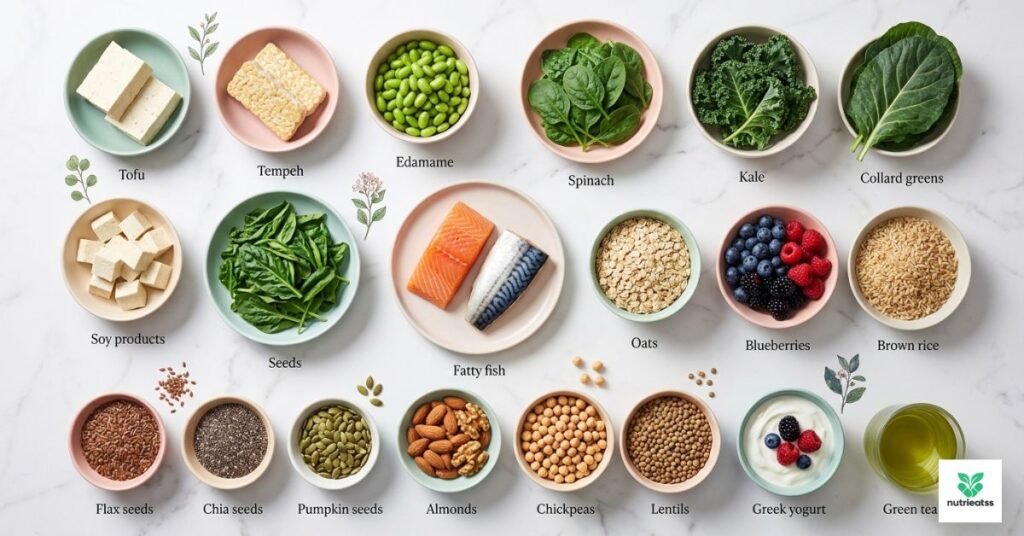
Diet doesn’t replace medical treatment for menopause symptoms, but a growing body of research suggests that what you eat can meaningfully shape how your body experiences this transition.
Phytoestrogens — plant compounds that weakly mimic estrogen in the body — are the most studied dietary factor for hot flashes. A 2024–2025 systematic review and meta-analysis of soy isoflavone studies found they were effective at reducing menopausal symptoms, and an earlier meta-analysis of 36 trials found women consuming 30–80 mg of soy isoflavones daily experienced roughly 21% fewer hot flashes, with symptom severity reduced by about 26% compared to placebo.
The Mediterranean-style eating pattern — rich in vegetables, legumes, whole grains, nuts, olive oil, and fish — has also been linked to fewer and less severe vasomotor symptoms in several studies, including a large cohort of nearly 6,000 women where higher fruit intake and Mediterranean-style eating were associated with about a 20% lower likelihood of reporting symptoms. A 2025 cross-sectional study similarly found women with the highest adherence to a modified Mediterranean diet had significantly lower odds of moderate-to-severe hot flashes. (It’s worth noting other studies have found mixed results, so this connection is promising but not universal.)
Beyond hot flashes specifically, nutrition plays a broader supporting role during menopause by helping to:
- Maintain healthy weight and metabolism, as declining estrogen shifts fat storage toward the abdomen
- Protect bone density, since bone loss accelerates in the years around menopause
- Support cardiovascular health, as heart disease risk rises after menopause
- Stabilize mood, sleep, and energy
In short: food isn’t a cure, but it’s a genuine, modifiable piece of the menopause puzzle.
Key Nutrients That Support Menopause Health
| Nutrient | Why It Matters During Menopause | Good Sources |
| Protein | Preserves muscle mass, which naturally declines with age and lower estrogen | Tofu, tempeh, lentils, salmon, eggs |
| Phytoestrogens (isoflavones, lignans) | May weakly bind estrogen receptors and ease vasomotor symptoms | Soy foods, flaxseeds, sesame seeds |
| Calcium | Supports bone density as estrogen’s protective effect on bone declines | Dairy or fortified plant milk, sardines, kale, tofu |
| Vitamin D | Needed for calcium absorption and bone health | Salmon, sardines, fortified foods, sunlight |
| Omega-3 fatty acids | May help mood, joint comfort, and cardiovascular health | Salmon, sardines, walnuts, flaxseeds, chia seeds |
| Fiber | Supports gut health, blood sugar balance, and healthy estrogen metabolism | Oats, quinoa, lentils, chickpeas, vegetables |
| B vitamins | Support energy metabolism and nervous system function | Whole grains, leafy greens, legumes |
| Antioxidants | May reduce oxidative stress associated with hormonal changes | Berries, leafy greens, green tea |
20 Foods That May Help Reduce Hot Flashes
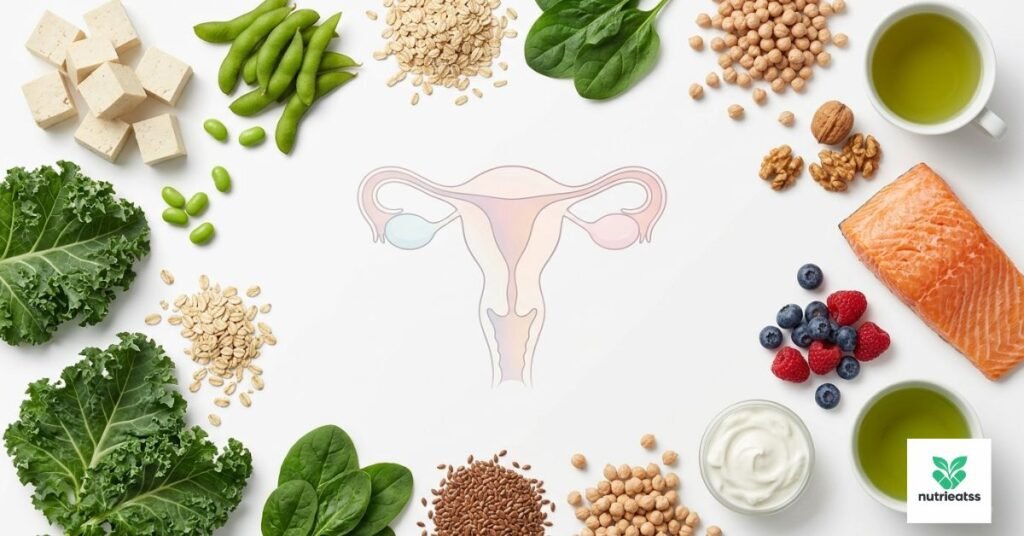
Below are 20 foods with research or nutritional rationale supporting a role in menopause health. Individual responses vary — what helps one woman may do little for another — so think of this as a toolkit to draw from, not a rigid checklist.
1. Soybeans (Edamame)
Nutritional benefits: High in plant protein, fiber, and isoflavones (genistein and daidzein). Why it may help: Soy isoflavones are the most-studied phytoestrogen for hot flashes, with meta-analyses linking regular intake to fewer and less severe episodes. Easy ways to include it: Steam edamame pods as a snack, or toss shelled edamame into grain bowls and salads.
2. Tofu
Nutritional benefits: A complete plant protein rich in isoflavones, calcium, and iron. Why it may help: Like edamame, tofu delivers soy isoflavones in an easily absorbed form. Easy ways to include it: Cube and pan-sear firm tofu for stir-fries, or blend silken tofu into smoothies.
3. Tempeh
Nutritional benefits: Fermented soy with protein, fiber, and probiotics. Why it may help: Fermentation may make tempeh’s isoflavones easier to absorb, and its probiotic content supports gut bacteria involved in metabolizing phytoestrogens. Easy ways to include it: Marinate and grill slices, or crumble into tacos and grain bowls.
4. Flaxseeds
Nutritional benefits: Rich in lignans (a phytoestrogen), omega-3 ALA, and fiber. Why it may help: Flaxseed lignans are converted by gut bacteria into compounds with mild estrogen-like activity, and some research links flaxseed to modest reductions in hot flash frequency. Easy ways to include it: Grind fresh and stir into oatmeal, yogurt, or smoothies (whole seeds pass through undigested).
5. Chia Seeds
Nutritional benefits: High in fiber, omega-3s, and calcium. Why it may help: Supports blood sugar stability and provides plant-based omega-3s that may help with inflammation and mood. Easy ways to include it: Make chia pudding, or sprinkle over salads and cereal.
6. Sesame Seeds
Nutritional benefits: Contain lignans, calcium, and healthy fats. Why it may help: Sesame lignans are another phytoestrogen source studied for hormone-related benefits, alongside meaningful calcium content for bone support. Easy ways to include it: Sprinkle toasted seeds on vegetables, or use tahini in dressings.
7. Chickpeas
Nutritional benefits: Plant protein, fiber, and B vitamins. Why it may help: High fiber content supports healthy estrogen metabolism and steady blood sugar, which may reduce symptom flares tied to glucose swings. Easy ways to include it: Roast for a crunchy snack, or blend into hummus.
8. Lentils
Nutritional benefits: Excellent plant protein and fiber source, plus iron and folate. Why it may help: Fiber-rich legumes support gut health and are a cornerstone of the Mediterranean eating pattern linked to fewer menopause symptoms. Easy ways to include it: Simmer into soups and stews, or use as a meat substitute in bolognese.
9. Oats
Nutritional benefits: Whole grain rich in soluble fiber (beta-glucan) and B vitamins. Why it may help: Soluble fiber supports heart health and blood sugar balance, both important as cardiovascular risk rises after menopause. Easy ways to include it: Overnight oats with flaxseed and berries make an easy daily habit.
10. Quinoa
Nutritional benefits: A complete plant protein with fiber, magnesium, and iron. Why it may help: Provides steady energy and protein to support muscle maintenance, which becomes harder to preserve with declining estrogen. Easy ways to include it: Use as a base for grain bowls or a rice substitute.
11. Brown Rice
Nutritional benefits: Whole grain with fiber, magnesium, and B vitamins. Why it may help: A lower-glycemic alternative to refined grains, supporting more stable blood sugar and energy. Easy ways to include it: Swap for white rice as a side, or use in stir-fries.
12. Spinach
Nutritional benefits: Rich in calcium, magnesium, iron, and antioxidants. Why it may help: Leafy greens support bone health and provide antioxidants that may help buffer oxidative stress associated with hormonal shifts. Easy ways to include it: Blend into smoothies or sauté as a simple side.
13. Kale
Nutritional benefits: High in calcium, vitamin K, and vitamin C. Why it may help: One of the best plant sources of bioavailable calcium, supporting bone density during a time when bone loss accelerates. Easy ways to include it: Massage into salads, or bake into crispy kale chips.
14. Broccoli
Nutritional benefits: Calcium, vitamin C, and glucosinolates (compounds involved in estrogen metabolism). Why it may help: Cruciferous vegetables support the liver’s ability to metabolize estrogen efficiently. Easy ways to include it: Roast with olive oil, or add to stir-fries.
15. Salmon
Nutritional benefits: Rich in omega-3 fatty acids (EPA/DHA), protein, and vitamin D. Why it may help: Omega-3s are linked to improved mood and cardiovascular health, and vitamin D supports calcium absorption for bone strength. Easy ways to include it: Bake or grill 2–3 times per week as a main protein source.
16. Sardines
Nutritional benefits: Omega-3s, calcium (especially with bones), and vitamin D. Why it may help: One of the few foods that delivers omega-3s and bone-supportive calcium and vitamin D together. Easy ways to include it: Enjoy on whole-grain toast, or toss into salads.
17. Walnuts
Nutritional benefits: Plant-based omega-3 (ALA), fiber, and antioxidants. Why it may help: May support heart and brain health during a life stage when cardiovascular risk increases. Easy ways to include it: A small handful as a snack, or chopped over oatmeal and salads.
18. Almonds
Nutritional benefits: Healthy fats, protein, fiber, and calcium. Why it may help: A convenient source of bone-supportive calcium and satiating fats that help manage appetite and blood sugar. Easy ways to include it: Snack on a small handful, or use almond butter on fruit.
19. Blueberries
Nutritional benefits: Rich in antioxidants (anthocyanins), fiber, and vitamin C. Why it may help: Antioxidants may help offset oxidative stress and support brain and cardiovascular health during menopause. Easy ways to include it: Add to oatmeal, yogurt, or eat fresh as a snack.
20. Green Tea
Nutritional benefits: Contains catechins (antioxidants) and a modest amount of caffeine. Why it may help: Some research links green tea polyphenols to potential benefits for bone density and metabolic health, though evidence specific to hot flashes is limited. Easy ways to include it: Swap one coffee for green tea daily, ideally earlier in the day since it does contain caffeine.
Top 20 Foods and Their Benefits
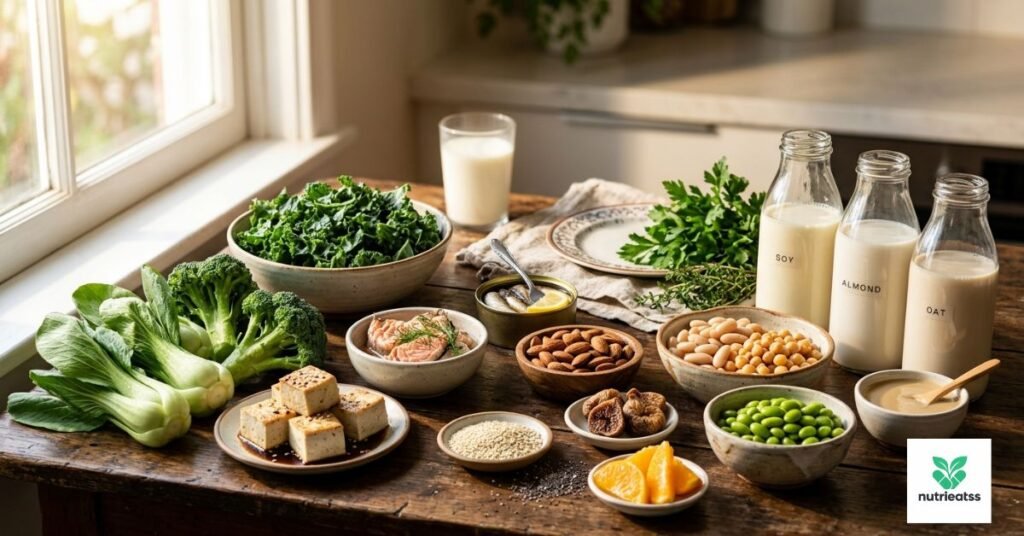
| Food | Primary Benefit | Key Compound |
| Soybeans (Edamame) | Hormone balance | Isoflavones |
| Tofu | Hormone balance, protein | Isoflavones |
| Tempeh | Hormone balance, gut health | Isoflavones, probiotics |
| Flaxseeds | Hormone balance | Lignans, omega-3 |
| Chia Seeds | Omega-3s, fiber | ALA, fiber |
| Sesame Seeds | Bone health, hormone balance | Lignans, calcium |
| Chickpeas | Fiber, blood sugar balance | Fiber, protein |
| Lentils | Fiber, heart health | Fiber, folate |
| Oats | Heart health, fiber | Beta-glucan |
| Quinoa | Muscle maintenance | Complete protein |
| Brown Rice | Blood sugar balance | Complex carbs |
| Spinach | Bone health, antioxidants | Calcium, iron |
| Kale | Bone health | Calcium, vitamin K |
| Broccoli | Estrogen metabolism | Glucosinolates |
| Salmon | Omega-3s, bone health | EPA/DHA, vitamin D |
| Sardines | Bone health, omega-3s | Calcium, vitamin D |
| Walnuts | Heart & brain health | ALA omega-3 |
| Almonds | Bone health, satiety | Calcium, healthy fats |
| Blueberries | Antioxidant support | Anthocyanins |
| Green Tea | Antioxidant, metabolic support | Catechins |
Phytoestrogen Food Sources
| Food | Phytoestrogen Type |
| Soybeans, tofu, tempeh, edamame | Isoflavones |
| Flaxseeds | Lignans |
| Sesame seeds | Lignans |
| Chickpeas, lentils | Isoflavones (lower amounts) |
| Oats, barley | Lignans (lower amounts) |
Omega-3 Rich Foods
| Food | Omega-3 Type |
| Salmon | EPA/DHA |
| Sardines | EPA/DHA |
| Flaxseeds | ALA |
| Chia seeds | ALA |
| Walnuts | ALA |
Calcium & Vitamin D Sources
| Food | Nutrient |
| Sardines (with bones) | Calcium + Vitamin D |
| Salmon | Vitamin D |
| Kale, spinach | Calcium |
| Tofu (calcium-set) | Calcium |
| Fortified plant milk or dairy | Calcium + Vitamin D |
| Almonds | Calcium |
Fiber-Rich Foods for Menopause
| Food | Fiber Benefit |
| Lentils, chickpeas | Blood sugar balance |
| Oats | Heart health |
| Quinoa, brown rice | Steady energy |
| Broccoli, spinach, kale | Digestive & estrogen metabolism support |
| Chia seeds, flaxseeds | Satiety and gut health |
Sample 7-Day Menopause Meal Plan
This sample plan weaves in the 20 foods above. Adjust portions to your needs and consult a registered dietitian for a personalized plan.
| Day | Breakfast | Lunch | Dinner | Snack |
| Mon | Oats with flaxseed, blueberries, almond milk | Chickpea and kale salad with olive oil | Baked salmon, quinoa, broccoli | Handful of walnuts |
| Tue | Tofu scramble with spinach | Lentil soup with whole-grain bread | Tempeh stir-fry with brown rice | Green tea + almonds |
| Wed | Greek yogurt with chia seeds and blueberries | Edamame and quinoa bowl | Sardines on toast, side salad | Sliced apple with almond butter |
| Thu | Smoothie with tofu, spinach, flaxseed | Broccoli and chickpea stir-fry | Grilled salmon, roasted kale | Handful of edamame |
| Fri | Oatmeal with walnuts and sesame seeds | Tempeh salad wrap | Lentil and vegetable curry with brown rice | Green tea + blueberries |
| Sat | Whole-grain toast with almond butter | Quinoa salad with chickpeas and kale | Baked tofu with roasted broccoli | Handful of almonds |
| Sun | Chia pudding with berries | Sardine and spinach salad | Salmon, quinoa, sautéed greens | Edamame |
Foods to Eat vs. Foods to Limit
| Eat More Often | Limit or Moderate |
| Soy foods (tofu, tempeh, edamame) | Alcohol |
| Fatty fish (salmon, sardines) | Spicy foods |
| Whole grains (oats, quinoa, brown rice) | Sugary desserts and refined carbs |
| Legumes (lentils, chickpeas) | Processed and packaged snacks |
| Leafy greens and cruciferous vegetables | Excess caffeine |
| Nuts and seeds | High-sodium foods |
| Berries and colorful produce | Trans fats and fried foods |
Foods and Drinks to Limit
While no food needs to be eliminated entirely, several are commonly reported to worsen hot flashes or work against menopause health goals:
- Alcohol – Can trigger vasomotor symptoms and disrupt sleep; also affects bone health and liver estrogen metabolism.
- Spicy foods – Capsaicin can raise body temperature and trigger flashes in sensitive individuals.
- Sugary desserts and refined carbohydrates – May contribute to blood sugar spikes and crashes, weight gain, and inflammation.
- Excess caffeine – Some (not all) women find caffeine triggers or worsens hot flashes and disrupts sleep.
- Highly processed snacks – Often high in sodium, added sugar, and unhealthy fats, offering little nutritional support during this transition.
If you notice a pattern between a specific food or drink and your symptoms, a simple symptom journal can help you identify your personal triggers, since they vary from woman to woman.
Lifestyle Tips Beyond Diet
Nutrition works best alongside other supportive habits:
- Stay hydrated. Dehydration can worsen fatigue and may intensify the sensation of hot flashes.
- Move regularly. Regular exercise, including strength training, supports bone density, mood, weight management, and sleep.
- Prioritize sleep hygiene. Keep your bedroom cool, avoid screens before bed, and maintain a consistent sleep schedule.
- Manage stress. Practices like yoga, meditation, or deep breathing may help reduce the frequency of stress-triggered hot flashes.
- Dress in layers and keep your environment cool to reduce triggers.
- Talk to your doctor about options such as hormone therapy or non-hormonal medications if symptoms are significantly affecting your quality of life — diet is a complement to medical care, not a replacement.
Common Myths About Menopause Nutrition
Myth: Soy is dangerous or “too estrogenic.” Major health organizations, including the North American Menopause Society, consider moderate soy food intake safe for most women, including many breast cancer survivors. Soy isoflavones are not the same as pharmaceutical or bioidentical estrogen.
Myth: Cutting out all carbs will fix hot flashes. Whole grains and legumes are actually linked to better menopause outcomes in several studies. The issue is more about refined carbs and added sugars, not carbohydrates as a food group.
Myth: Supplements always work better than food. Whole foods provide fiber, synergistic nutrients, and steadier absorption. Supplements can play a role, but they aren’t automatically superior — and should be discussed with a healthcare provider.
Myth: One “menopause diet” works for everyone. Symptom triggers and nutrient needs vary significantly by individual, genetics, gut bacteria (which affects phytoestrogen metabolism), and health history.
Frequently Asked Questions
Can diet stop hot flashes completely?
No. Diet may help reduce the frequency or severity of hot flashes for some women, but it isn’t a guaranteed fix. Hormone therapy and certain non-hormonal medications remain the most effective treatments for moderate-to-severe symptoms; food is a supportive strategy alongside medical care.
Are soy foods safe during menopause?
For most women, yes. Research, including recent meta-analyses, supports moderate soy food intake (like tofu, tempeh, and edamame) as both safe and potentially helpful for menopausal symptoms. If you have a personal or family history of hormone-sensitive cancer, talk with your oncologist or doctor about what’s appropriate for you.
What foods should I avoid during menopause?
No food is strictly off-limits, but many women find alcohol, spicy foods, excess caffeine, sugary desserts, and highly processed snacks worsen hot flashes, sleep, or overall wellbeing when consumed in excess.
Is coffee bad for hot flashes?
It depends on the individual. Some studies and clinical observations link caffeine to more frequent or intense hot flashes in sensitive women, while others show no clear effect. If you suspect coffee is a trigger, try reducing intake or switching to green tea and track your symptoms.
Can weight loss reduce menopause symptoms?
For women who are overweight, modest weight loss has been associated with a reduction in hot flash frequency and severity in some clinical trials, likely related to changes in fat tissue and hormone metabolism.
Are phytoestrogens effective? Research is promising but not unanimous. Multiple meta-analyses of soy isoflavones show modest but statistically meaningful reductions in hot flash frequency and severity, though individual response varies — partly based on whether someone’s gut bacteria can convert soy isoflavones into the more active compound equol.
What is the Mediterranean diet for menopause?
It’s an eating pattern rich in vegetables, fruits, legumes, whole grains, nuts, olive oil, and fish, with moderate dairy and limited red meat and processed foods. Several studies link higher adherence to this pattern with lower odds of moderate-to-severe hot flashes and better overall menopause-related quality of life.
How much protein do women need during menopause?
General guidance often points to roughly 1.0–1.2 grams of protein per kilogram of body weight daily for women in midlife, higher than standard adult recommendations, to help counteract age- and hormone-related muscle loss. A registered dietitian can help tailor this to your specific needs.
Do I need calcium and vitamin D supplements after menopause?
Many postmenopausal women need more calcium and vitamin D than diet alone provides, particularly if sun exposure and dairy intake are limited. A doctor can check vitamin D levels and recommend appropriate supplementation alongside food sources.
Will this diet help with menopause weight gain too?
A diet emphasizing protein, fiber, and healthy fats — as outlined here — can support a healthy metabolism and weight management during menopause, though weight changes are influenced by many factors including muscle mass, activity level, sleep, and stress.
Final Thoughts
There’s no single food or “miracle” ingredient that will make hot flashes vanish. But the research is genuinely encouraging: a nutrient-rich eating pattern built around phytoestrogen-containing foods, fatty fish, whole grains, legumes, colorful produce, nuts, and seeds — paired with less alcohol, caffeine, and processed food — is associated with fewer and milder menopause symptoms for many women, along with better long-term bone, heart, and metabolic health.
Your experience of menopause is unique to you. What eases one woman’s hot flashes may do little for another, and that’s normal. The most reliable approach is to build your plate around whole, minimally processed foods, pay attention to your own patterns, and stay in conversation with your healthcare provider or a registered dietitian, especially if symptoms are significantly affecting your daily life. Food is a powerful tool in your menopause toolkit — just not the only one.
Medical Disclaimer
This article is for educational purposes only and is not a substitute for professional medical advice, diagnosis, or treatment. Always consult your physician, gynecologist, or a registered dietitian before making significant changes to your diet, especially if you have existing health conditions, take medications, or are considering dietary supplements. Individual results from dietary changes vary, and no food or eating pattern can guarantee relief from menopause symptoms.
Pingback: 15 Best Foods for Better Sleep: Proven Picks | nutrieatss