
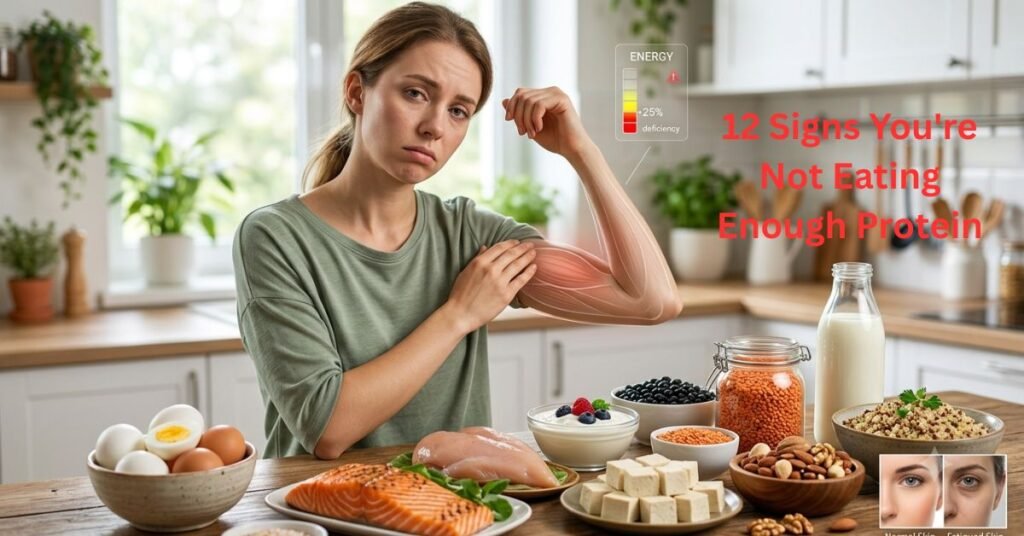
Feeling tired, losing muscle, or always hungry? Discover the 12 signs you’re not eating enough protein, why it happens, and how to fix it.
You’re eating three meals a day. You’re not “on a diet.” And yet — you’re tired all the time, your hair seems to be thinning, your nails snap if you so much as open a soda can, and you’re hungry again an hour after lunch. Sound familiar?
Here’s something most people don’t realize: you can eat plenty of food and still not eat enough protein. It’s one of the most common — and most overlooked — nutritional gaps in modern diets, especially among people who eat a lot of processed carbohydrates, follow restrictive diets, or simply aren’t paying attention to where their calories are coming from.
Protein isn’t just for bodybuilders. It’s the literal building block of your muscles, skin, hair, nails, immune system, and hormones. When you don’t get enough of it, your body starts sending you signals — some subtle, some impossible to ignore.
In this guide, we’ll walk through the 12 most common signs you’re not eating enough protein, explain the science behind each one, tell you who’s most at risk, and show you exactly how to fix it — with real food examples, a full protein-content table, and daily intake targets based on your age and activity level.
Let’s get into it.
Why Protein Matters So Much
Protein is one of the three macronutrients (along with carbohydrates and fats), but it plays a role no other nutrient can replace. It’s made up of amino acids — often called the “building blocks” of the body — which your cells use to:
- Repair and build muscle tissue
- Produce enzymes and hormones (including insulin and thyroid hormones)
- Build antibodies that fight off infection
- Maintain healthy skin, hair, and nails
- Transport oxygen and nutrients through the blood
- Keep you feeling full and stabilize blood sugar
Unlike fat, your body doesn’t store extra protein for later use. If you don’t get enough from food, your body starts breaking down its own tissue — usually muscle — to get the amino acids it needs for more urgent jobs, like keeping your immune system and organs running. That’s why protein deficiency symptoms often show up first in muscle, skin, hair, and energy levels — the tissues your body considers “less essential” in a pinch.
How Much Protein Do I Need?
The official U.S. Recommended Dietary Allowance (RDA) is 0.8 grams of protein per kilogram of body weight per day — roughly 0.36 grams per pound. That’s the minimum amount needed to prevent deficiency in a sedentary adult, not necessarily the amount needed to feel and perform your best.
Many researchers and dietitians now argue that this baseline is too low for a lot of people, particularly older adults and those who are physically active. A widely cited nutrition review noted that protein needs for healthy adults are set at 0.8 g/kg/day, but a growing body of evidence points to real benefits from higher intakes — especially for preserving muscle in older age.
Here’s a more realistic breakdown:
| Group | Recommended Daily Protein |
| Sedentary adults | 0.8 g/kg body weight (~56–65 g/day average) |
| Adults 65+ (seniors) | 1.0–1.2 g/kg body weight |
| Recreationally active adults | 1.1–1.4 g/kg body weight |
| Strength/endurance athletes | 1.4–2.0 g/kg body weight |
| Pregnant/breastfeeding women | +25 g/day above baseline |
Quick conversion: divide your weight in pounds by 2.2 to get kilograms, then multiply by the target above. If you’re unsure how much you personally need, a registered dietitian or your doctor can help you calculate a target based on your age, weight, activity level, and any health conditions
The 12 Signs You’re Not Eating Enough Protein
1. Constant Hunger (Even After Eating)
If you feel hungry again shortly after a full meal, low protein intake could be the reason. Protein is the most satiating macronutrient — meaning it keeps you feeling full longer than carbs or fat. It slows digestion and triggers the release of hormones like peptide YY and GLP-1, which signal fullness to your brain.
When meals are protein-light and carb-heavy, blood sugar spikes and crashes quickly, leaving you hungry again within an hour or two.
Who’s most at risk: People who eat mostly processed or convenience foods, those on low-calorie diets without adequate protein, and anyone replacing meals with sugary snacks or drinks.
When to see a doctor: If constant hunger is paired with unexplained weight loss, excessive thirst, or fatigue, get checked for other causes like diabetes or hyperthyroidism.
2. Muscle Weakness or Muscle Loss
This is one of the clearest protein deficiency symptoms. Since your body can’t store protein the way it stores fat, it will break down muscle tissue for amino acids when dietary intake falls short — a process called muscle catabolism.
Over time, this leads to noticeable muscle loss, reduced strength, and difficulty with everyday tasks like climbing stairs or carrying groceries.
Who’s most at risk: Older adults (a condition called sarcopenia — age-related muscle loss — is worsened by low protein intake), people recovering from illness or surgery, and anyone on a low-calorie or low-protein diet.
When to see a doctor: Noticeable, unexplained muscle loss or weakness that doesn’t improve with better nutrition warrants a medical evaluation.
3. Slow Wound Healing
Protein is essential for building new skin cells and collagen, the structural protein that helps wounds close. Without enough protein, your body struggles to repair tissue efficiently, so cuts, bruises, and surgical wounds take longer to heal — and are more prone to infection.
Who’s most at risk: Post-surgical patients, older adults, people with chronic wounds (like diabetic ulcers), and anyone with a restrictive diet.
When to see a doctor: Any wound that isn’t visibly improving after 1–2 weeks, or shows signs of infection (redness, swelling, discharge), needs prompt medical attention.
4. Hair Thinning or Hair Loss
Hair is made almost entirely of a protein called keratin. When protein intake is too low, your body prioritizes sending available amino acids to vital organs — and hair follicles are one of the first things to be “deprioritized.” This can push more hair follicles into a resting (shedding) phase, a condition known as telogen effluvium.
Who’s most at risk: People on crash diets, those with disordered eating patterns, and anyone with a sudden, significant drop in calorie or protein intake.
When to see a doctor: If hair loss is sudden, patchy, or accompanied by other symptoms, see a dermatologist or doctor to rule out other causes (thyroid issues, iron deficiency, hormonal changes).
5. Brittle, Weak, or Ridged Nails
Like hair, nails are made largely of keratin. Inadequate protein intake can lead to nails that are thin, peel easily, break often, or develop ridges. While brittle nails have several possible causes (including thyroid problems and iron deficiency), chronic low protein intake is a commonly overlooked one.
Who’s most at risk: Same groups as hair thinning — restrictive dieters, older adults with reduced appetite, and people recovering from illness.
When to see a doctor: Persistent nail changes despite improved diet, or nail changes paired with fatigue or other symptoms, should be evaluated.
6. Frequent Illness or Slow Recovery from Infections
Your immune system relies heavily on protein. Antibodies — the proteins that identify and neutralize viruses and bacteria — are built from amino acids. Chronically low protein intake can weaken your immune response, making you more susceptible to colds, infections, and slower recovery times.
Who’s most at risk: Older adults, people under chronic stress, and those with restrictive diets or eating disorders.
When to see a doctor: If you’re getting sick more than usual or infections linger longer than expected, it’s worth discussing with your doctor — there can be several underlying causes.
7. Fatigue and Low Energy
Protein plays a role in producing enzymes and transporting oxygen (via hemoglobin, which contains protein) throughout your body. Low protein intake can also lead to reduced muscle mass, which lowers your overall metabolic capacity and energy reserves. The result: persistent tiredness that isn’t fixed by sleep alone.
Who’s most at risk: Anyone under-eating overall, vegetarians/vegans not planning meals carefully, and people with high physical or mental workloads.
When to see a doctor: Fatigue that persists despite adequate sleep and improved nutrition could indicate anemia, thyroid dysfunction, or another medical issue — worth ruling out.
8. Swelling in Hands, Feet, or Legs (Edema)
This is a lesser-known but medically significant sign. Protein — specifically a protein called albumin — helps keep fluid inside your blood vessels rather than leaking into surrounding tissue. In cases of significant protein deficiency, low albumin levels can allow fluid to pool in the extremities, causing visible swelling (edema).
Who’s most at risk: This sign usually appears in more severe or prolonged protein deficiency (like the medical condition kwashiorkor), which is rare in developed countries but can occur in older adults with poor appetite, people with certain illnesses, or those with very restrictive diets.
When to see a doctor: Swelling in the limbs should always be medically evaluated, since it can also signal heart, kidney, or liver problems unrelated to diet.
9. Difficulty Concentrating (“Brain Fog”)
Amino acids from protein are precursors to neurotransmitters like dopamine and serotonin, which regulate mood, focus, and mental clarity. Additionally, unstable blood sugar from low-protein, high-carb meals can cause the energy dips that make it hard to concentrate.
Who’s most at risk: People skipping breakfast or eating carb-heavy meals without protein, students and professionals under high cognitive demand.
When to see a doctor: Persistent brain fog unrelated to sleep or stress should be discussed with a healthcare provider, as it can have many causes.
10. Mood Changes or Irritability
Since protein is directly tied to neurotransmitter production, low intake can contribute to irritability, low mood, or increased anxiety. Blood sugar swings from protein-poor meals can also cause the shakiness and moodiness often described as being “hangry.”
Who’s most at risk: Anyone with inconsistent eating patterns or diets low in complete proteins.
When to see a doctor: If mood changes are significant, persistent, or affecting daily life, consult a healthcare professional — nutrition may be one factor among several.
11. Dry, Thin, or Unhealthy-Looking Skin
Collagen and elastin — two proteins responsible for skin’s structure and elasticity — depend on adequate dietary protein for production. Low intake can lead to dry, flaky, thin, or slow-healing skin, and can make existing skin conditions worse.
Who’s most at risk: Older adults (skin protein turnover naturally slows with age), people with restrictive diets, and those with malabsorption conditions.
When to see a doctor: Skin changes accompanied by other symptoms on this list, or that don’t improve with better hydration and nutrition, warrant a checkup.
12. Slow Recovery After Exercise
If you’re more sore than usual after workouts, or your soreness lingers for days, low protein intake could be limiting your body’s ability to repair exercise-induced muscle damage. Protein provides the amino acids needed to rebuild muscle fibers stronger after training — without it, recovery slows and performance can plateau or decline.
Who’s most at risk: Athletes and regular exercisers who underestimate their protein needs, especially those doing strength training or high-intensity workouts.
When to see a doctor: Persistent, unusual soreness or a sudden drop in exercise performance despite consistent training should be discussed with a doctor or sports dietitian.
Important Note
Every symptom on this list can also be caused by conditions unrelated to protein intake — including thyroid disorders, anemia, autoimmune conditions, medication side effects, and more. This article is meant to help you recognize patterns, not diagnose yourself. If you’re experiencing several of these signs, especially persistently, talk to a doctor or registered dietitian to identify the true underlying cause and get personalized guidance.
High-Protein Foods: Animal & Plant-Based Options
Boosting your intake doesn’t require supplements — real food does the job well. Here’s a reference table of protein-rich foods and how much protein they provide per serving.
| Food | Serving Size | Protein (grams) |
| Animal-Based | ||
| Chicken breast (cooked) | 3.5 oz (100g) | 31g |
| Turkey breast (cooked) | 3.5 oz (100g) | 29g |
| Lean beef (cooked) | 3.5 oz (100g) | 26g |
| Salmon (cooked) | 3.5 oz (100g) | 25g |
| Tuna (canned) | 3 oz | 22g |
| Eggs | 2 large | 12g |
| Greek yogurt (plain) | 1 cup | 20–23g |
| Cottage cheese | 1 cup | 25g |
| Milk | 1 cup | 8g |
| Whey protein powder | 1 scoop (30g) | 20–25g |
| Plant-Based | ||
| Lentils (cooked) | 1 cup | 18g |
| Chickpeas (cooked) | 1 cup | 15g |
| Black beans (cooked) | 1 cup | 15g |
| Tofu (firm) | 1 cup | 20g |
| Tempeh | 1 cup | 31g |
| Edamame (cooked) | 1 cup | 17g |
| Quinoa (cooked) | 1 cup | 8g |
| Peanut butter | 2 tbsp | 8g |
| Almonds | 1 oz (23 nuts) | 6g |
| Chia seeds | 2 tbsp | 5g |
| Pea protein powder | 1 scoop (30g) | 20–24g |
Tip: Combining plant proteins throughout the day (like grains + legumes) ensures you get all essential amino acids, even if you don’t eat animal products
Practical Meal Ideas to Boost Your Protein Intake
You don’t need a complicated meal plan — just a few smart swaps and additions.
Breakfast
- Greek yogurt with berries and a scoop of chia seeds
- Scrambled eggs with spinach and whole-grain toast
- Protein smoothie: milk (or fortified plant milk), banana, protein powder, peanut butter
Lunch
- Grilled chicken or chickpea salad with quinoa
- Lentil soup with a side of whole-grain bread
- Turkey and hummus wrap with vegetables
Dinner
- Baked salmon with roasted vegetables and brown rice
- Tofu or tempeh stir-fry with mixed vegetables
- Lean beef or black bean chili
Snacks
- Cottage cheese with fruit
- A handful of almonds or roasted edamame
- Hard-boiled eggs
- Protein bar or shake (check for at least 15–20g protein per serving)
Simple strategy: Try to include a source of protein at every meal and snack rather than saving it all for dinner. Spreading intake evenly throughout the day supports better muscle maintenance and steadier energy than loading it all into one meal.
Daily Protein Requirements by Age and Activity Level
Your ideal intake isn’t one-size-fits-all. Here’s a general guide:
| Age/Group | Daily Protein Target |
| Children (4–13) | 19–34g/day (varies by age) |
| Teens (14–18) | 46–52g/day |
| Adults (19–64), sedentary | ~0.8 g/kg body weight |
| Adults (19–64), active | 1.2–1.6 g/kg body weight |
| Seniors (65+) | 1.0–1.2 g/kg body weight (higher end helps prevent muscle loss) |
| Pregnant/breastfeeding | Baseline + 25g/day |
| Strength athletes | 1.6–2.0 g/kg body weight |
Research increasingly supports higher intakes for older adults specifically, since aging reduces the body’s efficiency at using dietary protein to build muscle — a phenomenon researchers call “anabolic resistance.” This means seniors often need more protein than younger adults, not the same or less, to maintain muscle mass and strength.
Frequently Asked Questions
1. What are the first signs of not eating enough protein?
Early signs typically include constant hunger, fatigue, and slower recovery from workouts — often before more visible signs like hair thinning or muscle loss appear.
2. Can you have a protein deficiency even if you’re not underweight?
Yes. You can eat plenty of calories from carbs and fat while still falling short on protein, especially with heavily processed diets.
3. How much protein is considered a “low protein diet”?
Consistently eating less than the RDA of 0.8g per kilogram of body weight per day is generally considered inadequate for most adults, particularly those who are active or older.
4. Is muscle loss reversible after fixing a protein deficiency?
In many cases, yes—especially when combined with resistance exercise. However, recovery time varies based on age, health status, and severity of the deficiency.
5. Do vegetarians and vegans need more protein than meat-eaters?
Not necessarily more in total, but they need to be more intentional about combining plant protein sources to get all essential amino acids.
6. Can too much protein be harmful?
For most healthy people, higher protein intake within recommended ranges is safe. Those with kidney disease should consult a doctor before increasing protein significantly.
7. What’s the best time of day to eat protein?
Spreading protein intake across all meals (rather than one large dose at dinner) appears to support muscle maintenance better than front- or back-loading it.
8. Can low protein intake cause hair loss?
Yes—hair is made of keratin, a protein, and inadequate intake can push more hair follicles into a shedding phase.
9. How quickly will I notice improvement after increasing protein intake? Energy and hunger levels often improve within days to a couple of weeks; changes in hair, nails, and muscle mass typically take several weeks to months.
10. Should I take a protein supplement if I think I’m deficient? Whole foods should be the priority, but a protein powder can help fill gaps if you’re consistently falling short. Speak with a healthcare provider or dietitian for personalized advice.
Medical Disclaimer
This article is for informational and educational purposes only and is not intended as medical advice. It is not a substitute for professional medical diagnosis, treatment, or consultation. Symptoms described here can result from numerous causes beyond protein intake. Always consult a physician, registered dietitian, or other qualified healthcare provider before making significant changes to your diet, especially if you have an existing medical condition or are experiencing persistent symptoms.
Authoritative External Source Recommendations
- National Institutes of Health, Office of Dietary Supplements — Protein and Dietary Reference Intakes (ods.od.nih.gov)
- Harvard T.H. Chan School of Public Health — The Nutrition Source: Protein (hsph.harvard.edu)
- Academy of Nutrition and Dietetics (eatright.org)
- National Institute on Aging — Nutrition for Older Adults (nia.nih.gov)