
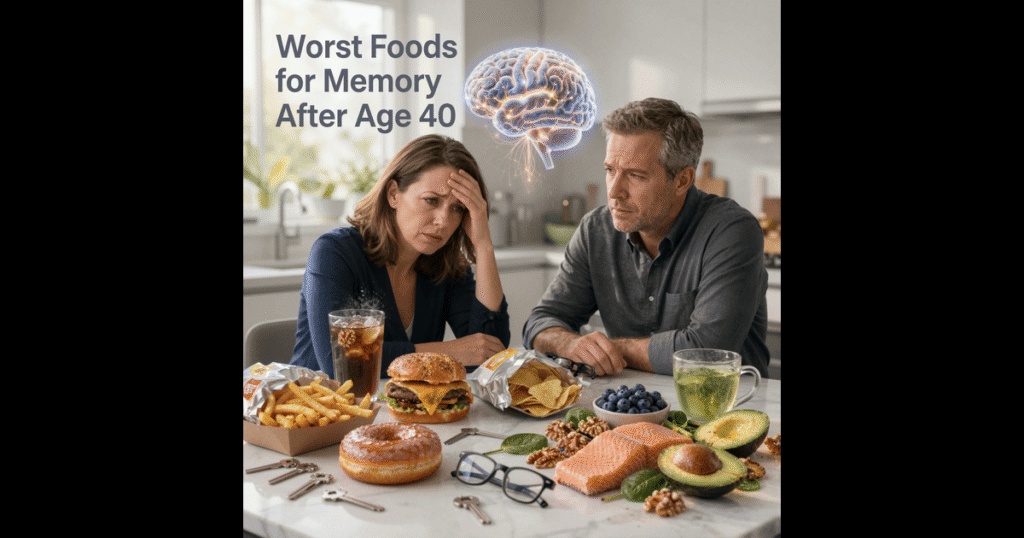
Discover the worst foods for memory after 40, the science behind brain aging, and the brain-healthy foods and habits that support sharper thinking.
worst foods for memory after age 40
You walk into a room and forget why you’re there. You blank on a coworker’s name mid-sentence. You spend ten minutes looking for keys that were in your hand five minutes ago.
If this sounds familiar and you’re over 40, take a breath — you’re not alone, and you’re probably not developing dementia. Some memory slips are a completely normal part of getting older. Your brain is still processing decades of information, juggling more responsibilities than ever, and dealing with the natural effects of time.
But here’s what many people don’t realize: what’s on your plate may be quietly shaping how well your brain ages. Diet isn’t the only factor in memory and cognition — genetics, sleep, stress, and activity levels all matter too — but food is one of the few things you have real, daily control over.
In this guide, we’ll walk through 12 foods that research suggests may work against brain health when eaten regularly over the long term, explain the science in plain language, and then flip the script with foods and habits that support sharper thinking as you age. No fear-mongering, no miracle cures — just practical, evidence-informed information you can actually use.
One important note before we dive in: no single food causes memory loss or dementia. Brain health is shaped by long-term patterns, not one bag of chips or one soda. Think of this article as a guide to patterns worth rethinking, not a list of forbidden foods.
Why Memory Changes After Age 40
Before pointing fingers at specific foods, it helps to understand what’s actually happening in the brain during this stage of life.
Natural Brain Aging
Starting around midlife, the brain gradually loses some volume, particularly in areas tied to memory formation, like the hippocampus. This doesn’t mean decline is inevitable or severe — it just means the brain’s structure shifts over time, similar to how joints or skin change with age.
Hormonal Changes
For many people, 40s and 50s bring shifts in hormones — perimenopause and menopause in women, and a gradual decline in testosterone in men. These hormonal shifts can affect sleep, mood, and mental clarity, all of which influence how sharp memory feels day to day.
Increased Inflammation
Chronic, low-grade inflammation tends to rise with age, a phenomenon researchers sometimes call “inflammaging.” Inflammation in the body can affect the brain too, potentially interfering with communication between neurons.
Blood Sugar Regulation
Insulin sensitivity often declines with age, meaning the body needs more insulin to manage blood sugar. Since the brain relies heavily on stable glucose delivery, poor blood sugar control can affect concentration and memory over time.
Oxidative Stress
Cells naturally produce byproducts called free radicals during normal metabolism. Over decades, an imbalance between free radicals and the antioxidants that neutralize them — oxidative stress — can accumulate and affect brain cells, which are especially vulnerable due to their high energy demands.
Sleep Quality
Sleep is when the brain clears out metabolic waste, including proteins linked to cognitive decline. Sleep often becomes lighter or more fragmented with age, which can reduce this nightly “cleanup” process.
Cardiovascular Health
What’s good for your heart is good for your brain. The brain depends on a steady, healthy blood supply, so blood pressure, cholesterol, and artery health all play a role in cognitive function.
Nutrition’s Role in All of This Diet touches nearly every factor above — inflammation, blood sugar, oxidative stress, even sleep quality. That’s why nutrition researchers increasingly view food not as a side note in brain health, but as one of the central, modifiable pieces of the puzzle
12 Worst Foods for Memory After Age 40
Remember: the issue isn’t occasional indulgence. It’s how often and how much of these foods show up in your regular routine.
1. Sugary Soft Drinks
Regularly drinking sugar-sweetened beverages is associated with higher risk of obesity, type 2 diabetes, and metabolic syndrome — all conditions linked to accelerated cognitive decline.
: A daily soda delivers a large, fast spike in blood sugar. Over years, this can contribute to insulin resistance, which some researchers have described as a factor in what’s sometimes informally called “type 3 diabetes” in the context of Alzheimer’s-related changes, though this term is not an official diagnosis and the connection is still being studied.
Soda remains one of the most commonly consumed beverages worldwide, with many adults drinking it daily or several times a week.
Sparkling water with fruit, unsweetened iced tea, or infused water with cucumber and mint.
2. Candy and Sugary Desserts
Like soda, candy and desserts deliver concentrated sugar with little nutritional value. Diets high in added sugar are linked in observational studies to smaller brain volume and poorer memory performance over time.
Repeated blood sugar spikes and crashes can promote inflammation and may affect the hippocampus, a brain region essential for forming new memories.
Many people eat dessert or candy multiple times per week, often without tracking how much added sugar this contributes.
Fresh berries with a dollop of Greek yogurt, or a small square of dark chocolate (70% cacao or higher).
3. Refined White Bread
Refined grains have had the fiber-rich bran and germ removed, leaving mostly starch that digests quickly into sugar.
High-glycemic foods cause rapid blood sugar swings, which over years may contribute to insulin resistance — a risk factor tied to cognitive decline in multiple studies.
White bread, white rice, and refined pasta are dietary staples for a large portion of the population.
Whole grain or sprouted bread, quinoa, or steel-cut oats.
4. Sugary Breakfast Cereals
Many popular cereals are essentially a sugar delivery system dressed up as breakfast, often lacking meaningful protein or fiber to slow sugar absorption.
Starting the day with a sugar spike can lead to an energy crash mid-morning, affecting focus and short-term memory during a period when many people need to concentrate most.
Cereal remains a go-to breakfast for many households, particularly for convenience.
Plain oatmeal topped with nuts and berries, or eggs with vegetables.
5. Fried Fast Foods
Deep-fried foods are typically high in unhealthy fats and often cooked in oils that degrade with repeated heating, producing compounds linked to inflammation.
Diets high in fried food have been associated in research with poorer cognitive performance, possibly through their effects on blood vessels and systemic inflammation.
Fast food is a regular part of many people’s routines, especially during busy weeks.
Baked or air-fried versions of favorite foods, using olive oil instead of processed frying oils.
6. Processed Meats
Bacon, sausage, deli meats, and hot dogs are typically high in sodium, nitrates, and saturated fat.
Some large observational studies have linked higher processed meat intake with faster cognitive decline, though researchers are still working to fully understand the mechanisms, which may involve inflammation and vascular effects.
Processed meats are a common lunch and breakfast staple for many people.
Grilled chicken, fish, or plant-based proteins like lentils and beans.
7. Ultra-Processed Snacks
Chips, packaged cookies, and similar snacks tend to combine refined carbohydrates, unhealthy fats, and heavy sodium with minimal fiber or protein.
Emerging research has linked diets high in ultra-processed foods overall with faster rates of cognitive decline, likely due to the combined effect of low nutrient density and high inflammatory potential.
Ultra-processed foods make up a substantial share of daily calories in many modern diets.
Nuts, air-popped popcorn, or cut vegetables with hummus.
8. Artificial Trans Fats
Trans fats, once common in margarine and packaged baked goods, are widely considered one of the most harmful fats for cardiovascular and brain health.
Trans fats raise “bad” LDL cholesterol while lowering “good” HDL cholesterol, harming blood vessels — including those that supply the brain. Several health authorities have restricted their use due to this risk.
Trans fats are less common than in past decades due to regulation, but still appear in some packaged and fried foods, especially where partially hydrogenated oils remain in use.
Cook with olive oil, avocado oil, or butter in moderation, and check labels for “partially hydrogenated oil.”
9. Excess Alcohol
While moderate drinking is a personal choice with mixed research findings, heavy or frequent alcohol use has clear, well-documented links to memory problems and brain shrinkage over time.
Alcohol is a neurotoxin at high doses and can interfere with the brain’s ability to form and consolidate memories, which is why heavy drinking is sometimes associated with blackouts.
Regular heavy drinking is common enough that many public health bodies specifically warn about its cognitive effects in midlife and beyond.
If you drink, stick to recommended moderate limits, alternating with water, and having several alcohol-free days per week.
10. Highly Processed Frozen Meals
Many frozen dinners are engineered for shelf life and flavor rather than nutrition, often high in sodium, refined starch, and preservatives while low in fiber and micronutrients.
Regularly relying on these meals can crowd out more nutrient-dense whole foods, leading to gaps in nutrients like omega-3s and B vitamins that the brain needs.
Convenience foods like this are common on busy weeknights.
Batch-cooking simple whole-food meals on weekends to reheat during the week.
11. Excessive Energy Drinks
Energy drinks often combine high sugar content with large amounts of caffeine, and sometimes other stimulants.
While moderate caffeine may offer some cognitive benefits, excessive intake can disrupt sleep — and poor sleep is one of the most direct pathways to impaired memory and concentration.
Energy drink consumption has risen, particularly among adults juggling demanding schedules.
: A moderate amount of coffee or green tea earlier in the day, paired with good hydration.
12. Artificially Sweetened Beverages (Mixed Evidence)
Diet sodas and artificially sweetened drinks are often assumed to be a “safe” swap from sugary drinks, but the research here is genuinely mixed.
Some studies have suggested associations between high artificial sweetener intake and changes in gut bacteria or appetite regulation, while other research finds no meaningful cognitive harm. At this time, evidence is not conclusive enough to call artificial sweeteners a clear “worst food,” but relying on them heavily instead of diversifying with water and whole foods isn’t an ideal long-term pattern either.
Many people drink diet beverages daily as a sugar-free alternative.
Gradually reduce reliance on any sweetened beverage, sweet or “sugar-free,” in favor of water, herbal tea, or naturally flavored water.
Nutrients That Help Protect Memory
Now for the encouraging part. Certain nutrients have consistent research support for supporting brain function as we age.
- Omega-3 fatty acids: Found in fatty fish, these fats are structural components of brain cell membranes and are linked to reduced inflammation and support for memory function.
- Vitamin B12: Essential for nerve function; deficiency (more common with age) is linked to memory problems and confusion.
- Folate: Works alongside B12 to regulate homocysteine, an amino acid that in high levels has been associated with cognitive decline.
- Vitamin D: Receptors for vitamin D exist throughout the brain, and low levels have been associated with poorer cognitive performance in observational research.
- Magnesium: Plays a role in nerve signaling and has been studied for its potential to support learning and memory processes.
- Choline: A building block for acetylcholine, a neurotransmitter directly involved in memory and learning.
- Vitamin E: An antioxidant that may help protect brain cells from oxidative damage.
- Polyphenols: Plant compounds (found in berries, tea, and cocoa) with antioxidant and anti-inflammatory properties studied for brain benefits.
- Antioxidants generally: Help neutralize free radicals, reducing the cumulative oxidative stress that may affect aging brain cells.
Best Brain-Friendly Foods After 40
- Fatty fish (salmon, sardines, mackerel): Rich in omega-3s that support brain cell structure.
- Blueberries: High in antioxidant polyphenols studied for memory support.
- Leafy greens (spinach, kale): Provide folate, vitamin K, and antioxidants.
- Walnuts: Contain plant-based omega-3s and antioxidants.
- Eggs: A top source of choline.
- Olive oil: Rich in healthy monounsaturated fats and polyphenols; a cornerstone of the Mediterranean diet, which is consistently linked to brain health.
- Avocados: Provide healthy fats that support cardiovascular — and by extension, brain — health.
- Pumpkin seeds: A good source of magnesium and zinc.
- Turmeric: Contains curcumin, studied for its anti-inflammatory properties.
- Green tea: Provides polyphenols along with a moderate, steady dose of caffeine.
- Beans: High in fiber, which supports stable blood sugar.
- Broccoli: Rich in antioxidants and vitamin K.
- Tomatoes: Contain lycopene, an antioxidant studied for its protective properties.
- Dark chocolate (in moderation): Provides flavonoids with antioxidant potential.
Daily Habits That Protect Memory
Food is only part of the picture. These habits work alongside diet to support cognitive health:
- Regular exercise: Increases blood flow to the brain and is linked to the growth of new neural connections.
- Good sleep: Allows the brain to clear metabolic waste and consolidate memories.
- Stress management: Chronic stress raises cortisol, which in excess may affect the hippocampus over time.
- Hydration: Even mild dehydration can affect concentration and short-term memory.
- Mental stimulation: Learning new skills, reading, or puzzles help build cognitive reserve.
- Social interaction: Strong social ties are consistently linked to better cognitive aging in long-term studies.
- Blood sugar control: Stable glucose levels support consistent energy delivery to the brain.
- Blood pressure management: Protects the blood vessels that supply the brain.
- Smoking cessation: Smoking is linked to accelerated cognitive decline; quitting at any age offers benefits.
Myth vs. Fact
Myth: Sugar instantly causes dementia. Fact: Excessive long-term sugar intake may increase risk through obesity, insulin resistance, and inflammation, but no single food directly causes dementia.
Myth: Memory loss after 40 always means early dementia. Fact: Occasional forgetfulness is a normal part of aging and is usually unrelated to dementia, which involves a pattern of significant, progressive decline.
Myth: Taking brain supplements can reverse memory loss. Fact: While some nutrients support brain health, no supplement has been shown to reverse existing memory loss; whole dietary patterns matter more than any single pill.
Myth: Fat is always bad for the brain. Fact: Healthy fats, like omega-3s and monounsaturated fats, are essential for brain structure and function — it’s specific fats like trans fats and excess saturated fat that raise concern.
Myth: You can’t improve memory once you’re over 40. Fact: The brain retains plasticity throughout life, and lifestyle changes — including diet, exercise, and sleep — can meaningfully support cognitive function at any age.
Myth: Diet soda is a totally safe alternative to regular soda for brain health. Fact: While it avoids the sugar spike, research on artificial sweeteners is mixed, and it shouldn’t be viewed as a health food.
Myth: Coffee is bad for memory. Fact: Moderate coffee intake has been associated with neutral or even potentially positive cognitive effects in many studies, though excessive intake can disrupt sleep.
Frequently Asked Questions
Which foods cause memory loss?
No single food directly causes memory loss. However, regular consumption of ultra-processed foods, added sugars, fried foods, and excess alcohol has been associated with faster cognitive decline over time.
Can diet improve memory?
Yes — diets rich in whole foods, healthy fats, and antioxidants, such as the Mediterranean diet, are consistently linked in research to better cognitive performance and slower age-related decline.
Is sugar bad for the brain?
Excessive, long-term sugar intake is linked to inflammation, insulin resistance, and smaller brain volume in some studies, but occasional sugar in moderation is not inherently harmful.
Are artificial sweeteners harmful?
The evidence is mixed. Some research raises questions about effects on gut bacteria and appetite regulation, but conclusive harm to memory specifically has not been firmly established.
What breakfast is best for memory?
A breakfast with protein, fiber, and healthy fats — like eggs with vegetables, or oatmeal with nuts and berries — supports stable blood sugar and sustained focus better than sugary cereal.
Which vitamin helps memory?
B12, folate, and vitamin D are among the most studied nutrients for supporting memory and overall cognitive function.
What drinks improve brain function?
Water, green tea, and moderate coffee are generally considered supportive choices, while sugary and excessive alcoholic drinks are best limited.
Is coffee good for memory? Moderate coffee consumption has been associated with neutral to potentially beneficial cognitive effects in many studies, though individual tolerance and sleep impact should be considered.
Can processed foods affect concentration?
Yes — diets high in ultra-processed foods have been linked in research to increased inflammation and less stable blood sugar, both of which can affect focus and short-term memory.
What foods reduce dementia risk?
While no food guarantees prevention, diets rich in fatty fish, leafy greens, berries, nuts, and olive oil — similar to the Mediterranean or MIND diet patterns — are associated with lower dementia risk in long-term studies.
Conclusion
Protecting your memory after 40 doesn’t require a perfect diet or eliminating every food on this list forever. It’s about shifting your overall pattern — cutting back gradually on sugary drinks, processed snacks, and fried foods, while making more room for fatty fish, leafy greens, nuts, and healthy fats.
Your brain, like the rest of your body, responds to consistency over perfection. A treat here and there isn’t going to undo your cognitive health. But a daily habit of choosing whole, nutrient-dense foods — paired with good sleep, regular movement, and strong social connections — can genuinely support sharper thinking for decades to come.
Start small. Swap one sugary drink for water this week. Add a handful of walnuts or a serving of salmon to your routine. Your future self — and your memory — will thank you.
Sources
This article draws on general research and guidance from reputable health organizations, including the World Health Organization (WHO), the National Institutes of Health (NIH), Harvard Health Publishing, the Alzheimer’s Association, the Mayo Clinic, and the American Heart Association. For personalized dietary or medical guidance, consult a qualified healthcare provider or registered dietitian.