
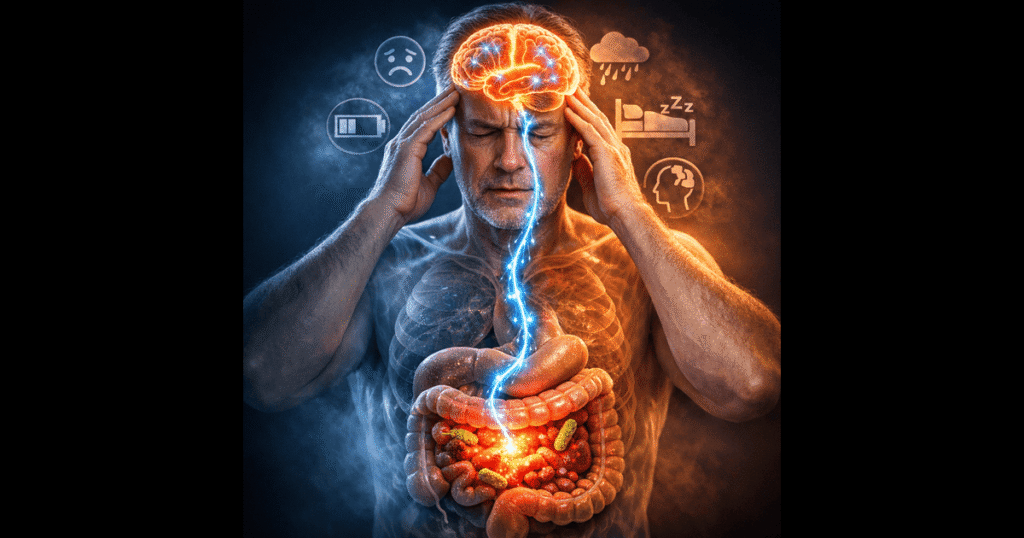
Discover 7 signs your gut is affecting your brain — from brain fog to anxiety — plus science-backed foods and habits to heal the gut-brain connection. willpower for the mood. But there’s a good chance all of them trace back to the same place: your gut.
Gut health is about far more than digestion. Your digestive tract houses trillions of bacteria, an entire nervous system of its own, and the majority of your body’s serotonin supply. It talks to your brain constantly, through nerves, hormones, and immune signals, in a two-way conversation scientists call the gut-brain axis. When that conversation gets disrupted — by stress, poor diet, illness, or lack of sleep — the effects don’t stay in your stomach. They show up in your thinking, your mood, and your energy.
Millions of people live with these warning signs for years without connecting the dots, because the symptoms feel like separate problems rather than one underlying pattern. In this guide, you’ll learn what the gut-brain connection actually is, the seven most common signs that your gut may be affecting your brain, and practical, evidence-based steps you can take starting today.
Let’s start with the science behind this surprising relationship.
What Is the Gut-Brain Connection?
The gut-brain axis is the two-way communication network linking your digestive system and your central nervous system. Think of it as a busy highway with traffic running in both directions: your brain influences your gut (which is why stress can cause stomach aches), and your gut influences your brain (which is why digestive problems often show up alongside anxiety or brain fog).
Several biological systems make this connection possible:
The vagus nerve. This is the longest nerve in the body, running from your brainstem down through your neck and chest into your abdomen. It acts as a direct line between gut and brain, carrying signals about digestion, inflammation, and the state of your gut bacteria straight to your brain.
The gut microbiome. Your intestines host trillions of bacteria, fungi, and other microbes — collectively called the microbiome. These microbes don’t just help digest food. They produce compounds that influence brain chemistry, immune function, and even the strength of the gut lining itself.
Neurotransmitters are chemical messengers that regulate mood, focus, and emotional stability. Surprisingly, an estimated <cite index=”7-1″>90% of the body’s serotonin is synthesized in the gut, predominantly by cells in the intestinal lining</cite>. While most of this gut serotonin regulates digestion rather than mood directly, <cite index=”6-1″>gut bacteria also produce compounds that interact with the vagus nerve, sending signals that can influence how calm or stressed the brain feels</cite>.
About 70% of your immune system lives in your gut. When the gut lining becomes irritated or “leaky,” it can trigger low-grade inflammation that circulates throughout the body — including the brain, where inflammation has been linked to fatigue, low mood, and difficulty concentrating.
Chronic stress keeps the body in fight-or-flight mode, which can disrupt gut motility, alter the balance of gut bacteria, and weaken the gut lining. This creates a feedback loop: stress harms the gut, and an unhealthy gut makes it harder for the brain to regulate stress.
Together, these systems explain why so many “mental” symptoms — fog, anxiety, low mood, poor memory — can have roots in the digestive system. Now let’s look at the specific signs to watch for.
7 Signs Your Gut Is Affecting Your Brain
Sign #1: Persistent Brain Fog
Brain fog is the sensation of thinking through static — trouble focusing, slower recall, and a general mental haze that doesn’t lift with rest.
When the gut is inflamed or the microbiome is out of balance, inflammatory molecules can travel through the bloodstream and affect brain function, including regions responsible for attention and processing speed.
Researchers describe a “microbiota-gut-brain axis” in which imbalances in gut bacteria are associated with neuroinflammation. This inflammation may interfere with communication between brain cells, producing the sluggish, unclear thinking many people describe as fog.
Common symptoms
- Difficulty concentrating on tasks
- Feeling mentally “slow” or hazy
- Losing your train of thought easily
- Fog that worsens after eating certain foods
Diets high in processed foods and added sugar, chronic stress, antibiotic overuse, food sensitivities, and conditions like irritable bowel syndrome (IBS) are all linked to a higher risk of brain fog tied to gut health.
Reduce processed food and added sugar, add more fiber-rich vegetables and fermented foods, stay hydrated, and prioritize consistent sleep to support the gut lining and reduce inflammation.
See a doctor if brain fog is severe, persistent, or paired with unexplained weight change, fever, or digestive symptoms that don’t improve — these could point to an underlying condition that needs evaluation.
Sign #2: Anxiety That Seems to Come Out of Nowhere
This is anxiety that appears without an obvious trigger — a racing heart, restlessness, or sense of dread that doesn’t match what’s actually happening in your life.
The gut and the brain share many of the same neurotransmitters. When gut bacteria are imbalanced, they can produce more inflammatory byproducts and less of the calming compounds that help regulate the nervous system.
A growing body of research has examined the relationship between the gut microbiome and anxiety. <cite index=”12-1″>Studies exploring gut microbiota in people with anxiety disorders have looked at both the biological alterations involved and the potential for probiotics to ease symptoms</cite>. While findings are still developing, several reviews report that gut bacteria imbalances are associated with higher anxiety symptom severity, and that <cite index=”15-1″>probiotic use over several weeks has shown moderate reductions in anxiety symptoms in some clinical trials</cite>.
Common symptoms
- Sudden waves of worry or unease
- Restlessness or a racing heart without a clear cause
- Anxiety that flares after eating inflammatory foods
- Digestive upset (nausea, cramping) during anxious episodes
Chronic stress, low-fiber diets, frequent antibiotic use, and a history of digestive disorders such as IBS all raise the likelihood of gut-related anxiety symptoms.
Incorporate fermented foods, prioritize fiber, practice stress-reduction techniques like deep breathing, and consider discussing probiotic supplementation with a healthcare provider.
If anxiety is frequent, intense, or interfering with daily life, it’s worth talking to a doctor or mental health professional — gut support can complement, but shouldn’t replace, appropriate care.
Sign #3: Low Mood or Depression
This refers to persistent sadness, low motivation, or a flat emotional state that lingers for weeks rather than passing in a day or two.
Because so much serotonin is produced in the gut, a disrupted microbiome may indirectly affect the availability of mood-related compounds and increase inflammation associated with depressive symptoms.
Common symptoms
- Persistent low mood or lack of interest in usual activities
- Fatigue paired with digestive discomfort
- Appetite changes alongside mood changes
- Mood that dips after inflammatory meals
A diet low in fiber and fermented foods, chronic inflammation, gut infections, and long-term antibiotic use can all contribute to gut-related mood changes.
Build meals around whole foods, fiber, and fermented options; move your body daily; and treat gut support as one part of a broader mental health strategy that may include therapy or medical care.
Sign #4: Poor Memory and Trouble Concentrating
This shows up as forgetting recent conversations, losing focus mid-task, or needing to reread the same paragraph several times.
Gut-derived inflammation and disrupted neurotransmitter signaling can affect the hippocampus, a brain region central to memory formation and learning.
The vagus nerve carries signals from gut bacteria directly toward brain regions involved in memory and emotional processing. When those signals are disrupted by inflammation or dysbiosis (an imbalance of gut bacteria), memory and concentration can suffer as a downstream effect.
Common symptoms
- Forgetting names, tasks, or recent conversations
- Needing to reread material multiple times
- Losing focus during conversations or meetings
- Memory lapses that coincide with digestive flare-ups
Poor diet quality, chronic stress, sleep deprivation, and long-term gut inflammation all increase risk.
Prioritize omega-3-rich foods like fatty fish and walnuts, reduce ultra-processed food intake, and support consistent, high-quality sleep to give the brain time to consolidate memories.
Sudden or severe memory loss, especially if it’s progressive or affects daily functioning, should always be evaluated by a physician to rule out other causes.
Sign #5: Constant Fatigue
This is a persistent, low-grade tiredness that doesn’t improve with sleep or rest and often feels more mental than physical.
An unhealthy gut can impair nutrient absorption (including B vitamins and iron), drive chronic low-grade inflammation, and disrupt the body’s energy-regulating hormones — all of which contribute to fatigue.
Chronic gut inflammation prompts the immune system to release cytokines, signaling molecules that, in excess, are associated with the kind of fatigue and low motivation seen in sickness behavior — the tired, foggy feeling you get when you’re ill.
Common symptoms
- Tiredness that doesn’t improve with sleep
- Fatigue that worsens after eating
- Low energy paired with bloating or irregular digestion
- A general sense of sluggishness throughout the day
Risk factors Nutrient deficiencies, chronic digestive conditions, poor sleep, and diets low in fiber and high in processed foods all raise the risk of gut-related fatigue.
Focus on nutrient-dense whole foods, address any suspected nutrient deficiencies with a doctor’s guidance, stay hydrated, and support regular movement to aid digestion and energy levels.
Fatigue that is severe, unexplained, or accompanied by other symptoms like unintended weight loss should be evaluated, as it can signal a range of underlying conditions.
Sign #6: Sleep Problems
This includes trouble falling asleep, frequent waking, or sleep that doesn’t leave you feeling rested.
The gut microbiome influences the production of melatonin precursors and interacts with the body’s circadian rhythm. An imbalanced gut can disrupt these signals, making quality sleep harder to achieve.
Because serotonin (largely produced in the gut) is a precursor to melatonin, disruptions in gut serotonin production may ripple into the sleep-wake cycle. Gut inflammation has also been associated with more fragmented, lower-quality sleep in several studies.
Common symptoms
- Difficulty falling or staying asleep
- Waking up still feeling tired
- Sleep that gets worse during digestive flare-ups
- Nighttime bloating or discomfort that interrupts rest
Risk factors Late-night eating, high sugar intake, alcohol use, chronic stress, and gut disorders can all disrupt the gut-sleep relationship.
Sign #7: Frequent Digestive Problems Alongside Mood Changes
This is the clearest sign of all — bloating, cramping, constipation, or diarrhea that consistently shows up alongside anxiety, irritability, or low mood.
Because the gut and brain share nerve pathways and chemical messengers, physical digestive distress and emotional distress often rise and fall together. This is especially common in conditions like IBS, which is sometimes called a “disorder of the gut-brain axis.”
Studies on IBS consistently show higher rates of anxiety and depression among patients, and treatments that address the gut (such as certain probiotics or gut-directed therapies) can sometimes improve mood symptoms as well, and vice versa.
Common symptoms
- Bloating or cramping that coincides with stress or low mood
- Changes in bowel habits during emotionally difficult periods
- Digestive flare-ups triggered by anxiety
- A sense that “stomach issues” and “mood issues” always arrive together
A diagnosed digestive disorder, chronic stress, poor diet, and a personal or family history of anxiety or depression all increase the likelihood of this overlap.
Track patterns between meals, stress, and mood in a simple journal; reduce known trigger foods; and consider working with both a gastroenterologist and a mental health professional, since this overlap often benefits from a two-sided approach.
If digestive symptoms and mood changes consistently occur together, or if either is severe, it’s time to see a doctor — this pattern often requires coordinated care rather than a single fix.
Foods That Support Both Gut and Brain
- Yogurt — a source of live bacterial cultures that can help diversify the gut microbiome.
- Kefir — a fermented dairy drink with a broader range of probiotic strains than most yogurts.
- Kimchi — fermented cabbage rich in probiotics and fiber that support gut bacteria diversity.
- Sauerkraut — another fermented vegetable that delivers beneficial bacteria and gut-friendly fiber.
- Tempeh — a fermented soy product that offers plant protein alongside probiotic benefits.
- Fiber-rich vegetables — feed beneficial gut bacteria, which in turn produce compounds that support brain health.
- Oats — a source of soluble fiber that supports steady digestion and a healthy gut lining.
- Berries — packed with antioxidants that help calm gut and brain inflammation.
- Leafy greens — provide fiber and folate, a nutrient tied to mood regulation.
- Walnuts — contain omega-3 fatty acids linked to reduced inflammation and better cognitive function.
- Almonds — offer fiber, healthy fats, and magnesium, a mineral involved in stress regulation.
- Chia seeds — rich in fiber and omega-3s that support both digestion and brain health.
- Flaxseeds — another strong plant source of omega-3s and fiber for gut support.
- Olive oil — an anti-inflammatory fat associated with better gut and cognitive health in Mediterranean-diet research.
- Fatty fish (salmon, sardines, mackerel) — rich in omega-3s, which support brain structure and reduce inflammation.
- Beans — high in fiber and plant protein that feed beneficial gut bacteria.
- Lentils — another fiber powerhouse that supports steady blood sugar and gut health.
- Garlic — contains prebiotic fiber that feeds beneficial bacteria.
- Onions — like garlic, a natural prebiotic that supports microbiome diversity.
Bananas — provide prebiotic fiber and B vitamins that support
Lifestyle Habits That Improve the Gut-Brain Axis
Beyond food, daily habits play a major role in supporting the gut-brain connection:
- Better sleep gives the gut lining time to repair and helps regulate the hormones that influence appetite and mood.
- Daily exercise promotes gut motility and has been linked to greater microbiome diversity.
- Stress management techniques, like journaling or therapy, help prevent chronic stress from disrupting gut bacteria.
- Meditation can lower cortisol levels, which in excess can harm the gut lining.
- Walking, especially after meals, supports digestion and mild stress relief.
- Hydration keeps digestion moving and supports the mucosal lining of the gut.
- Avoiding processed foods reduces exposure to additives that may disrupt the microbiome.
- Reducing added sugar helps prevent the overgrowth of less beneficial gut bacteria.
- Eating more fiber feeds beneficial bacteria and supports regular digestion.
- Spending time outdoors is linked to lower stress and, indirectly, a calmer gut.
- Consistent meal timing helps regulate the gut’s internal clock, which is closely tied to the body’s circadian rhythm.
- Limiting alcohol protects the gut lining from irritation and supports microbiome balance.
- Quitting smoking reduces oxidative stress that can damage both gut tissue and cognitive function.
Common Myths
Myth: All probiotics work the same. Different probiotic strains have different effects. A strain studied for digestive support won’t necessarily have the same impact on mood or anxiety, so it’s worth looking for products backed by research relevant to your specific goal.
Myth: Gut problems only affect digestion. As this article shows, the gut influences inflammation, neurotransmitter production, and nervous system signaling — all of which extend far beyond the digestive tract.
Myth: Supplements can replace healthy eating. Probiotic supplements may offer some benefit, but they can’t substitute for a varied, fiber-rich diet that feeds a broad range of beneficial bacteria over time.
Myth: Mental health has nothing to do with gut health. Research increasingly shows the opposite — the gut-brain axis is a legitimate, actively studied area of medicine, even though more research is still needed to fully understand it.
Frequently Asked Questions
Can poor gut health cause brain fog?
Yes. Gut-related inflammation and microbiome imbalances have been linked to the kind of mental haze and difficulty concentrating commonly described as brain fog.
Does the gut affect memory?
Emerging research suggests gut bacteria and inflammation can influence brain regions involved in memory, though more studies are needed to fully map this relationship.
Can probiotics improve mood?
Some studies show mild to moderate benefits for mood and anxiety, but results are mixed, and probiotics should be seen as a complement to — not a replacement for — standard mental health care.
How long does it take to heal the gut?
This varies by individual, but many people notice initial improvements in digestion and energy within a few weeks of consistent dietary changes, while deeper microbiome shifts can take several months.
What foods improve the gut-brain connection?
Fiber-rich vegetables, fermented foods like yogurt and kimchi, omega-3 sources like fatty fish and walnuts, and prebiotic foods like garlic and onions all support this connection.
Is brain fog a sign of anxiety or gut problems?
It can be either — or both. Because the gut and brain are so closely linked, it’s common for gut-related brain fog and anxiety-related brain fog to overlap and reinforce each other.
Can stress alone damage gut health?
Yes. Chronic stress can alter gut bacteria composition, weaken the gut lining, and disrupt digestion, even without any dietary changes.
Do children have a gut-brain connection too?
Yes, the gut-brain axis develops from early childhood and is an active area of research in relation to childhood development and mood regulation.
Should I see a gastroenterologist or a mental health professional first?
If you’re experiencing both digestive and mood symptoms, it’s often helpful to mention both to your primary care provider, who can help coordinate care between specialists if needed.Can fixing my gut cure my anxiety or depression? Not on its own. Gut support can meaningfully ease symptoms for some people, but it works best alongside — not instead of — appropriate medical and mental health treatment
Conclusion
Your gut and brain are in constant conversation, whether you’re aware of it or not. The fog, fatigue, mood swings, and sleepless nights that seem to come from nowhere often have roots in this connection — and the good news is that small, sustainable changes can make a real difference. You don’t need to overhaul your entire diet overnight. Adding one fermented food, taking a daily walk, or fitting in a few more servings of fiber-rich vegetables each week is enough to start shifting the balance.
If you’ve noticed several of these signs, consider discussing your symptoms with a healthcare professional. Small changes to your diet and lifestyle can make a meaningful difference for both your gut and your brain.