
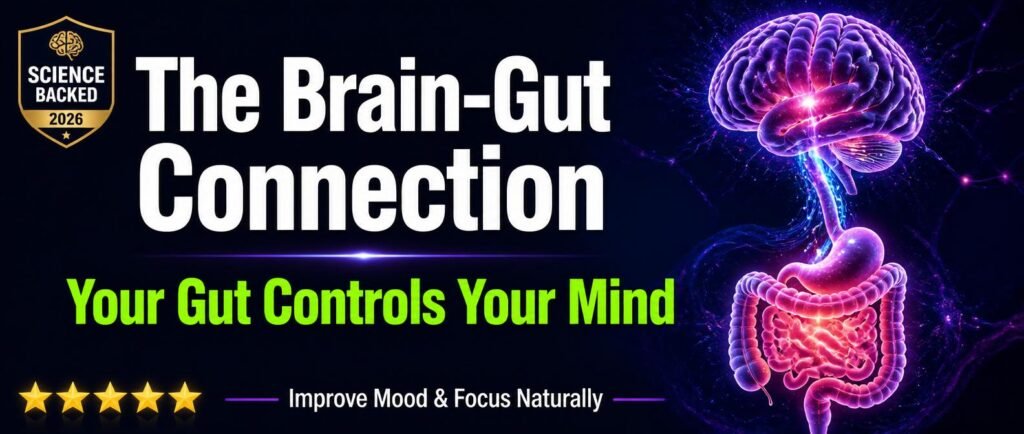
For centuries, Western medicine treated the brain and the body as largely separate systems, with the brain commanding everything from above and the gut simply processing food below. Modern neuroscience has fundamentally overturned this model.
We now know that the gut and brain are in constant, bidirectional communication — each profoundly influencing the other. So sophisticated is the nervous system embedded in the gut that it’s been called the “second brain” by researchers, and the communication highway between them — the vagus nerve and the gut-brain axis — turns out to be one of the most important systems governing our mental health, mood, cognitive function, and stress response.
Your Gut Microbiome: The Overlooked Organ
Your digestive system houses approximately 100 trillion microorganisms — bacteria, viruses, fungi, and other microbes — collectively called the gut microbiome. This ecosystem is so large and metabolically active that it’s increasingly regarded as an organ in its own right.
The composition of your microbiome — which species are present and in what proportions — has profound effects on:
- Neurotransmitter production
- Inflammation levels throughout the body and brain
- Stress response and resilience
- Mood regulation
- Cognitive function and focus
- Risk for depression and anxiety
The gut produces about 90% of the body’s serotonin — the neurotransmitter most associated with mood stability and emotional well-being. Changes in gut microbiome composition directly affect serotonin production and, consequently, mood.
The Vagus Nerve: Your Brain-Gut Highway
The vagus nerve is the longest nerve in the body, running from the brainstem through the heart and lungs down to the digestive tract. It carries signals in both directions: the brain sends information to regulate digestion, and — more surprisingly — the gut sends information to the brain that influences mood, stress response, and even decision-making.
Research shows that approximately 80–90% of the fibers in the vagus nerve carry information from the gut to the brain (not the other way around). This means the gut is constantly reporting to the brain, influencing it far more directly than most people realize.
This is why gut problems and mental health problems so frequently co-occur: irritable bowel syndrome, inflammatory bowel disease, and chronic gut dysbiosis are all strongly associated with elevated rates of anxiety, depression, and cognitive difficulties.
How Diet Affects the Brain Through the Gut
Different foods have dramatically different effects on the gut microbiome, which in turn affects brain function:
Fiber-rich foods feed beneficial gut bacteria that produce short-chain fatty acids (SCFAs) — compounds that reduce neuroinflammation, strengthen the blood-brain barrier, and promote the production of BDNF (a protein that supports neuron growth and survival).
Fermented foods (yogurt, kefir, sauerkraut, kimchi, miso, kombucha) introduce beneficial live bacteria directly into the gut, increasing microbiome diversity and producing beneficial compounds.
Ultra-processed foods high in refined sugar, artificial additives, and low fiber feed inflammatory bacterial species and reduce microbiome diversity — changes associated with increased anxiety, depression, and cognitive decline.
Polyphenol-rich foods (berries, olive oil, green tea, dark chocolate) act as prebiotics, selectively feeding beneficial bacterial species that produce neuroprotective compounds.
Signs Your Gut-Brain Axis May Be Compromised
Many people experience gut-brain dysfunction without recognizing the connection:
- Chronic brain fog that worsens after eating
- Anxiety that flares alongside digestive symptoms
- Depression that doesn’t respond well to conventional treatment
- Difficulty concentrating, especially after meals
- Mood swings linked to blood sugar fluctuations (exacerbated by poor microbiome health)
- Sleep problems (the gut produces melatonin precursors)
Optimizing Your Gut for Better Brain Function
Eat diverse plant foods: Research consistently shows that people who eat 30+ different plant foods per week have significantly more diverse microbiomes than those eating fewer. Diversity of plant foods = diversity of beneficial gut bacteria = better brain support.
Prioritize prebiotic foods: Prebiotics are foods that specifically feed beneficial gut bacteria. Key sources: garlic, onions, leeks, asparagus, bananas, oats, apples, flaxseeds, Jerusalem artichokes.
Include fermented foods daily: Even small amounts (a tablespoon of kimchi, a small yogurt) consumed consistently contribute meaningfully to microbiome health.
Minimize ultra-processed foods: These damage the gut lining (intestinal permeability, or “leaky gut”), allow inflammatory bacterial products to enter the bloodstream, and drive neuroinflammation.
Manage stress actively: Chronic stress profoundly disrupts the gut microbiome. Meditation, yoga, exercise, and time in nature all measurably improve gut health by modulating the stress response.
Sleep sufficiently: The microbiome has its own circadian rhythm. Sleep deprivation disrupts microbiome composition within days, and a disrupted microbiome further worsens sleep quality — a vicious cycle.
The Psychobiotic Future
Research into “psychobiotics” — specific probiotic strains that measurably improve mental health outcomes — is one of the most exciting frontiers in neuroscience. Studies have demonstrated that certain bacterial strains (particularly Lactobacillus and Bifidobacterium species) reduce anxiety, improve stress resilience, and even alleviate mild to moderate depression in double-blind controlled trials.
While this field is still developing, the evidence is strong enough that leading psychiatrists are beginning to incorporate gut-focused dietary interventions into mental health treatment.
Conclusion
The gut-brain connection fundamentally changes how we should think about mental health and cognitive performance. Your brain’s functioning is inseparable from the health of your digestive system and the trillions of microorganisms that inhabit it. By nourishing your gut microbiome with diverse plant foods, fermented foods, and prebiotic fiber — while minimizing ultra-processed foods and chronic stress — you can meaningfully improve your mood, focus, stress resilience, and cognitive clarity from the inside out.