
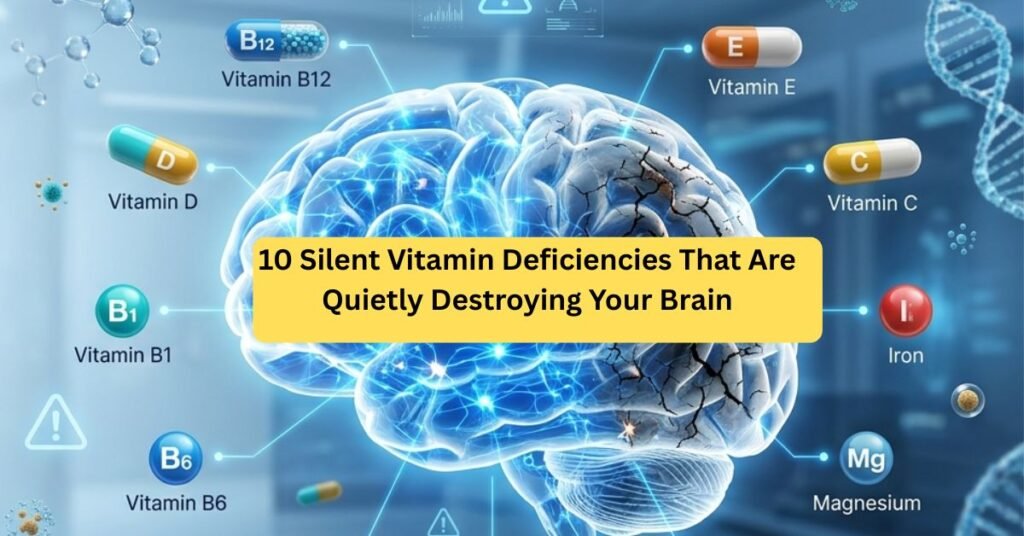
Vitamin Deficiencies can silently damage your brain, memory, and energy. Discover 10 warning signs, common causes, and the best foods to restore optimal brain health.
You’re not lazy.
You’re not “just getting older.”
You’re not losing your edge because life is hard right now.
Something else might be happening — something so quiet, so invisible, that most doctors don’t even test for it until it’s severe.
Why This Actually Matters
Your brain is 2% of your body weight.
But it burns roughly 20% of your daily energy.
It is, by far, the most metabolically expensive organ you own — which means it needs a constant, steady supply of specific micronutrients just to keep the lights on.
No fuel, no spark plugs? The engine still runs. It just runs badly.
That’s the brain fog. That’s the 2pm crash. That’s the “why can’t I remember names anymore” moment that quietly terrifies you.
Deficiency doesn’t announce itself with a siren. It creeps in as fatigue. As irritability. As a memory that used to be sharp.
By the time it’s obvious, it’s often been building for years.
The Science, Simplified
Your brain runs on chemical messengers called neurotransmitters — dopamine, serotonin, GABA, acetylcholine.
Every single one of them is manufactured using vitamins and minerals as raw materials.
No B6? Your body struggles to make serotonin.
No B12? Your nerve cells lose their protective coating.
No magnesium? Your neurons become overexcitable — hello, anxiety and insomnia.
Think of vitamins as the construction crew. Your brain is the building. Skip the crew, and the building doesn’t collapse overnight.
It just slowly, silently, stops being built right.
The 10 Silent Saboteurs
1. Vitamin B12 — The Nerve Insulator
B12 builds the myelin sheath, the fatty insulation around your nerves.
Without it, signals misfire. Memory slips. Some people develop numbness or tingling years before anyone diagnoses the cause.
Ignored symptoms: brain fog, mood swings, pins-and-needles, unexplained fatigue.
2. Vitamin D — The Brain’s Sunlight Switch
Vitamin D receptors exist all over your brain, including in regions tied to mood and memory.
Low vitamin D has been linked in research to low mood and cognitive struggles — especially in people who rarely see the sun.
Ignored symptoms: low motivation, seasonal sadness, sluggish thinking.
3. Thiamine (B1) — The Energy Gatekeeper
B1 is required to convert glucose into usable brain fuel. No B1, no energy — even if you just ate a full meal.
Ignored symptoms: confusion, irritability, poor concentration.
4. Magnesium — The Calm Mineral
Magnesium regulates how excitable your neurons are. Modern soil depletion and processed diets have made deficiency startlingly common.
Ignored symptoms: anxiety, muscle tension, restless sleep, racing thoughts at night.
5. Omega-3 (DHA) — The Brain’s Building Block
Roughly 60% of your brain’s dry weight is fat — and DHA omega-3 is one of its primary structural fats.
Ignored symptoms: mood instability, poor focus, dry skin, difficulty with complex thinking.
6. Iron — The Oxygen Courier
Iron carries oxygen to brain tissue. Low iron means your brain is quietly running on a thinner air supply.
Ignored symptoms: fatigue that sleep doesn’t fix, difficulty concentrating, pale skin.
7. Folate (B9) — The Mood Molecule Maker
Folate is essential for producing serotonin and dopamine. Low folate has repeatedly been linked to depressive symptoms in research.
Ignored symptoms: low mood, forgetfulness, apathy.
8. Vitamin B6 — The Neurotransmitter Assembler
B6 helps convert amino acids into serotonin, dopamine, and GABA — your brain’s calm-and-content chemistry.
Ignored symptoms: irritability, mood swings, poor stress tolerance.
9. Zinc — The Memory Mineral
Zinc plays a key role in how your brain forms and strengthens memories.
Ignored symptoms: poor memory retention, slow wound healing, weakened immunity.
10. Choline — The Forgotten Nutrient
Choline is a precursor to acetylcholine, a neurotransmitter central to learning and memory. Most people don’t even know this nutrient exists — let alone that they’re low in it.
Ignored symptoms: difficulty learning new information, mental fatigue.
Why So Many People Are Deficient (And Don’t Know It)
Here’s the uncomfortable truth.
Modern soil has fewer minerals than it did 70 years ago.
Modern schedules mean less sunlight, more indoor hours, more stress that burns through nutrients faster than we replace them.
Modern diets are calorie-rich and nutrient-poor — you can eat 2,500 calories a day and still be starving at the cellular level.
Add in coffee, alcohol, certain medications, and gut issues that block absorption — and deficiency becomes less of an exception and more of a quiet epidemic.
You’re not broken. You’re under-supplied.
Where to Actually Find These Nutrients
Nature already solved this problem. We just stopped eating the answer.
- B12 → eggs, fish, meat, dairy, fortified nutritional yeast
- Vitamin D → sunlight, fatty fish, egg yolks, fortified foods
- B1 → whole grains, pork, legumes, sunflower seeds
- Magnesium → pumpkin seeds, spinach, almonds, dark chocolate
- Omega-3 → salmon, sardines, walnuts, flaxseed, algae oil
- Iron → red meat, lentils, spinach, pumpkin seeds
- Folate → leafy greens, beans, asparagus, avocado
- B6 → chickpeas, poultry, bananas, potatoes
- Zinc → oysters, beef, pumpkin seeds, cashews
- Choline → eggs (especially yolks), liver, soybeans
A Simple Daily Rhythm to Protect Your Brain
You don’t need a supplement cabinet the size of a pharmacy. You need consistency.
Morning: 10–15 minutes of sunlight + a protein-rich breakfast with eggs or fish.
Midday: A colorful plate — leafy greens, legumes, nuts or seeds.
Afternoon: A handful of pumpkin seeds or walnuts instead of a sugar crash snack.
Evening: Magnesium-rich foods (dark leafy greens, dark chocolate) to support deeper sleep.
Always: Hydration and minimizing excess alcohol — both quietly drain these nutrients.
Small, boring, repeated actions. That’s what rebuilds a brain. Not a miracle pill. Not a 3-day cleanse. Just consistency, meal after meal, day after day.
The Truth Nobody Tells You
Your brain has been asking for help for a while now.
It’s been whispering through the fog, the fatigue, the forgotten names, the nights you couldn’t switch your thoughts off.
You just didn’t know the whisper had a name.
This isn’t about fear. It’s about awareness — because you can’t fix what you don’t know is broken.
If any of these symptoms sounded uncomfortably familiar, don’t self-diagnose and don’t self-treat with high-dose supplements on a guess. Ask your doctor for a simple blood panel. It’s one appointment that could explain years of “off.”
Your brain has been working hard for you your whole life.
Maybe it’s time you fed it properly.
\