
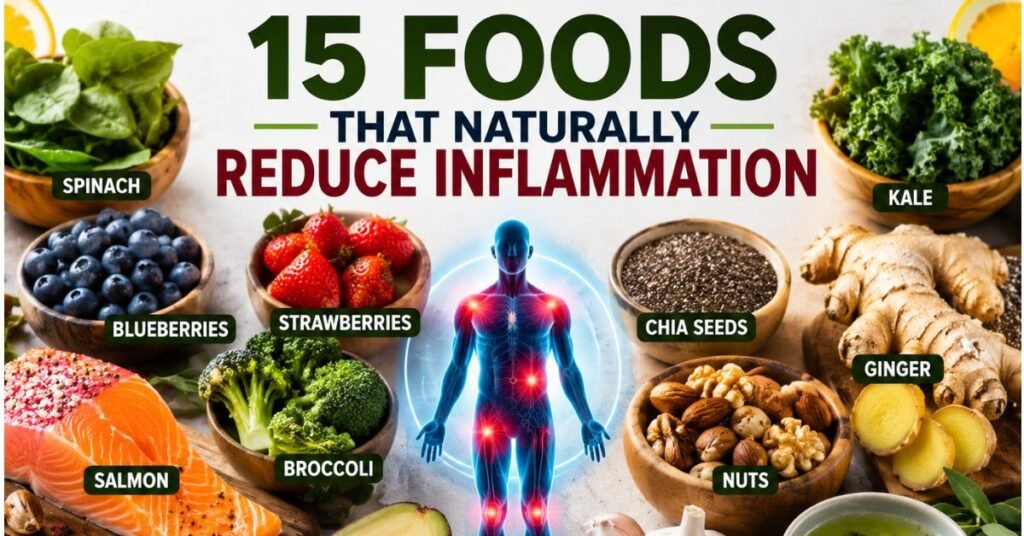
Discover 15 foods that naturally reduce inflammation, backed by science. Learn what to eat, what to avoid, and a simple meal plan to feel better.
If your joints ache more than they used to, or you just feel tired and puffy no matter how much you sleep, inflammation might be part of the story. The good news? What’s on your plate can make a real difference. In this guide, we’ll walk through 15 foods that naturally reduce inflammation, explain the science behind why they work, and give you simple, practical ways to start eating them today.
Chronic inflammation has been linked to some of the most common health problems adults face — heart disease, type 2 diabetes, arthritis, obesity, Alzheimer’s disease, and even certain cancers. The encouraging part is that research consistently points to diet as one of the most powerful tools we have to calm inflammation down, alongside sleep, movement, and stress management.
This article is meant to be educational, not a substitute for medical care. If you’re managing a chronic inflammatory condition, please talk with your doctor or a registered dietitian before making major changes to your diet.
What Is Inflammation, Really?
Inflammation is your immune system’s natural response to injury or infection. Think of a sprained ankle that swells up, or a fever when you catch a cold — that’s your body sending white blood cells and chemicals to protect and repair itself. This is called acute inflammation, and it’s a good thing. It’s short-lived and it heals.
Chronic inflammation is different. It’s a low-grade, long-term immune response that lingers for months or even years, often without obvious symptoms at first. Instead of protecting the body, it can slowly damage tissues, blood vessels, and organs over time.
According to Harvard Health and the National Institutes of Health (NIH), chronic inflammation is now considered a common thread running through many of today’s most serious diseases, including:
- Heart disease and stroke
- Type 2 diabetes
- Rheumatoid arthritis and other autoimmune conditions
- Obesity
- Alzheimer’s disease
- Certain types of cancer
The encouraging news is that diet plays a major role in either fueling or calming this kind of inflammation — and that’s exactly what we’re going to dig into.
What Causes Chronic Inflammation?
Before we get to the foods that help, it’s worth understanding what tends to make inflammation worse. Common contributors include:
- Poor diet — regularly eating foods low in nutrients and high in sugar or unhealthy fats
- Excess sugar — especially from sodas, candy, and baked goods
- Processed and ultra-processed foods — packaged snacks, fast food, and refined ingredients
- Smoking — introduces toxins that trigger ongoing immune activation
- Excess alcohol — can irritate the gut lining and liver
- Obesity — fat tissue, especially around the belly, produces inflammatory compounds
- Chronic stress — keeps stress hormones like cortisol elevated, which affects immune function
- Lack of sleep — poor sleep is associated with higher levels of inflammatory markers
- Physical inactivity — regular movement helps regulate immune and metabolic function
None of these factors act alone. Usually, it’s a combination — say, high stress plus poor sleep plus a diet heavy in processed food — that keeps the body in a low-grade inflammatory state.
How Anti-Inflammatory Foods Work
So how does food actually calm inflammation down? It comes down to a few key components found in whole, minimally processed foods:
- Antioxidants — neutralize unstable molecules called free radicals that can damage cells
- Polyphenols — plant compounds found in berries, tea, and olive oil that have anti-inflammatory effects
- Omega-3 fatty acids — found in fatty fish and walnuts, these help balance inflammatory signals in the body
- Fiber — feeds beneficial gut bacteria and helps regulate blood sugar, both linked to lower inflammation
- Vitamins and minerals — nutrients like vitamin C, vitamin E, magnesium, and zinc support immune regulation
- Gut microbiome support — a healthy gut appears to play a central role in controlling inflammation throughout the body
- Reduced oxidative stress — nutrient-dense foods help lower the cellular “wear and tear” that drives chronic inflammation
Put simply: whole foods give your body the raw materials it needs to keep inflammation in check, while processed foods often do the opposite.
15 Foods That Naturally Reduce Inflammation
Here’s the heart of this guide — a closer look at the foods for inflammation that have the most research behind them, and how to actually work them into your week.
1. Fatty Fish (Salmon, Sardines, Mackerel)
Why it helps: Fatty fish are among the richest natural sources of omega-3 fatty acids, which help lower levels of inflammatory markers in the blood.
Key nutrients: EPA and DHA omega-3s, vitamin D, selenium
The evidence: Organizations like the American Heart Association and Harvard Health point to regular fatty fish intake as one of the most well-supported dietary strategies for reducing inflammation and supporting heart health.
Health benefits: May help lower triglycerides, support brain health, and ease joint stiffness in people with arthritis.
Best ways to eat it: Baked, grilled, or pan-seared with olive oil, lemon, and herbs. Canned sardines or salmon work great in salads too.
Daily/weekly serving: Aim for 2–3 servings (about 3–4 ounces each) per week.
2. Blueberries
Why it helps: Blueberries are packed with anthocyanins, the pigments that give them their deep blue color and strong antioxidant power.
Key nutrients: Vitamin C, vitamin K, manganese, fiber
The evidence: Studies published in nutrition journals have linked regular berry consumption to lower markers of inflammation and improved blood vessel function.
Health benefits: May support heart health, brain function, and healthy blood sugar levels.
Best ways to eat it: Fresh or frozen, tossed into oatmeal, yogurt, or smoothies.
Daily serving suggestion: About 1 cup per day.
3. Strawberries
Why it helps: Strawberries contain high levels of vitamin C and polyphenols, which help reduce oxidative stress.
Key nutrients: Vitamin C, folate, fiber, antioxidants
The evidence: Research suggests strawberries may help lower inflammatory markers associated with heart disease risk.
Health benefits: Supports immune function and cardiovascular health.
Best ways to eat it: Sliced over salads, blended into smoothies, or eaten fresh as a snack.
Daily serving suggestion: About 1 cup (roughly 8 medium strawberries).
4. Leafy Greens (Spinach, Kale)
Why it helps: Leafy greens are loaded with antioxidants and plant compounds that help protect cells from damage.
Key nutrients: Vitamin K, vitamin A, vitamin C, folate, magnesium
The evidence: The Mediterranean diet, widely studied for its anti-inflammatory effects, relies heavily on leafy greens as a daily staple.
Health benefits: May help lower the risk of heart disease and support healthy aging.
Best ways to eat it: Sautéed with garlic and olive oil, added to soups, or blended into smoothies.
Daily serving suggestion: 1–2 cups per day.
5. Broccoli
Why it helps: Broccoli contains sulforaphane, a compound shown to reduce certain inflammatory markers in the body.
Key nutrients: Vitamin C, vitamin K, fiber, sulforaphane
The evidence: Cruciferous vegetables like broccoli are consistently associated with lower inflammation and reduced chronic disease risk in population studies.
Health benefits: Supports detoxification pathways and heart health.
Best ways to eat it: Roasted, steamed lightly (to preserve nutrients), or added to stir-fries.
Daily serving suggestion: About 1 cup, a few times per week.
6. Tomatoes
Why it helps: Tomatoes are rich in lycopene, an antioxidant especially concentrated when tomatoes are cooked.
Key nutrients: Lycopene, vitamin C, potassium
The evidence: Research has linked higher lycopene intake to lower levels of inflammatory markers, particularly in relation to heart health.
Health benefits: May support cardiovascular health and skin protection from oxidative damage.
Best ways to eat it: Cooked into sauces, soups, or roasted with olive oil to boost lycopene absorption.
Daily serving suggestion: 1 medium tomato or ½ cup cooked tomato products daily.
7. Extra Virgin Olive Oil
Why it helps: Extra virgin olive oil contains oleocanthal, a compound that has effects similar to ibuprofen in reducing inflammation.
Key nutrients: Monounsaturated fats, vitamin E, polyphenols
The evidence: As the cornerstone fat of the Mediterranean diet, extra virgin olive oil has strong research support from institutions like Mayo Clinic for reducing inflammation and supporting heart health.
Health benefits: May help lower risk of heart disease and support healthy cholesterol levels.
Best ways to eat it: Drizzled over salads, vegetables, or used for low-to-medium heat cooking.
Daily serving suggestion: About 1–2 tablespoons per day.
8. Avocados
Why it helps: Avocados are rich in monounsaturated fats and carotenoids that help reduce inflammatory activity.
Key nutrients: Healthy fats, fiber, potassium, vitamin E
The evidence: Studies suggest regular avocado consumption may lower certain inflammatory markers linked to metabolic health.
Health benefits: Supports heart health and helps you absorb fat-soluble vitamins from other foods.
Best ways to eat it: Sliced on toast, mashed into guacamole, or added to salads.
Daily serving suggestion: About half an avocado per day.
9. Turmeric
Why it helps: Turmeric contains curcumin, one of the most studied natural anti-inflammatory compounds.
Key nutrients: Curcumin, manganese, iron
The evidence: Multiple clinical studies suggest curcumin can help reduce markers of inflammation, particularly in people with joint pain. Pairing turmeric with black pepper (which contains piperine) significantly improves absorption.
Health benefits: May ease joint discomfort and support overall antioxidant defenses.
Best ways to eat it: Added to curries, soups, golden milk, or scrambled eggs.
Daily serving suggestion: About 1 teaspoon of ground turmeric per day, ideally with black pepper.
10. Ginger
Why it helps: Ginger contains gingerol, a compound with documented anti-inflammatory and antioxidant properties.
Key nutrients: Gingerol, manganese, vitamin C
The evidence: Research has shown ginger may help reduce muscle pain and markers of inflammation, particularly after exercise.
Health benefits: May ease nausea, support digestion, and reduce exercise-related soreness.
Best ways to eat it: Fresh, grated into stir-fries, steeped as tea, or added to smoothies.
Daily serving suggestion: About 1–2 grams of fresh ginger daily.
11. Garlic
Why it helps: Garlic contains allicin, a sulfur compound that appears to help regulate the body’s inflammatory response.
Key nutrients: Allicin, manganese, vitamin B6, vitamin C
The evidence: Population studies link regular garlic consumption to lower inflammatory markers and improved cardiovascular health.
Health benefits: May support immune function and healthy blood pressure.
Best ways to eat it: Crushed or chopped (and left to sit 10 minutes before cooking to activate allicin), added to almost any savory dish.
Daily serving suggestion: 1–2 cloves per day.
12. Walnuts
Why it helps: Walnuts are one of the few nuts especially rich in plant-based omega-3 fatty acids (ALA).
Key nutrients: Omega-3 fatty acids, polyphenols, vitamin E
The evidence: Studies have associated regular walnut consumption with lower inflammatory markers and improved heart health.
Health benefits: Supports brain health, cholesterol levels, and cardiovascular function.
Best ways to eat it: A handful as a snack, added to oatmeal, salads, or yogurt.
Daily serving suggestion: About 1 ounce (roughly a small handful).
13. Almonds
Why it helps: Almonds are rich in vitamin E, a fat-soluble antioxidant that helps protect cells from inflammatory damage.
Key nutrients: Vitamin E, magnesium, healthy fats, fiber
The evidence: Research suggests regular almond consumption may help lower certain inflammatory markers, particularly in people with metabolic risk factors.
Health benefits: Supports heart health and healthy blood sugar regulation.
Best ways to eat it: As a snack, sliced over salads, or as almond butter.
Daily serving suggestion: About 1 ounce (approximately 23 almonds).
14. Green Tea
Why it helps: Green tea is rich in catechins, particularly EGCG, a powerful antioxidant linked to reduced inflammation.
Key nutrients: Catechins, small amounts of caffeine, manganese
The evidence: Studies suggest regular green tea drinkers may have lower levels of inflammatory markers and reduced risk of certain chronic diseases.
Health benefits: May support metabolism, brain health, and cardiovascular function.
Best ways to eat it: Brewed hot or cold, unsweetened.
Daily serving suggestion: 2–3 cups per day.
15. Dark Chocolate (70%+ Cocoa)
Why it helps: Dark chocolate with high cocoa content contains flavanols, plant compounds with notable antioxidant and anti-inflammatory activity.
Key nutrients: Flavanols, magnesium, iron, fiber
The evidence: Research has associated moderate dark chocolate consumption with reduced inflammatory markers and improved blood vessel function — though portion control matters, since chocolate is also calorie-dense.
Health benefits: May support heart health and mood.
Best ways to eat it: A small square after a meal, or shaved over fruit.
Daily serving suggestion: About 1 ounce (roughly 1–2 squares) of dark chocolate with at least 70% cocoa.
Foods That Increase Inflammation (Limit These)
Just as important as what you add is what you cut back on. These foods have been consistently linked to higher inflammation:
- Sugary drinks — sodas and sweetened juices cause rapid blood sugar spikes
- Refined carbohydrates — white bread, white rice, and pastries lack the fiber that helps control inflammation
- Processed meats — bacon, sausage, and deli meats are linked to higher inflammatory markers
- Deep-fried foods — often cooked in oils that oxidize at high heat
- Trans fats — found in some margarines and packaged baked goods; widely considered one of the most inflammatory fats
- Excess alcohol — can irritate the gut and liver over time
- Ultra-processed snacks — chips, packaged cookies, and similar foods tend to be low in nutrients and high in additives
You don’t need to eliminate these completely. The goal is balance — enjoying them occasionally while making whole foods the foundation of your diet.
Sample One-Day Anti-Inflammatory Meal Plan
Here’s a simple example of how these foods for joint pain and inflammation might fit into a real day:
- Breakfast: Greek yogurt with blueberries, walnuts, and a drizzle of honey
- Snack: A handful of almonds and an apple
- Lunch: Grilled salmon salad with spinach, tomatoes, avocado, and an olive oil vinaigrette
- Snack: Green tea with a small square of dark chocolate
- Dinner: Turmeric-ginger chicken or tofu stir-fry with broccoli and garlic over brown rice
- Dessert: Fresh strawberries with a dollop of Greek yogurt
Lifestyle Tips to Reduce Inflammation Naturally
Diet is powerful, but it works best alongside these habits:
- Exercise regularly — aim for at least 150 minutes of moderate activity per week
- Prioritize sleep — most adults need 7–9 hours per night
- Manage stress — try meditation, deep breathing, or time outdoors
- Stay hydrated — water supports every cell process, including inflammation control
- Maintain a healthy weight — reducing excess body fat, especially around the abdomen, lowers inflammatory load
- Quit smoking — one of the most impactful changes for lowering chronic inflammation
- Limit alcohol — stick to moderate intake or less, per current health guidelines
Frequently Asked Questions
What foods reduce inflammation the fastest?
Fatty fish, leafy greens, berries, turmeric, and ginger tend to have the most immediate research-backed anti-inflammatory effects, though “fast” results vary by person and usually take weeks of consistent eating.
Which fruit is best for inflammation?
Blueberries are often considered the top choice due to their high antioxidant content, but strawberries, cherries, and pomegranates are also excellent options.
Are eggs inflammatory?
For most people, eggs are not inflammatory when eaten in moderation. They’re a good source of protein and nutrients, though people with specific egg sensitivities may respond differently.
Does coffee increase inflammation?
Moderate coffee consumption (about 3–4 cups per day) has actually been linked to lower inflammatory markers in many studies, thanks to its antioxidant content. Adding excess sugar or cream can offset these benefits.
Is oatmeal anti-inflammatory?
Yes. Oats contain beta-glucan fiber, which supports gut health and has been associated with reduced inflammatory markers.
Is banana good for inflammation?
Bananas contain antioxidants and fiber that offer mild anti-inflammatory benefits, though they’re not as potent as berries in research studies.
Can turmeric reduce inflammation?
Yes, turmeric’s active compound curcumin is one of the most researched natural anti-inflammatory agents, particularly for joint discomfort. Absorption improves significantly when paired with black pepper.
How long does an anti-inflammatory diet take to work?
Many people notice improvements in energy and digestion within a few weeks, while markers of inflammation and joint comfort may take a few months of consistent eating to shift meaningfully.
Conclusion
Chronic inflammation doesn’t happen overnight, and it won’t disappear overnight either — but the foods you choose day after day genuinely matter. By gradually adding more of these 15 foods that naturally reduce inflammation into your meals, and cutting back on the processed foods and added sugars that fuel it, you’re giving your body real tools to protect itself over the long run.
Start small. Swap soda for green tea. Add a handful of walnuts to your morning yogurt. Cook with olive oil instead of butter a few nights a week. These small, consistent choices add up to meaningful changes over time.
Remember, diet is a powerful piece of the puzzle, but it isn’t a replacement for medical care. If you’re living with a chronic inflammatory condition like arthritis, heart disease, or an autoimmune disorder, talk with your doctor or a registered dietitian to build a plan that works safely for you.