
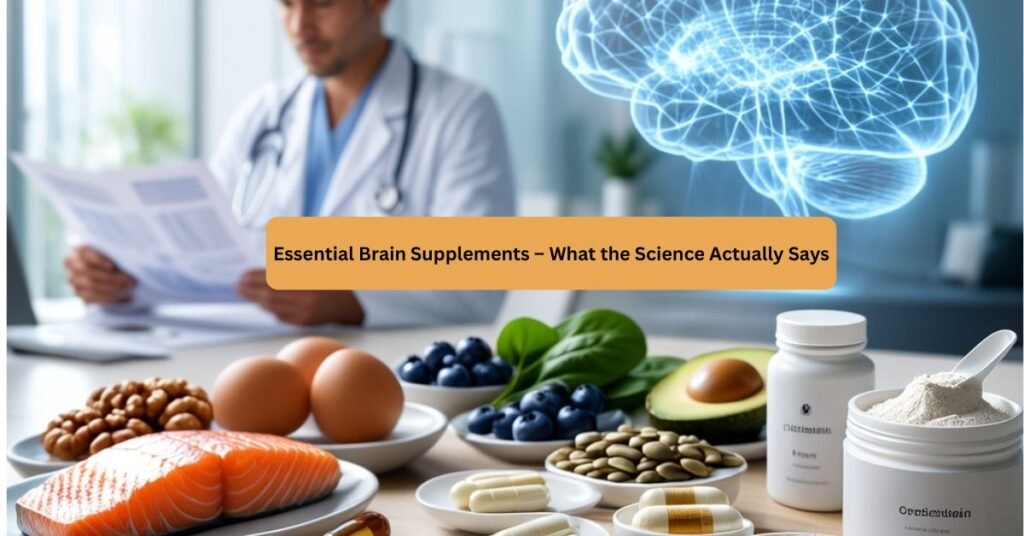
Learn what research says about essential brain supplements, including their benefits, safety, and effectiveness for memory, focus, and overall cognitive health.
The brain supplement market is worth billions of dollars and is filled with extraordinary claims, dubious products, and confusing terminology. Separating evidence-based supplementation from marketing hype is essential for making smart decisions about what — if anything — to add to your regimen.
This guide evaluates the most widely discussed brain supplements using the lens of actual scientific research, distinguishing between strong evidence, promising evidence, and insufficient evidence.
Supplement 1: Omega-3 Fatty Acids (EPA and DHA) — STRONG EVIDENCE
Omega-3 supplementation has more high-quality research support for brain health than any other supplement. The brain is approximately 60% fat, and DHA is the primary structural fatty acid in neurons.
Evidence: Meta-analyses consistently show that EPA supplementation (particularly at doses of 1–2g daily) significantly reduces symptoms of depression. DHA is associated with better memory, slower cognitive decline, and reduced dementia risk. Omega-3 supplementation during pregnancy significantly benefits fetal brain development.
Who benefits most: Anyone not regularly consuming fatty fish (2–3 servings per week). Those with depression or anxiety. Pregnant and breastfeeding women. Older adults concerned about cognitive aging.
Recommended form: Fish oil (for EPA/DHA) or algae oil (vegan DHA source). Look for products tested for purity and heavy metal contamination by a third party.
Typical dose: 1–3g EPA+DHA combined daily. Higher EPA ratios (EPA:DHA >2:1) may be better for mood; balanced ratios for general brain health.
Supplement 2: Vitamin D — STRONG EVIDENCE
Vitamin D functions more like a hormone than a vitamin, binding to receptors throughout the brain and influencing hundreds of genes involved in mood, immune function, and neuroprotection.
Evidence: Deficiency (extremely common — estimated 40–50% of populations in northern latitudes) is strongly associated with depression, seasonal affective disorder, cognitive decline, and increased dementia risk. Supplementation in deficient individuals meaningfully improves mood, reduces risk of seasonal depression, and may slow cognitive aging.
Testing: A blood test (25-hydroxyvitamin D) is the only way to know your status. Aim for levels between 40–60 ng/mL.
Recommended form: D3 (cholecalciferol) combined with K2 (to ensure calcium is directed to bones rather than arteries). Take with fat for better absorption.
Typical dose: 1,000–5,000 IU daily depending on your tested level and sun exposure.
Supplement 3: Magnesium — STRONG EVIDENCE
Magnesium is involved in over 300 enzymatic reactions in the body, including many critical to brain function. Modern diets are widely deficient: processing strips magnesium from food, and depleted soils mean even whole foods contain less than they once did.
Evidence: Magnesium deficiency is directly associated with anxiety, depression, poor sleep quality, and cognitive impairment. Supplementation studies show improvements in anxiety, sleep quality, and may reduce the frequency of migraines.
Recommended forms: Magnesium glycinate (best for anxiety and sleep), magnesium L-threonate (specifically studied for brain penetration and cognitive effects), magnesium malate (for energy). Avoid magnesium oxide — poor absorption.
Typical dose: 200–400mg elemental magnesium daily, preferably in the evening as it promotes sleep quality.
Supplement 4: Lion’s Mane Mushroom — PROMISING EVIDENCE
Lion’s mane (Hericium erinaceus) is a medicinal mushroom containing compounds (hericenones and erinacines) that stimulate the production of Nerve Growth Factor (NGF) — a protein critical for the survival and growth of neurons.
Evidence: Animal studies show impressive neurogenesis and cognitive effects. Human trials are more limited but show improvements in mild cognitive impairment, anxiety, depression, and focus.
Bottom line: The mechanism of action is well-understood and the early human evidence is promising, though large-scale clinical trials are lacking. Low risk, potentially significant benefit — a reasonable choice for those interested in cognitive support.
Recommended form: Products standardized for hericenone and erinacine content; fruiting body preferred over mycelium.
Supplement 5: Bacopa Monnieri — PROMISING EVIDENCE
Bacopa is an Ayurvedic herb with a long history of use for cognitive enhancement and anxiety reduction. Its active compounds (bacosides) have antioxidant effects in the brain and appear to enhance dendritic branching — the physical connections between neurons that underlie learning and memory.
Evidence: Multiple randomized controlled trials show improved memory recall, better learning rate, and reduced anxiety. Effects typically take 8–12 weeks to fully emerge.
Recommended dose: 300–600mg standardized extract (45% bacosides) daily with food.
Supplements with Insufficient Evidence
Ginkgo biloba: Long popular for memory, but high-quality meta-analyses show limited benefit in healthy adults and no meaningful dementia prevention.
Phosphatidylserine: Important brain compound, but evidence for supplementation benefits is weak in recent reviews.
Nootropic blends: Most commercial “nootropic” formulas contain ingredient combinations at doses too low to be effective, with limited evidence.
Frequently Asked Questions (FAQs)
1. What are essential brain supplements?
Essential brain supplements are vitamins, minerals, and other nutrients that may support memory, focus, and overall cognitive function. Some have stronger scientific evidence than others, especially when used to correct nutrient deficiencies.
2. Which brain supplements have the strongest scientific evidence?
Among the most researched are:
- Omega-3 fatty acids (EPA and DHA)
- Vitamin B12
- Vitamin D (for people with low levels)
- Magnesium
- Creatine
- Citicoline
- Phosphatidylserine
The effectiveness of these supplements depends on factors such as age, diet, and existing nutrient deficiencies.
3. Can brain supplements improve memory?
Some supplements may help support memory, particularly in people with nutrient deficiencies or certain age-related cognitive changes. However, no supplement can guarantee dramatic memory improvement in healthy individuals.
4. Are brain supplements safe?
Most are safe when taken at recommended doses, but excessive intake can cause side effects or interact with medications. Always consult a healthcare professional before starting a new supplement.
5. Do healthy adults need brain supplements?
Not necessarily. Many healthy adults can get the nutrients their brains need through a balanced diet rich in fish, vegetables, fruits, nuts, seeds, and whole grains.
6. What foods naturally support brain health?
Excellent brain-supporting foods include:
- Fatty fish
- Blueberries
- Walnuts
- Eggs
- Leafy greens
- Pumpkin seeds
- Olive oil
- Avocados
These foods provide nutrients linked to healthy brain function.
7. How long does it take for brain supplements to work?
It depends on the supplement and the individual. Some people notice changes within a few weeks, while others may require several months. Supplements that correct deficiencies often produce the most noticeable benefits.
8. Can brain supplements prevent dementia or Alzheimer’s disease?
Current research does not support using supplements alone to prevent dementia or Alzheimer’s disease. Maintaining a healthy diet, exercising regularly, sleeping well, and managing blood pressure and diabetes have stronger evidence for supporting long-term brain health.
9. Are “brain booster” supplements worth buying?
Be cautious of products that promise instant memory improvement or dramatic cognitive enhancement. Choose supplements backed by scientific research and avoid products with exaggerated marketing claims.
10. Can I take multiple brain supplements together?
Some combinations are appropriate, but taking multiple supplements may increase the risk of excessive nutrient intake or interactions. A healthcare provider or registered dietitian can help determine what’s appropriate for your needs.
11. What lifestyle habits support brain health besides supplements?
The strongest evidence supports:
- Regular physical exercise
- Quality sleep
- A Mediterranean-style diet
- Stress management
- Lifelong learning
- Social engagement
- Avoiding smoking and limiting alcohol
These habits often have a greater impact on cognitive health than supplements alone.
12. Who should talk to a doctor before taking brain supplements?
You should seek medical advice if you are pregnant, breastfeeding, have chronic medical conditions, take prescription medications, or have concerns about memory loss or cognitive decline. A healthcare professional can help identify underlying causes and recommend appropriate treatment.
Conclusion
Evidence-based supplementation for brain health centers on correcting genuine nutritional deficiencies (omega-3s, vitamin D, magnesium) that are common in modern populations and meaningfully impact cognitive function and mood. Beyond these, several promising compounds (lion’s mane, bacopa) have sufficient evidence and safety profiles to be worth considering. Always prioritize whole food nutrition first — supplements support but cannot replace a diet rich in brain-nourishing whole foods.