
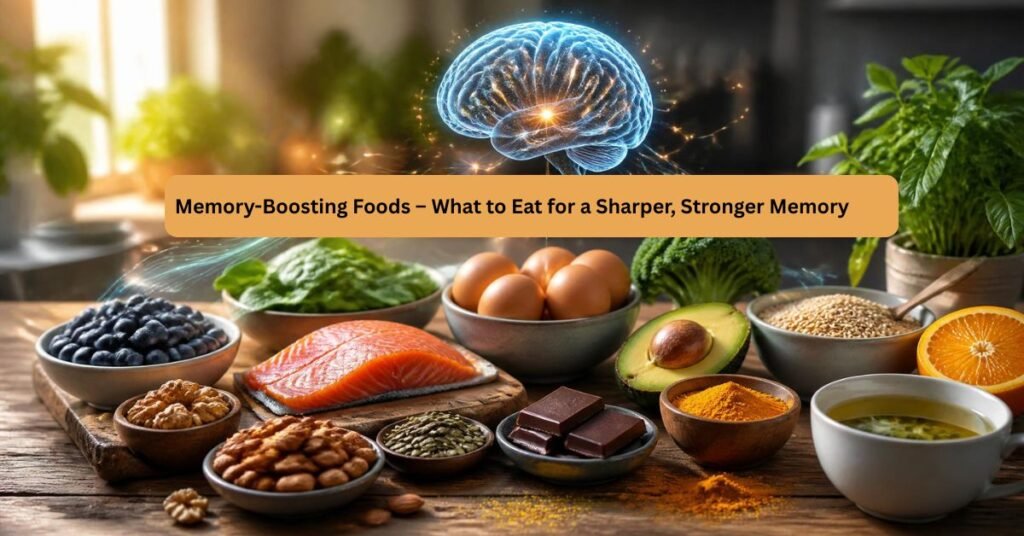
Discover the best memory-boosting foods that support brain health, improve focus, and enhance cognitive function naturally for a sharper, stronger mind.
Memory problems are not inevitable with aging. While some cognitive changes are normal as we get older, significant memory decline is influenced by lifestyle factors — particularly diet — in ways that give us substantial control over our cognitive trajectory.
Research in nutritional neuroscience has identified specific foods and nutrients that support the biological mechanisms underlying memory formation, consolidation, and retrieval. Here’s what you should be eating if a stronger memory is a priority.
The Biology of Memory: What Food Affects
Memory involves complex brain processes that food can influence at several levels:
The hippocampus — the brain’s primary memory-forming structure — is one of the few brain regions that continues generating new neurons throughout life (neurogenesis). Certain foods promote neurogenesis; others suppress it.
: Learning and memory formation require changes in the strength of synaptic connections between neurons (long-term potentiation). Specific nutrients support this plasticity; inflammation and oxidative stress inhibit it.
Neurons need a constant supply of oxygen and glucose. Foods that support cardiovascular health and blood flow directly benefit brain function, including memory.
Neuroinflammation is one of the primary mechanisms through which poor diet impairs memory. Anti-inflammatory eating patterns measurably preserve memory function.
Acetylcholine is the primary neurotransmitter for memory function. Its production depends entirely on dietary choline.
The MIND Diet: Designed for Brain Protection
The MIND diet (Mediterranean-DASH Intervention for Neurodegenerative Delay) was specifically developed by researchers at Rush University to protect against Alzheimer’s disease and cognitive decline. In studies, following the MIND diet closely was associated with significantly reduced Alzheimer’s risk and cognitive aging equivalent to being 7.5 years younger.
MIND diet brain-protective food groups:
- Green leafy vegetables (6+ servings per week)
- Other vegetables (1+ per day)
- Berries (2+ servings per week)
- Nuts (5+ servings per week)
- Olive oil as primary cooking fat
- Whole grains (3+ servings per day)
- Fish (1+ serving per week)
- Beans (4+ meals per week)
- Poultry (2+ servings per week)
- Wine (1 glass per day — optional)
Foods the MIND diet limits:
- Red meat (fewer than 4 servings per week)
- Butter and margarine (less than 1 tablespoon per day)
- Cheese (less than 1 serving per week)
- Pastries and sweets (fewer than 5 per week)
- Fried or fast food (less than 1 serving per week)
Top Memory Foods in Detail
Blueberries: Anthocyanins in blueberries accumulate in the hippocampus and directly improve memory in older adults. Studies show that daily blueberry consumption reverses some aspects of age-related memory decline after just 12 weeks.
Leafy greens: A 2018 study following 960 older adults found that those who ate one to two servings of leafy greens daily had memory performance equivalent to people 11 years younger than those who rarely ate greens.
Fatty fish: DHA is a primary structural component of hippocampal cell membranes. Higher blood omega-3 levels are consistently associated with larger hippocampal volume and better memory performance across all age groups.
Eggs: Choline from eggs is the direct precursor to acetylcholine — the neurotransmitter most essential for memory encoding and retrieval. Studies link adequate choline intake with better memory, particularly in aging adults.
Turmeric: Curcumin crosses the blood-brain barrier, reduces amyloid plaques, and directly increases BDNF — the growth factor that maintains hippocampal function. A 2018 UCLA study found that curcumin supplementation over 18 months improved memory by 28% in older adults with mild memory complaints.
Extra virgin olive oil: Oleocanthal in olive oil reduces amyloid and tau protein accumulation — the two hallmarks of Alzheimer’s disease. Long-term olive oil consumption is one of the strongest dietary predictors of preserved cognitive function.
Nuts: Regular nut consumption is associated with better memory, faster processing speed, and larger brain volume in aging. Walnuts, in particular, are rich in DHA, polyphenols, and vitamin E — all critical for hippocampal health.
Memory-Harming Foods to Minimize
Trans fats: Directly impair memory, reduce hippocampal volume, and increase Alzheimer’s risk. Found in processed baked goods and some fast foods.
Refined sugar: Excess sugar impairs the insulin signaling that hippocampal neurons depend on for glucose uptake. Research links high sugar diets with significantly worse memory performance.
Excessive alcohol: Damages hippocampal neurons and impairs memory consolidation. Moderate to heavy drinking accelerates hippocampal atrophy.
Ultra-processed foods: Associated with 2.5 times higher risk of dementia in a major 2022 study of 72,000 adults followed for 10 years.
Conclusion
Memory is not fixed. It is a biological capacity that responds dynamically to how we care for the brain that enables it. By adopting the eating patterns supported by the best nutritional science — the MIND diet framework, rich in leafy greens, berries, fatty fish, olive oil, nuts, and eggs — you can meaningfully protect and even improve your memory at any age. The hippocampus is remarkable in its plasticity; give it the nutritional support it needs and it will reward you with a sharper, more reliable memory well into old age.