
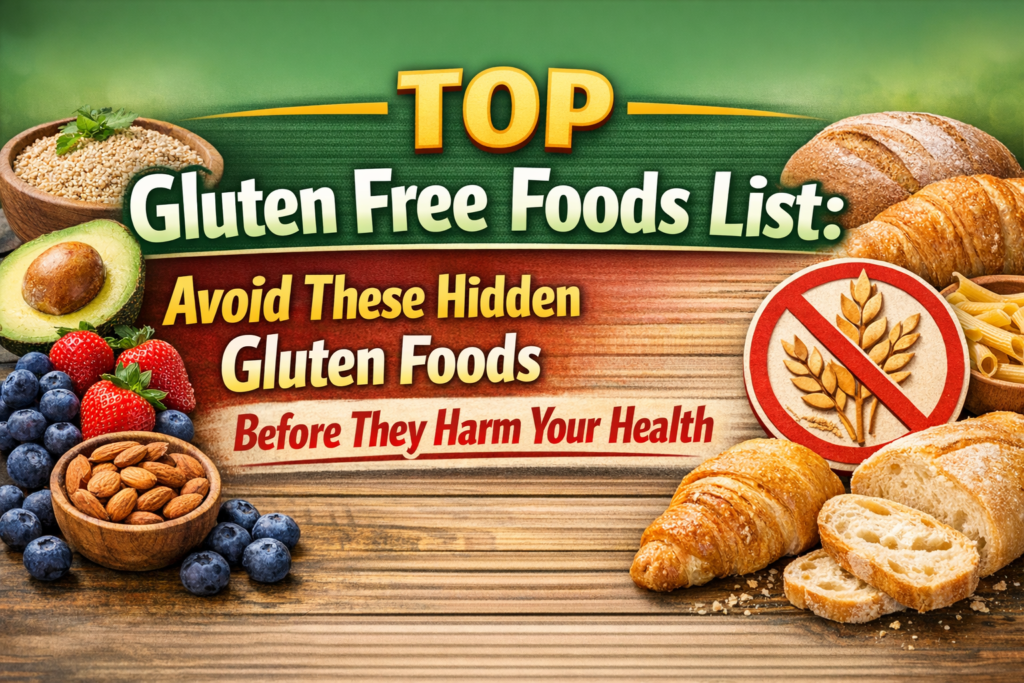
The TOP Gluten Free Foods List including what to eat and what to avoid. Learn the best gluten-free fruits, vegetables, grains, snacks, and hidden foods that contain gluten.
Going gluten-free can feel overwhelming at first — especially when gluten hides in many everyday foods you wouldn’t expect. Whether you have celiac disease, gluten sensitivity, or simply want to improve your digestion and energy levels, understanding which foods are safe is essential.
In this complete guide to the TOP Gluten Free Foods List, you’ll discover the best naturally gluten-free foods you can enjoy daily, along with the most common foods you should avoid. From healthy fruits and vegetables to safe grains, proteins, snacks, and hidden sources of gluten, this article will help you build a simple and stress-free gluten-free lifestyle.
If you’ve ever wondered “What can I actually eat on a gluten-free diet?” — this guide has everything you need to get started confidently.
So, what exactly is gluten? Simply put, it’s a group of proteins found naturally in certain grains. For some folks, eating gluten can cause a range of uncomfortable symptoms and health issues, making a gluten-free lifestyle essential. But here’s the thing: avoiding it completely can feel like a real detective mission at first!
The main grains that contain gluten are wheat, rye, and barley. You’ll also find it in ingredients like brewer’s yeast, malt, and triticale (which is a mix of rye and wheat). And a quick heads-up about oats: unless they’re specifically labeled “gluten-free,” they’ve likely been cross-contaminated with wheat during growing or processing.
Wheat in All Its Forms
Wheat is a big one, and it comes in many varieties you might not immediately recognize as wheat. Even different types like durum, einkorn, emmer, kamut, and spelt all contain gluten. So, if you see these listed, know they’re off-limits for a gluten-free diet.
Wheat-Based Flours
Just like whole wheat, various flours are derived from wheat and are therefore not gluten-free. If you spot terms like enriched flour, farina, graham flour, self-rising flour, or semolina on an ingredient list, understand that these are wheat-based.
Bread and Baked Goods
This is a huge category where gluten is almost always present. Most breads—think your everyday rolls, buns, bagels, biscuits, and even flour tortillas—are packed with gluten. Unless a product is clearly marked “gluten-free,” assume it contains wheat. The same goes for delicious treats like cake, cookies, doughnuts, muffins, pies, pancakes, and waffles; these are typically made with wheat flour.
Pasta
Get ready for this one: virtually all traditional wheat pasta contains gluten. This includes your favorites like spaghetti, fettuccine, macaroni, lasagna, and ravioli. If it’s standard pasta, it has gluten.
Cereal
While not all breakfast cereals contain wheat, many do. It’s crucial to check those nutrition labels carefully. Also, be aware that even oats often get processed or grown near wheat, so unless they are specifically labeled “gluten-free oats,” they might contain gluten due to cross-contamination.
Snack Time Staples
Many popular snack foods are sneaky sources of gluten. Crackers, pretzels, and certain types of chips are common culprits. Always check the packaging before you munch!
Beverages
Your favorite beer is made from malted barley, which naturally contains gluten. Some liquors can also have added wheat, so if you’re avoiding gluten, it’s always smart to do a little research on the ingredients of your preferred spirits.
Sauces and Soups
Gluten often acts as a thickening agent in liquid foods. Gravies and many ready-made meals containing gravy are likely to have gluten. The same often applies to powdered gravy mixes unless they’re explicitly labeled “gluten-free.” Similarly, many canned and boxed soups use wheat flour for thickening, so always peek at the ingredient list to make sure.
Feeling a bit overwhelmed? Don’t be! The fantastic news is that a healthy and delicious gluten-free diet is totally achievable. Many foods are naturally gluten-free, and the market for gluten-free products has absolutely exploded!
Naturally Gluten-Free Powerhouses
The good news is that a truly fantastic and healthy plate can be built with an abundance of foods that are naturally gluten-free. These aren’t special, expensive substitutes; they’re the delicious, wholesome staples that have been a part of healthy diets for ages. You can freely enjoy:
Fresh fruits and vegetables: From vibrant berries and crisp apples to leafy greens and colorful bell peppers, all fruits and vegetables are naturally gluten-free. Load up on these for vitamins, minerals, and fiber!
Unprocessed meats and fish: Think fresh chicken breast, lean beef, salmon, or cod. These protein powerhouses are naturally free of gluten and form a fantastic base for any meal.
Fresh fruits and vegetables: From vibrant berries and crisp apples to leafy greens and colorful bell peppers, all fruits and vegetables are naturally gluten-free. Load up on these for vitamins, minerals, and fiber!
Nuts:
Almonds, walnuts, cashews, pecans – all varieties of plain, unsalted nuts are excellent gluten-free snack options, packed with healthy fats and protein.
Beans and legumes:
Lentils, chickpeas, black beans, kidney beans – these versatile pantry staples are not only naturally gluten-free but also incredibly rich in fiber and plant-based protein.
Grains like rice and corn:
While wheat is out, grains like rice (white, brown, wild) and corn (including cornmeal and popcorn) are perfectly safe and offer valuable carbohydrates for energy.
Most cheese and dairy products
Plain milk, yogurt, and the vast majority of cheeses are naturally gluten-free. Just be mindful of flavored varieties or processed cheese products that might have added ingredients containing gluten.
Eggs:
A true superfood! Eggs are naturally gluten-free, versatile, and an excellent source of protein, making them perfect for any meal of the day.
going gluten-free doesn’t mean ditching all grains! Many grains are naturally gluten-free and are nutritional powerhouses. They provide essential carbohydrates for energy, vital fiber for digestion, and a host of vitamins and minerals. In fact, incorporating a variety of these whole grains can significantly boost your overall health.
Some fantastic gluten-free grain options to add to your plate include:
Buckwheat:
buckwheat isn’t related to wheat at all. It’s a highly nutritious pseudo-cereal, great for pancakes, porridges, or even as a rice alternative.
Sorghum:
This ancient grain is incredibly versatile. You can enjoy it as a whole grain, use its flour for baking, or even pop it like popcorn! It’s rich in antioxidants and fiber.
Corn:
A staple for a reason! Corn, and all its delicious forms like popcorn and cornmeal, is naturally gluten-free. Just remember to choose plain corn products to avoid hidden gluten.
Millet:
A small, round grain, millet is a good source of protein and fiber. It has a mild flavor and can be cooked into a fluffy side dish or a creamy porridge.
Quinoa:
Often called a “superfood,” quinoa is a complete protein, meaning it contains all nine essential amino acids. It cooks quickly and is perfect in salads, as a side dish, or in soups.
Gluten-free oats
While regular oats can be cross-contaminated with wheat during processing, certified gluten-free oats are processed separately, making them safe to enjoy in oatmeal, granola, or baked goods.
Teff:
This tiny ancient grain, originating from Ethiopia, is packed with iron and calcium. It has a slightly sweet, malty flavor and is often used to make injera bread or added to porridges and stews.
Rice:
From fluffy white rice to nutty brown rice and aromatic basmati, rice in all its varieties is naturally gluten-free and a versatile staple in kitchens worldwide.
Smart Gluten-Free Swaps
Making easy substitutions can transform your meals. Here are some simple swaps:
Trade flour tortillas for corn tortillas.
For dessert, enjoy fresh fruit or a light gelatin with whipped cream.
Instead of traditional pasta, try zucchini noodles with your favorite sauce, or simply swap in rice.
Dip raw veggies instead of crackers.
Use cornstarch for thickening instead of wheat flour.
Look for gluten-free soups.
Switch to tamari instead of regular soy sauce (which contains wheat).
For baking, explore flours like almond, tapioca, rice, or corn instead of wheat flour.
The world of gluten-free products has grown incredibly. You can now find gluten-free breads, pastas, baked goods, and more made from safe ingredients. But you’ll still need to put in a little extra effort, especially when you’re just starting out. Here’s what to look for:
Always read the ingredient label carefully. Even if a food is labeled “gluten-free,” the FDA allows it to contain a very tiny amount of gluten (under 20 parts per million).
“Wheat-Free” Isn’t “Gluten-Free”: This is super important! A product can be “wheat-free” but still contain other gluten culprits like rye or barley. These aren’t always highlighted as “major” allergens, so you have to look closely.
There are fantastic phone apps that scan barcodes and instantly tell you if a food is gluten-safe. If you’re new to this, download a couple – they’re a lifesaver!
Keep an eye out for labels like “made on shared equipment” or “may contain wheat or gluten.” This means there’s a chance a tiny bit of gluten could have found its way into the product.
Gluten can be a master of disguise! Check labels on all packaged and processed foods. You might be surprised to find it in dressings, sauces, gravies, and even some candies. For example, both soy sauce and licorice often contain wheat.
Remember those different types of wheat we talked about earlier? Durum, einkorn, emmer, kamut, spelt, farina, graham flour, and semolina – all of them contain gluten.
If a product label seems contradictory (like it says “gluten-free” but lists wheat as an ingredient), it’s always safest to simply choose something else.
while gluten-free options are wonderful, many specially processed gluten-free foods (like bakery items) can be high in fat, sugar, salt, and refined carbohydrates. They can also be quite a bit more expensive. So, like with any diet, focus on naturally gluten-free whole foods as much as possible for the most health benefits!
mangeging the world of gluten might seem complex at first, but with a little knowledge and practice, you’ll be a pro in no time. By understanding what to look for and exploring the amazing range of naturally gluten-free foods, you can truly thrive. If you have any questions about going gluten-free, drop them in the comments below! And don’t forget to like this video and subscribe to Health Protocol for more tips to empower your well-being. We’ll see you next time!