
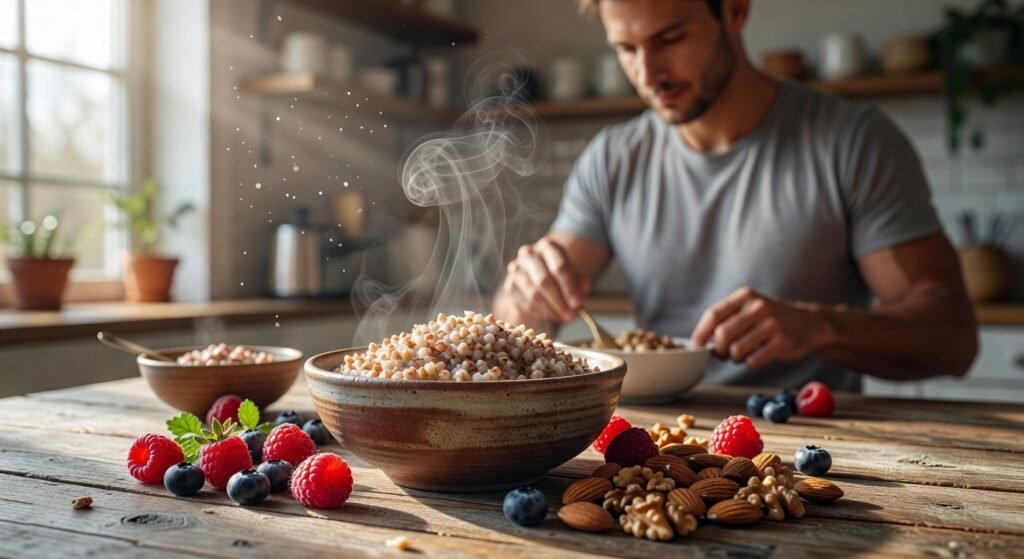
Discover the top 10 foods that fix low energy naturally and improve stamina, focus, and physical performance. Learn how nutrient-rich foods like buckwheat, mango, grapes, beans, and watercress can boost energy without caffeine or crashes.
Why Most “Energy Advice” Completely Misses the Point
Before we get into the foods, we need to talk about why the conventional energy advice keeps failing people.
“Drink more coffee.” “Try an energy drink.” “Eat less carbs.” “Eat more carbs.” “Take a B12 supplement.” “Just sleep more.”
The problem with almost all of this advice is that it’s treating energy as a single-variable equation when it’s actually a complex biological system. Your energy levels at any given moment are the result of blood sugar regulation, mitochondrial function, cellular hydration, nutrient availability, hormonal signaling, gut health, and circulation — all working together, or failing to work together.
https://amzn.to/4dAv8Cd
Caffeine temporarily blocks adenosine receptors and makes you feel less tired. It does not actually give you energy. It borrows against tomorrow’s reserves and charges compound interest.
Real, sustained energy — the kind that gets you through a demanding workout and a demanding workday and still leaves something in the tank for the evening — comes from giving your body the specific nutrients it uses to produce and sustain energy at the cellular level.
And some of the most powerful sources of those nutrients are foods you’ve probably walked past in the grocery store a hundred times without giving a second glance.
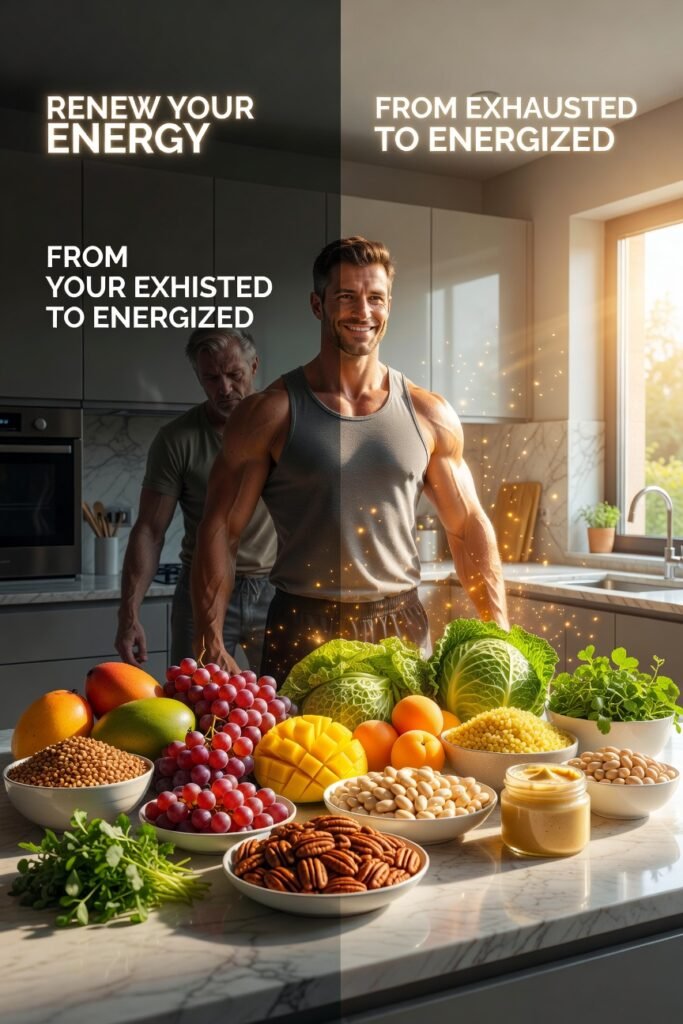
The 10 Foods That Fix Low Energy and Weak Performance
1.Buckwheat — The Underground Energy Powerhouse
Despite its name, buckwheat has nothing to do with wheat. It’s not even a grain. It’s a seed — technically a pseudo-cereal — and it is one of the most criminally underrated energy foods in existence.
What makes buckwheat extraordinary for sustained energy is its nutritional architecture. It contains a compound called D-chiro-inositol, which plays a significant role in blood sugar regulation — helping your body use insulin more effectively and preventing the glucose swings that cause energy crashes. It’s also rich in rutin, a bioflavonoid that strengthens blood vessels and improves circulation, and it provides a complete amino acid profile that supports muscle function and recovery.
The practical result is stable, enduring energy — not the sharp spike of sugar or caffeine, but the consistent, reliable output that lets you sustain performance through a long workout, a long meeting, or a long day.
Use it as a hot porridge in the morning, cook it like rice and serve it alongside dinner, or buy it as buckwheat flour and bake with it. Whichever way you eat it, your energy levels will notice the difference.
Mango — Fast, Clean Fuel Without the Crash
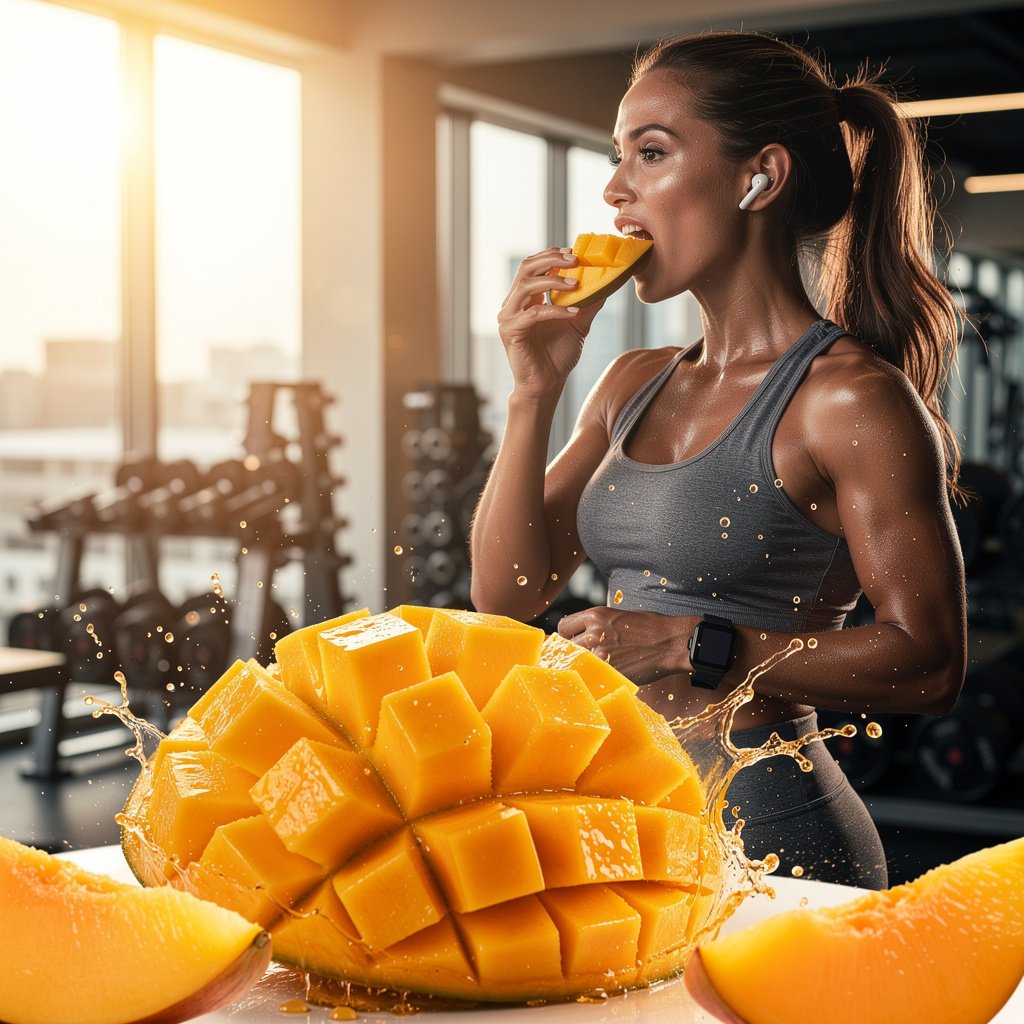
Most people instinctively reach for something processed when they need quick energy before a workout or through a mid-afternoon slump. An energy bar, a handful of crackers, a coffee with sugar. These produce energy, briefly, followed by a drop that leaves you worse off than before.
Mango does something different. It delivers fast, clean, natural sugars — primarily fructose and glucose — alongside a fiber content that moderates the absorption rate, preventing the sharp spike-and-crash pattern. But what elevates mango beyond just a “natural sugar source” is its broader nutrient profile: vitamin C for adrenal function and cortisol regulation, vitamin B6 for energy metabolism and serotonin production, and a collection of enzymes that actively support digestive efficiency.
Better digestion means better nutrient absorption from everything else you eat. More efficient nutrient absorption means more available cellular energy. A mango thirty minutes before a workout or at two in the afternoon when your focus begins to fade is one of the most practically effective energy interventions available in food form.
Red Grapes — The Hydrating Fatigue Fighter

Fatigue and dehydration are so closely linked that many researchers treat mild dehydration as a primary cause of low energy and poor cognitive performance. Even a 1–2% reduction in body water is enough to measurably impair physical performance and mental focus.
Red grapes address this at multiple levels. Their naturally high water content delivers direct cellular hydration. Their natural sugars provide gentle, quick-access energy. And their most important contribution — resveratrol, the polyphenol compound concentrated in the grape skin — has been studied extensively for its ability to support mitochondrial function.
Your mitochondria are the energy-producing organelles inside every cell of your body. They convert the fuel you eat into ATP — the actual currency of cellular energy. Anything that supports mitochondrial health directly supports your energy capacity. Resveratrol does this, alongside supporting blood flow and reducing the cellular inflammation that quietly drains vitality over time.
Red grapes are hydrating, anti-inflammatory, mitochondria-supportive, and genuinely refreshing. They also require zero preparation. There are very few reasons not to have them in your refrigerator at all times.
Cannellini Beans — The Slow-Burn Performance Fuel

Here is what high performers in any domain share in their approach to nutrition: they are all, consciously or not, managing their blood sugar with extraordinary care. Because blood sugar stability is performance stability. The moment your blood sugar crashes, your physical output drops, your mental clarity fades, your mood deteriorates, and your motivation evaporates — simultaneously.
Cannellini beans are among the most effective blood sugar stabilizers you can eat. Their combination of complex carbohydrates and significant protein creates a digestive process that releases glucose slowly, steadily, and over a long arc — providing energy for hours without the volatility that most carbohydrate foods produce.
They’re also rich in iron, which is worth paying close attention to. Iron deficiency is one of the most common and most underdiagnosed causes of persistent fatigue, particularly in active people and women. Iron is essential for the production of hemoglobin — the protein that carries oxygen in red blood cells to working muscles and the brain. Not enough iron means not enough oxygen delivery, which means fatigue that no amount of sleep or caffeine fully resolves.
Cannellini beans in a salad, blended into a soup, or simply tossed with olive oil and herbs alongside dinner is one of the most sustainable energy investments you can make.
Pecans — Small Handful, Significant Impact
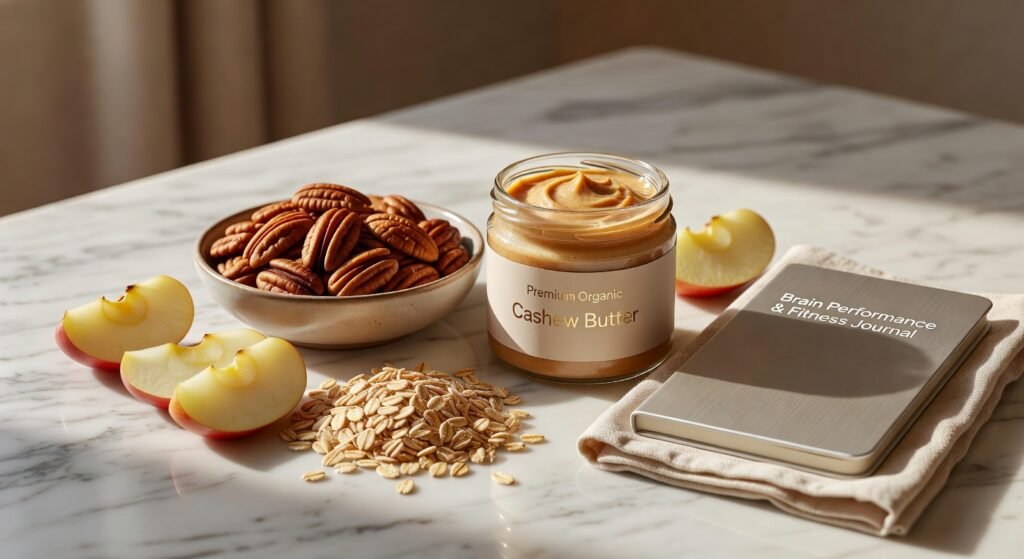
The relationship between healthy fat intake and sustained energy is one of the most consistently misunderstood areas of nutrition. For decades, dietary fat was cast as the villain in the story of poor health. What was lost in that narrative was the fact that fat is a critical energy substrate — one that burns slowly, cleanly, and with remarkable stability compared to carbohydrates.
Pecans are primarily fat — but it’s the right kind of fat. Rich in monounsaturated fatty acids, specifically oleic acid (the same fat predominant in olive oil), pecans provide sustained energy that doesn’t provoke an insulin response and doesn’t create the blood sugar volatility that undermines focus and performance. They also deliver vitamin B1 (thiamine), which plays a direct role in converting the food you eat into usable energy at the cellular level, alongside zinc for testosterone support, immune function, and recovery.
A small handful of pecans between meals or before a workout provides the kind of low-level, steady fuel that keeps your energy from dipping without overloading your digestive system. They are also, unlike many “healthy” snacks, genuinely satisfying — which means they do something most energy snacks fail entirely to do: they actually stop the hunger.
Cabbage — The Humble, Underestimated Powerhouse
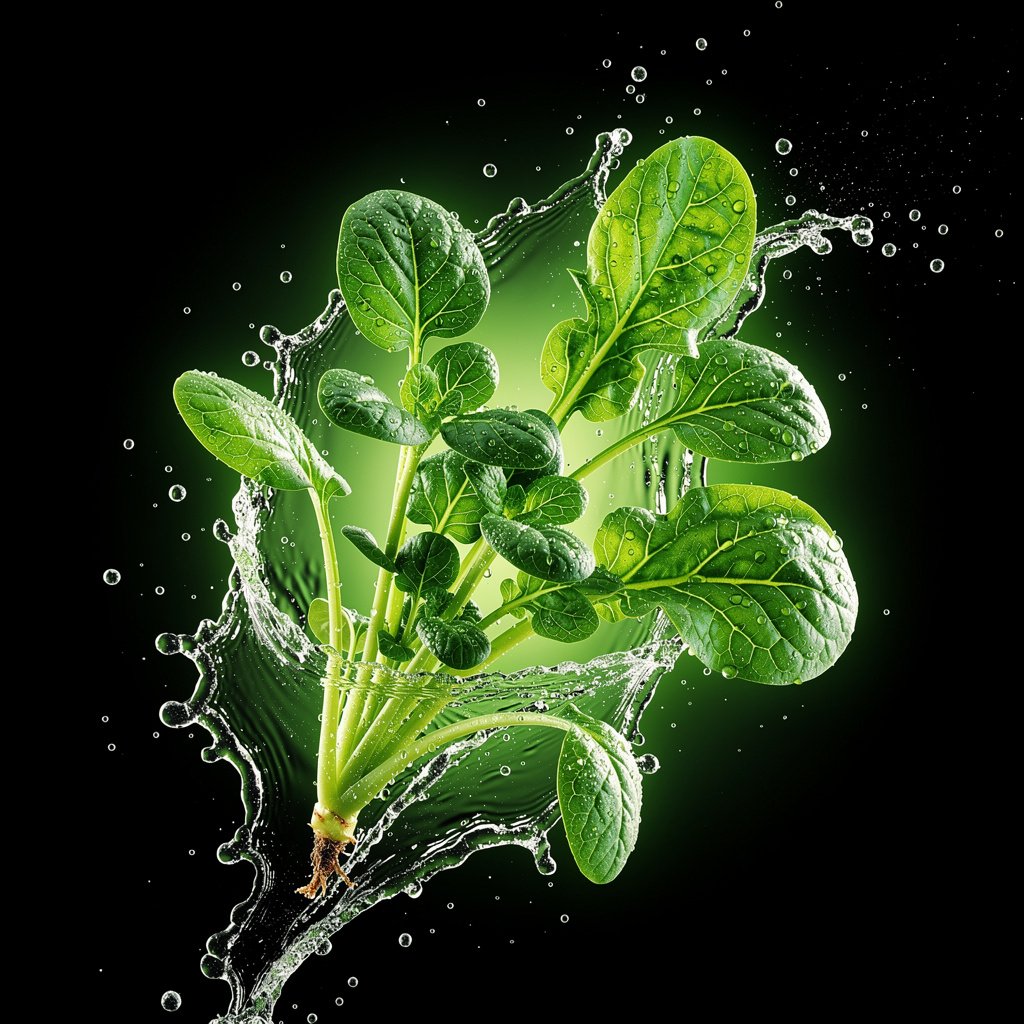
Cabbage has an image problem. It doesn’t sound exciting. It doesn’t carry the nutritional marketing glamour of superfoods with exotic names. And yet, per calorie, cabbage is one of the most nutrient-dense foods you can put in your body — and several of those nutrients are directly relevant to energy and performance.
Cabbage is rich in vitamin C, which most people associate with immune function but which also plays a critical role in iron absorption. Eating cabbage alongside iron-containing foods significantly increases how much of that iron your body actually uses — directly addressing one of the most common nutritional roots of fatigue. It also contains vitamin K2 (in fermented forms like sauerkraut), sulforaphane compounds that support liver detoxification, and a fiber content that feeds the gut bacteria responsible for producing B vitamins that your body uses for energy metabolism.
The gut connection is particularly important. A compromised gut microbiome — damaged by processed food, antibiotics, chronic stress, or insufficient fiber — produces less of the B vitamins your mitochondria need to function. Supporting the gut with prebiotic fibers from foods like cabbage has downstream effects on energy that most people never connect because the mechanism is invisible.
Eat it raw in slaws, sautéed with olive oil and garlic, fermented as sauerkraut or kimchi, or roasted until the edges caramelize. Any form works. Just eat it regularly.
Apricots — Nature’s Stamina Snack
Fresh or dried, apricots are one of the most concentrated sources of nutrients that directly support energy, stamina, and recovery in the fruit category.
Their standout contribution is iron — particularly in dried form, where the concentration per gram increases significantly compared to the fresh fruit. Iron for oxygen delivery, as discussed above, is foundational to physical performance and the absence of fatigue. Apricots pair this iron with a natural vitamin C content that enhances the iron’s bioavailability, making them a remarkably efficient package for addressing one of the most common underlying causes of low energy.
They’re also rich in potassium, which supports fluid balance and muscle contraction — critical for anyone whose energy problem manifests as physical weakness or poor workout performance. And their natural sugar content provides quick-access carbohydrate fuel that athletes and active people can use immediately, without the added sugar, artificial flavoring, or processed ingredients of commercial energy products.
Four or five dried apricots before a workout, during a long commute, or at the afternoon point when your energy naturally flags is an upgrade over almost anything you’d find in the snack aisle of a convenience store. Keep them in your bag. Use them consistently.
Bulgur — Steady Fuel for Real Performance
The problem with most convenient carbohydrate sources — white bread, white rice, most pasta, most crackers — is that they have been processed to the point where their fiber has been removed and their glucose delivery has been accelerated. They work fast and stop fast. They’re the dietary equivalent of starting your car with a shot of ether — powerful, brief, and hard on the engine.
Bulgur is the opposite. Minimally processed, made from parboiled cracked wheat, it retains its bran and germ — the parts of the grain that contain the fiber, the B vitamins, and the minerals that make whole grain carbohydrates genuinely different from refined ones.
The fiber slows glucose absorption. The B vitamins — particularly B1, B2, B3, and B6 — are directly involved in the metabolic pathways that convert carbohydrates into ATP. The magnesium content supports the hundreds of enzymatic reactions involved in energy production. Together, this means that bulgur delivers carbohydrate energy in a form your body can use efficiently and sustainably — without the post-meal heaviness and cognitive dullness that refined grains reliably produce.
Prepare it like couscous, use it as the base of grain bowls, add it to soups, or build it into salads like tabbouleh. It cooks in fifteen minutes and improves almost any meal it’s added to.
Watercress — The Forgotten Circulation Booster
Of all the foods on this list, watercress is probably the one you’ve been walking past the longest without picking up. It’s small, it looks unremarkable, and it rarely shows up in any nutrition conversation that isn’t specifically about microgreens or obscure superfoods.
That anonymity is unjustified. Gram for gram, watercress is one of the most nutrient-dense foods on the planet. Nutritional databases consistently rank it at or near the top of nutrient density scores — beating out kale, spinach, and most other leafy greens that carry significantly more nutritional marketing weight.
For energy specifically, its most relevant properties are its extraordinarily high vitamin K content (important for cardiovascular function), its nitrate compounds (which the body converts to nitric oxide, a vasodilator that improves blood flow to muscles and the brain), and its vitamin C and iron combination that supports oxygen-carrying capacity.
Better blood flow. Better oxygen delivery. Less cellular oxidative stress. The sum of these effects is something that active people and anyone dealing with fatigue can feel — improved physical endurance, faster recovery between efforts, and a sharpness and vitality that’s difficult to attribute to any single compound but is consistently reported by people who eat watercress regularly.
Add a handful to salads, blend it into smoothies, tuck it into sandwiches, or wilt it briefly into soups. It’s mild enough to disappear into almost any meal and nutritionally potent enough to make that disappearance worthwhile.
- Cashew Butter — The Upgrade Your Snacks Have Been Missing
There’s a reason cashew butter belongs on this list rather than just “nuts” generically: it combines the energy benefits of healthy fat and protein in a format that is uniquely practical, versatile, and satisfying in a way that few whole foods can match.
Cashews are among the richest food sources of magnesium — a mineral involved in over 300 enzymatic reactions in the human body, including the majority of the reactions involved in ATP production. Magnesium deficiency is shockingly common and is directly associated with fatigue, muscle weakness, poor sleep quality, and difficulty concentrating. If your energy problem has a magnesium deficiency component — which it statistically has a reasonable chance of — adding cashew butter to your daily diet makes a measurable difference.
Beyond magnesium, cashew butter provides copper (essential for mitochondrial energy production and iron metabolism), zinc (for testosterone, recovery, and immune function), and a fat-protein combination that sustains energy without provoking significant insulin response.
On rice cakes, stirred into overnight oats, spread on apple slices, blended into smoothies, or eaten by the spoonful between meals — cashew butter is possibly the easiest single upgrade you can make to your daily nutrition. It requires zero preparation, travels well, and does something most convenient snacks completely fail to do: it actually addresses the underlying nutritional need rather than just masking the symptom.
The Pattern You Should Be Noticing
Look back through this list and notice what these ten foods share: almost none of them are exotic. None of them require a specialty health food store. None of them cost a fortune or demand elaborate preparation. They are grapes, beans, nuts, seeds, greens, and whole grains — the kind of food that has been feeding human beings for thousands of years.
What they all provide, in different combinations and through different mechanisms, is the raw material your body needs for real energy production. Iron for oxygen. B vitamins for metabolism. Magnesium for ATP. Healthy fats for sustained fuel. Fiber for blood sugar stability. Nitrates for blood flow. Antioxidants for mitochondrial protection.
Your energy problem isn’t mysterious. It isn’t inevitable. And it isn’t solved by stimulants that bypass the problem while making it worse.
It’s solved by feeding the system that produces energy in the first place.
Start Here — Not Everywhere
The most common mistake people make when they encounter a list like this is attempting to implement all of it simultaneously. They overhaul their entire diet in one week, feel overwhelmed, revert to their old habits, and conclude that “nothing works.”
Don’t do that.
Pick two foods from this list — the two that feel most accessible, most appealing, most easy to integrate into what you already eat. Find a simple way to eat them every day for two weeks. Just two weeks.
Then notice what’s different.
Your body doesn’t need a perfect diet. It needs better inputs than it’s currently getting. Every improvement compounds. Every meal that’s slightly more nutritious than yesterday’s is a deposit into the account that pays out as energy, focus, and physical performance.
The version of you that moves through the day with genuine vitality — not the borrowed, caffeinated, crash-and-recover version, but the real, sustained, still-going-strong-at-seven-PM version — is available to you.
You’ve just been reaching for the wrong fuel.
Time to change that.