
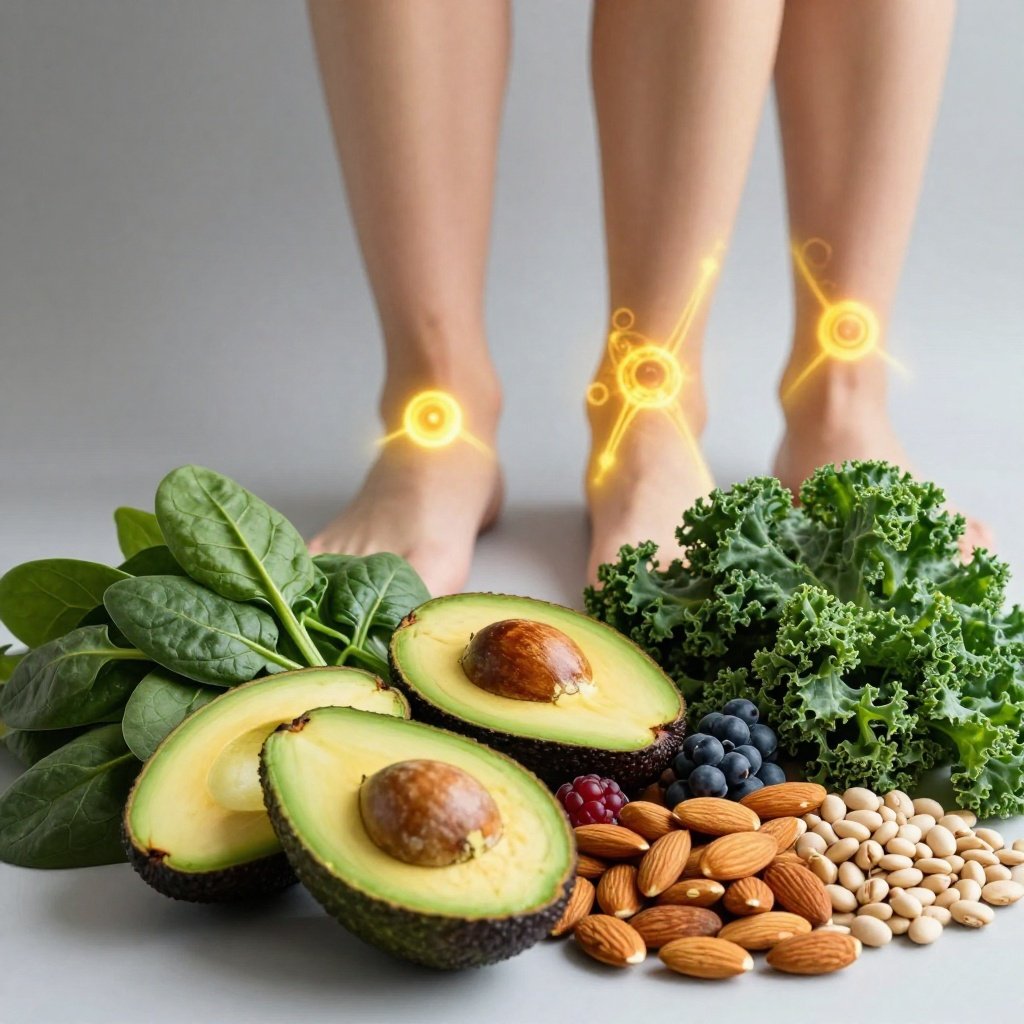
Discover the best foods and daily habits to build stronger legs at any age naturally. Learn how potassium, magnesium, vitamin B1, and reduced sugar intake can improve circulation, reduce swelling, boost mobility, and keep your legs healthy and energized for years to come.
I need to tell you something most doctors will never say. Something that might make you uncomfortable… because it challenges everything you think about your health, your diet, and even the way you live your life .
A few years ago, I woke up one morning, and my feet felt… wrong. Not just tired. Not just sore. But swollen. Puffy. Heavy. Every step felt like I was dragging bricks. Shoes barely fit. Climbing stairs? A nightmare. Walking to the kitchen… exhausting.
I thought immediately… something must be seriously wrong with my liver, or my kidneys, or my heart. And I wasn’t alone. Many people, the moment they see swelling, panic. They picture the worst-case scenario, and their mind races.
But here’s the truth: most of the time, swollen feet aren’t a death sentence. They aren’t a sign of some catastrophic disease lurking unseen. Often… it’s something much more common. And the good news? It’s fixable.
And I want to tell you exactly why it happens, what’s really going on in your body, and how you can fix it… naturally, safely, and effectively.

But before we get into the science, I want to ask you: where are you watching from today? Drop it in the comments. I love connecting with people from all over, hearing your stories, your experiences.
Now, let’s get started… and I promise, by the end of this video, your understanding of your body—and your feet—will never be the same.
Let me take you back to that morning when my feet were swollen. I sat on the edge of my bed and just stared at them. Heavy… puffy… almost alien.
I thought about my patients, my colleagues, my friends. How many of them had suffered quietly with the same thing, thinking it was normal, thinking they were just getting “old.” And I realized… they didn’t need expensive medications or surgeries most of the time. They needed knowledge. They needed awareness.
That’s why I made it my mission. I had to understand why it happened. I had to fix it—not just for myself, but for everyone who trusted me as a doctor.

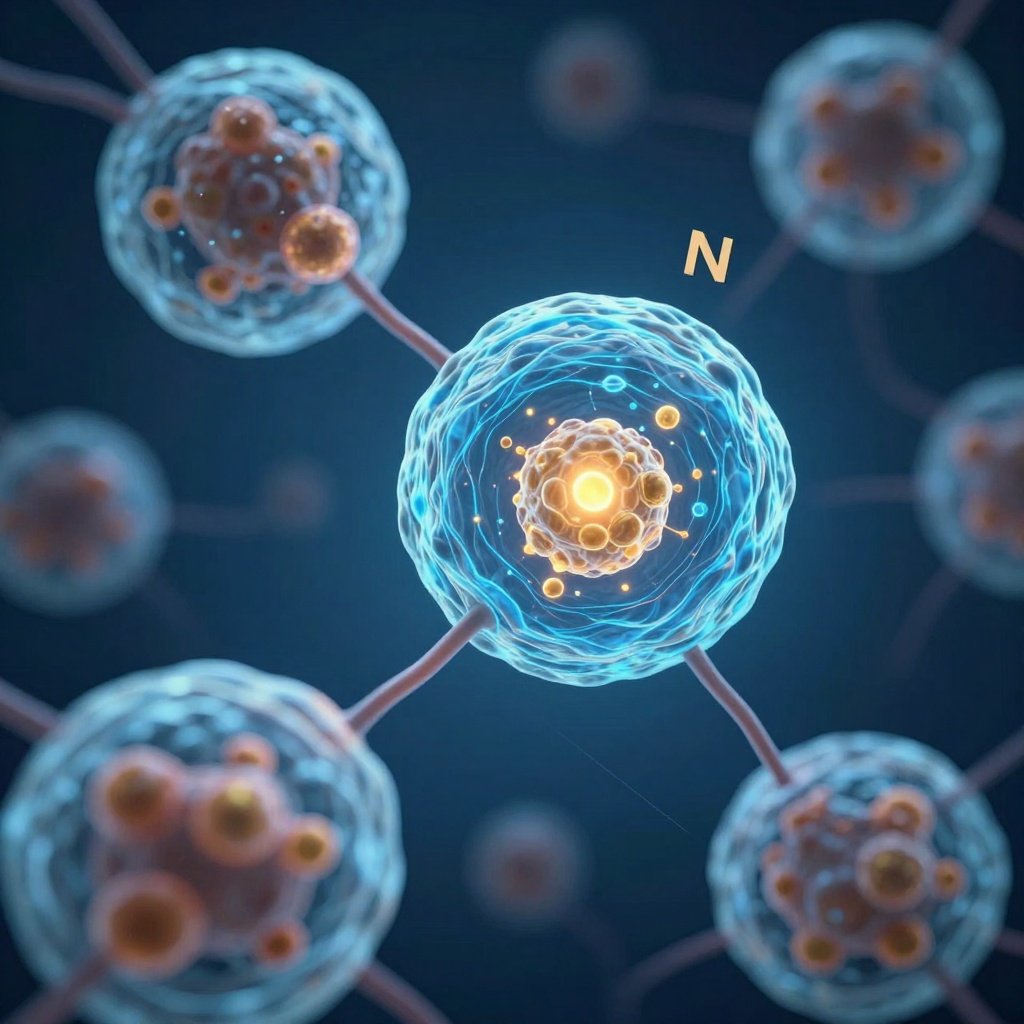
And the first thing I learned was something most people never hear: swelling isn’t just about your feet. It’s about your cells, and the tiny, miraculous pumps inside them that control every drop of fluid in your body.
Every one of your trillions of cells has a pump. It’s microscopic, invisible, but it’s working 24/7. And its job is simple… yet vital: push sodium out of the cell, bring potassium in, and maintain the delicate balance of water inside.
This is your sodium-potassium pump.
I like to describe it like a tiny water pump in every single cell. When it works, fluid moves where it should. Your legs feel light. Your energy is steady. Your circulation works beautifully.
But what happens if it falters? If the pump doesn’t have enough fuel to operate? Water starts pooling… in your legs… in your feet. Heavy ankles, puffy toes… every step a reminder that something inside isn’t right.
And what starves this pump? Two silent culprits: low potassium and magnesium. These are minerals that keep your cells’ pumps running. Without them, it’s like trying to run a car without gas. Your body begins to retain water. You get tired. You feel drained. Swollen. And if you ignore it, it can lead to bigger problems.
I remember sitting in my kitchen, looking at my feet, thinking… How did it come to this?
I’d spent decades taking care of other people’s health. I taught patients how to eat right, how to exercise, how to avoid disease. Yet here I was, brought to my knees by something as simple as minerals and sugar.
It was humbling. And it scared me. Because I realized… I’d ignored the tiny details for too long. And maybe you have, too.
Now, let’s talk about sugar. Oh, sugar—the sweet poison we all love.
High sugar intake is a silent contributor to swollen feet. When blood sugar spikes, your body produces insulin. Insulin tells your kidneys to hold onto sodium. Sodium makes your body hold onto water. The result? Puffy, swollen legs.
I’ve seen it countless times in my clinic. Take Mrs. Thompson, 68. She came to me, worried her legs were “always puffy.” She had no heart problems, no liver problems. But her breakfast? A sugary cereal, fruit juice, and pastries… every morning.
After adjusting her sugar intake and adding potassium- and magnesium-rich foods, within weeks, the swelling almost disappeared. And her energy? Skyrocketed. She could climb stairs without stopping. She walked to her garden again.
Sugar also triggers glycation, where glucose binds to proteins in your blood, stiffening blood vessels, slowing circulation. That’s why swollen feet are often just the tip of the iceberg.
Let’s get practical.
Potassium is essential for your sodium-potassium pump. Adults need about 4,700 mg a day. That’s huge. One banana? 300 mg. You’d need fifteen bananas to hit your daily target—impractical, and loaded with sugar.
Better sources:
Avocados (~975 mg)
Spinach, broccoli, kale
Berries like strawberries and blueberries
Smoothies that combine fruits and veggies
Magnesium supports your pump, reduces cramps, and helps regulate fluids. Adults need about 420 mg daily. Good sources include:
Almonds, cashews
Beans and legumes
Leafy greens
Electrolyte powders (no added sugar)
I tell my patients: don’t obsess over exact numbers. Focus on consistently eating these foods. Over time, your swelling will improve, your energy will rise, and your legs will feel lighter.
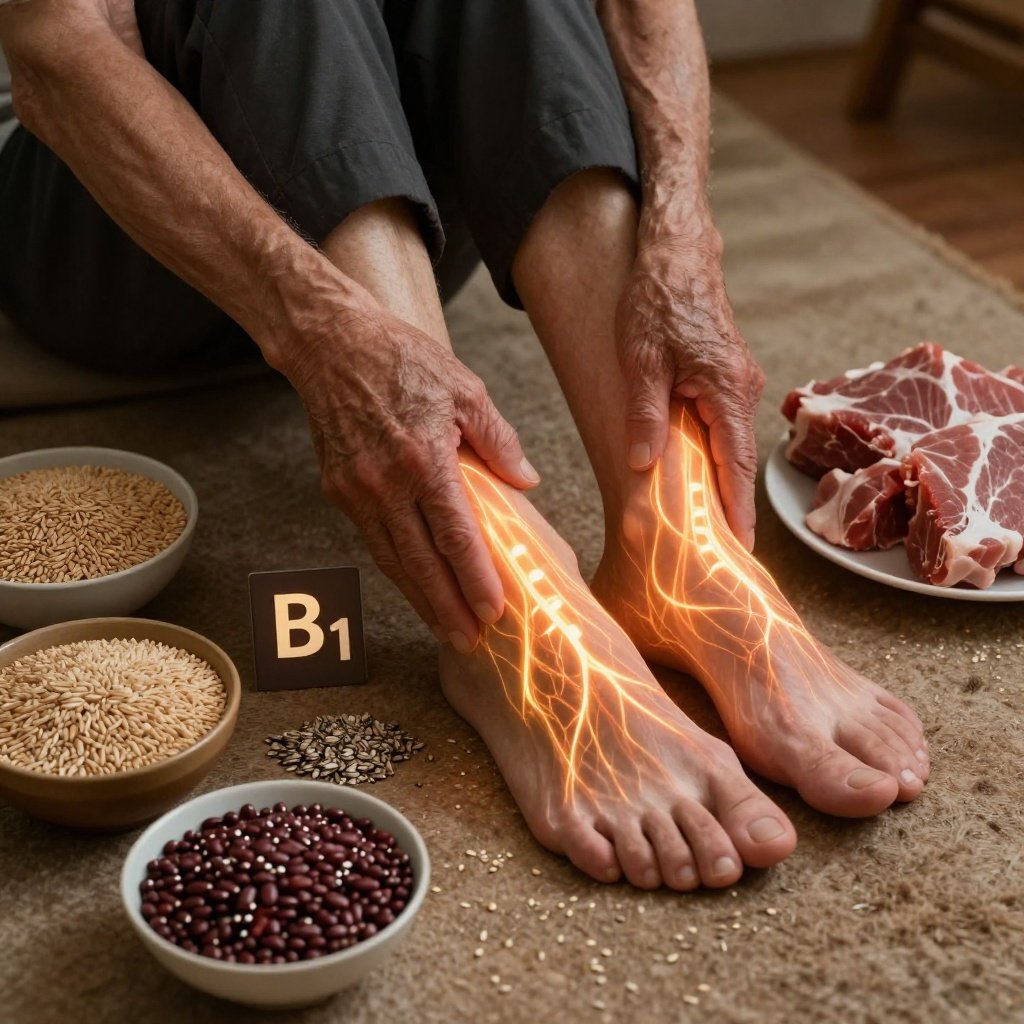
Now here’s something most people miss: Vitamin B1, also known as Thiamine.
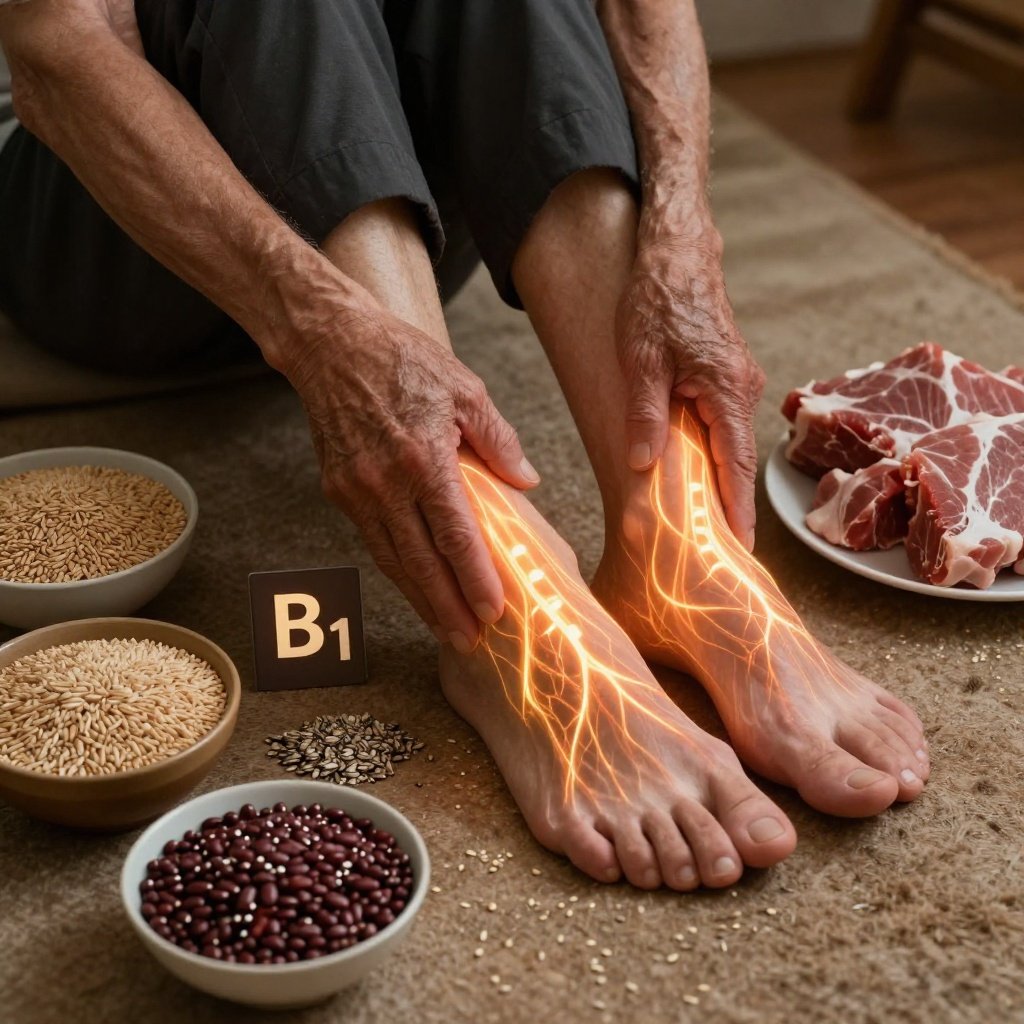
When your body lacks B1, sugar can’t be processed efficiently. It builds up in your blood. You retain more water. And nerves can start to malfunction, causing tingling or burning sensations in your feet.
I had a patient, Mr. Rivera, 72, who came to me worried about numbness in his toes. Simple solution? Add lean pork, legumes, and whole grains to his diet, plus a B1 supplement. Within weeks, his symptoms eased.
Thiamine isn’t just about energy. It’s about protection. It shields your nerves, reduces glycation, and keeps your circulation smooth.
I spent decades thinking health was about chasing the big things: cholesterol levels, blood pressure, exercise goals. I ignored the small stuff—minerals, sugar, vitamins.
And it nearly cost me.
I realized that we spend so much time trying to prevent the big problems that we ignore the little signs. Puffy feet. Tired legs. Tingling toes. These are whispers from your body—signals that something is off. Listen. Don’t wait until it’s a full-blown warning.
Like so many things in life, prevention is about noticing the small things early.
So, here’s what you do. And I don’t want you to just hear this—I want you to feel it, because this is where the change happens.
Step 1: Cut sugar.
I know, I know… sugar is everywhere. That morning coffee with sweet syrup, the snacks at work, the desserts we reach for because “we deserve it”… I’ve been there. I used to reach for chocolate every afternoon, thinking it was harmless.
But sugar isn’t just empty calories. It’s sneaky. It tells your body to hold onto water. It spikes insulin. It makes your sodium-potassium pump stumble. And suddenly… your legs feel heavy. Your feet puff up. You feel tired, sluggish, frustrated.
I remember Mrs. Thompson, 68, who came to me with ankles swollen like balloons. She said, “Doctor, I eat well, I exercise… why is this happening?”
We went through her diet, and it was sugar—hidden sugar everywhere. Once she cut back on sugary drinks and pastries, within a few weeks, her swelling started to disappear. Her smile came back, her steps felt lighter.
You don’t have to give up sugar forever. I’m not asking for a life without joy. But you do need to reduce it enough to let your body’s natural systems function properly. Your cells need to balance water… and sugar makes them hoard it.
Step 2: Eat potassium-rich foods daily.
Potassium is like fuel for your cellular pumps. Without it, water retention happens, energy drops, and swollen feet become the new normal.
I tell my patients: think of potassium as the gentle helper that whispers to your cells, “Everything will be okay. Let’s keep the water balanced.”
Some of my favorite real-life tips:
Avocados: One a day can give you almost 1,000 mg of potassium. Spread it on toast, mix into salads, or even blend into a smoothie. Delicious and heart-healthy.
Berries: Strawberries, blueberries—tiny little fruits, but they pack a potassium punch. 150 grams of strawberries gives 250 mg. Sprinkle them on oatmeal or yogurt.
Greens: Spinach, kale, Swiss chard. These leafy warriors are easy to add to any meal. I like to sauté a handful of spinach with garlic and olive oil—it’s a quick, tasty potassium boost.
I once had a patient, Mr. Davis, 70, who hated vegetables. He thought they were bland. But I suggested blending berries, spinach, and banana into a smoothie every morning. Two weeks later, he said, “Doctor, I feel lighter on my feet. I didn’t know food could do this!”
Potassium is simple. Eat it consistently. It works quietly, like a friend who always shows up when you need them most.
Step 3: Eat magnesium-rich foods daily.
Magnesium is another essential player, supporting the sodium-potassium pump and keeping fluid balance smooth. It also calms your muscles, reduces cramps, and supports circulation.
Magnesium is easier to get than potassium, but you still need to be intentional. Some excellent sources:
Almonds: Just a small handful, around 80 mg. Snack on them, or sprinkle them on salads or oatmeal.
Cashews: Another tasty nut, around 75 mg per ounce. Great for mid-afternoon energy.
Beans and legumes: Black beans, kidney beans—one cup of cooked beans gives you over 100 mg of magnesium. Try them in soups or chili.
Leafy greens: Spinach, kale, chard—double duty with potassium and magnesium.
I often tell my patients to think of magnesium as the oil in your engine. Without it, everything squeaks and slows down. With it, your body hums smoothly.
Step 4: Include Vitamin B1 (Thiamine).
Vitamin B1 is often overlooked, but it’s critical for breaking down sugar and protecting your nerves. Without it, glucose builds up, water retention worsens, and nerve problems like tingling or burning sensations in the feet can appear.
Sources include:
Lean pork: Just a small portion, about 3 ounces, can give you a significant daily dose.
Legumes: Lentils, beans, chickpeas—they’re versatile and easy to add to meals.
Whole grains: Oats, brown rice, whole wheat bread. Simple swaps in your daily diet.
Seeds: Sunflower seeds, sesame seeds. Sprinkle them on salads or yogurt for a crunchy boost.
I remember one patient, Mrs. Lopez, 66, whose feet tingled constantly. We added B1-rich foods to her diet and a supplement for a few weeks. The relief was almost miraculous. She cried when she told me she could finally sleep comfortably at night. That’s the power of nutrients.
Step 5: Move your body.
This one may seem obvious, but it’s underestimated. Circulation is key. Gentle walks, stretching, elevating your legs—it all matters.
I encourage patients to do just 10–15 minutes of walking after meals. Lift your legs on a pillow while watching TV. Rotate your ankles. Move the blood. Keep fluid flowing.
I often tell people: imagine your blood is like a river. If it stagnates, water pools, swelling appears. Movement is the dam release. It’s simple, yet profound.
Reflection / Dramatic Pause
I promise you—these small changes, if done consistently, can transform your feet, your energy, and your life.
You don’t need surgery. You don’t need expensive drugs. You need knowledge, action, and persistence.
I’ve seen it hundreds of times in my clinic: someone follows these steps, and within weeks, they walk lighter, sleep better, climb stairs without stopping, and smile more. And it all begins with the decision to take care of yourself today, not tomorrow.
So take a deep breath. Look at your feet. Ask yourself: Am I willing to make these small, meaningful changes that could give me comfort, energy, and freedom in my body?
The answer should be yes. Because every step you take after this… can be lighter, easier, and pain-free. And that, my friends, is worth every little effort.
I’m 74. And every morning I wake up aware of how precious health is. I know what it feels like to feel trapped in your own body. I’ve seen patients in pain, worried, and frustrated. And I know you don’t need to suffer.
Swollen feet aren’t just an annoyance—they’re a warning, a chance to change course before bigger problems arise.
Take action today. Reduce sugar. Boost minerals. Protect your nerves. Move your body. Listen to your signals.
Because the day you ignore the small whispers of your body… that’s the day you may pay the price. Don’t wait. Start now.
Camera slowly zooms out as doctor smiles reassuringly.
Your feet, your legs, your body—they will thank you. And you will thank yourself.